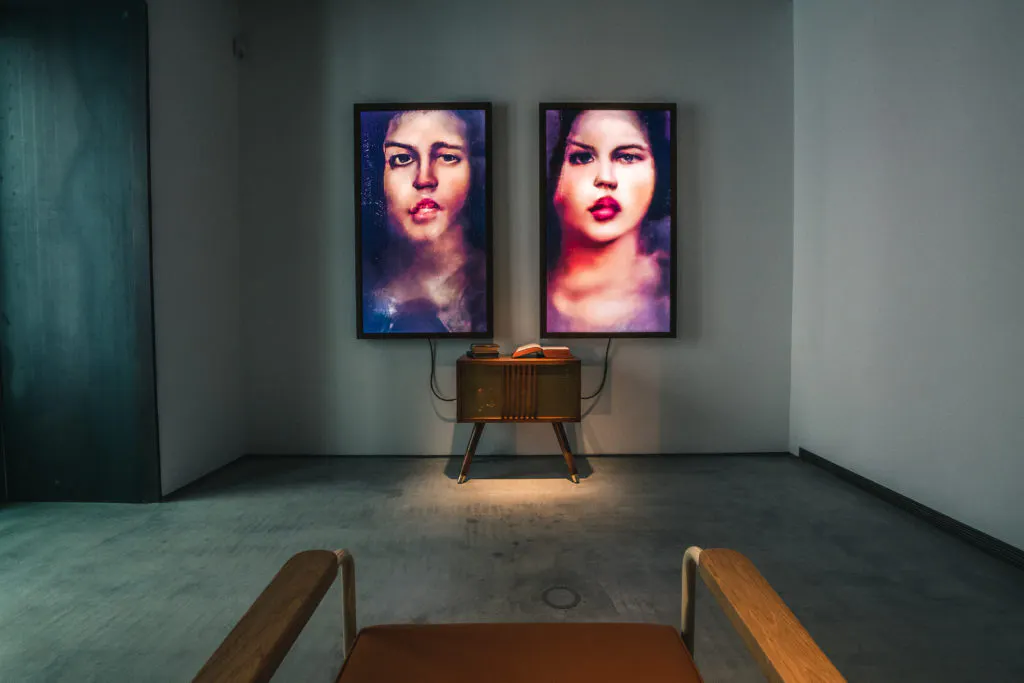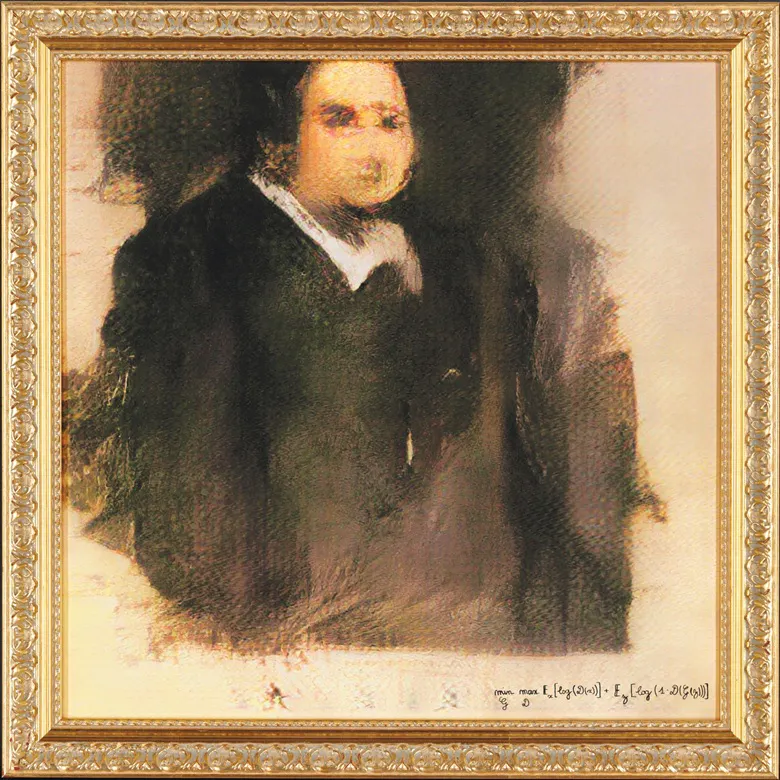
At Christie's Prints & Multiples sale on October 23-25, Portrait of Edmond Belamy sold for $432,500, over 40 times its estimate of $10,000. The painting is part of a collection of Belamy portraits created by the Paris art collective Obvious, composed of Hugo Caselles-Dupré, Pierre Fautrel and Gauthier Vernier, who have experimented with creating paintings, using GAN technology (Generative Adversarial Networks). While they tried landscapes and nudes, they found that portraiture has been the most successful medium in creating a compelling piece of artwork through artificial intelligence. The painting was produced using an algorithm and a data set of 15,000 portraits painted between the 14th and 20th centuries.

"The algorithm is composed of two parts," says Caselles-Dupré. "On one side is the Generator, on the other the Discriminator. We fed the system with a data set of 15,000 portraits painted between the 14th century to the 20th. The Generator makes a new image based on the set, then the Discriminator tries to spot the difference between a human-made image and one created by the Generator. The aim is to fool the Discriminator into thinking that the new images are real-life portraits. Then we have a result."
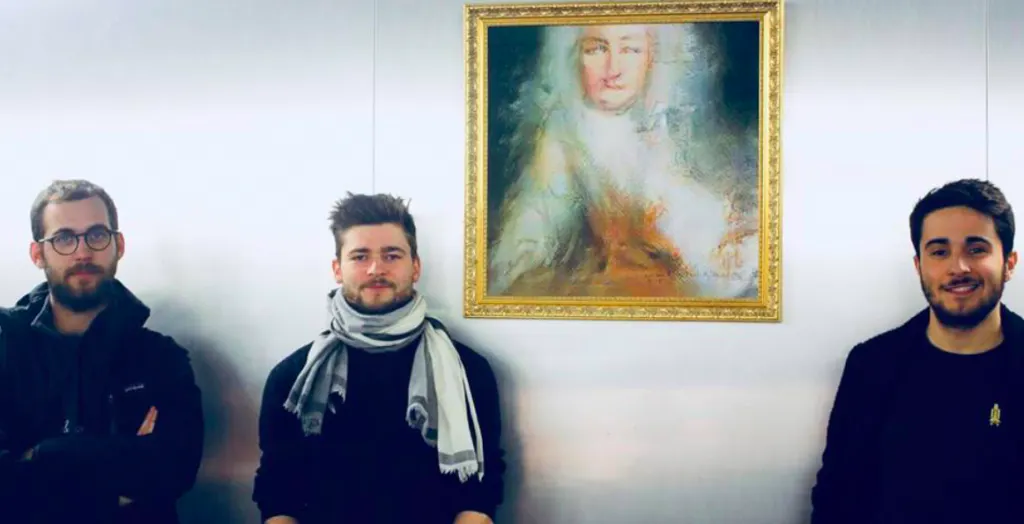
This new artificial intelligence in art trend reveals a change in the art world and the effect of technology on an industry essentially founded on human creativity and craftsmanship.
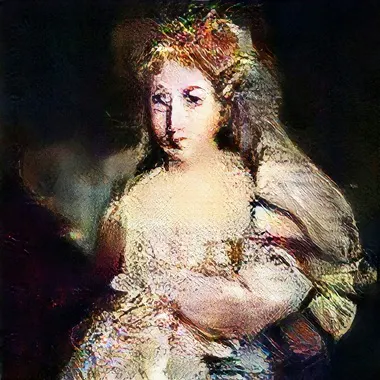
Richard Lloyd, a Christie's expert, explained this dichotomy, "It is a portrait, after all. It may not have been painted by a man in a powdered wig, but it is exactly the kind of artwork we have been selling for 250 years."
This new technology signals a shift in the definition of what art is and how is it created, and the sale has ignited a dialogue about the future of the art world.
However, the masterminds behind Obvious still believe that the human hand will always be intrinsically linked to art creation, stating "In contemporary art, the artist has always been at the center of the work, and the tool as a way for him to express, and pass on emotions. Here, the tool is closer to the center of the work, even though the artist behind the algorithm remains the 'real' artist. The intention and inspiration comes from the human who designed and used the algorithm. Hence the collaboration between human and machine has never been so close."
Obvious Collective has voiced a new perspective on revolutionizing the art market and Christie's sale shows a clear interest and value in the technology. Nevertheless, Richard Lloyd says, “AI is just one of several technologies that will have an impact on the art market of the future – although it is far too early to predict what those changes might be."