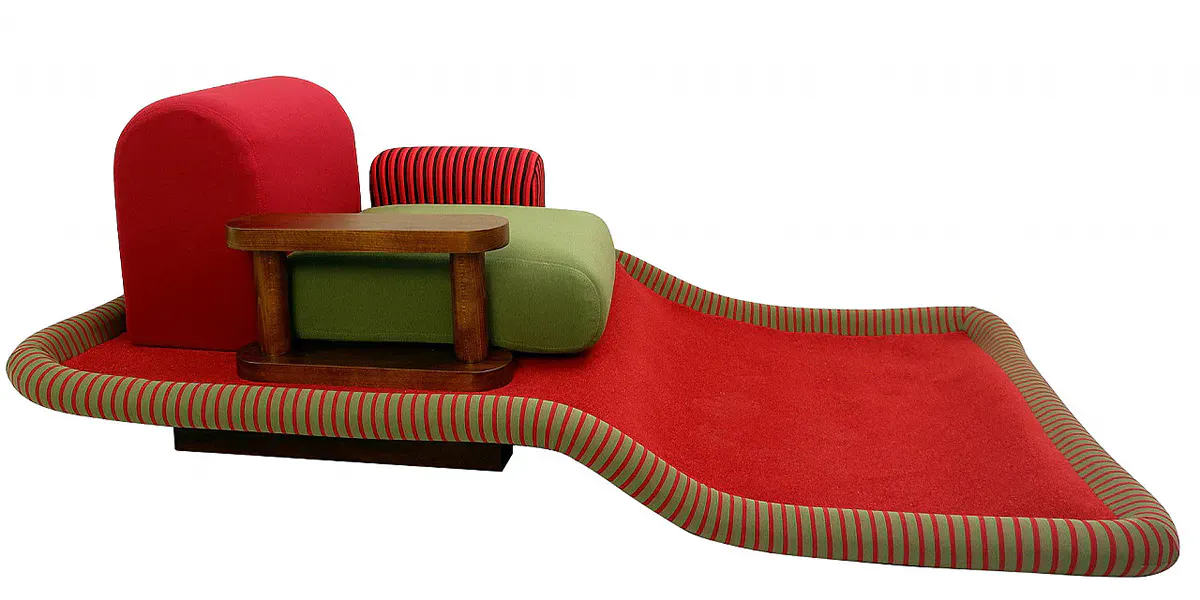
A designer should know that objects can become the tool of an existential ritual.
Ettore Sottsass was convinced that design should not only be functional, but also arouse emotions and ideas through form, design, color and structure. His focus was social, cultural and sensorial, and he envisioned a type of design in line with contemporary sensibility. Over the course of his very long career, which lasted around 60 years, Sottsass revolutionized the concept of design with his creative impetus, energy and eclectic talent.
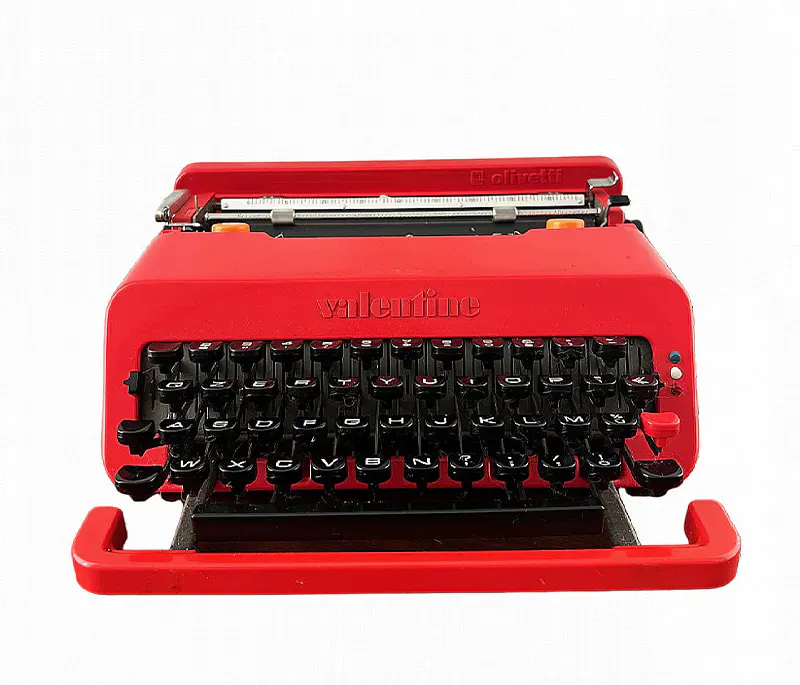
Born in Innsbruck, Austria-Hungary in 1917, he graduated in 1939 from the Polytechnic of Turin and began his activity in Milan, in 1947, a period in which Italy was in full reconstruction after the Second World War. In 1958 he began to collaborate with Italian manufacturer Olivetti, a relationship that lasted over 30 years and led to the creation of a new style for the company's products. Among the works of this collaboration as the famous "Valentine" typewriter and the Elea 9003 mainframe computer, the first commercial transistor computer produced in Italy, whose elegant and functional design earned Sottsass the first of three Compasso d'Oro in 1959.
Related: 5 Italian Design Brands to Know
In the 1950s and '60s, Sottsass made important journeys that influenced his product concept. Two in particular were fundamental for his education: the one to New York, where the artist came into contact with the consumerism of American society, and the one to India, in 1961, where he was fascinated by a culture emphasizing colors and textures.
Do you want to receive more articles like this by email? Sign up to our newsletter!
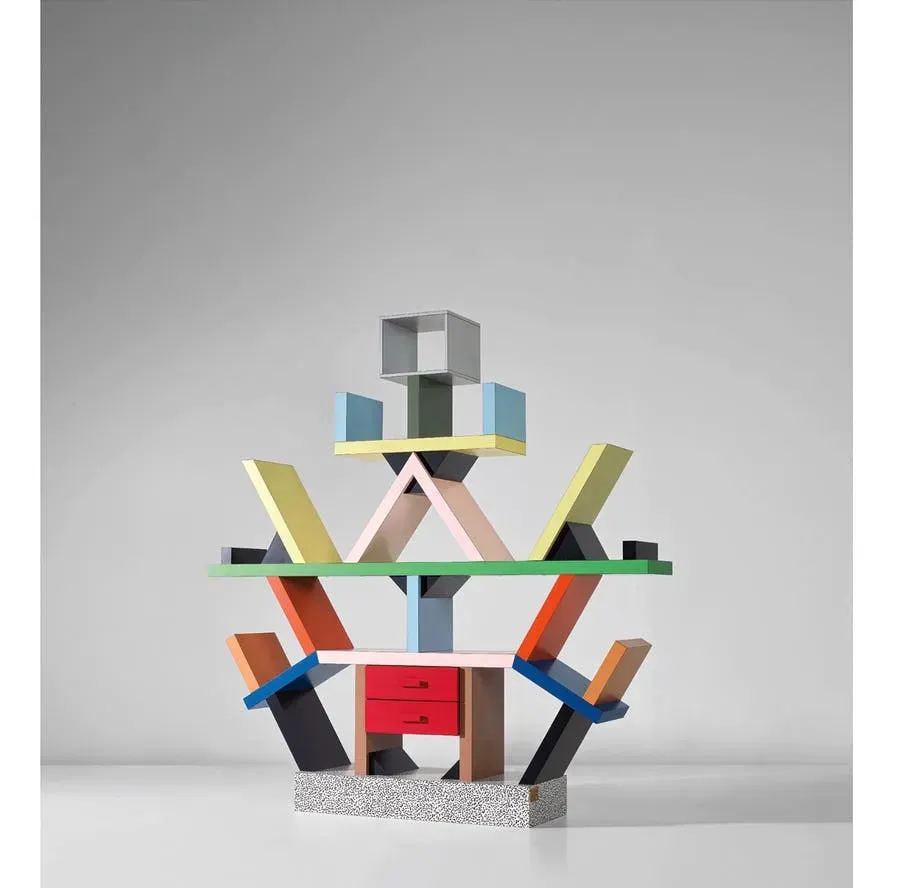
In the second half of the 1960s the concept of Controdesign or Radical Design (1966-1972) was born, which proposed design as a tool for social criticism. Radical Design culminated in 1981 with the founding of the Memphis movement, which was born precisely as a rebellion against the empty sobriety and rigid functionalism of modernist design. Along with other well-known names such as Martine Bedin, Matteo Thun, Aldo Cibic, Marco Zanini and Michele de Lucchi, Ettore Sottsass responded to formalism and "good taste" with extravagant, geometric and kitschy shapes and with the bright shades of Pop art.
Related: Memphis: All the Creativity, Irony and Freedom of the ‘80s
The products were often coated with plastic laminate, and glass was also often used, combining materials with textures and decorations rich in color and panache.
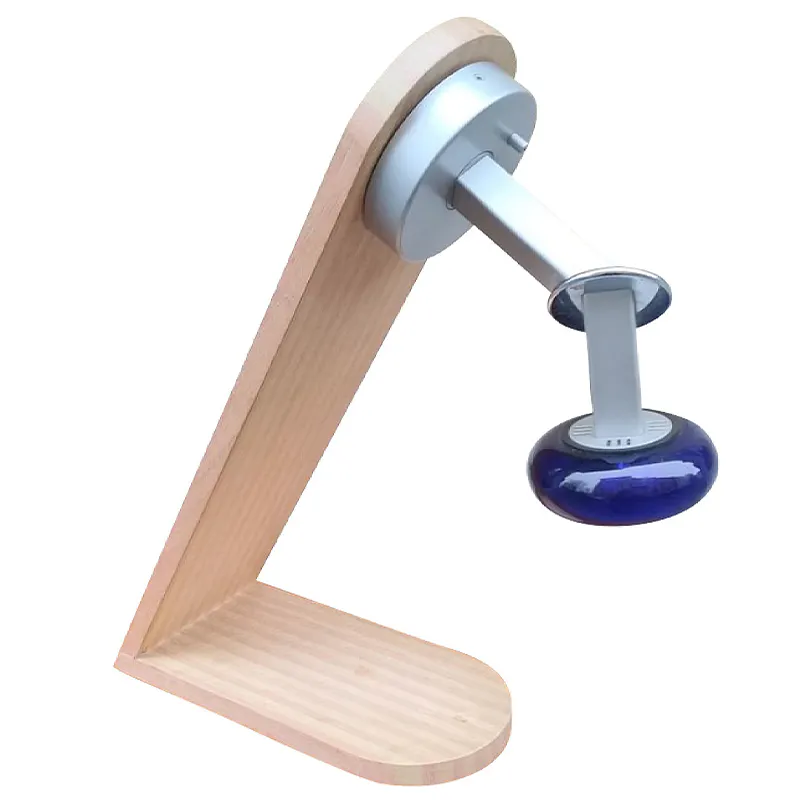
The result was a dynamic and captivating design destined to enchant many famous people, such as David Bowie and Karl Lagerfeld, and Memphis was very successful among collectors. Recently, Memphis has experienced a revival and continues to be an enduring source of inspiration for interior designers, further proof of its pioneering and innovative spirit.
Related: Inside a Designer's Punk-Inspired Italian Home
The ideas of the Memphis collective were enthusiastically received all over the world. So much so that many of the designers who collaborated on the collection that the Group presented at the 1981 Salone del Mobile were foreigners, including the Austrian Hans Hollein, the French Nathalie du Pasquier, the American Michael Graves, and the Japanese Shiro Kuramata.
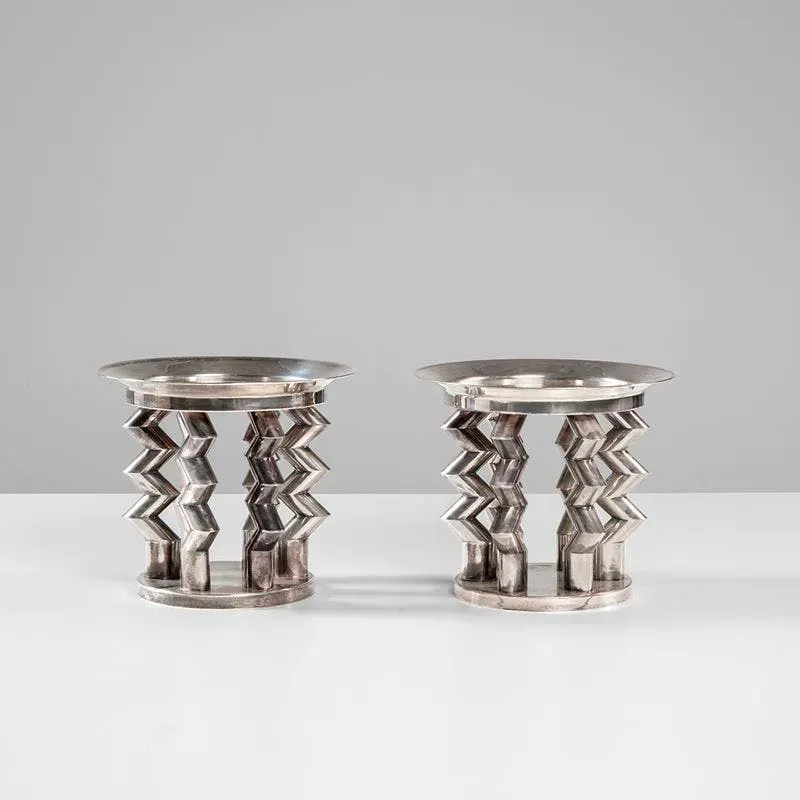
While the Memphis movement reached the pinnacle of notoriety, Sottsass began to devote himself to a design consultancy firm, which over time entered into important collaborations such as the one with Alessi, called Sottsass Associati. In 1985, Sottsass decided to focus attention on this company and left the Memphis Group, which was dissolved a few years later in 1988.
Related: Accommodation Meets Art: 7 of the Most Creative Hotels in the World
The '90s represented for Ettore Sottsass a period of great changes in which collaborations with other designers became rarer, and he worked increasingly on architectural projects and works for small art galleries, in opposition to a society based on consumerism and mass production.
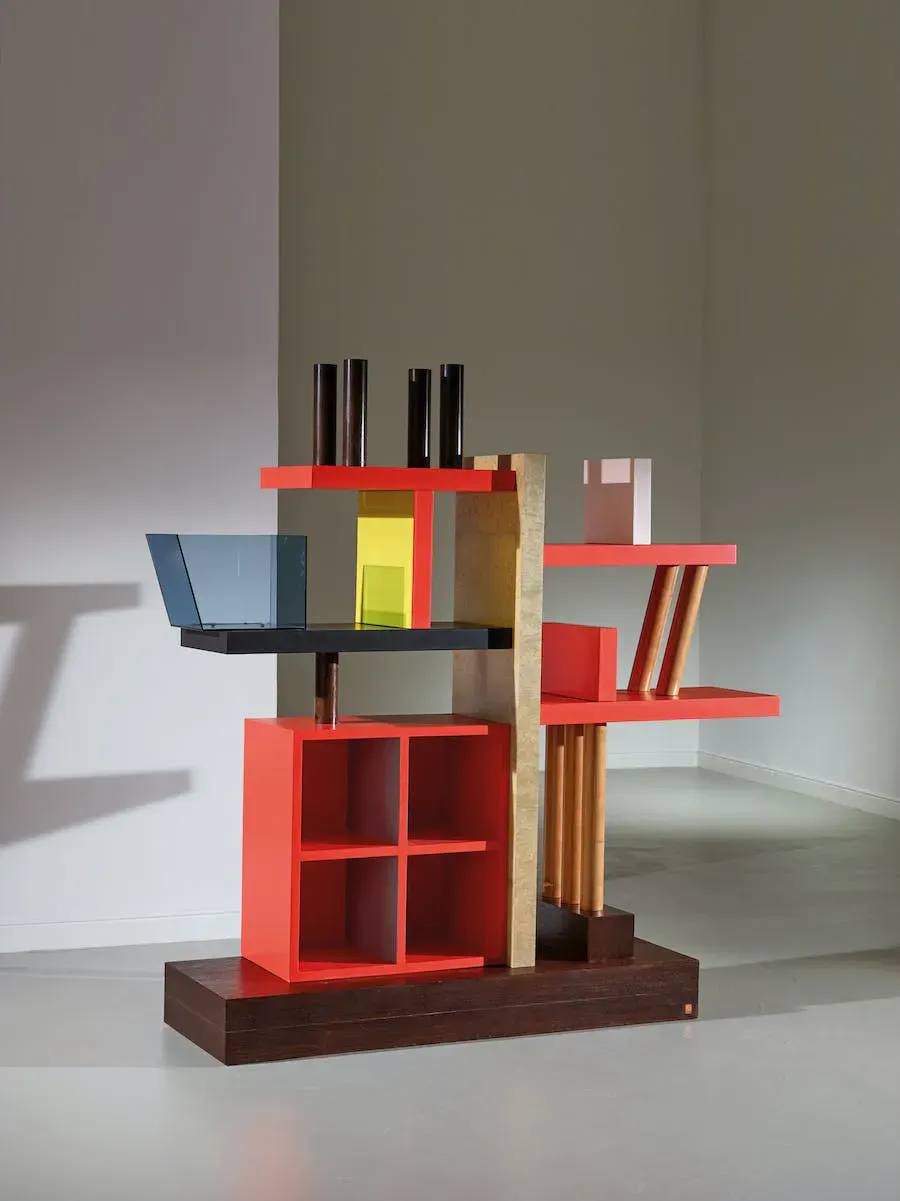
The largest museums in the world have dedicated important exhibitions to Sottsass, and his works are now present in the permanent collections of the Metropolitan Museum of Art, the Center Georges Pompidou, the Victoria & Albert Museum and more. His works also sell for hundreds of thousands of dollars at auction. His current record is set at $432,909 for ‘Composition of coloured wooden elements and mirror; all joined by hemp ropes’ that sold at Phillips in 2018.
Sottsass passed away in Milan on December 31, 2007, at the age of 90, due to heart failure. According to numerous historians and critics, his career has had an inestimable impact on design, and his influence has resonated throughout Italy and the rest of the world.