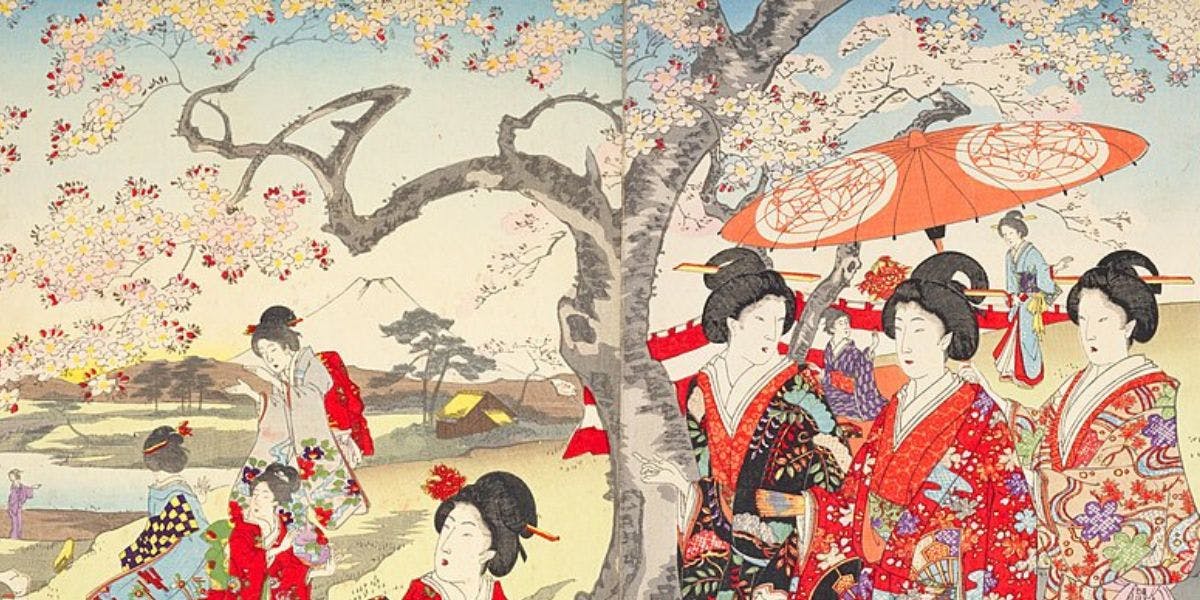
Perhaps no tree heralds the spring as much as the cherry blossom tree, whose thick, mangled branches become adorned with clouds of pink blossoms for a short period between March and April. Referred to in Japanese as sakura, the cherry blossom has enchanted since ancient times. The tree is native to Japan, where its brief bloom is a time of celebration and renewal, signifying the ephemeral beauty of life.
"The cherry blossom is associated with the Japanese aesthetic idea of ‘mono no aware’ that can be dated back to the Heian Period," says Hua Zhou, a specialist of Japanese and Korean Art at Christie's. Mono no aware, which translates to "a pathos of things," is a Japanese term for the awareness of the impermanent quality of life.
Related: Spring in Art: 10 Works of the Season
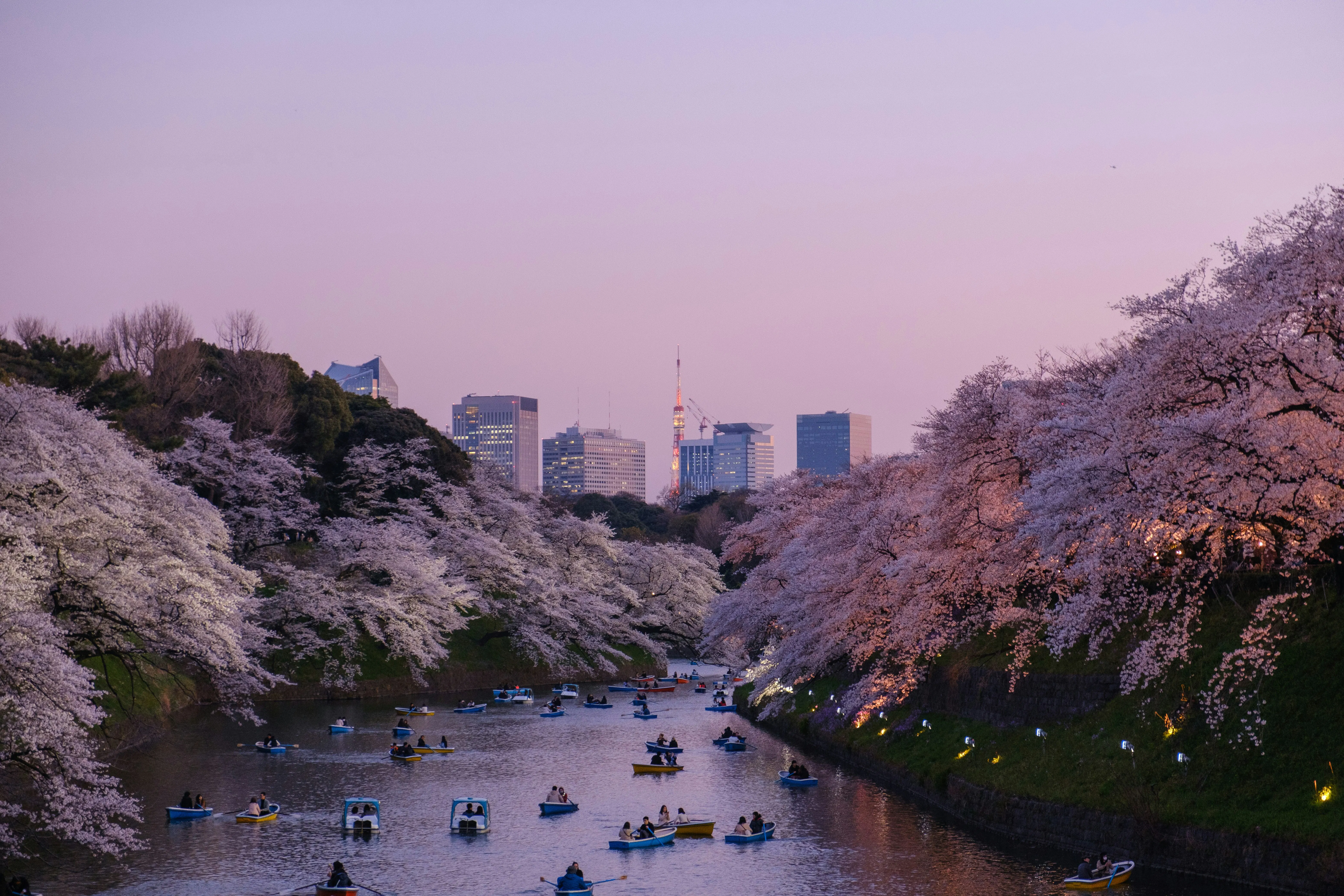
The tradition of enjoying and appreciating the fleeting cherry blossoms in bloom also has a term: hanami, an activity captured in Japanese art for centuries. Hanami was first written about in The Tale of Genji, the Japanese classic from the 11th century. It describes the leisurely ritual of gathering under the blooming trees to picnic and marvel at their beauty, reserved for the elites of society at the time. In fact, the symbol of the cherry blossom was especially profound for the samurai, the Japanese warrior class that existed until the Meiji Restoration in the 1870s.
"For the samurai, cherry blossoms held a special meaning," said Mark Hinton, Head of Japanese Works of Art at Sotheby’s. "Their short, yet glorious bloom aligned with the warrior's code of Bushido, emphasizing honor, courage, and living life to the fullest. Fallen cherry blossoms symbolized the end of the lives."
Related: Ukiyo-e: The Art of Japan
By the 17th century, with the reorganization of society under the Tokugawa shogunate, ukiyo-e (meaning "floating world") art emerged to depict contemporary life. During the Edo period (1603-1868), hanami became an activity for all people, not just the highest echelons of society. In the early 18th century, more cherry blossom trees were planted so their blooms could be enjoyed by larger numbers.
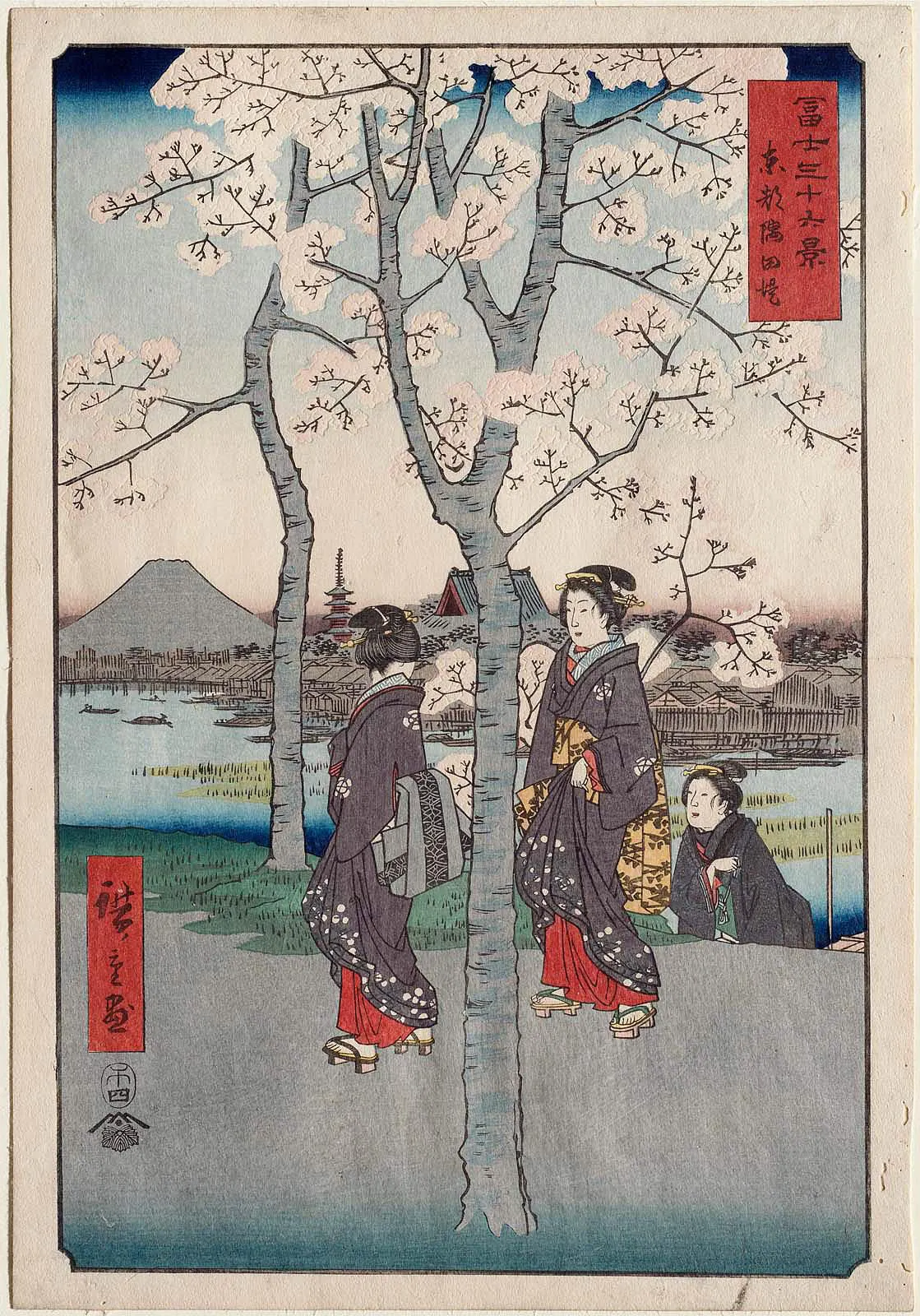
Throughout the 19th century, prominent ukiyo-e artists portrayed Japanese flora and fauna, particularly the cherry blossom, with rich colors and exquisitely detailed scenes.
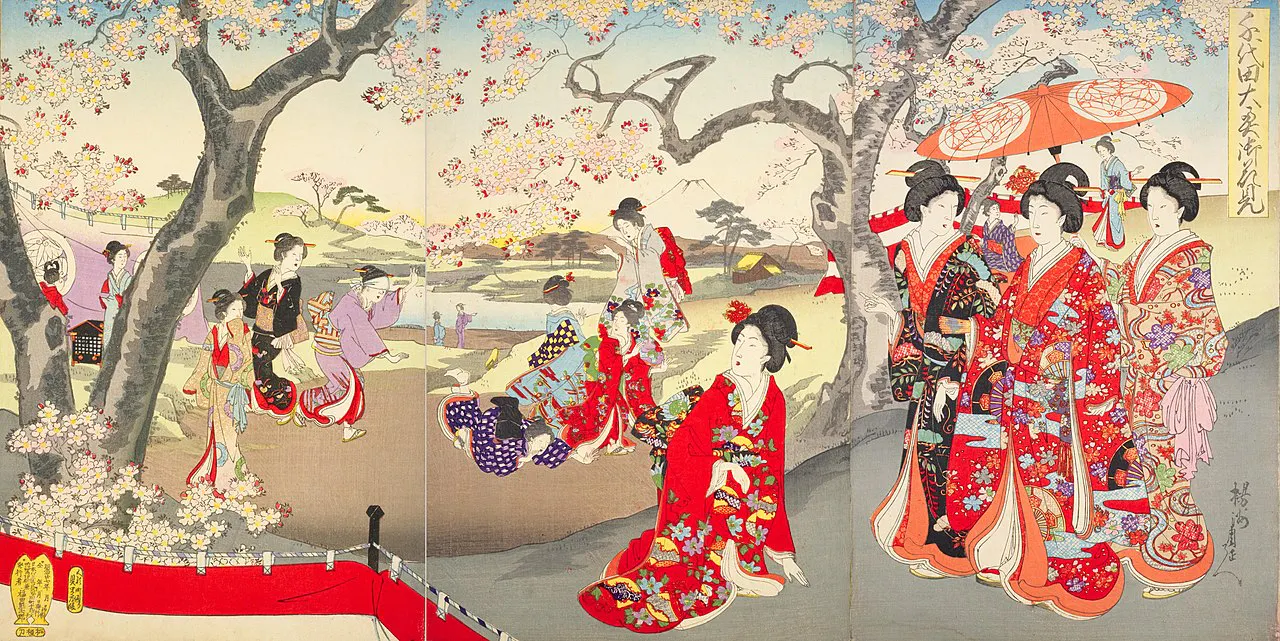
"The tradition of ‘hanami’, or ‘flower-viewing’, goes back centuries and features often in Japanese art, including 18th– 20th century paintings and woodblock prints," says Hinton. "Underneath cherry branches bending under the weight of blossoms, families and friends would gather for picnics and appreciate the fleeting beauty."
A time of revelry, the hanami tradition became an annual gathering with music, dance, food and sake under the soft petals of the cherry blossom trees. The leading masters of ukiyo-e expressed the importance of the cherry blossoms and hanami in their art, as found in Hiroshige's Cherry Blossom Viewing at Asukayama (1832) and Evening Cherry Blossoms at Gotenyam (1831) and Chikanobu's Chiyoda Great Interior Flower Viewing (1894).
Related: For Sake's Sake: A Japanese Nectar
In 1853, after the 200-year Dutch trade monopoly with Japan ended and the country opened up to the rest of Europe, the art of Japan spread rapidly in the West, a phenomenon known as "Japonism." Ukiyo-e was collected by artists like Vincent Van Gogh (he even directly copied many of Hiroshige's works), Claude Monet, James McNeill Whistler and Mary Cassatt. Whistler even used cherry blossoms in one of his paintings that shows a young girl handling potted cherry blossom branches.
Related: How Japanese Art Conquered Europe

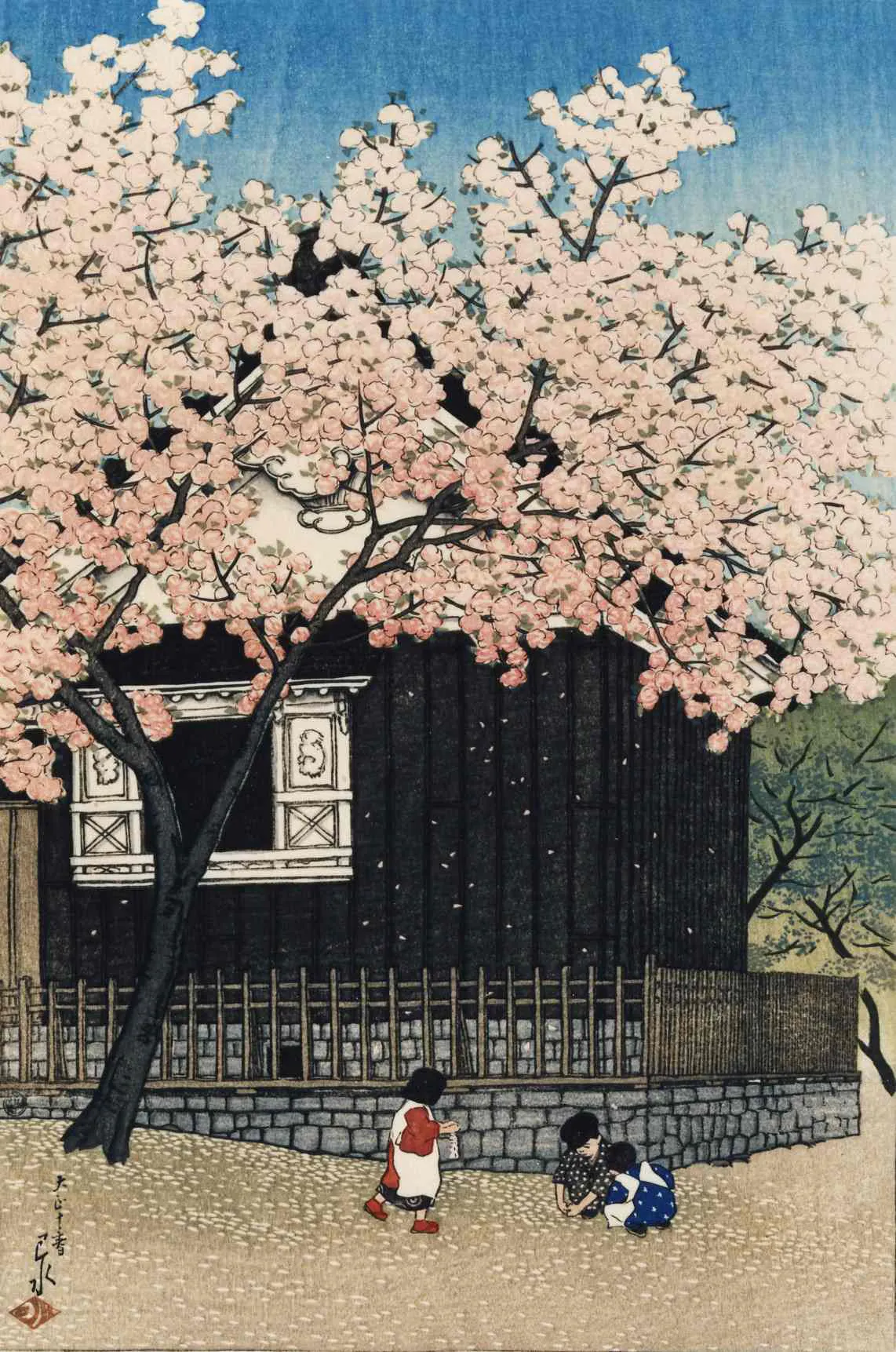
Ukiyo-e was considered archaic in Japan by the early 20th century, but the West was increasingly intrigued by Japanese art. In 1915, the shin-hanga ("new prints") movement, which were modern interpretations of traditional ukiyo-e, started to cater to the Western fascination with ukiyo-e prints.
Related: Paul Jacoulet: French Master of Japanese Prints
Hasui Kawase was one of the top shin-hanga artists, creating over a thousand prints. He was deemed a Japanese "Living National Treasure" in 1956. Tsuchiya Koitsu, who was known for his expert handling of light and shadow, was also a leading master. Cherry blossoms were a common motif in their shin-hanga prints, reflecting the timeless wonder of seeing the cherry blossoms in full bloom.
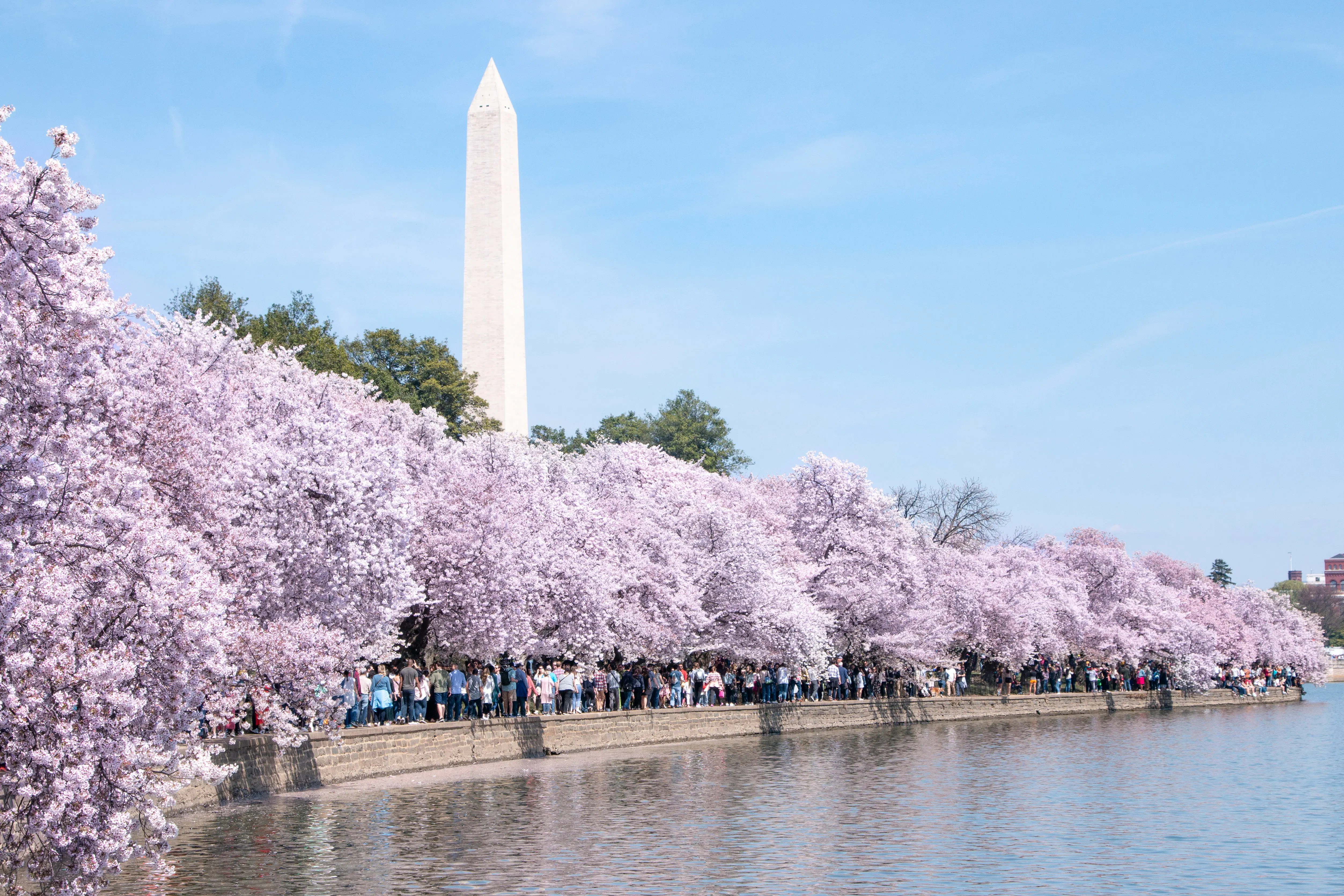
In March of 1912, Japan gifted 3,000 cherry blossom trees to the United States to be planted around the Tidal Basin in Washington, DC as a symbol of Japanese-American friendship. Since 1934, the Cherry Blossom Festival has been held in DC to commemorate the Japanese gift and to celebrate hanami, bringing millions to the nation's capital to enjoy the cherry blossom trees and the beginning of spring. Hasui Kwange was commissioned to design the 1935 poster for the Cherry Blossom Festival, portraying the cherry blossoms by the Washington Monument in the traditional ukiyo-e style.
Want more articles like this straight to your inbox? Subscribe to our free newsletter here!
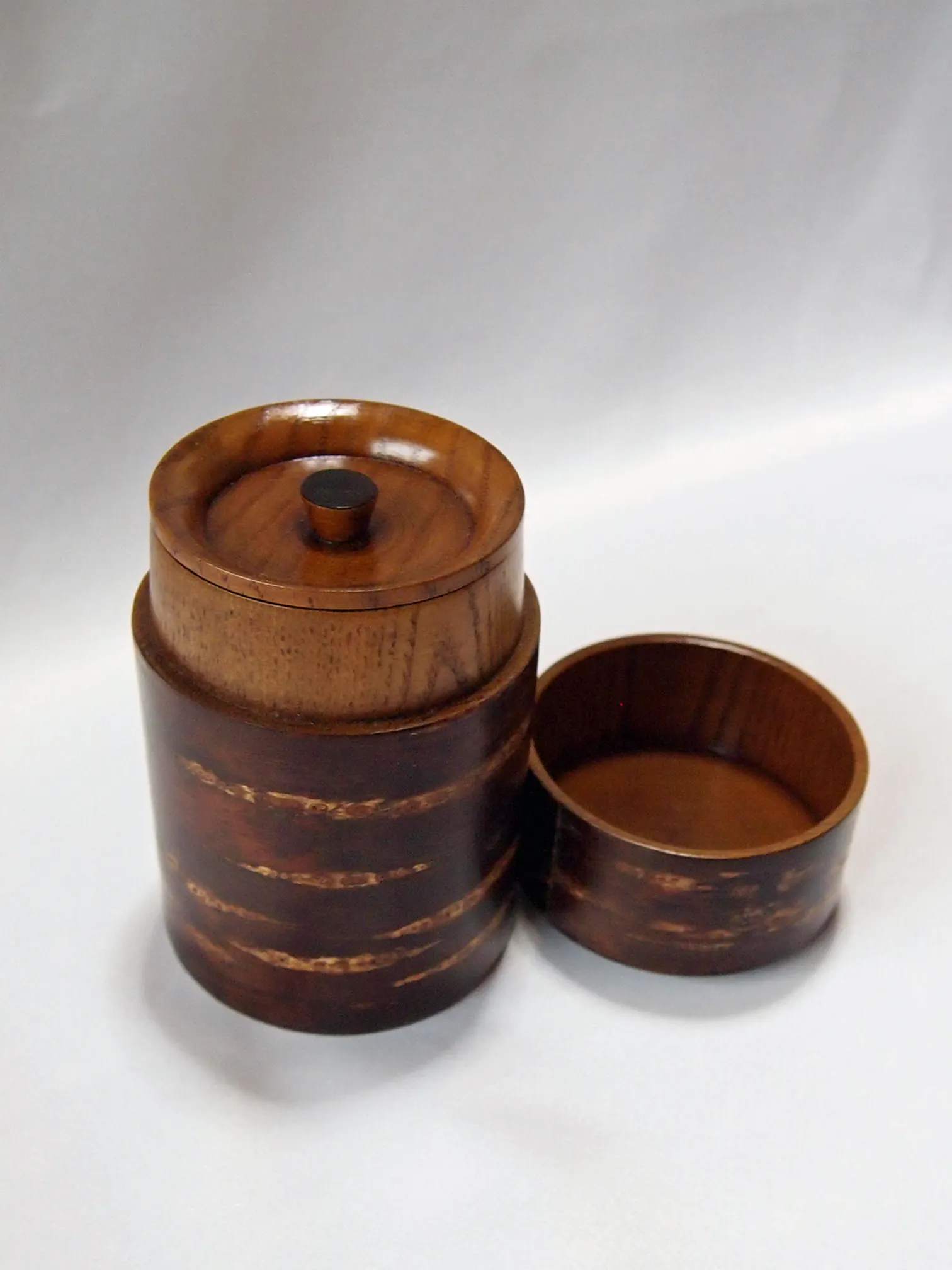
However, the art of the cherry blossom wasn't just found in prints. For centuries, Japanese craftspeople have used the bark of the cherry blossom trees to create wooden artworks called kabazaiku, such as small tea and tobacco boxes. The intensive ten-stage process required slender slices of bark to be applied to the wooden container using sap from the tree as an adhesive. Often the finished product would be decorated with carved motifs of cherry blossom flowers. As the cherry blossom was also associated with feminine beauty, the flowers have been used as a popular pattern for women's kimonos for centuries.
Related: Kimono: The Japanese Dress On and Off the Screen
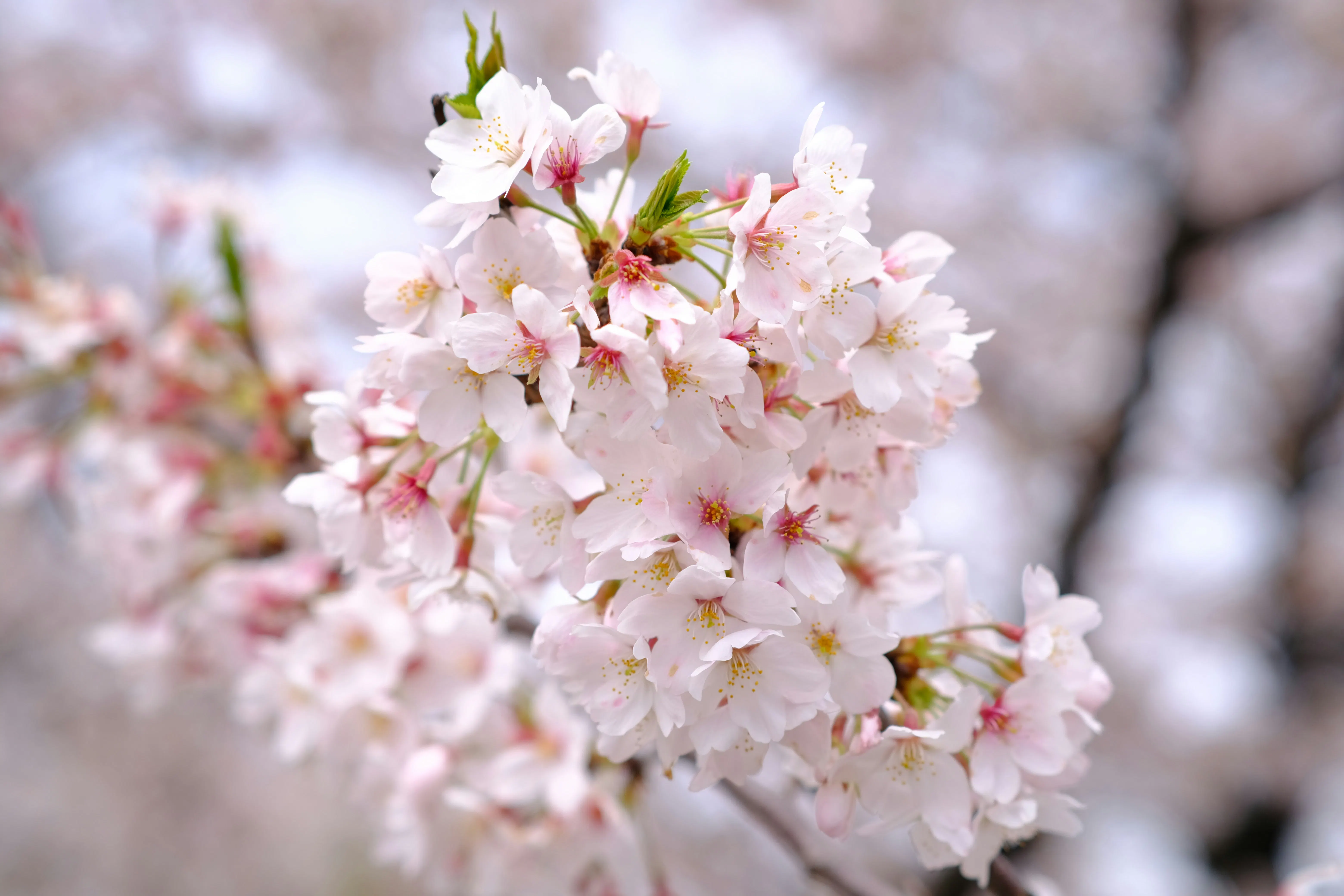
The bloom of the cherry blossoms in Japan continues to draw high tourist numbers, making the spring the most famous and busiest time to visit. While the bloom may be brief, and a trip to Japan too far, you can enjoy the beauty of the cherry blossoms all year-round by finding a Japanese print or wooden treasure depicting the art of sakura on Barnebys!