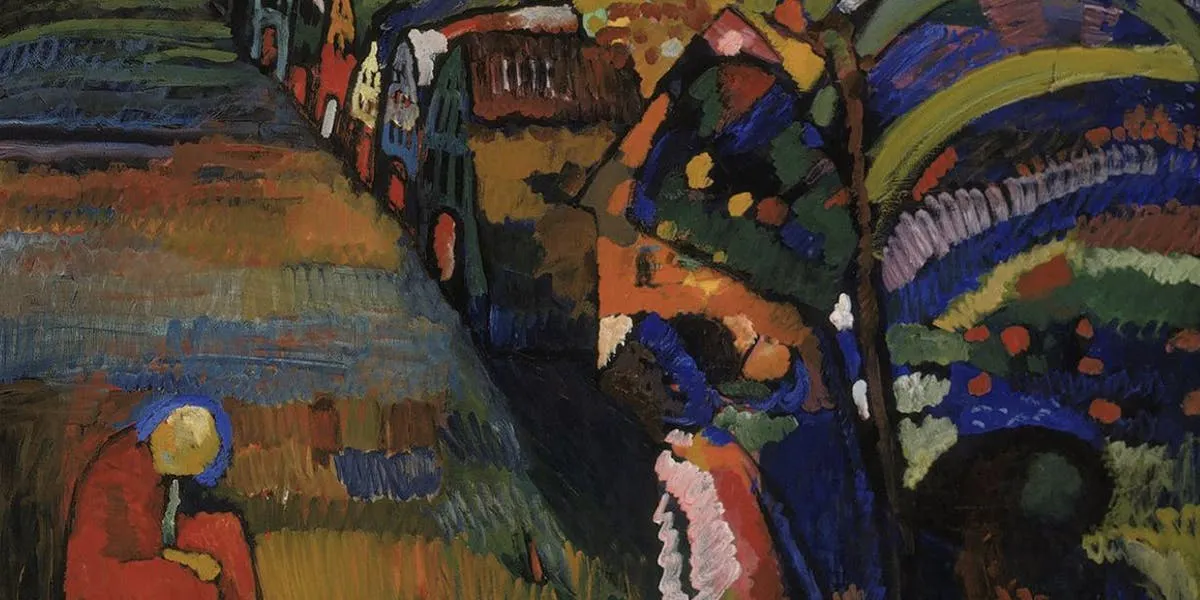
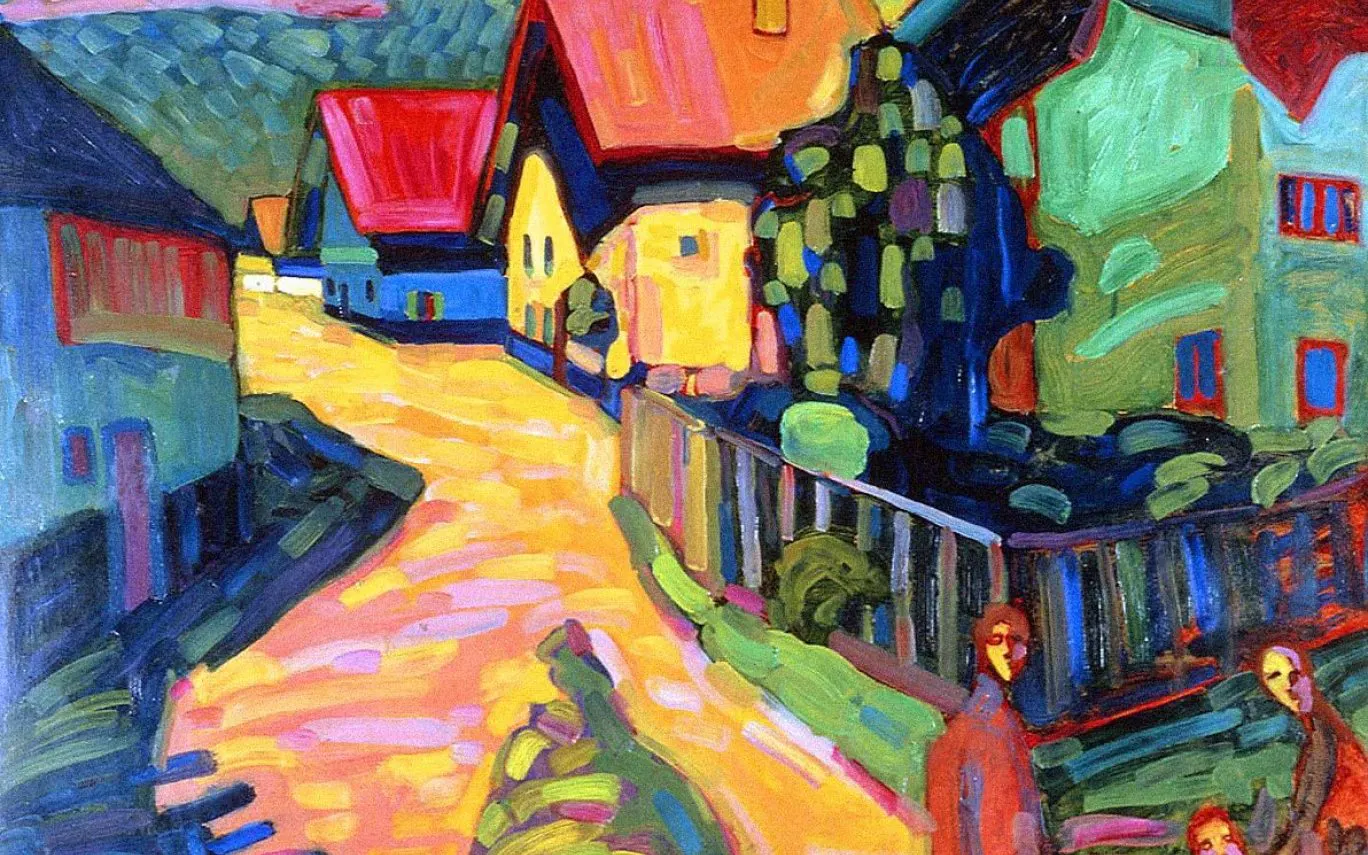
In August 2021, the city of Amsterdam voluntarily returned the oil on canvas Painting with Houses, created by Wassily Kandinsky in 1909, to the heirs of its former Jewish owners. This ended a complicated restitution case that had been ongoing since 2013, after both the Dutch Restitution Committee and a court had previously spoken out against its return.
Related: Amsterdam Returns Kandinsky Painting to Heirs
But an almost identical case of restitution had existed since 2015 at the Lenbachhaus in Munich and had remained undecided until now.

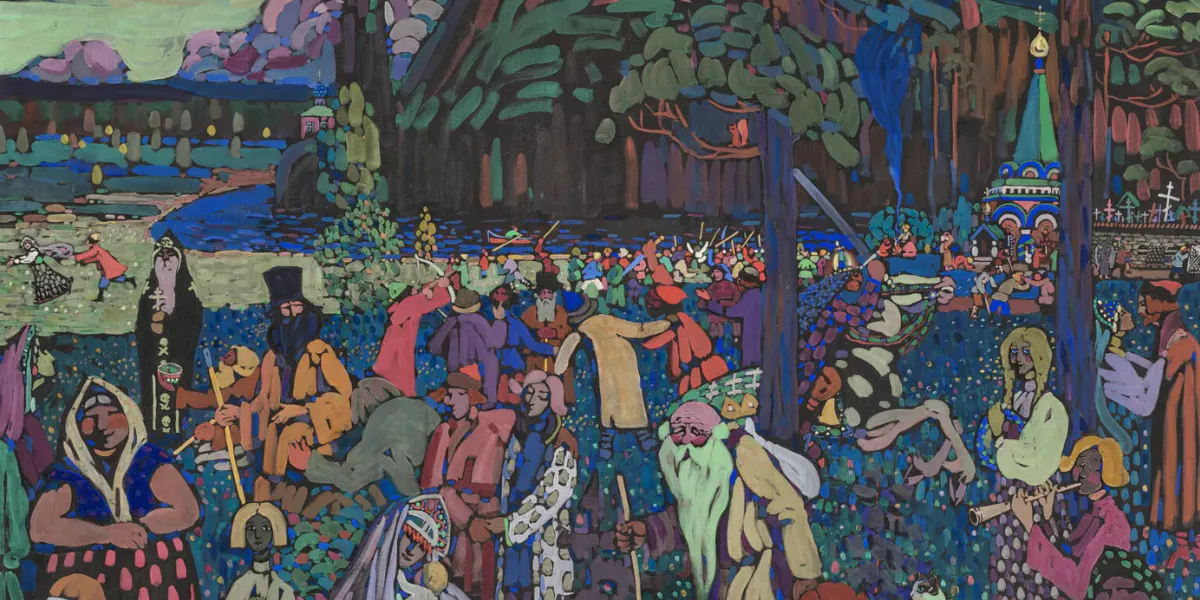
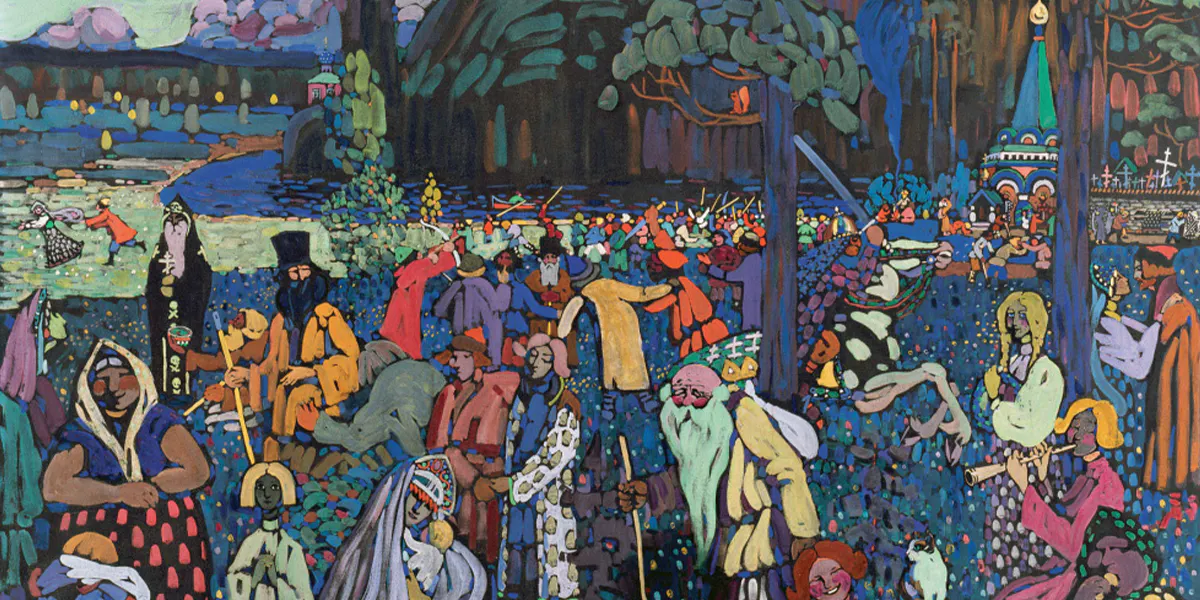
Like Painting with Houses, the work Das Bunte Leben (Colorful Life), painted two years earlier, was once owned by the Dutch-Jewish factory owners Emanuel Albert Lewenstein and Hedwig Lewenstein-Weijermann and was auctioned off in Amsterdam at the beginning of October 1940, when the Netherlands had already been occupied by National Socialist Germany for five months. Emanuel Albert and Hedwig Lewenstein were no longer alive at this time, and at the time of the auction, the painting was in the possession of their children Robert and Wilhelmine. The two heirs, however, had already emigrated to the USA and Mozambique, and only Robert's wife Irma was still living in Amsterdam.
Related: Wassily Kandinsky: 10 Facts to Know
One month before the auction, Colorful Life, which was on loan to the Stedelijk Museum, was picked up by the art dealer Abraham Mozes Querido and sold to the real estate agent and art collector Salomon B. Slijper. Slijper had to go into hiding in the following years, and the painting remained in the Stedelijk Museum's depot, and was then part of the display there on an official loan from Slijper from 1957 to 1963. Until the death of Salomon B. Slijper in 1971, it was then on display at the Gemeentemuseum Amsterdam. The painting was then sold by Slijper's widow, which brought it into the possession of the Bayerische Landesbank and on loan to the Lenbachhaus.
Want more articles like this delivered straight to your inbox? Subscribe to our free newsletter!
The lynchpin of this restitution case is the question of whether Irma, who was separated from Robert Lewenstein, actually consigned the painting at auction voluntarily or whether she was forced to sell under the pressure of Nazi persecution. According to the assessment published on Tuesday by the Advisory Commission on Nazi Looted Property (also known as the Limbach Commission), which is entrusted with the case, there was no evidence whatsoever that the consignment was voluntary. The commission thus recommended the restitution of the Kandinsky painting to the Lewenstein community of heirs.
Colorful Life of 1907 is an early major work by Wassily Kandinsky and also a key work that marks his turn towards abstraction and forms the conclusion of a group of works for which Kandinsky drew inspiration from old Russian motifs, such as the famous fairy tale illustrations by Ivan Yakovlevich Bilibin. His style was also influenced by Pointillism and the Fauves. Colorful Life was created during one of Kandinsky's stays in Sèvres, France. The following year, Wassily Kandinsky and his partner Gabriele Münter spent the summer in Murnau am Staffelsee for the first time – a stay that was to change Kandinsky's painting style forever.