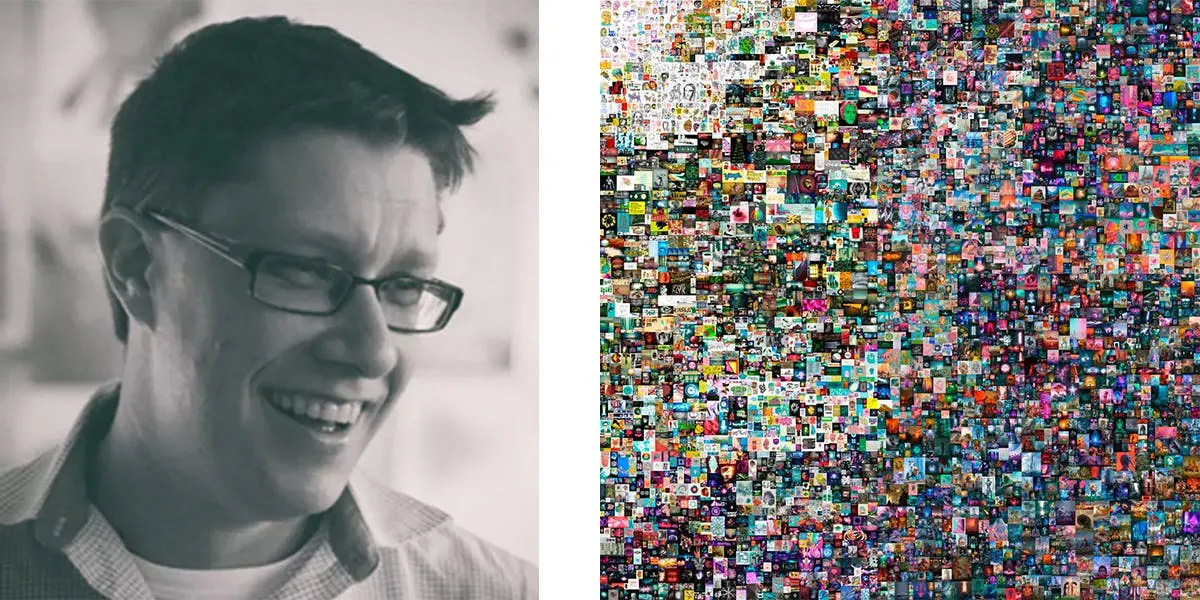
![Beeple, ‘Everydays: The First 5000 Days’, 2021, digital [detail]. Photo © Christie’s](https://images.prismic.io/barnebys/560126fa-fbd6-4c97-bb3c-8de6186f8924_Beeple-2.jpg?auto=compress,format)
After a storm of bidding in the final few minutes, the digital artwork Everydays: The First 5000 Days by the artist and animator known as Beeple sold for an astounding $69,346,250 in front of 22 million viewers on March 11, 2021. This sale propelled Beeple to the position of third most expensive living artist, behind Jeff Koons and David Hockney. It smashed the record for the most expensive digital piece ever sold, and also became the first purely digital piece auctioned by Christie’s. This major name, as well as the major price tag, validates the sale of digital works on the art market. The low costs normally associated with digital pieces (no photography, storing, handling or insuring required) make them incredibly attractive to auction houses.
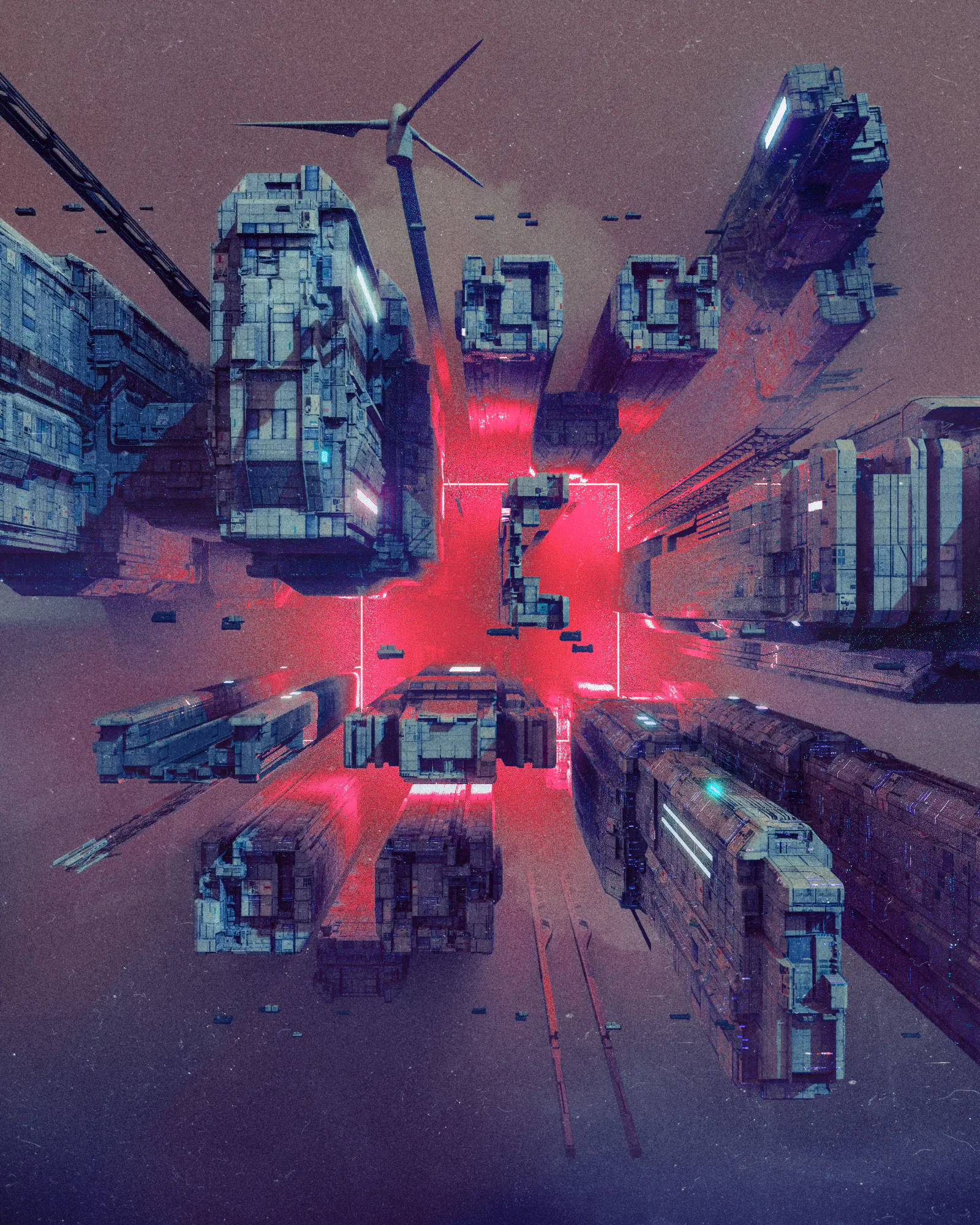
Beeple, whose name is Mike Winkelmann, lives in South Carolina and has previously collaborated with iconic names such as Louis Vuitton, Katy Perry and Justin Bieber. This was not Beeple’s first record for a digital art sale – in February 2021 his animated video entitled Crossroad sold for $6.6 million, mere months after the seller, the Miami-based art collector Pablo Rodriguez-Fraile, had purchased the piece for about $67,000.
Related: The 10 Most Expensive Living Artists
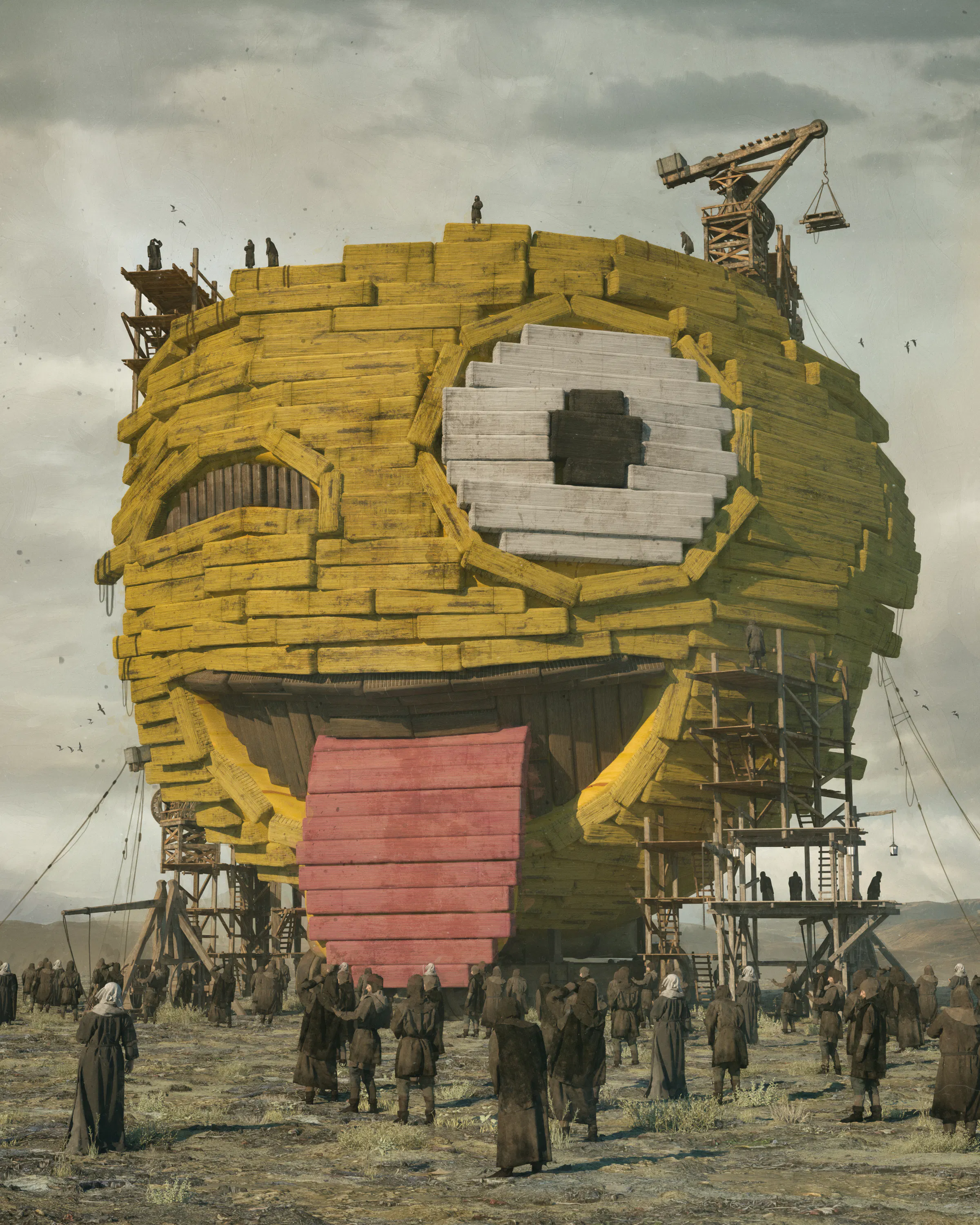
If you’re curious how images and videos that can be screenshotted and downloaded by anyone with an internet connection can achieve such high prices, you’re not alone. Everydays was minted as an NFT (‘non-fungible token’), which means that it is digitally unique, and although you can trade it for cryptocurrency or another type of token, you’ll be getting something entirely different. Similar to Bitcoin and other forms of crypto, NFTs are secured by blockchain technology. A blockchain is basically a digital ledger that records sales, giving buyers proof of authenticity and ownership and creating a sort of virtual provenance that cannot be copied or forged.
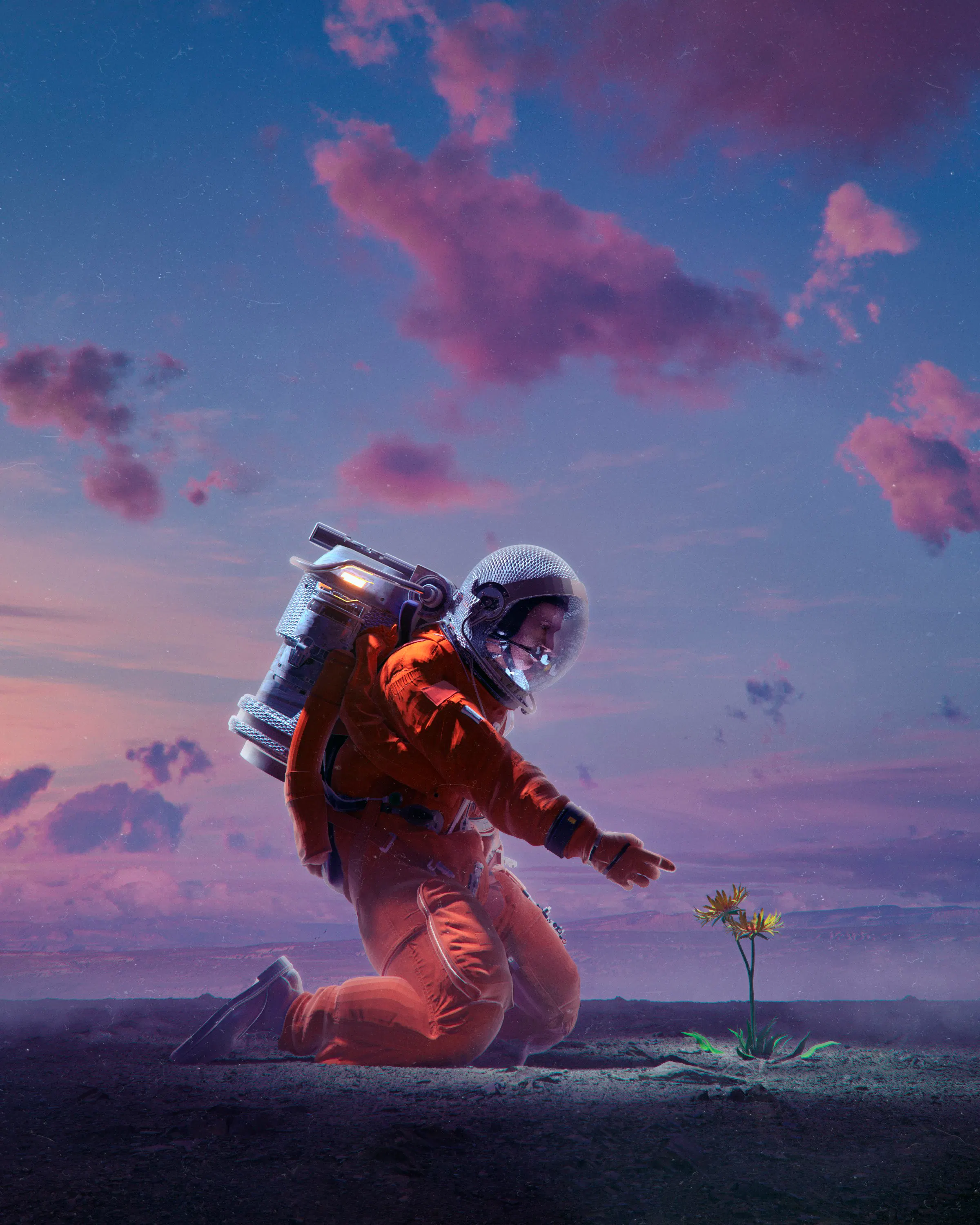
Before NFTs existed there was no way to truly own and collect digital art, but now blockchain technology has made it possible for digital artists to claim a place in the art market. Artists retain the copyrights to their work after it is sold, but they create artificial scarcity by only making one NFT of a certain work with a unique signature, much like signed limited-edition prints. The value of NFTs lies in the collective agreement that a digital file can be authentic, and that an authentic file is worth more than one that isn’t. Sure, you can download Everydays: The First 5000 Days right now and save $69.3 million, but you don’t own the real deal. Think of it as the difference between owning a reproduction of van Gogh’s Starry Night and owning the original. Related: The 11 Most Expensive Photographers
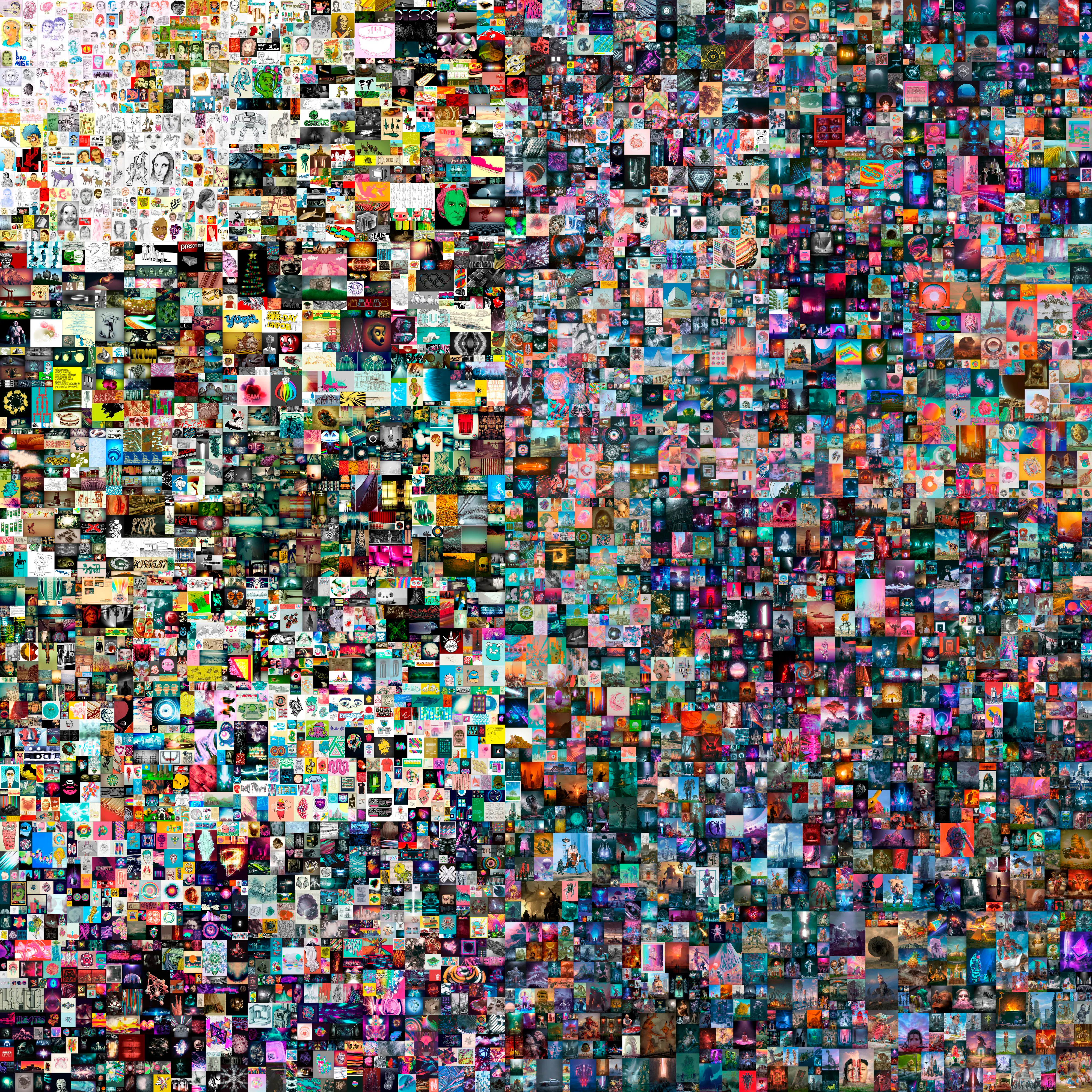
Everydays: The First 5000 Days is a compilation of Beeple’s work from the last thirteen and a half years, a consecutively-ordered mosaic of the artwork he created and posted online every day since May 1, 2007. It traces the development of his style, beginning with hand-drawn cartoons that he scanned and uploaded before he switched to digital art and began experimenting with new software through abstract pieces. He later entered a fantastical sci-fi phase, before turning to the more carefully rendered political and social satires for which he is recognized today.
Everydays functions as a sort of digital sketchbook as well as a time capsule, displaying Beeple’s progression as an artist while also demonstrating the hugely increased capabilities of digital technology from 2007 to the present day. The buyer, Metakovan, identifies this lengthy process as part of the work’s success and value. “Techniques are replicable and skill is surpassable, but the only thing you can’t hack digitally is time,” he stated.
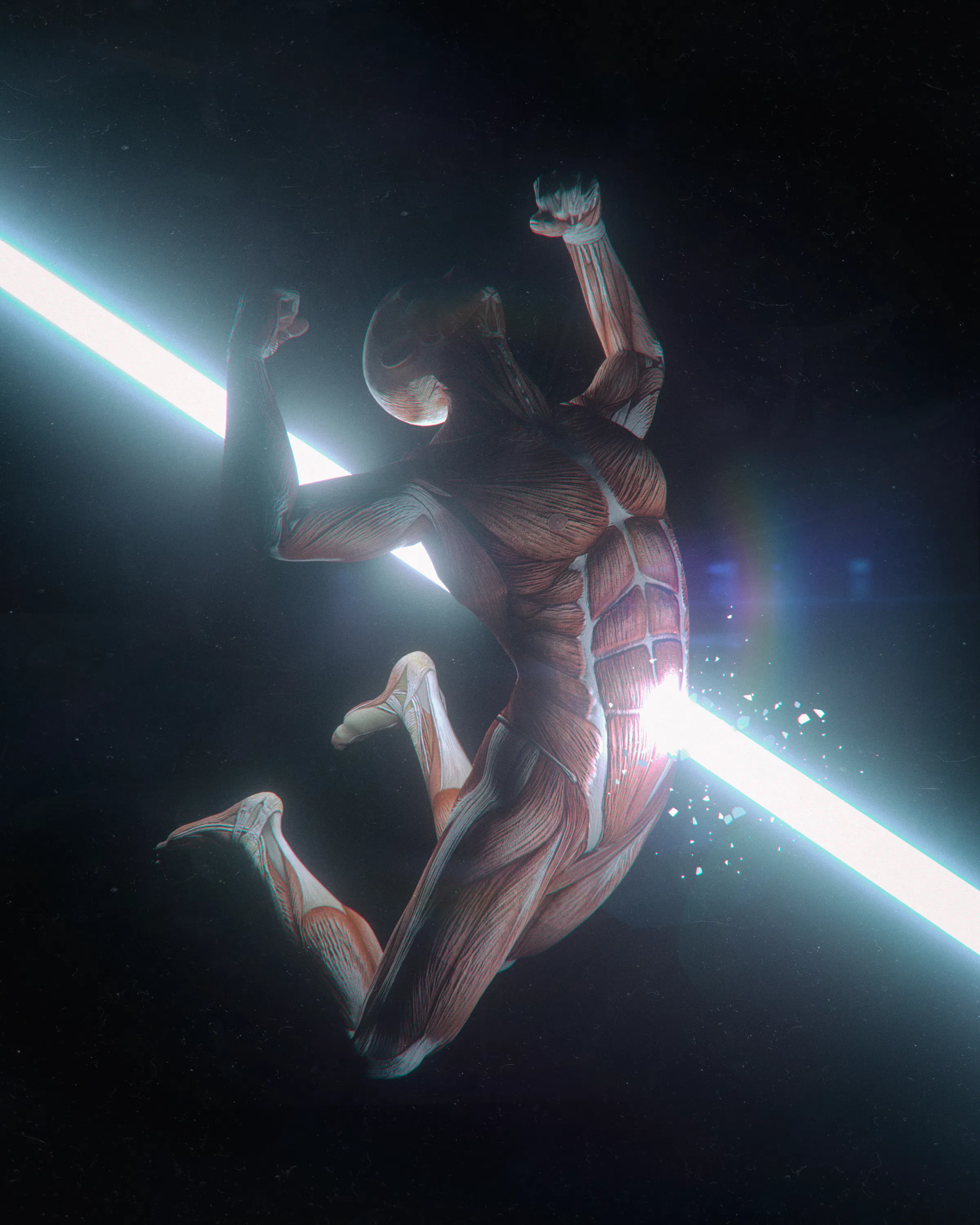
Metakoven is the founder and financier of Metapurse, an NFT production studio and the largest NFT fund in the world. Art investments and purchasing shares of physical art is nothing new, but NFTs and crypto have opened up more possibilities for investment. Metakoven previously bought twenty other digital works by Beeple, divided the ownership into 10 million discrete ‘tokens’ called B.20, and sold about 25% of them to the public while maintaining ownership of around 50% of the tokens.
Related: Will Blockchain Revolutionize the Art World?
Investors, cryptocurrency enthusiasts and art collectors alike jumped on the opportunity to purchase B.20, and their value grew exponentially as the hammer price for Everydays climbed. Today, the B.20 tokens are about 41 times more valuable than when they were released in January, and, by the time he placed the winning bid in the Christie’s auction, Metakovan’s own shares in B.20 had risen by around $51 million.
Art investment has always been a touchy subject in the art world. There are those who believe purely in ‘art for art’s sake’ and those who are primarily interested in financial gain, with most people falling somewhere in between. NFTs walk a fine line between art and currency, but in doing so they attract a wide range of parties. The underbidder for Everydays was Justin Sun, the founder of the blockchain company TRON. Many people who bought B.20 tokens from Metakoven were avid collectors hoping to get in on the future of art collecting.
Related: The True Value of Art
Cryptocurrency is experiencing a huge boom, and artists who work in all different media are experimenting with selling their work as NFTs. The painter and digital artist Trevor Jones has also found success through creating NFTs, although his works have not yet sold at auction. The musician Grimes sold around $6 million in digital art tokens on Nifty Gateway in February 2021, and her husband, Elon Musk, wrote a song about NFTs that he planned to release and sell as an NFT. The band Kings of Leon released their newest album, When You See Yourself, in NFT form on March 5, 2021, becoming the second group to do so after the Canadian artist Clarian released an NFT album the day before. The founder of Twitter, Jack Dorsey, is even selling his first tweet as an NFT for a charity auction.
Pontus Silfverstolpe, co-founder of Barnebys, says: "Digital art has existed nearly as long as computers have, but we are now witnessing a turning point in how digital art is quantified. It is the newest commodity in the art market, and I think there will be discussions about which NFTs are art and which are simply online currency. I’m looking forward to watching it develop, and I hope that discussion in the long run will be more about artistic content rather than economic value.”
As NFTs become more ubiquitous, certain aspects of their creation need to be addressed. Currently, someone who uploads a work that they want to mint as an NFT does not need to prove that they are the artist or owner, and the anonymity of crypto transactions leaves room for theft and exploitation. “We must also realize that this market is rather unregulated and, to say the least, speculative. We will almost certainly see financial regulations around NFT art, similarly to what will likely happen with cryptocurrency”, Silfverstolpe added.
There are heated discussions about whether NFT art will take over the art market or if it will go back into the realm of cryptocurrency, but currently, interest in NFTs is at a fever pitch. Sotheby’s announced that they will partner with the digital artist Pak for their first NFT auction, on a yet undisclosed date. Whether sales of Everydays: The First 5000 Days’ magnitude will become the norm for digital artworks remains to be seen, but it has undoubtedly ushered in a new era for artists, auction houses and buyers alike.
Find more art and auction news with Barnebys Magazine
Article by Madeleine Whalen