
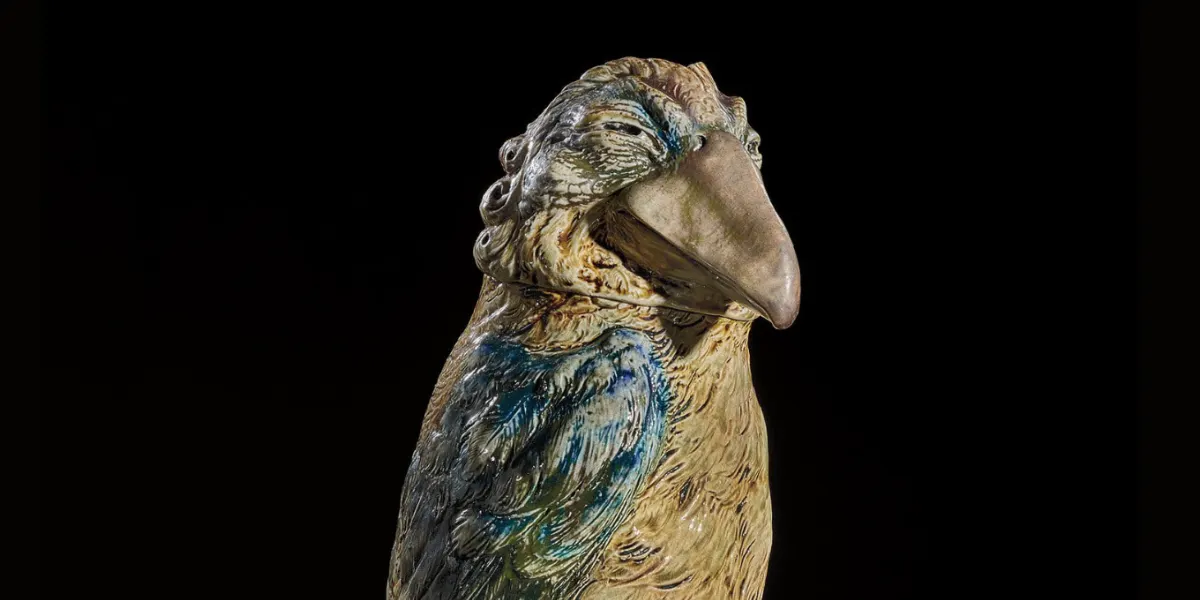
When The Martinware Pottery company reached the height of its demand in the 1890s, the pieces were adored by London's 'chattering classes'. Their anthropomorphic creations were modeled in a satirical punch-like manner on politicians and business figures, and commissioned by aristocrats such as Lord Faringdon and Sir William Drake.
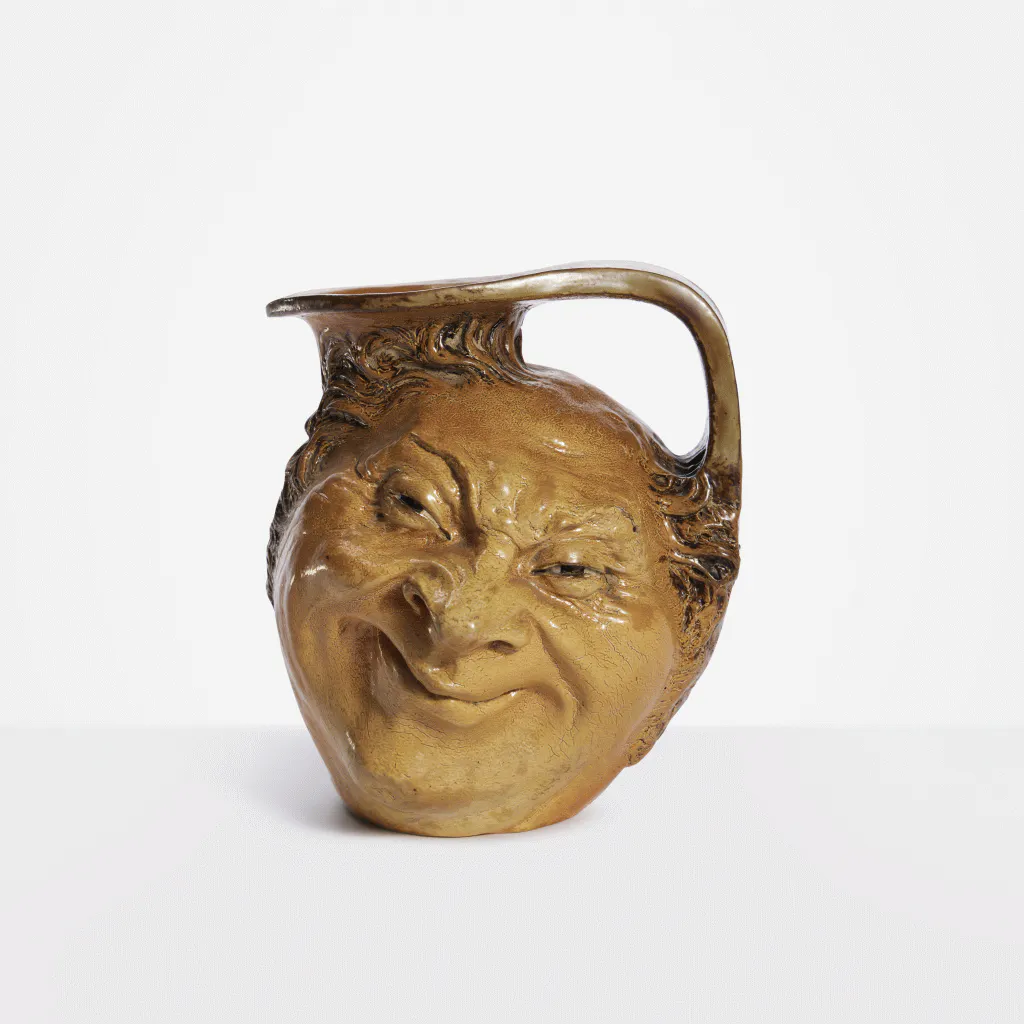
It all started in the 1870s when Robert Wallace Martin was an apprentice working on the Charles Barry redesign of the Palace of Westminster. Trained as a sculptor, Robert Wallace quickly became known for his grotesque-style models. In 1873, he founded the Martin Brothers Pottery in Fulham, where it remained until 1877, when the business was moved to Havelock Road in Middlesex.
Related: Ceramics 101: British Studio Pottery
Together with his three brothers Walter, Charles and Edwin, Robert Wallace produced a distinctive style of stoneware pottery now known as 'Martinware'. In their own days, Martinware was described as 'art pottery' – a category that is today better known as 'studio pottery'. The Martin Brothers are widely considered pioneers in the field, accredited with having led the transition from decorative Victorian ceramics to 20th-century studio pottery.
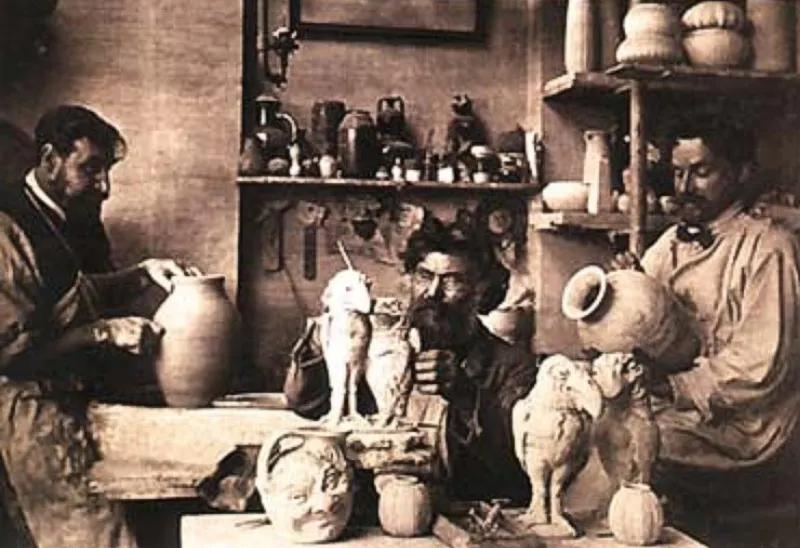
Within the business, Walter specialized in colored glazes and the wheel; Edwin was the thrower and decorator; and Charles managed the gallery at High Holborn. Having funded the Pottery, Robert Wallace was the self-appointed figurehead and principal sculptor.
Related: 5 Things You Didn't Know About Ceramics
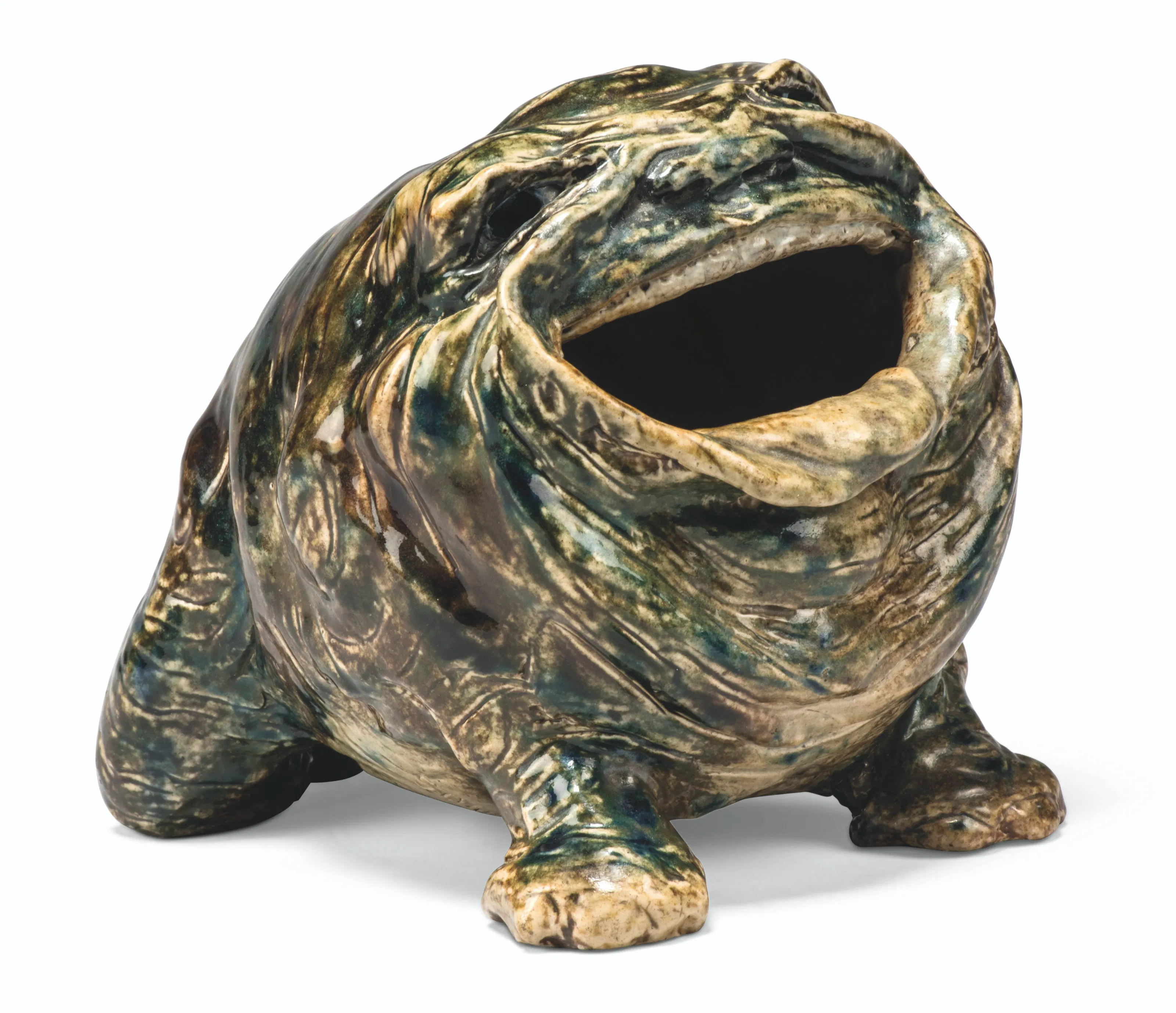
Martinware is best known for its gothic-inspired illustrative and sculptural works. The 'grotesques', modeled by Robert Wallace, come in a variety of forms of stoneware, such as vases, jars, water jugs, bowls, and small sculptures, and are usually reinterpretations of mythical creatures such as goblin faces, dragons, toads, fish, hedgehogs, salamanders, and gargoyles.
The 'Wally Birds', tobacco jars modeled as characterful birds, are the most famous of the Martin creations. The birds present sharp beaks, disproportionate feet, an upright posture, arched eyebrows and mischievous smiles, giving them anthropomorphic features that makes them a sort of playful caricature of their human audience.
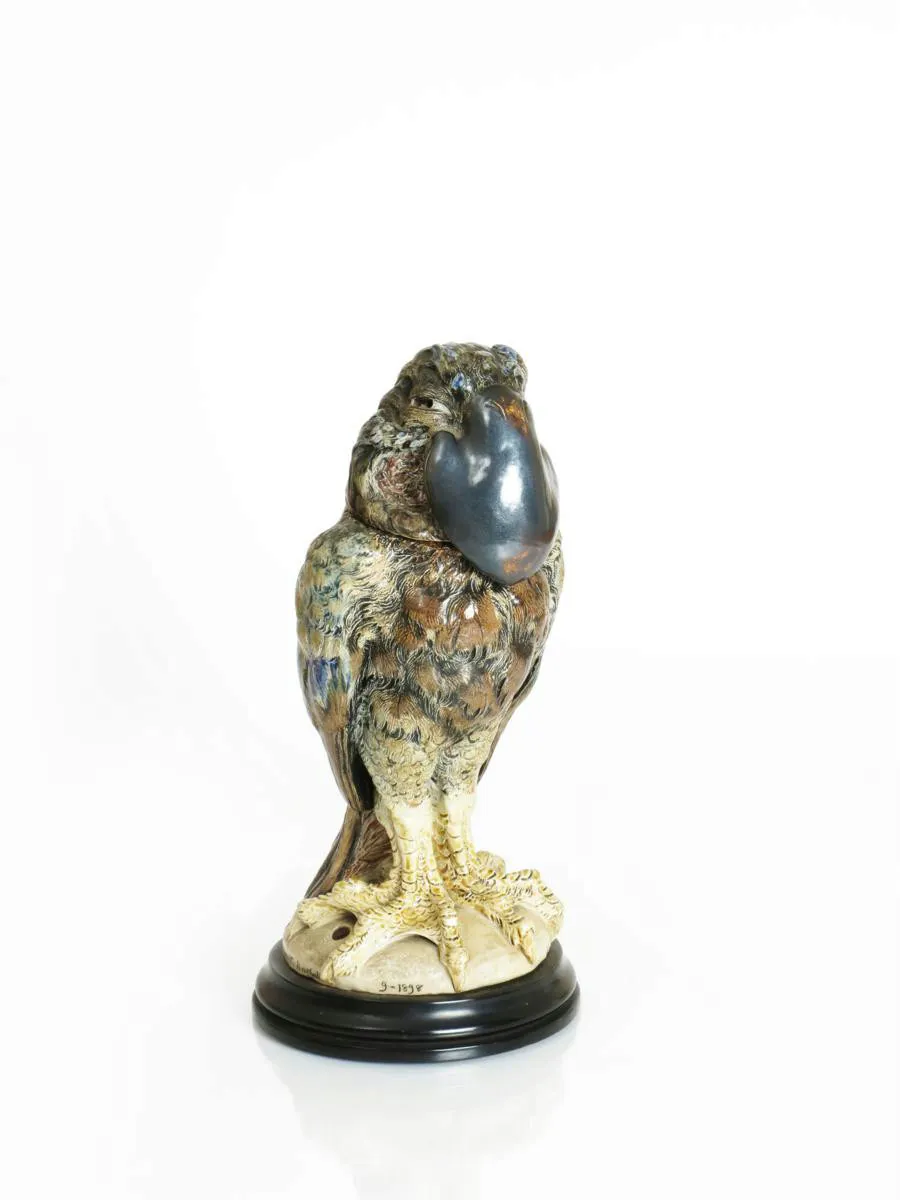
In the 1890s, when Martinware became most popular, special works were kept out of the public's gaze from within their gallery in Holborn and saved for the more exclusive clientele. In 1903, however, the gallery had to close due to a fire, and the pottery finally closed in 1914. In the later period of the Pottery, the designs had somewhat simplified, probably because of the influence of Art Nouveau.
Related: Tiffany Glass: Art Nouveau Illuminated
In the 1970s, Richard Dennis' selling exhibition of a superb collection of the Martin Brother's work helped to reignite interest. Dennis revived the aesthetic and commercial interest in the factory, and several other important international exhibitions followed. During this time, the appeal of the grotesques moved beyond the domestic market, and a large percentage of the Wally Birds was sold in overseas collections.
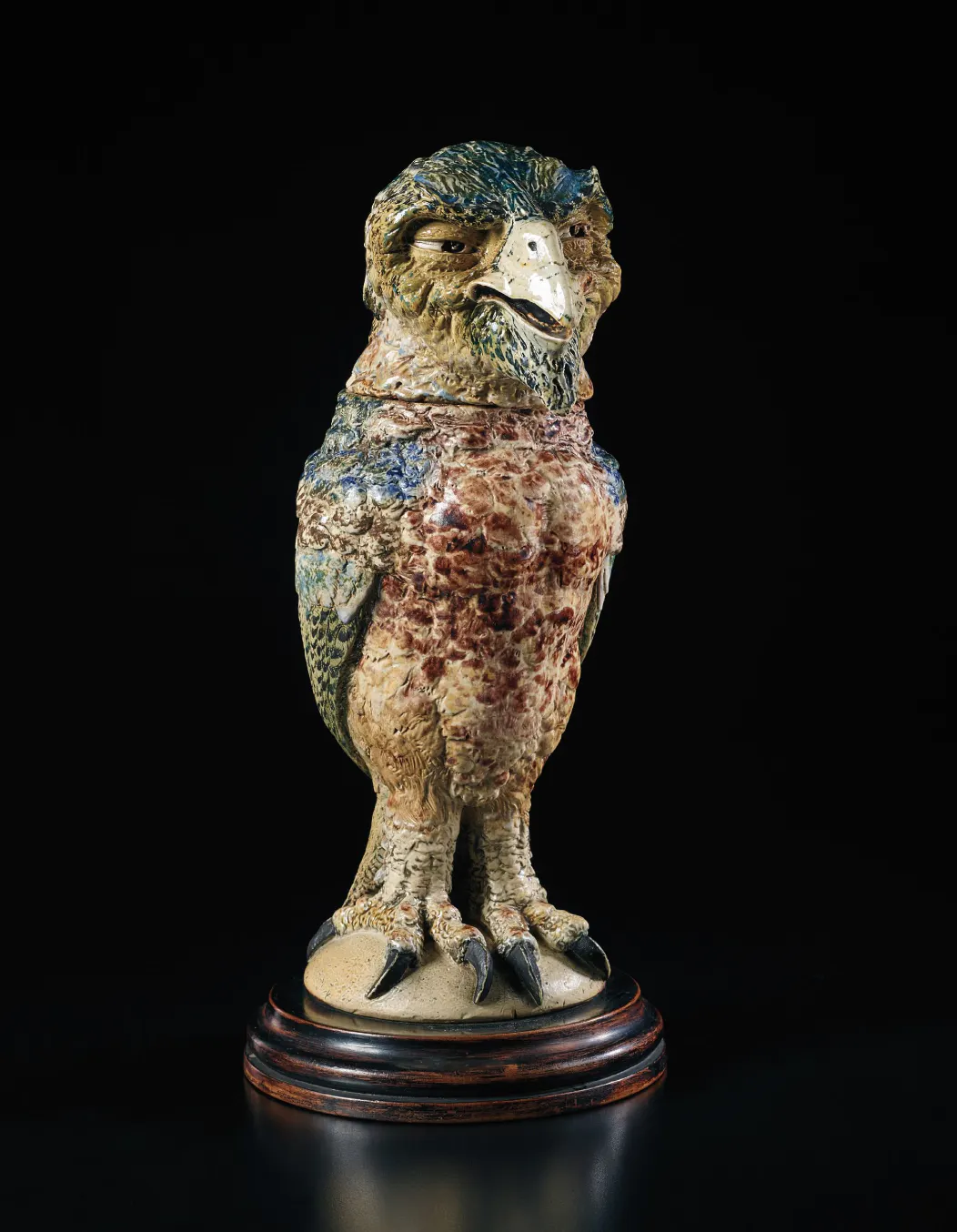
In the last 15 years, the Birds have been known to sell for six figures, tripling in price. In 2015, a record was set at Phillips in New York, with a Wally Bird jar from 1889, believed to be a caricature of Benjamin Disraeli, fetched $196,000. Another bird jar held the previous record from 1898, selling at Woolley & Wallis for £75,000 in 2014. The record for any creation of the Martin Brothers, however, goes to a grinning crab, which sold in 2018 at Phillips in New York for $275,000.
Related: 7 Paintings of London You Should Know
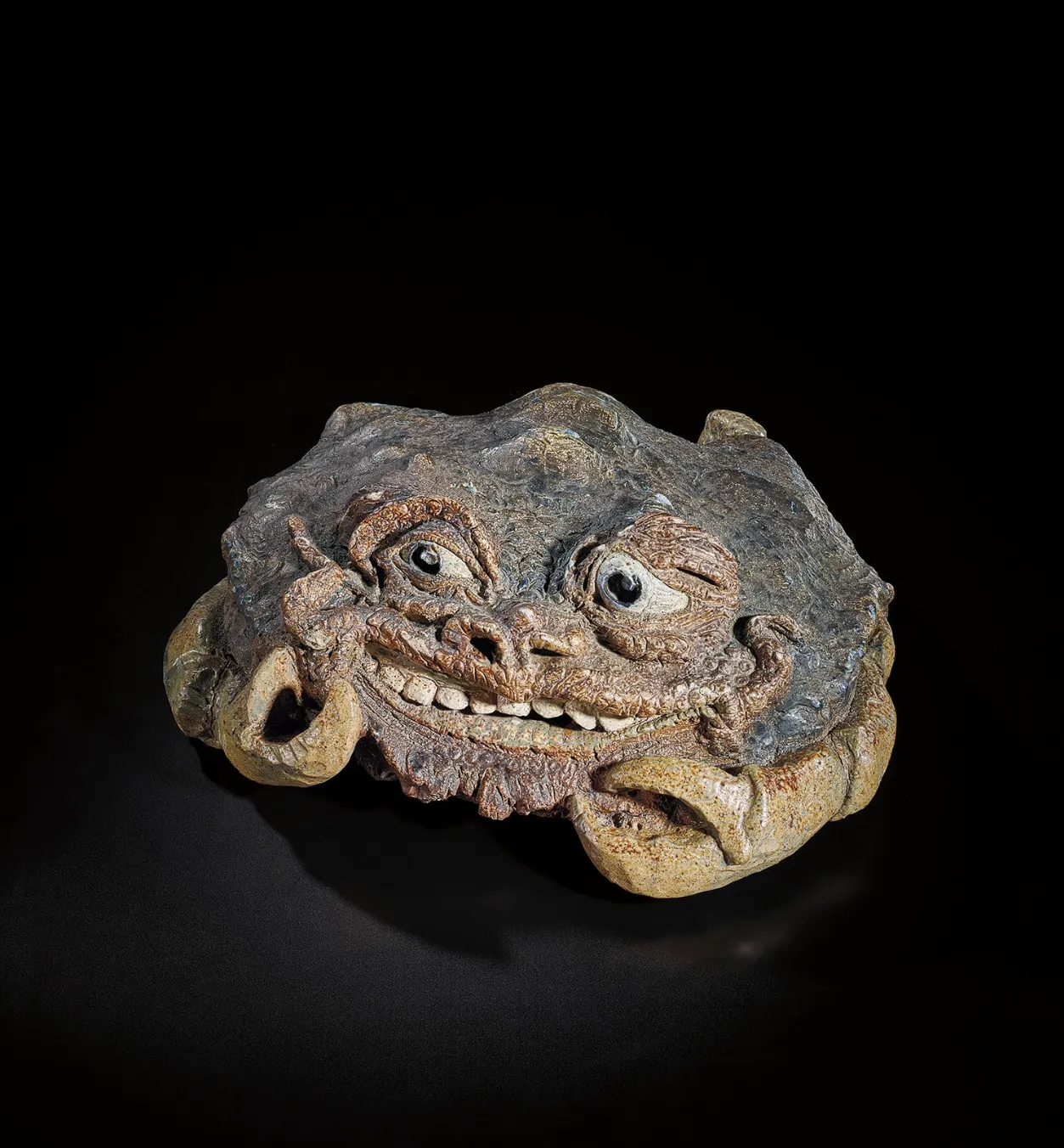
For the less rare pieces, more typical prices for bird jars and vases of substantial size range between $12,000 and $25,000.
Want to discover news artists and designers every week? Subscribe to our free newsletter!
Today, the rise in interest in the Arts and Crafts movement is a significant trend for British Ceramics, which have been historically undervalued against other objects such as works on paper and bronzes. Each bird, totally unique and hand-crafted by one of the founding fathers of the British Art Pottery Movement, is an important piece of British art history in clay.
