On Tuesday, April 19, hundreds of exciting antique weapons and militaria will be sold at Probus Auktioner. Find your favorite among the Swedish and international treasures.
Drabantvärja, Sweden, 1701
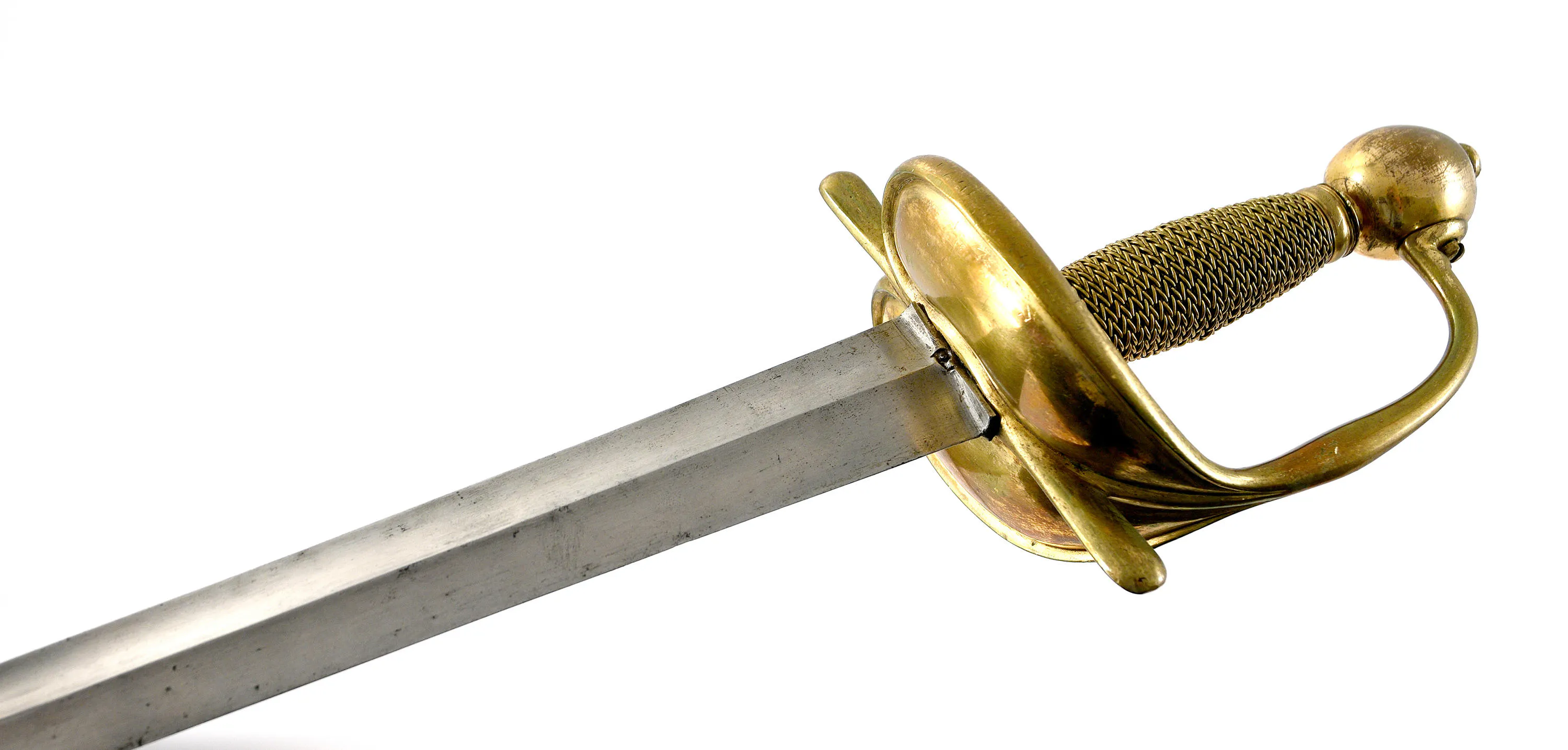
First up is a drabantvärja or Swedish sled sword from 1701. The 113-centimetre-long sword has a gilded brass attachment and a 97.5-centimeter-long blade with a P-stamp. Drabantvärjan could previously be found at the Tøjhusmuseet in Copenhagen. It is one of the swords that the Danes took to the Gottorp fortress during Tönningen's capitulation in May 1713. An identical copy was found in a Västmanland church in 2004.
Tschakå (Shako), Stockholm Citizenship, 1830s
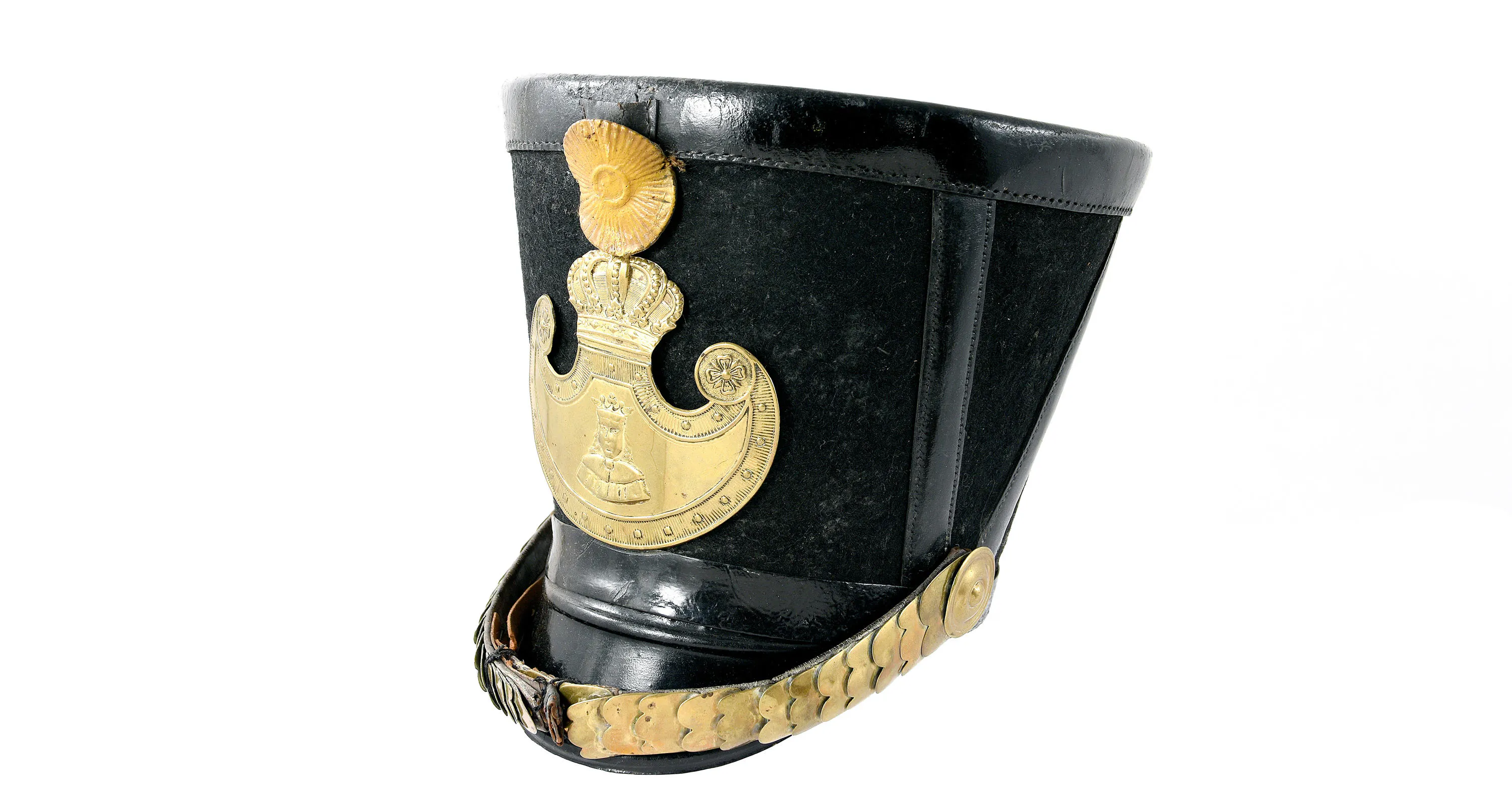
Here is a tschakå or shako (tall military cap) from the Stockholm Citizenship from the 1830s. The high cylindrical headdress has a brass emblem with Saint Erik on it. Tschakån was used in both the cavalry, navy and infantry. The headdress was introduced in Sweden in 1814 and maintained until 1845.
Riksdaler (coin), Fredrik I, 1746
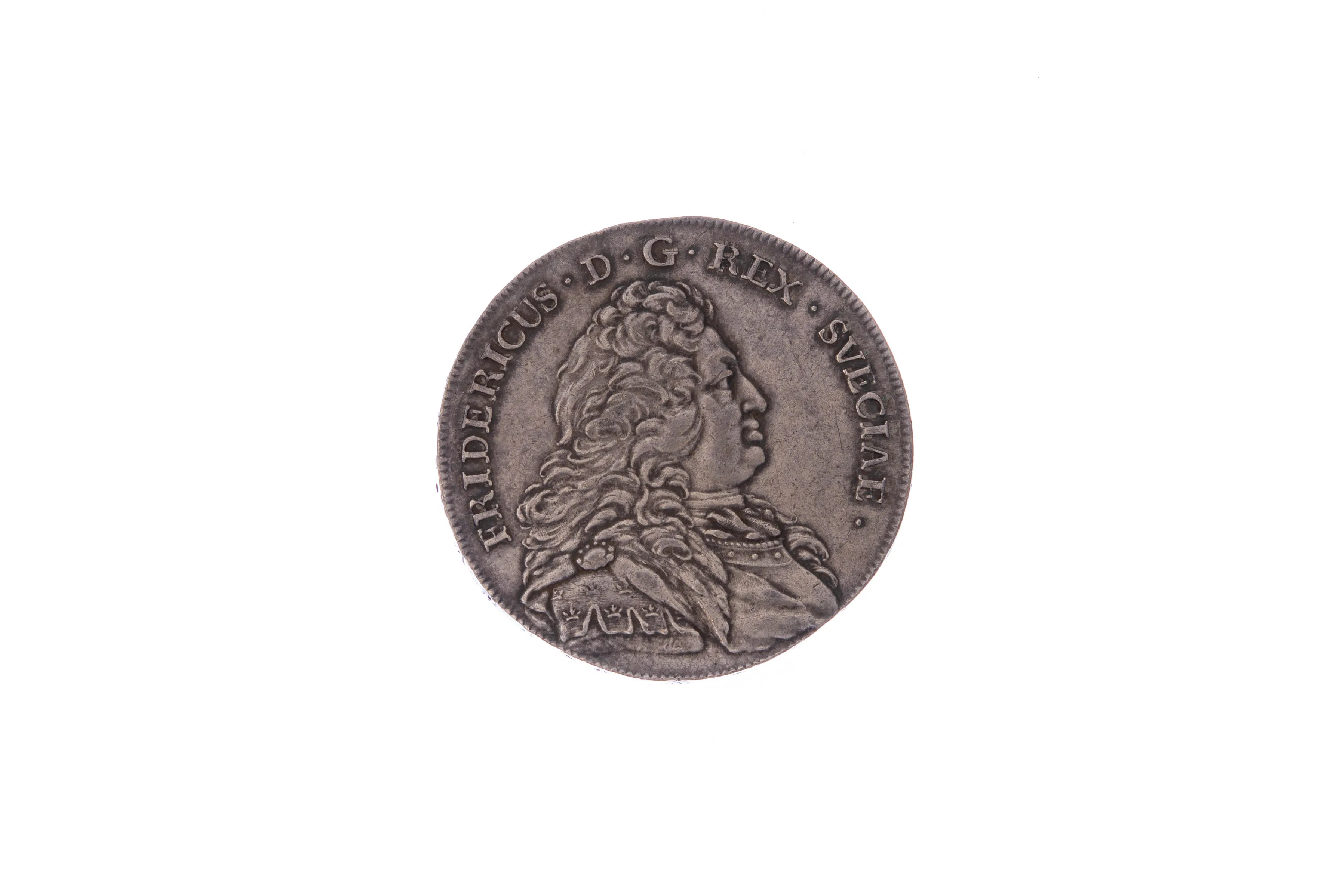
The catalogue also contains historical coins embossed with portraits of royalty, such as Gustaf III, Ulrika Elenora and Gustaf IV Adolf. The silver coin shown here is a Riksdaler and on the coin we see the Swedish king Fredrik I. The coin was minted in 1746, five years before the king's death.
Saxon wheel lock pistol, 1604
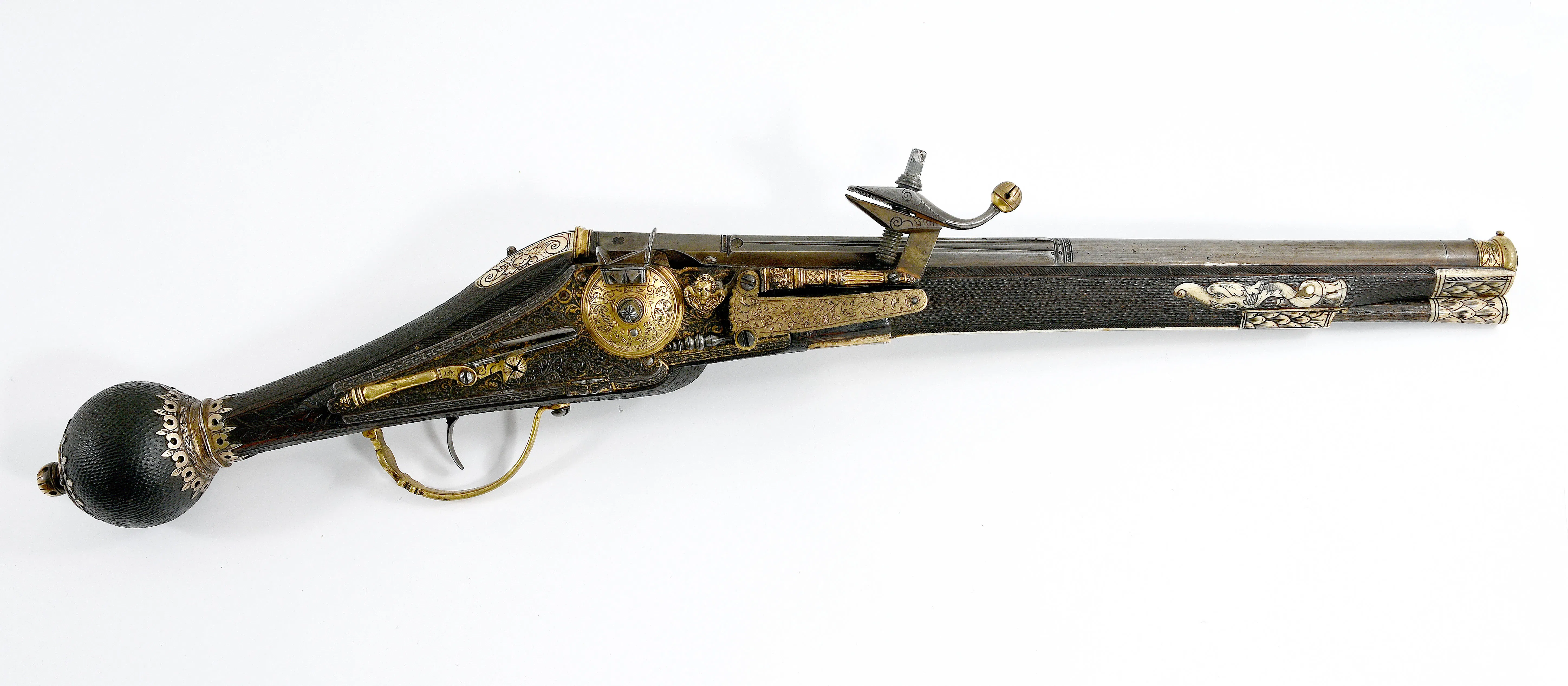
It’s not only Swedish historical objects that are being sold at Probus Auktioner. Shown here is a Saxon wheel lock pistol from 1604. It has a lock with etched decoration and the wheel lock is in gilded brass with a Saxon coat of arms.
A pair of assault rifles, Le Page Paris, mid-19th century
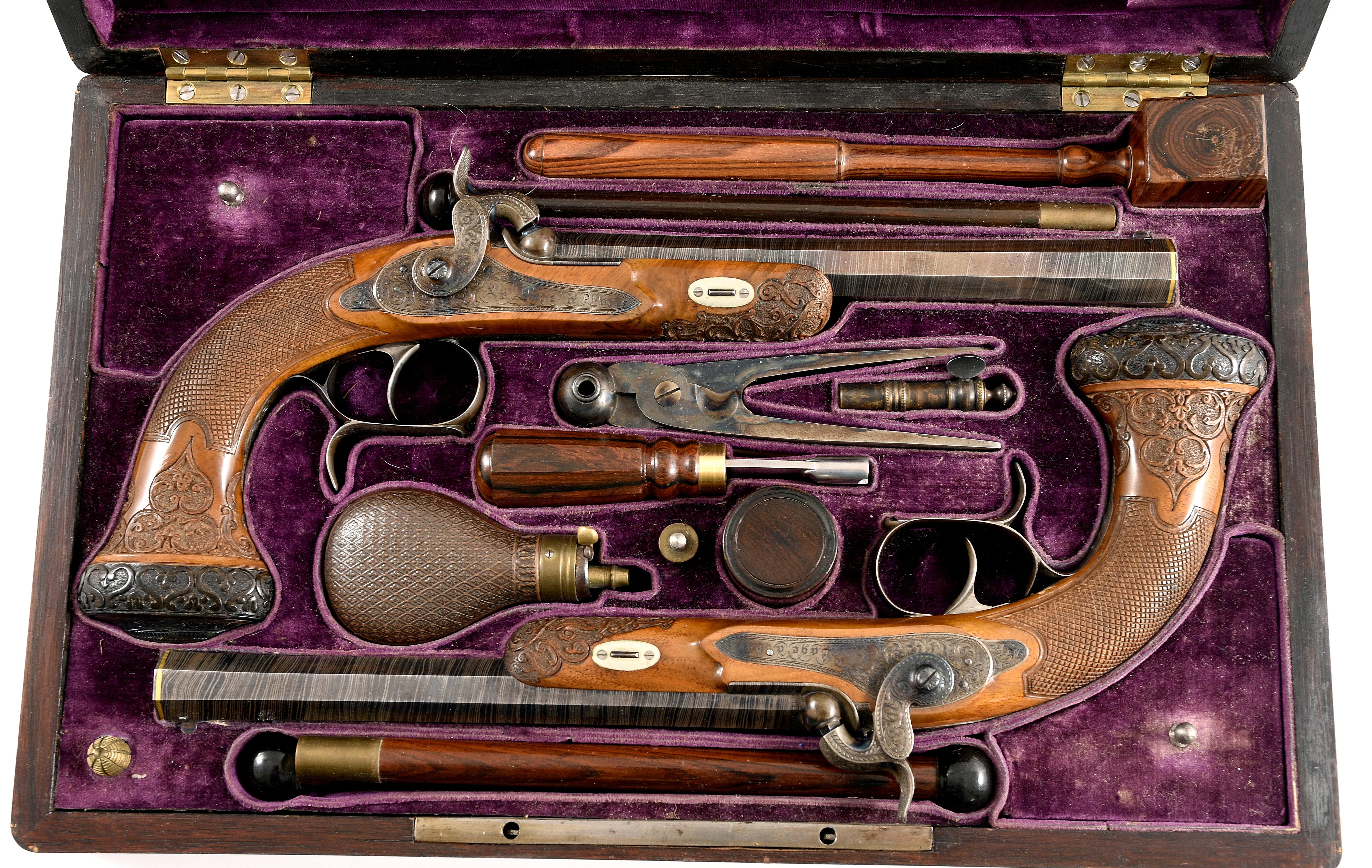
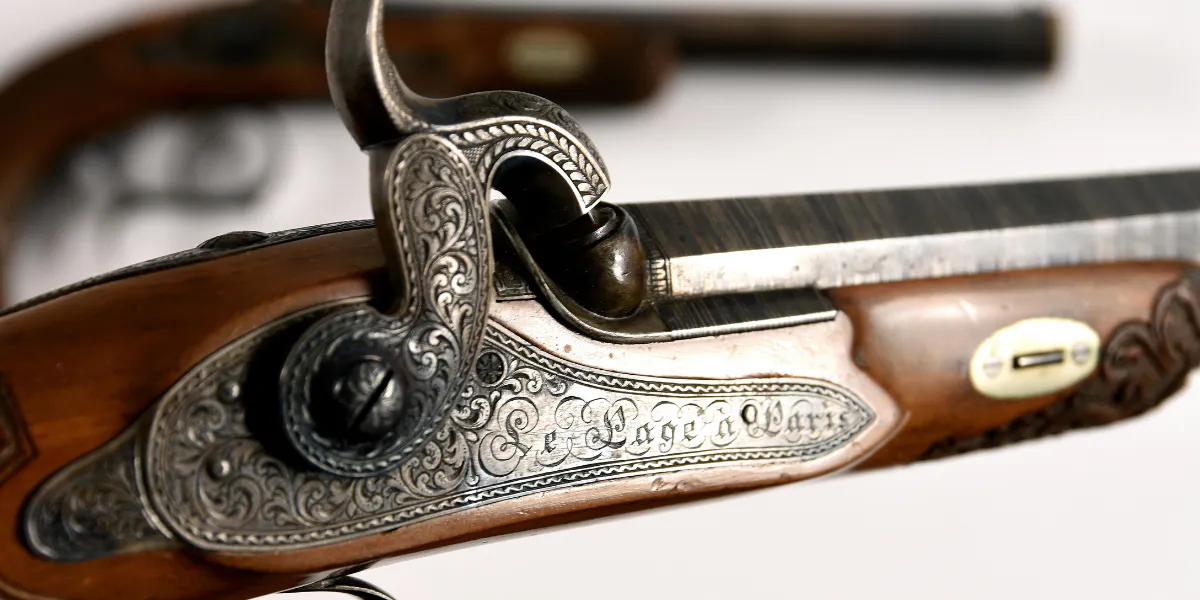
There are also modern firearms, such as this pair of assault rifles from the mid-nineteenth century. The locks are signed Le Page a Paris (a French arms manufacturer founded in 1716 in Paris) and the barrels have engraved text in gold where it says: Lepage arq er du roi. The pistols are sold together with a box with associated accessories.
Saxon cartridge box, c. 1580
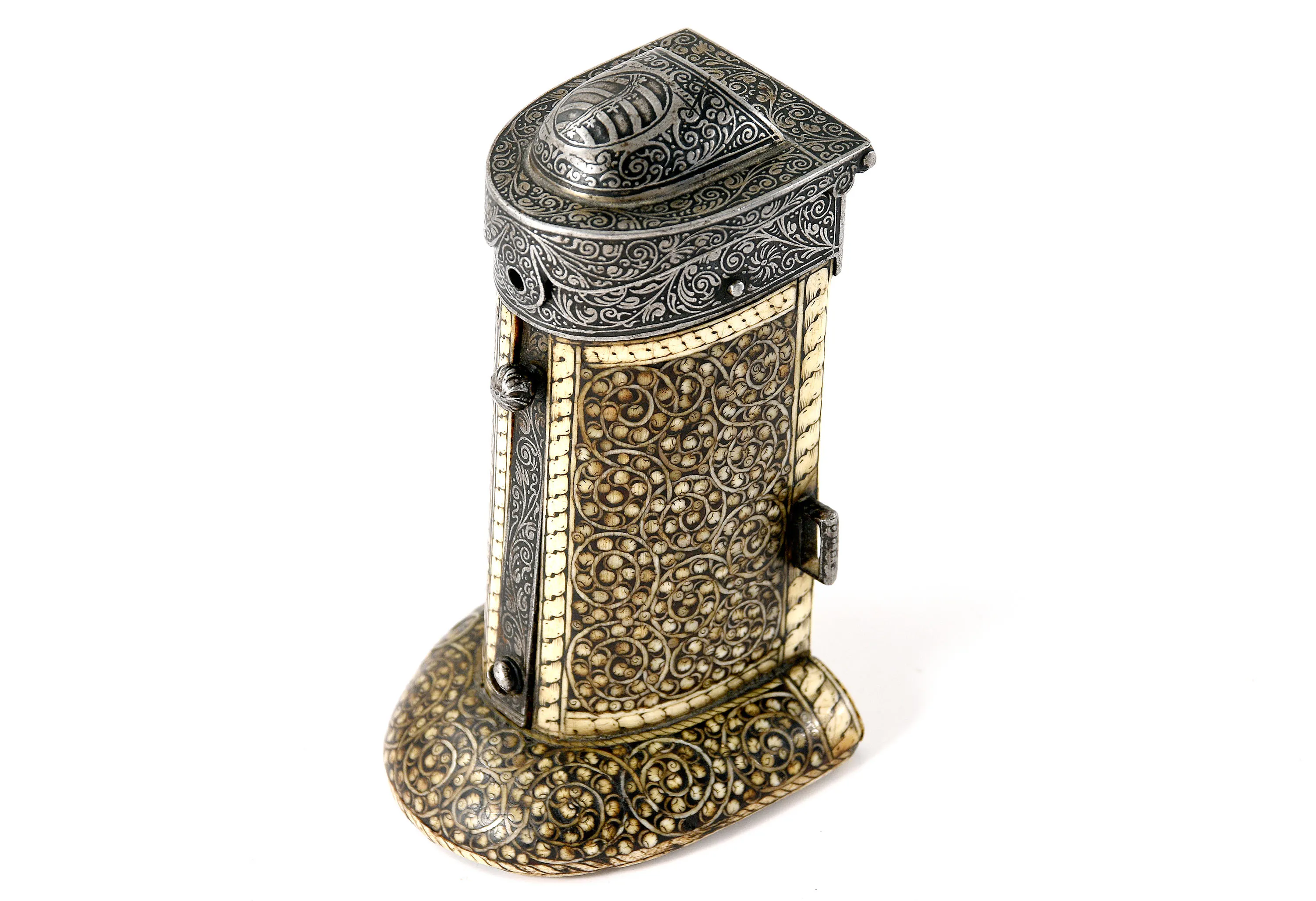
Last up is a Saxon cartridge box from around 1580, with etched iron mounts with Saxon weapons. A cartridge box was a larger box in which infantry previously stored their cartridges. When modern cartridges were introduced in the mid-19th century, cartridge boxes were replaced by cartridge cases, and then by cartridge belts.