
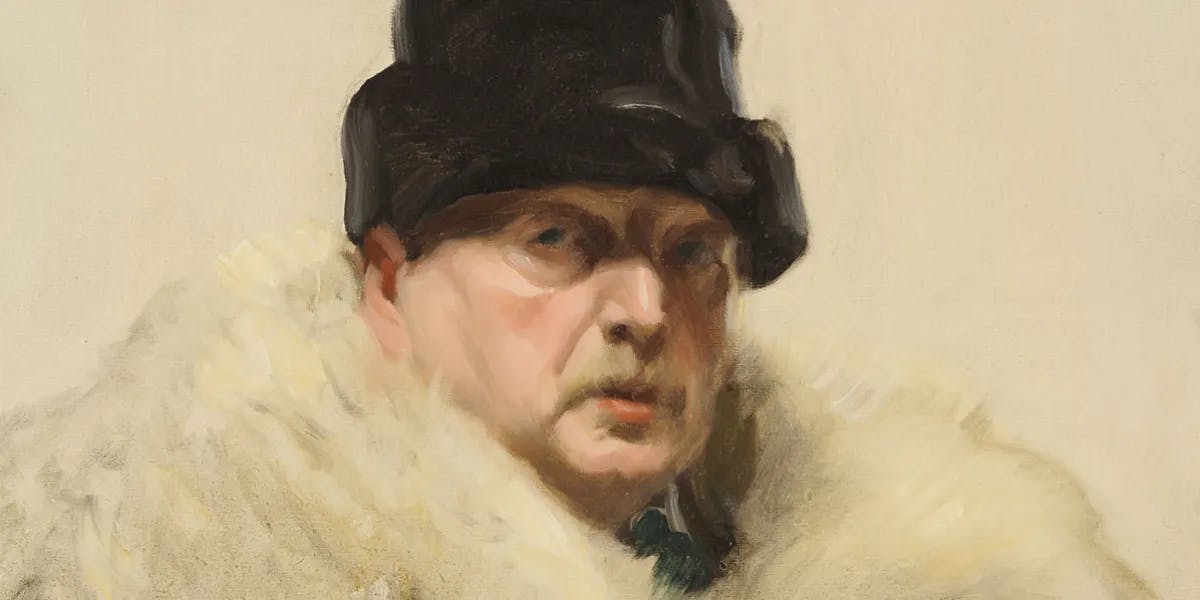
Anders Zorn (1860-1920) was born in 1860 in Mora, Sweden to the German brewer Leonard Zorn and Grudd Anna Andersdotter. His parents meet at a brewery during Leonard's brief professional stint in Uppsala, and after a short affair, Grudd Anna gave birth to baby Anders, one of the most famous artists in Swedish art history.
Anders Zorn's childhood unfolded peacefully on a farm near Mora, with his mother and maternal grandparents. At the age of twelve, in 1872, he moved to Enköping to begin his studies, a rare opportunity made possible by the inheritance he received upon the death of his father (whom he never met.)
Growing up speaking Moramål, the official language spoken in Mora at the time, young Zorn had to learn Swedish when he arrived in Enköping. It was at this time that his teacher noticed his talent for drawing and there Zorn would get his very first art award.
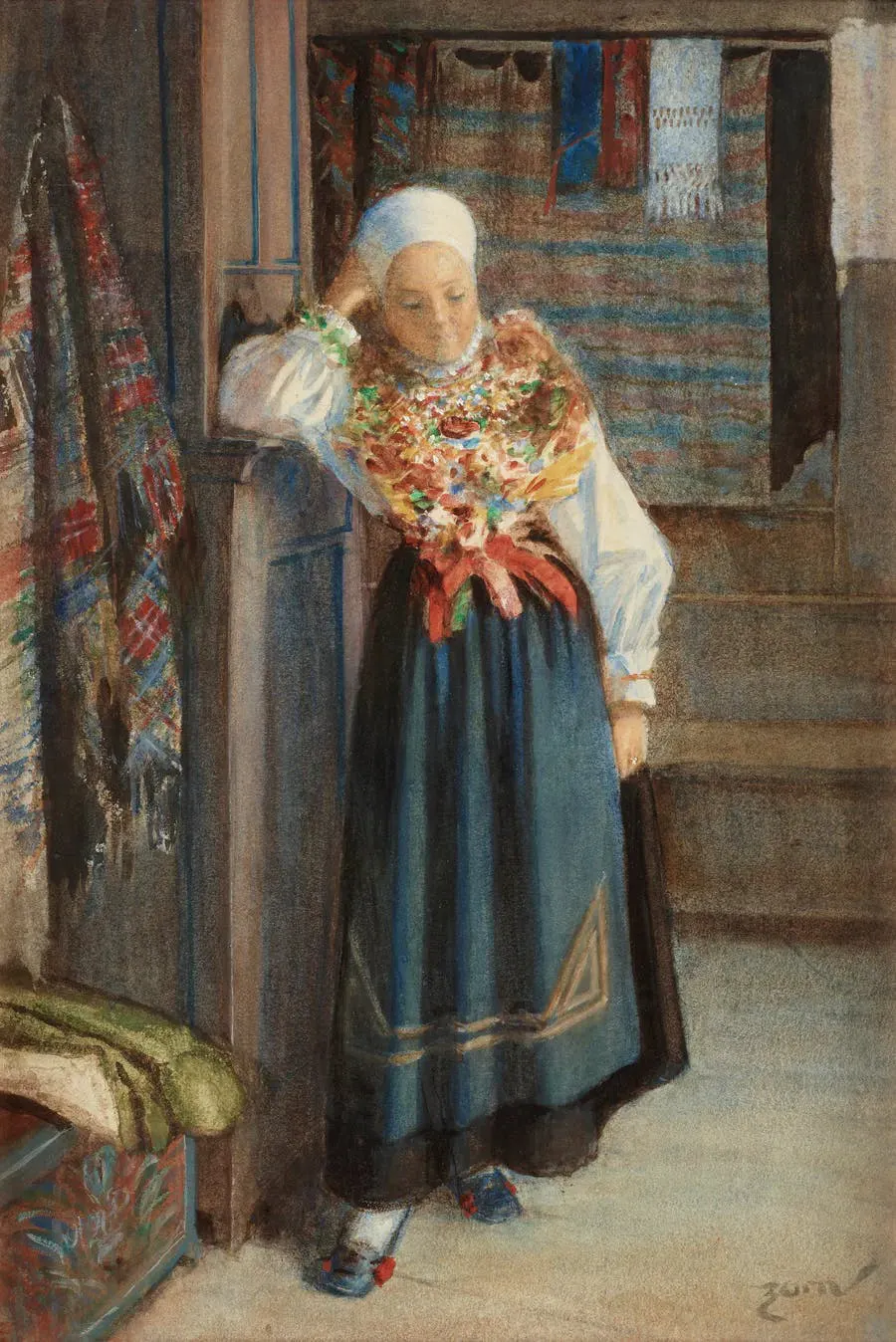
In 1875, at the age of 15, Zorn used the rest of his inheritance and entered the Royal Swedish Academy of Arts, located in Stockholm. He began his studies with the ambition of becoming a wood sculptor, but quickly realized that watercolor was his favorite mode of expression.
Related: Impressionism: Between Shadow and Light
He stood out from other students and was considered by his teachers as a real prodigy. Zorn kept watercolor as his main medium until 1887 and then started experimenting with oil painting.
In 1880, his watercolor In Mourning was selected for the presentation and annual exhibition of the Academy, a major event for his career, because his work attracted a lot of attention and allowed Zorn to reach the status of professional artist.
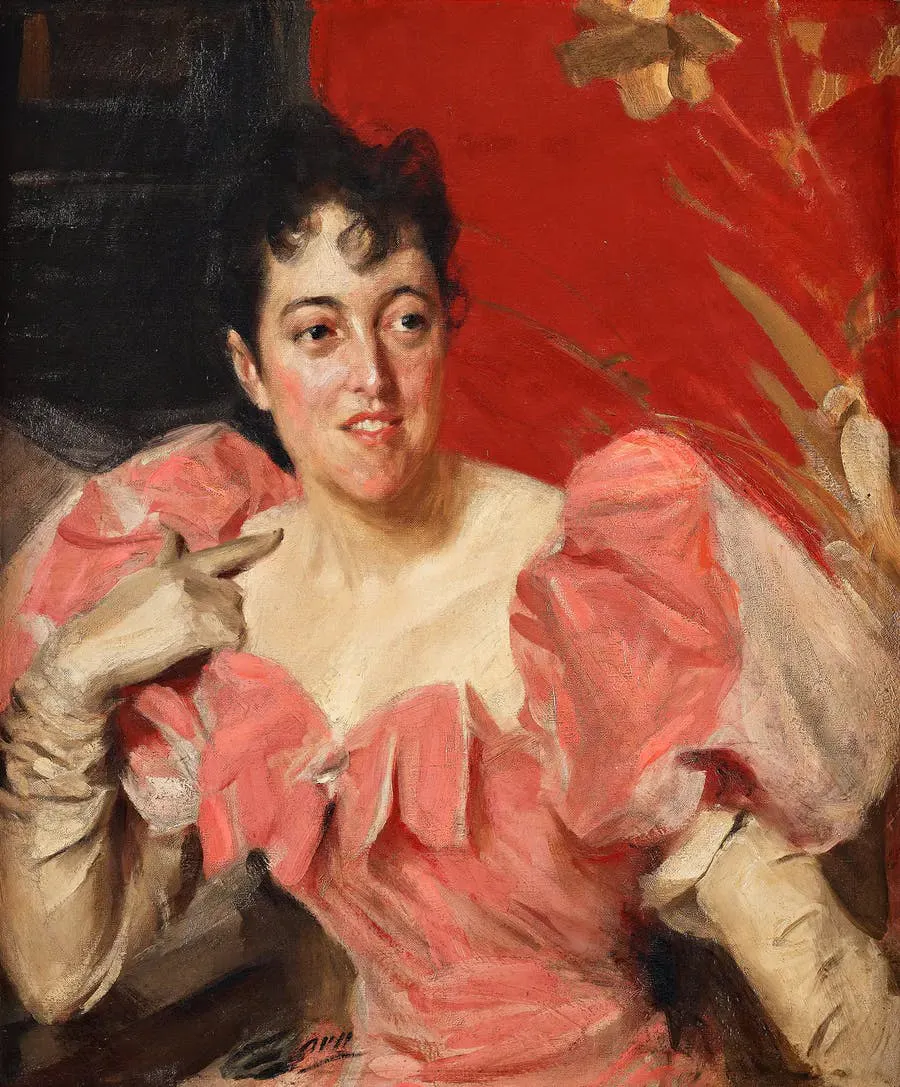
The success of the exhibition is such that he was quickly inundated with commissions, but this jeopardized his work at the academy. After receiving the principal's warning, Zorn surrenders his diploma and leaves the school.
Anders Zorn came from a generation of artists strongly opposed to academy education. In 1885, several artists sent a letter to the academy containing several reform proposals. The same year, an exhibition of opponents, in which Zorn is represented, was organized to definitively break with the conservatism of the establishment. The Artists' Association was created the following year and held its first show where Zorn presented Our Daily Bread, a remarkable work that the National Museum in Stockholm subsequently decided to acquire.
Related: Travel the World Through Art
Throughout his career, Zorn was in great demand for his talents as a portrait painter. Following his commissions from wealthy families who discovered him at the academy, Swedish high society soon followed.
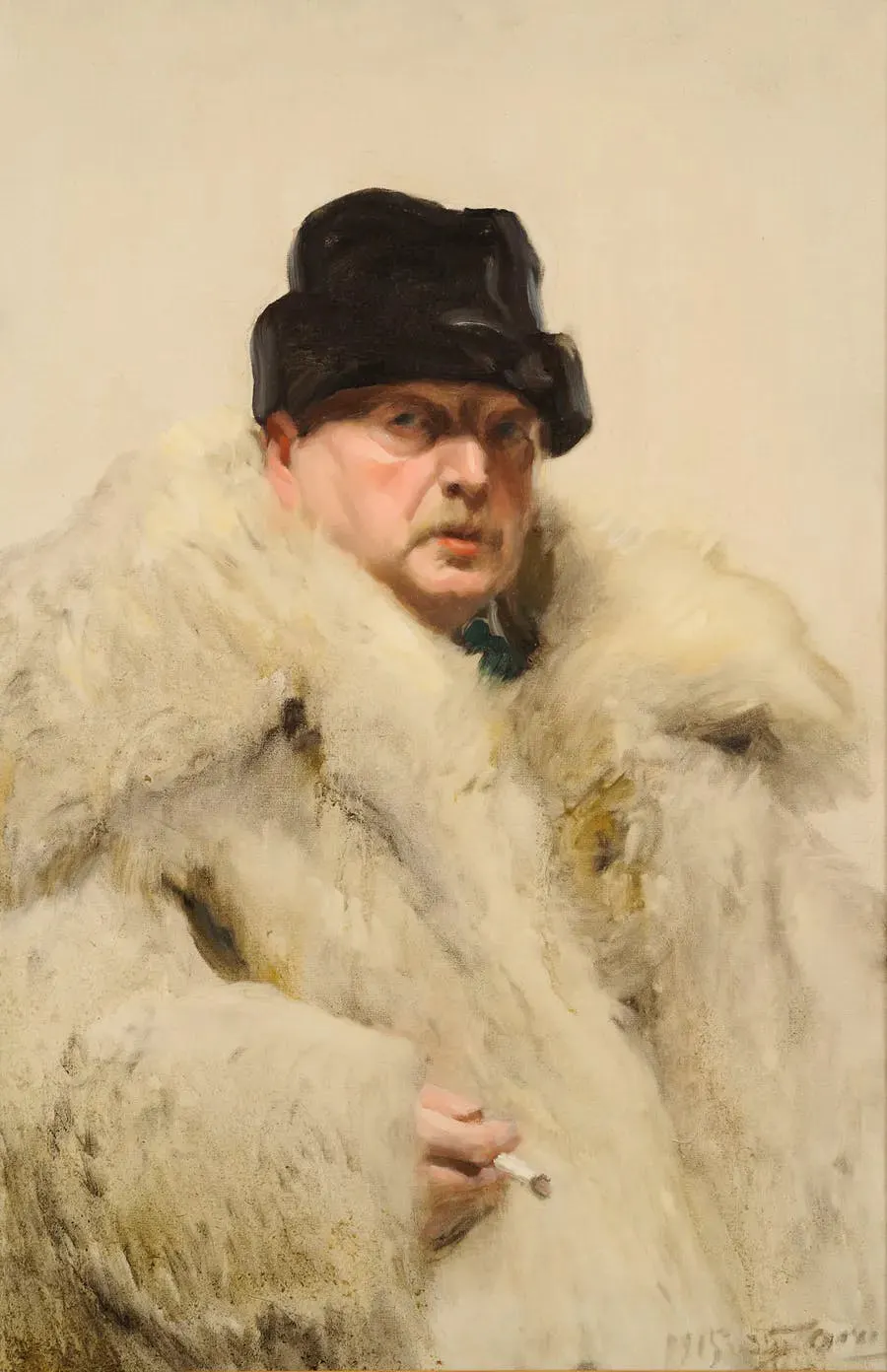
Much of Zorn's success and fame is due to the quality of his portraits and the care he took in each of them. At the time, portraiture was particularly in demand in the United States, and so Zorn received commissions from American bankers, politicians, and businessmen, all ready to pay high prices to obtain a painting with their likeness.
Inspired by the paintings of Egron Lundgren, Anders Zorn embarked on several trips, mainly to England and Spain, from 1881, and left his native country for four years, in order to explore new artistic horizons.
Related: The Art of Plein Air Painting
During his travels, he carefully studied the representation of reflective surfaces, especially water, and developed his very refined and characteristic technique.
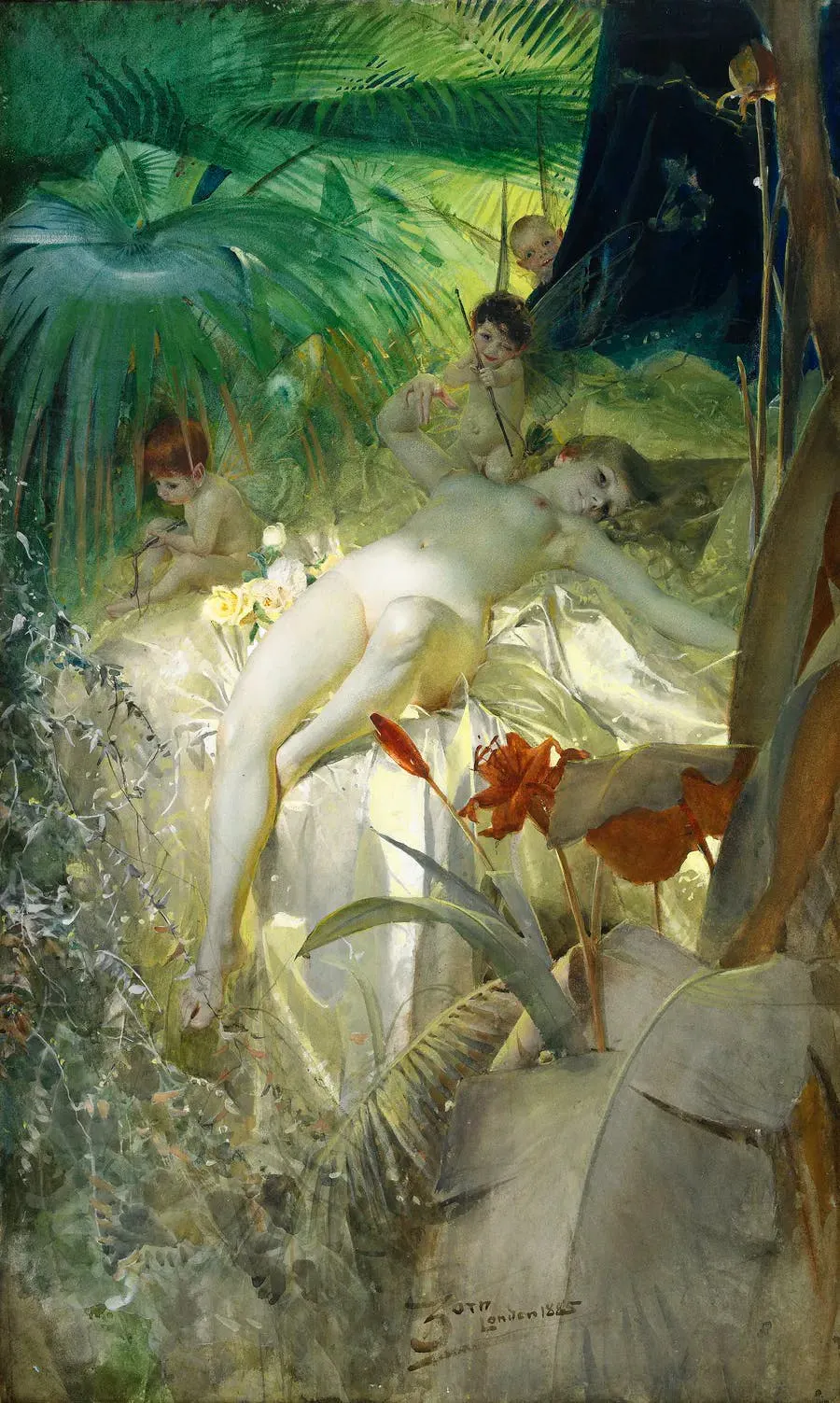
Kärleksnymf, painted in Madrid in 1884, enabled Zorn to make a breakthrough on the European continent, which greatly improved his financial situation. Back in Sweden, he married Emma Amalia Lamm in 1885, a cultured young girl from a Jewish family in Stockholm. Emma Lamm and Zorn had met as part of a portrait commission in 1881. The newlyweds went on their honeymoon to Hungary, then to Turkey, but were forced to stay there for nearly three months because Zorn contracted typhoid fever and remained bedridden.
Related: Jean-Baptiste-Camille Corot: The Love of Landscapes
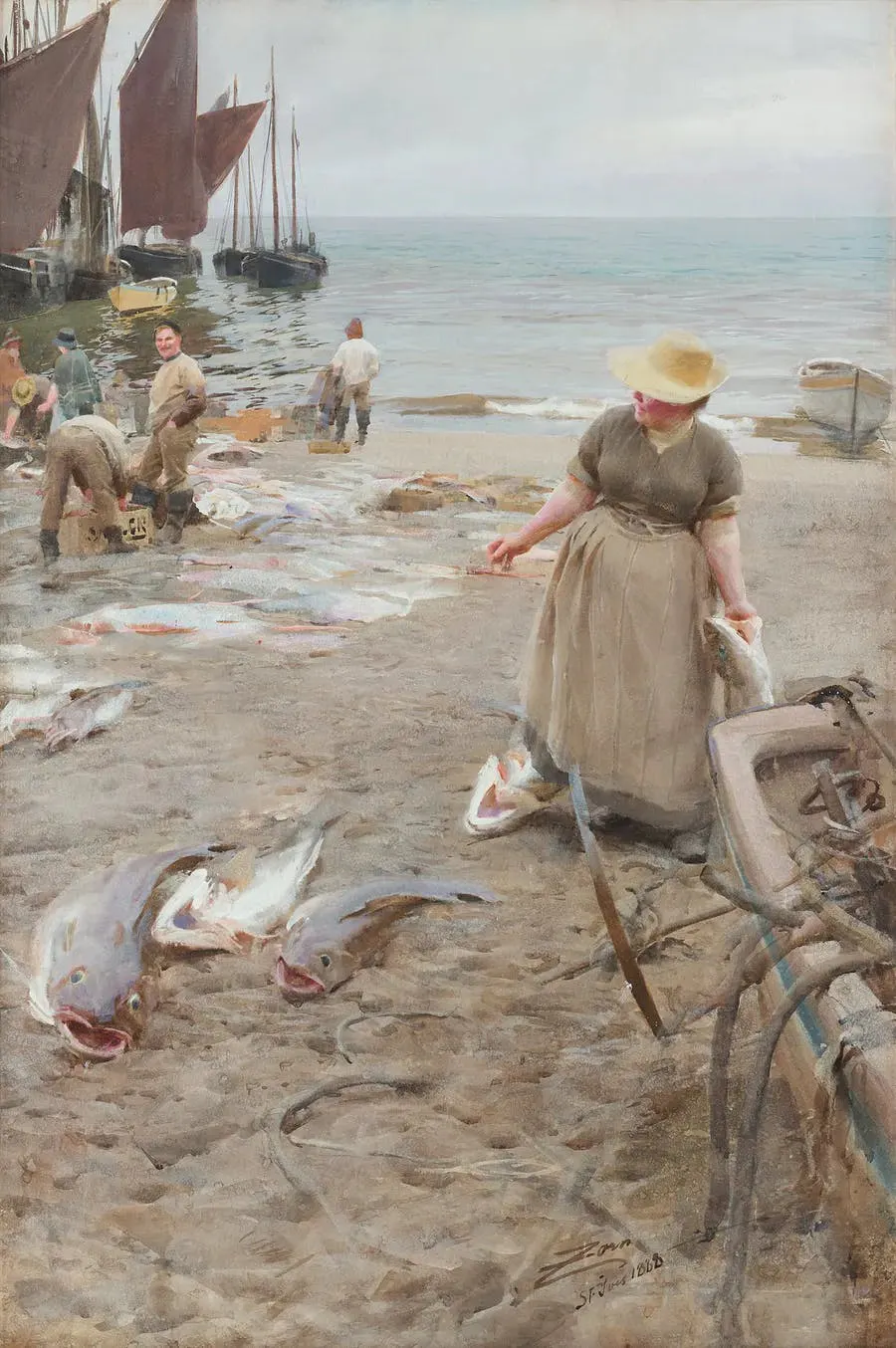
The transition from watercolor to oil painting is a revelation for Zorn, and a turning point in his practice. He met with immense success after a short stay in St Ives, a small fishing village in the southwest of England, during the winter of 1887-1888.
In 1888, Anders and Emma Zorn moved to Paris, and lived there for nearly eight years, although they made numerous trips during this period.
Related: 8 Patrons of the Parisian Avant-garde
In the 1880s and 1890s, the couple flew to Spain, North Africa, England and the United States, where Zorn painted portraits of politicians and members of American high society. During a trip to the USA in 1893, Zorn had the privilege of painting President Grover Cleveland and would also produce portraits of presidents Theodore Roosevelt (1905) and William Howard Taft (1911) during the 20th century.
In Paris, Zorn illustrated Antonin Proust, an eminent journalist and art critic, who introduced him to Parisian collectors. He befriended other Scandinavian artists such as August Hagborg, Christian Eriksson, Louis Sparre, Albert Edelfelt, and met the French masters Renoir, Rodin and Besnard.
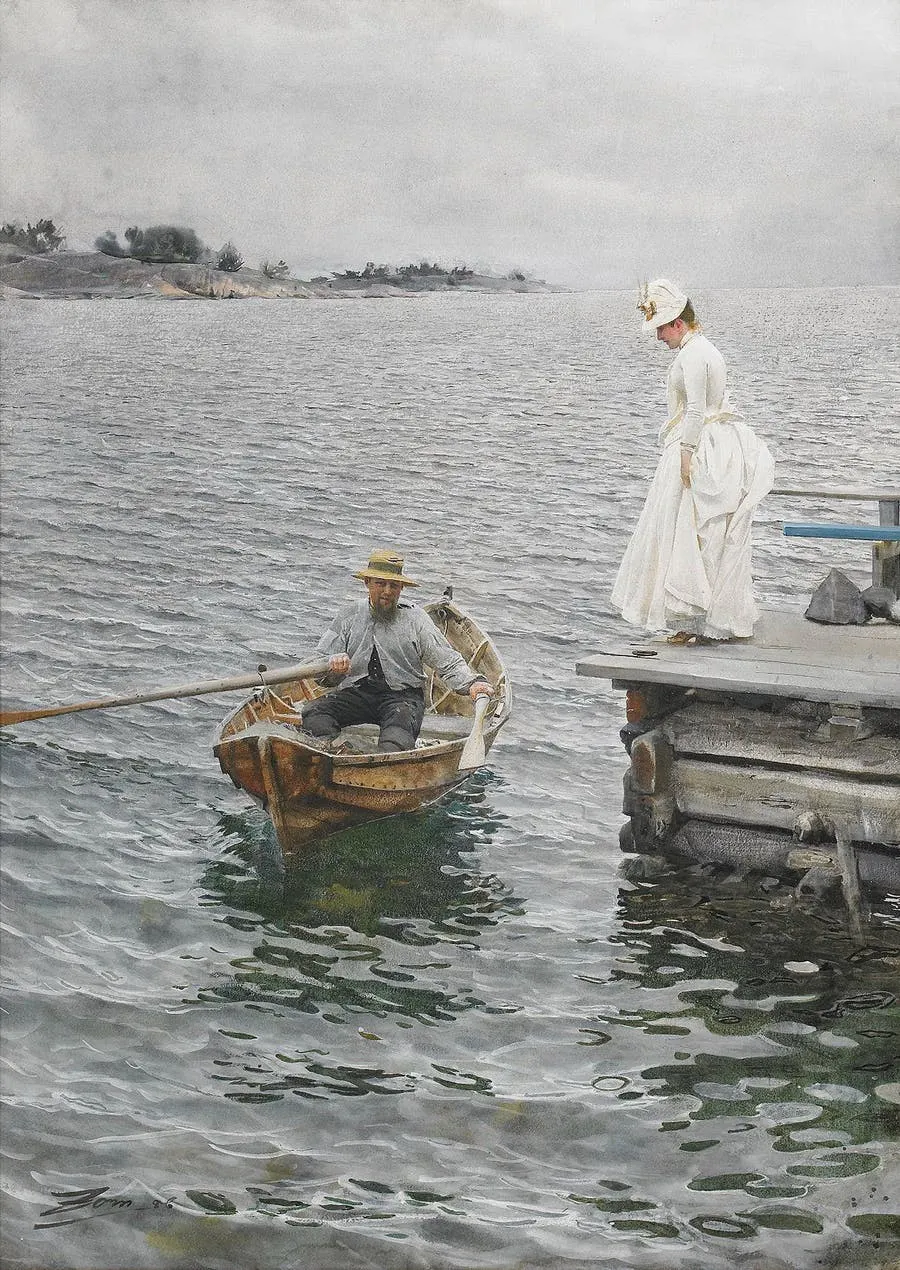
Although residents of Paris, the couple still spent their summers in Sweden, in the Stockholm archipelago in Dalarö, where Emma's mother had a summer residence. It is said that the subject of the work Summer Fun (Sommarnöje) was inspired by real events in Dalarö: when Emma's dress got stuck in a thorny bush, Anders hurried back to go find his material and paint the scene immediately.
Related: 10 Paintings That Capture the Spirit of Summer
It was during the following years that Zorn finalized his transition to oil painting and found more success on the international scene. He was awarded the Legion of Honor following the Universal Exhibition of 1889, which recognized his contribution to the history of art, and was elected to the National Society of Fine Arts.
Related: 10 Famous Sculptures in Art History
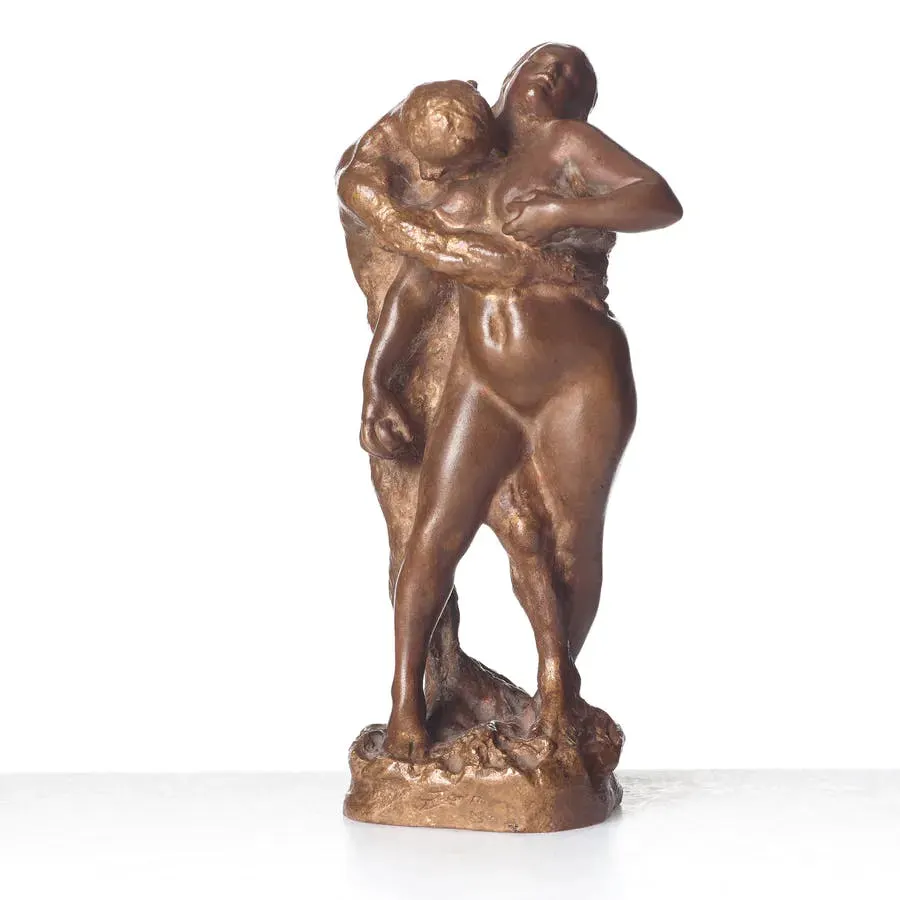
Even though Anders Zorn gave up sculpture at the Academy, his interest in the discipline never really died out. He began by making bronze sculptures and was strongly inspired by the work of Rodin. In 1889, he signed a bronze head with the effigy of Emma, as well as Faun and Nymph in 1895.
After eight years in Paris, the time had come for Anders and Emma Zorn to return home. Back in Mora, Zorn devoted himself more to folklore and nude studies, while representations of farm life were increasingly recurring among his works.
Zorn himself has declared Midsommardans (kept at the National Museum) to be his favorite folklore work. Midnight, Vallkulla and Dans in Gopsmorstugan are also famous paintings of the same genre. Folk depictions of the Siljan region, as well as the study of the nude, slowly but surely became the heart of Zorn's work and influenced many artists after him.
Related: Painting and Provocation: Suzanne Valadon
The artist's love for this new genre began in the 1880s. His nude models were often represented in nature, and preferably near a river, which enabled him to practice simultaneously the representation of the water.
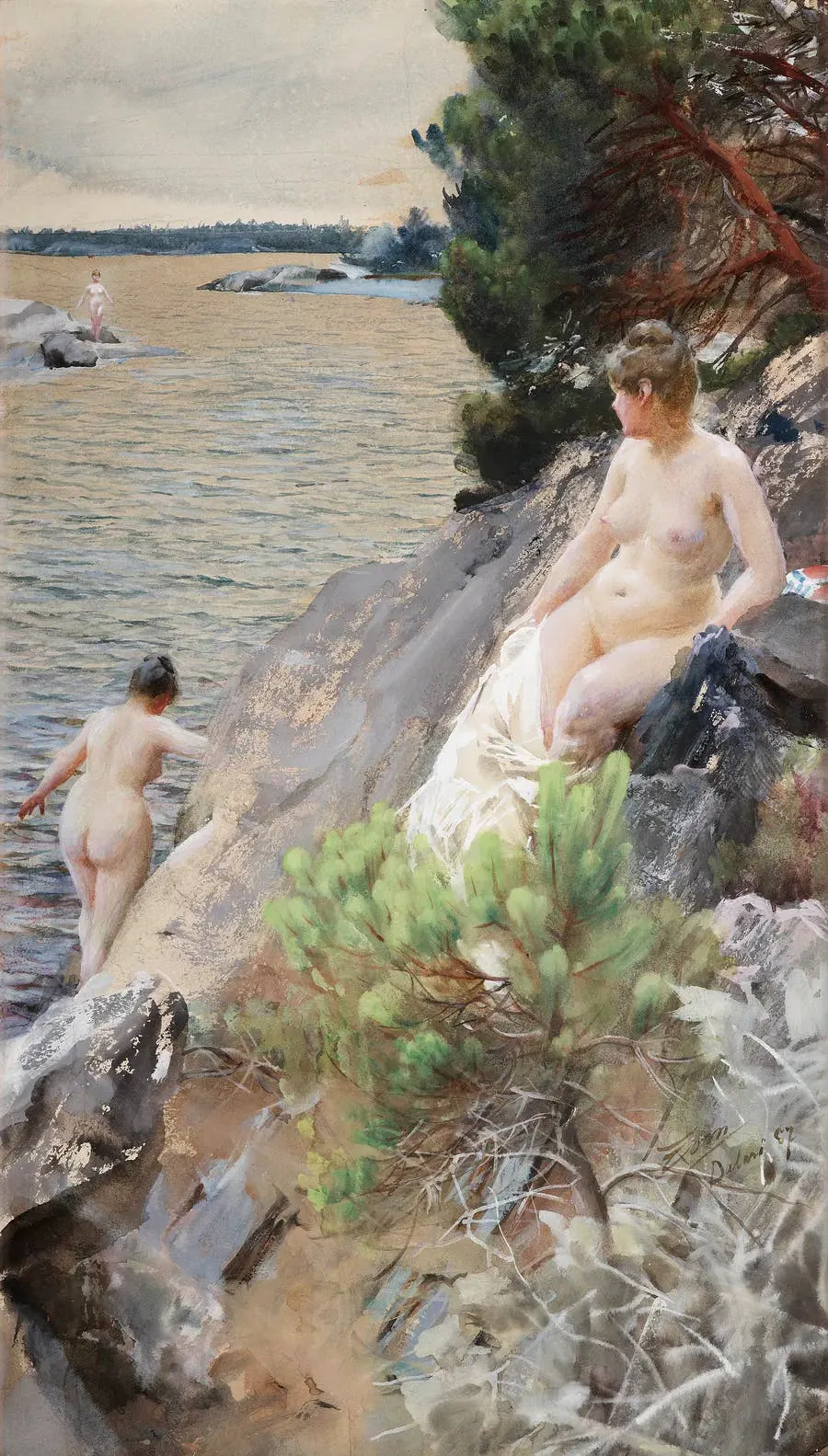
Axel Herman Hägg, a contemporary of Zorn, taught him the technique of printmaking in London in 1883. His very first print was a portrait of his teacher, Hägg, and the experience resulted in 288 different prints, including several self-portraits. The composition of his engravings were inspired by Rembrandt.
Related: Top 10 Rediscovered Masterpieces
Anders Zorn died in the 1920s in Mora hospital at the age of 60 from blood poisoning. In the couple's joint will of 1919, it was stipulated that their property should be given to the Swedish state.
The Zorn Museum was built in 1939, based on designs by Ragnar Östberg. After Emma Zorn's death in 1942, the couple's home in Zorngården was also turned into a museum.
Zorn's works are very popular today in the auction market and with art dealers. His engravings, watercolors and oil paintings always attract a large audience as soon as they arrive in the auction room.
Sommarnöje, from 1886, was sold at Stockholms Auktionsverk in 2010 for 26 million Swedish kronor ($3.3 million), making it Sweden's most expensive painting.
Find more articles on your favorite artists on Barnebys Magazine!