In 1913, the Romanov dynasty marked 300 years on the Russian imperial throne. To celebrate the occasion, Nicholas II commissioned Fabergé to create a special piece of jewelry featuring miniature portraits of the 18 Romanov tsars and tsarinas, as an Easter gift for his wife, Alexandra Feodorovna. This custom of presenting Fabergé eggs at Easter had begun in 1885 with Nicholas’s father, Tsar Alexander III, who gave one each year to his wife, Maria Feodorovna. After Alexander’s death in 1894, Nicholas II continued the tradition, now commissioning two eggs annually — one for his mother and one for Alexandra.
See also: Fabergé Eggs: 8 Little Known Facts
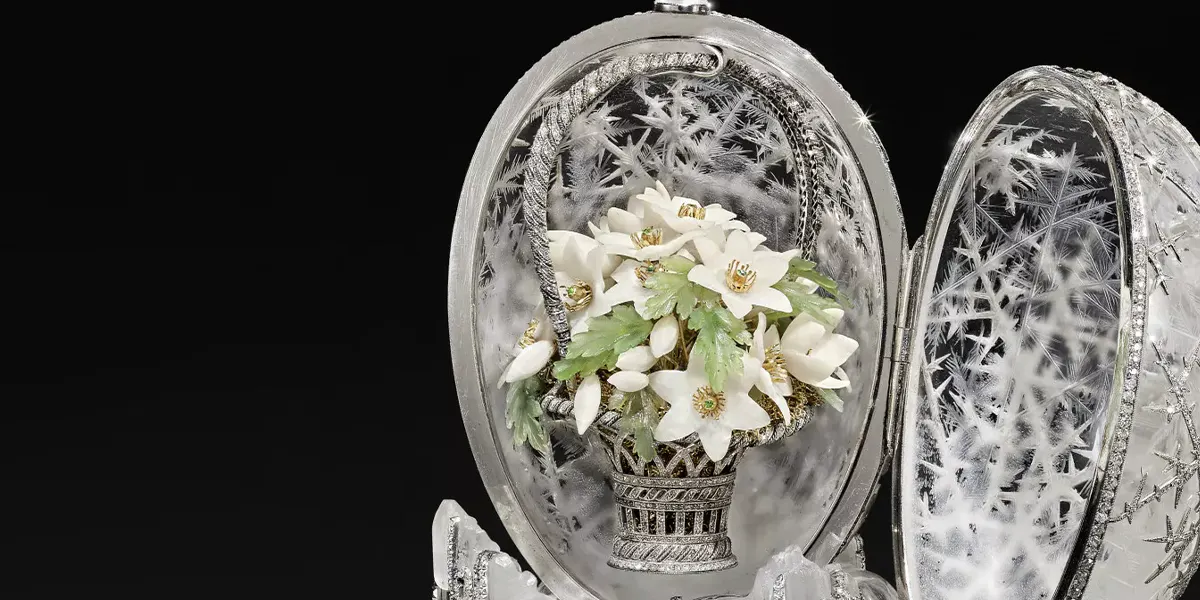
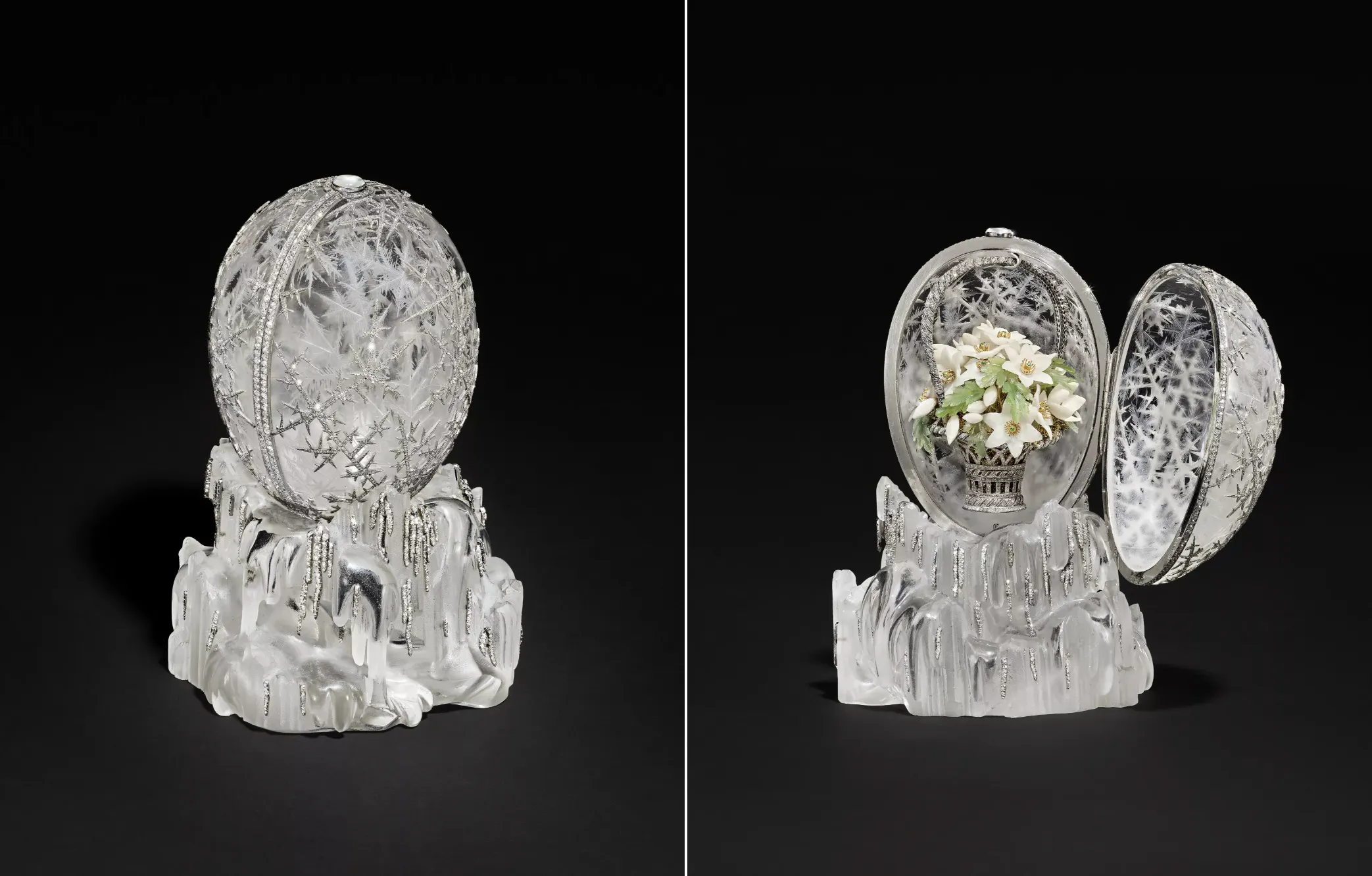
Maria Feodorovna did not miss out on her egg in 1913. Hers, however, looked less to the past than to the chill future awaiting the imperial family. The Dowager Empress received the Winter Egg, a creation of rock crystal, platinum, diamonds and moonstone, containing a removable basket of anemones carved from quartz and nephrite. At 24,600 roubles, it was the most expensive egg ever made for an imperial commission, matching the grandeur of the anniversary egg given to Alexandra.
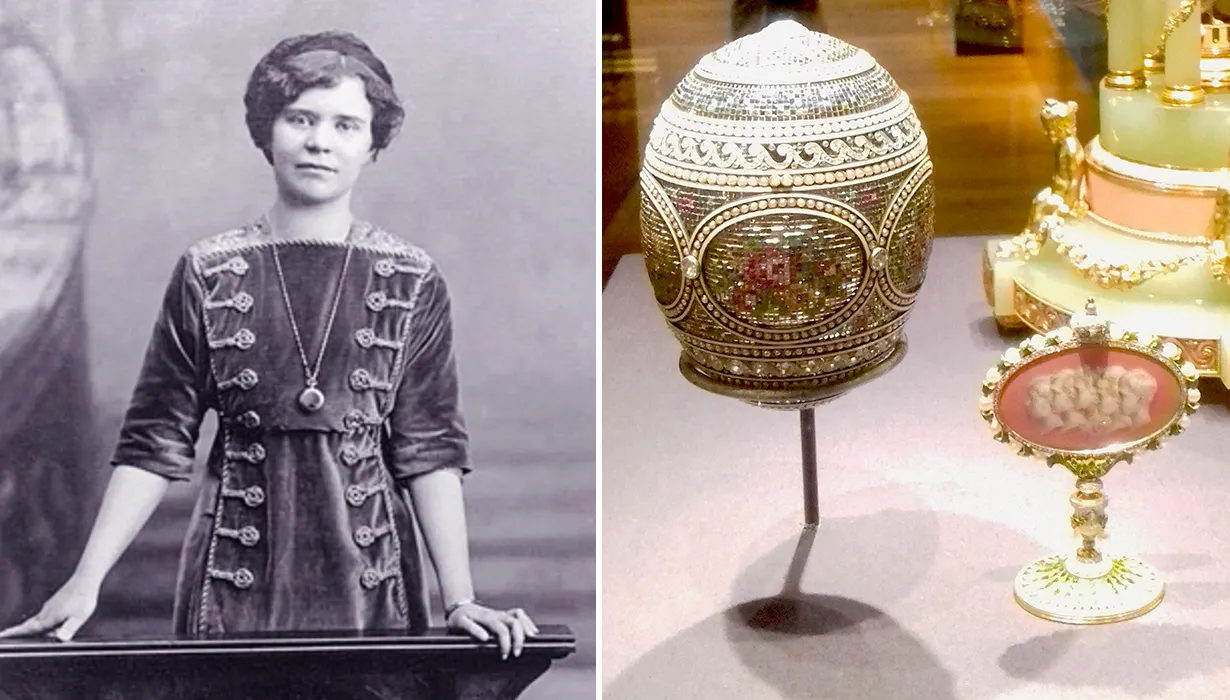
The Winter Egg was designed by Alma Pihl, who had joined Fabergé in 1909. She was the granddaughter of August Holmström, a Finnish-born craftsman who had long managed one of Fabergé’s workshops and designed several imperial eggs himself. The frost on her workshop window is said to have inspired the design.
See also: Flea Market Fabergé: The Third Imperial Egg
Pihl went on to design another imperial egg, the Mosaic Egg of 1914, presented to Alexandra Feodorovna. While the 1913 anniversary egg remains in Russia, now in the Armoury Chamber of the Moscow Kremlin, both of Pihl’s creations were sold after the confiscation of the Romanov possessions by the new government to raise funds for the state. The Mosaic Egg is now part of the Royal Collection, but the journey of the Winter Egg is less certain.
The Winter Egg was sold to England around 1930 and passed through several owners before disappearing from view in 1975. It resurfaced in 1994 and reaffirmed its reputation as the most valuable imperial egg when it sold for CHF 7,263,500 at Christie’s in Geneva, setting a new record for Fabergé. This record was broken again in April 2002 at Christie’s in New York, where it sold for $9,579,500. The buyer was widely reported to be the Emir of Qatar, Hamad bin Khalifa Al Thani, though this has never been officially confirmed.
See also: The 9 Most Popular Jewelry Brands
On December 2, Christie’s will auction the Winter Egg for the third time, this time in London as part of its Classic Week. The estimated price exceeds £20 million. The sale, titled The Winter Egg and Important Works by Fabergé from a Princely Collection, hints at possible Qatari ownership.
“It is a privilege for Christie's to be entrusted with the sale of the exquisite 'Winter Egg' by Fabergé for the third time in its history. With only six other Imperial Easter Eggs remaining in private collections, this is an extraordinary chance for collectors to acquire what is arguably one of Fabergé's finest creations, both technically and artistically. It would undoubtedly enhance the most distinguished collection,” says Margo Oganesian, Christie’s Head of Department, Fabergé and Russian Works of Art.
Want more articles like this straight to your inbox? Subscribe to our free newsletter!
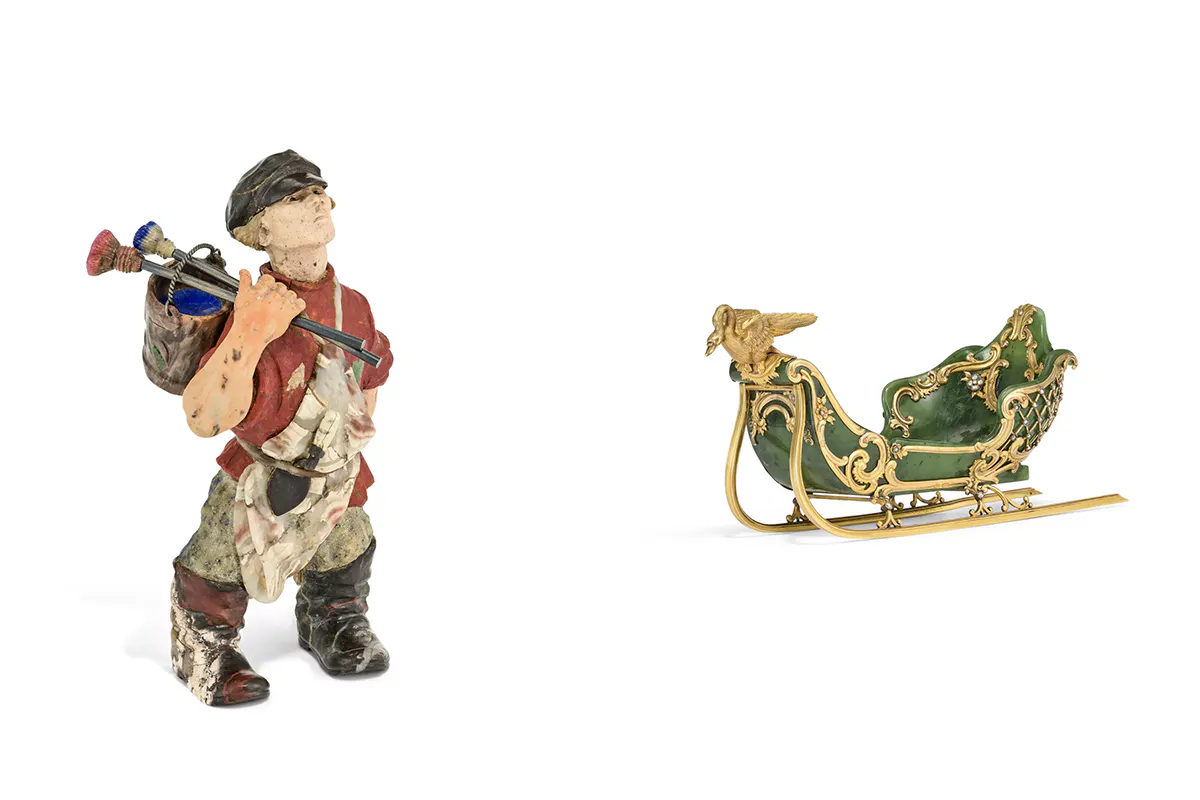
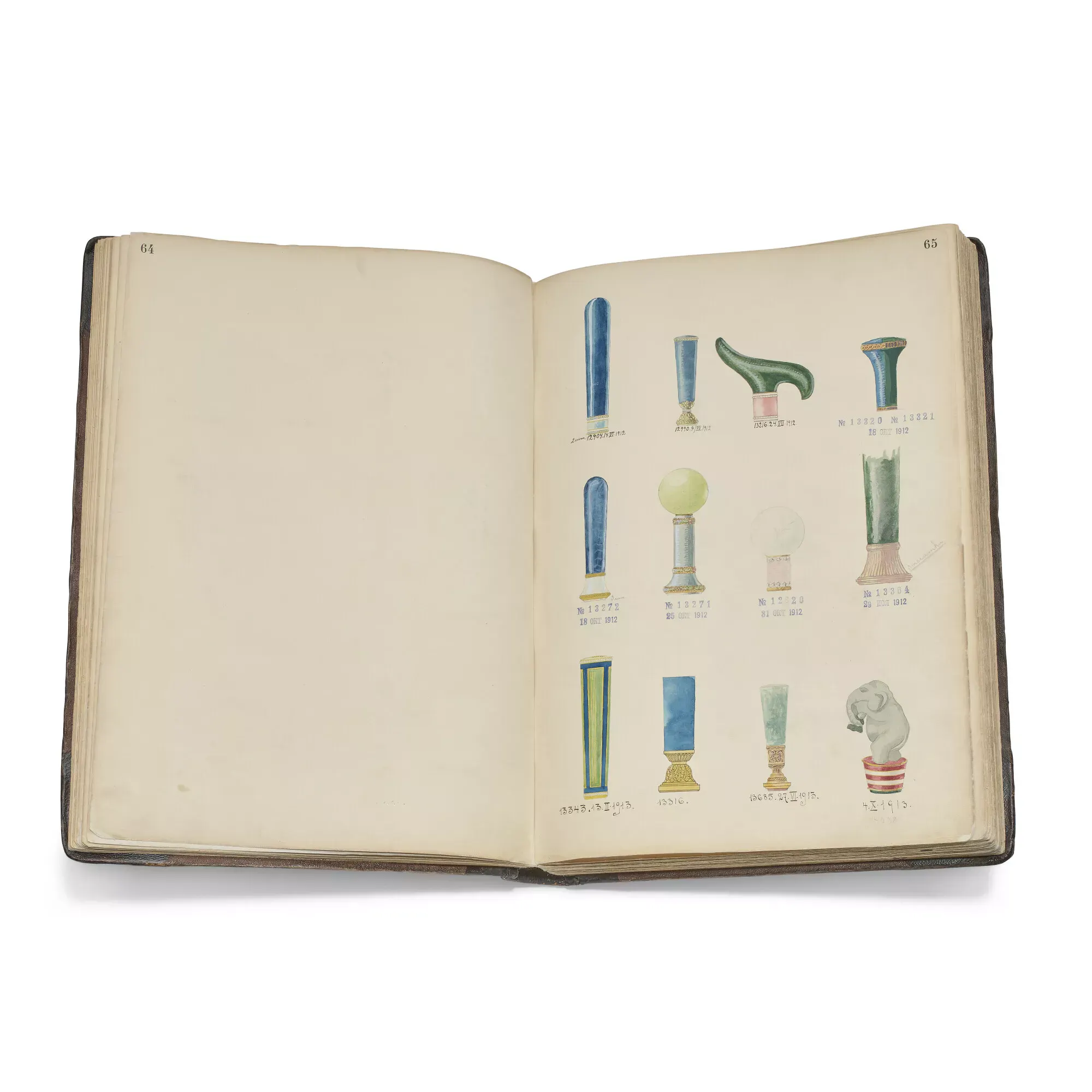
Other highlights of the auction include the rare and significant album of Fabergé designs from the St Petersburg workshop of Henrik Wigström, dating from 1911 to 1916 (estimated at £500,000–800,000), a miniature nephrite sleigh from around 1890 (estimated at £350,000–450,000), a jade peacock from the same period (estimated at £350,000–450,000), and the important figure of a street painter from 1916 (estimated at £1.5–2 million).