After the 1917 revolution, Paris became the new home for many members of the Russian nobility and the royal family. One exile was Marija Pavlovna Romanova (1890-1958), who lost her parents, Grand Duke Pavel Alexandrovich and Princess Alexandra of Greece and Denmark, at a young age. Marija Pavlovna was first married to the Swedish Prince Wilhelm, Duke of Södermanland. After having one son Lennart, they separated and Marija Pavlovna returned to Russia. There she remarried Prince Sergei Mihajlovich Putiatin, with whom she fled Russia during the revolution. This marriage was also dissolved in 1923, as the two spouses had different views of life in exile.
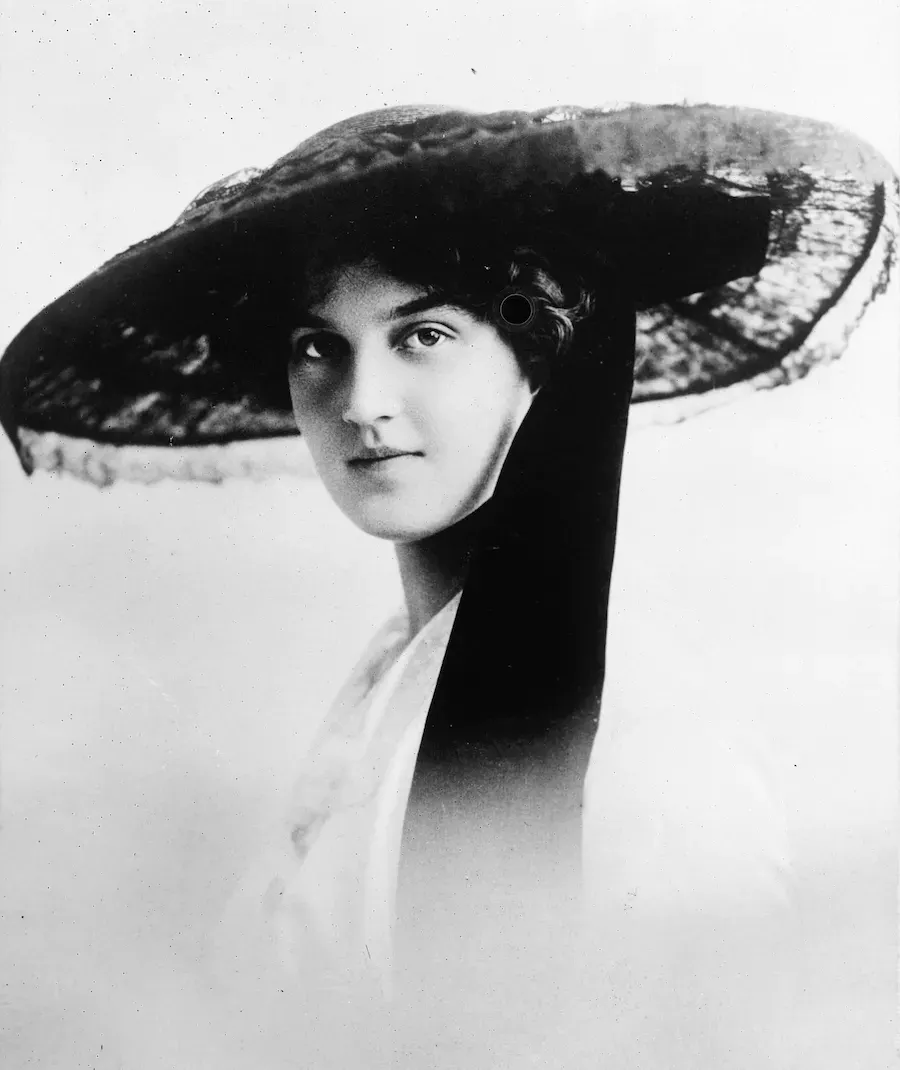
Unlike Prince Sergei, who indulged in idleness, Maria Pavlovna preferred to take her destiny as an exiled princess into her own hands. Since the money from the sale of her jewels smuggled from Russia could not last forever, Maria Pavlovna had already started selling handmade clothes in London, where she lived for a while. In London she also met her brother Dmitri, who was a year younger, and the two went to Paris together.
Want to discover articles like this straight to your inbox? Sign up for our free newsletter!
In Paris, Maria Pavlovna decided to further gain a foothold in the fashion industry. She founded the company Kitmir, which specialized in elaborate embroidered fabrics. This fine work was carried out by the delicate hands of other exiled Russian women who, like Marija Pavlovna, urgently needed an income.
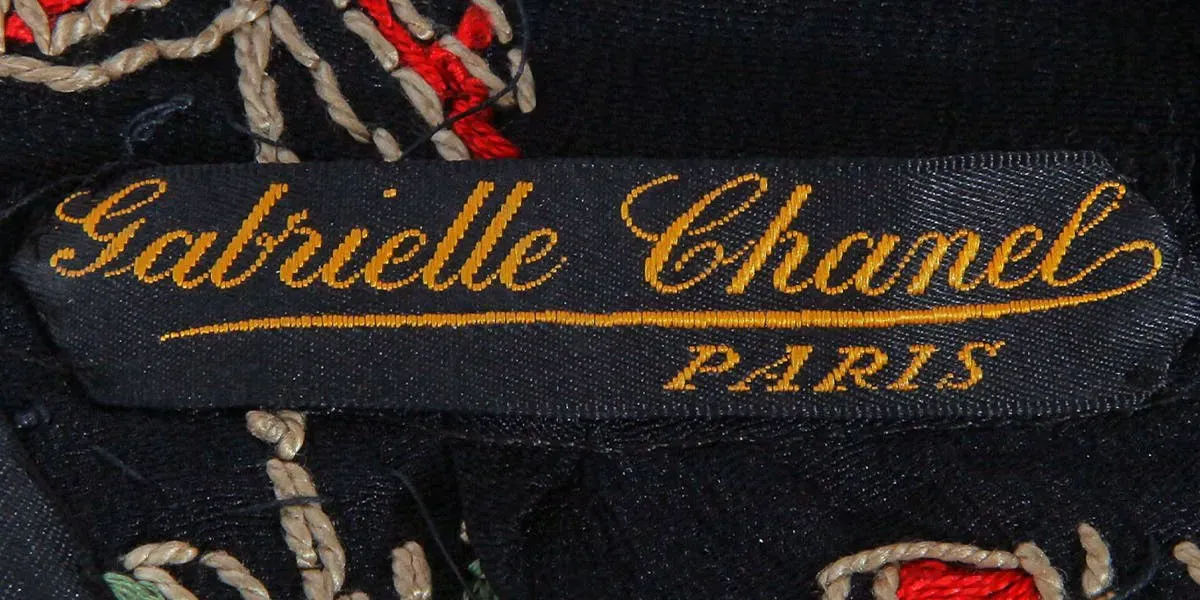
Dmitri also made a name for himself in Paris and in 1921 began an affair with a talented young fashion designer named Gabrielle Chanel, nicknamed "Coco". Dmitri introduced Coco to former Russian court perfumer Ernest Beaux, who soon created the Chanel Nº 5 perfume, and to his sister.
Related: Chanel: French Fashion Par Excellence
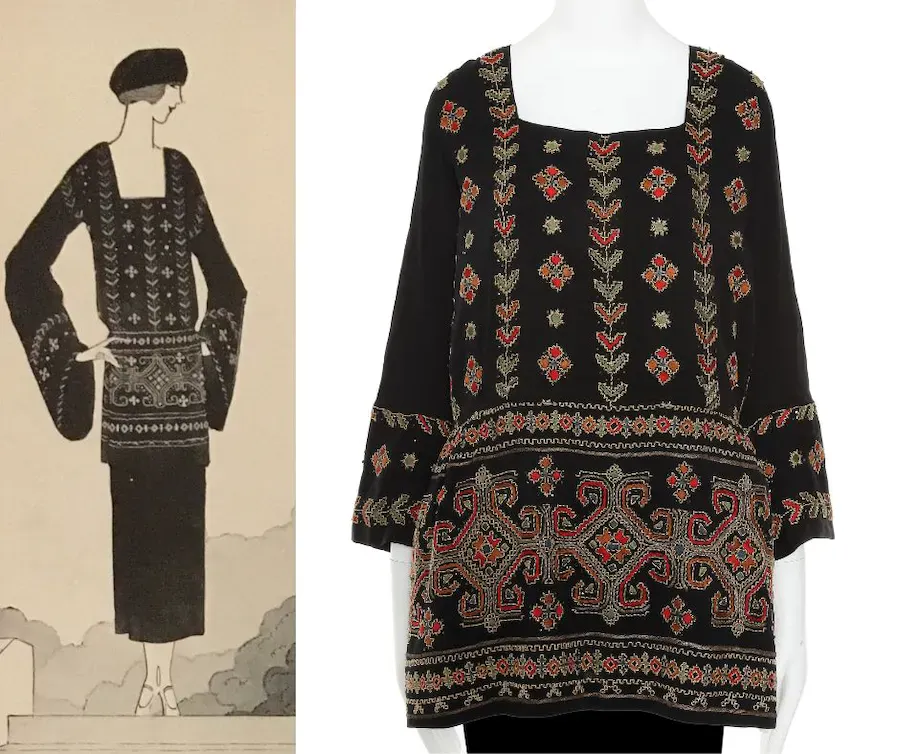
Russian patterns were all the rage in the fashion capital of Paris at the time, and Coco Chanel was delighted that the princess and her staff were able to supply her fashion house with embroidered fabrics to match. Among the creations by Chanel that used embroidered fabrics from Kitmir was a Russian tunic made of black silk crepe. In March 1922, the outfit was featured in French Vogue.
It is rare for clothing to be preserved over a very long period of time. However, a real treasure has miraculously survived the last 100 years in the spacious attic of a castle in Grasse, France: a Chanel Russian tunic.
Related: The 8 Most Popular Fashion Brands
This tunic, intended to be part of a day suit, was offered for sale at the Maurice Auctions auction room in Paris in mid-November by British fashion specialist Kerry Taylor, to whom the lucky discoverer had approached. The piece, which is in excellent condition, was estimated at 10,000-15,000 euros. Two bidders on the phone really wanted it for themselves and continued to outbid each other until the hammer finally fell at 100,000 euros. The highest bidder could take it home for 130,000 euros (including premium). The amazing sum means a new auction record for an early Chanel creation.
Have you discovered an old piece of clothing in the attic and would now like to know how much it is worth? Contact the experts at ValueMyStuff today !
The relationship between Coco Chanel and Dmitri Pavlovich Romanov was not destined to last forever, nor was the relationship between Chanel and Kitmir. Interest in Russian motifs and embroideries in general waned, and when Marija Pavlovna began taking commissions from other houses, the collaboration ended. The Russian princess sold her workshop in 1928 and went first to London and then to the United States, where her brother Dmitri had married wealthy American heiress Audrey Emery two years earlier.
Related: Is Vintage Clothing the Answer to Fast Fashion’s Impact on the Planet?
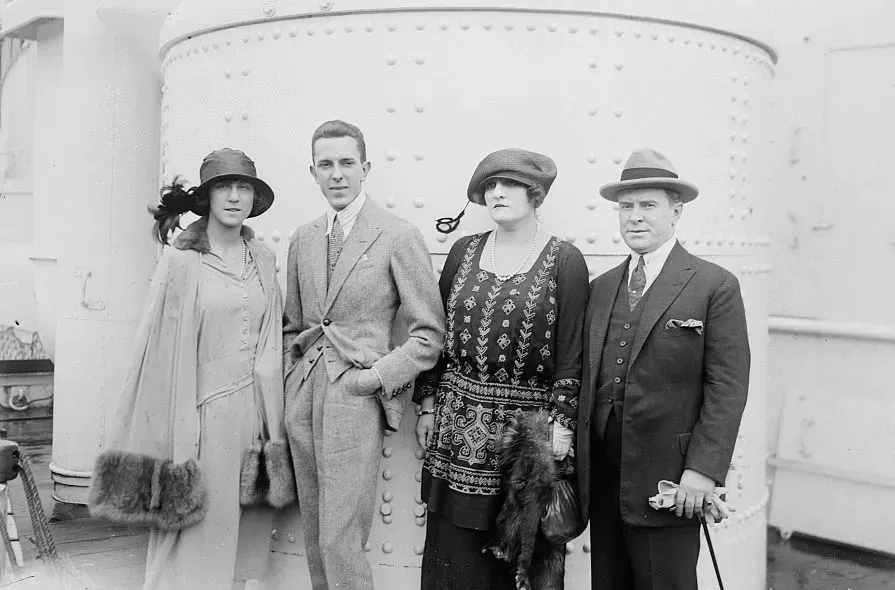
Maria Pavlovna did not remarry. In America she worked as a photographer and journalist and published her memoirs. After a stint in Buenos Aires in the 1940s, she returned to Europe, where she died in 1958. Maria Pavlovna is buried next to her brother Dmitri on the flower island of Mainau in Lake Constance, which her son Lennart created.