It might be worth investing in a metal detector to spend your Sunday afternoons in search of potential treasures... This is probably what British cafe owner Charlie Clarke must have thought when he devoted himself to this hobby for six months before making the discovery of "not once in a lifetime, but once in 30 lifetimes," according to the Guardian.
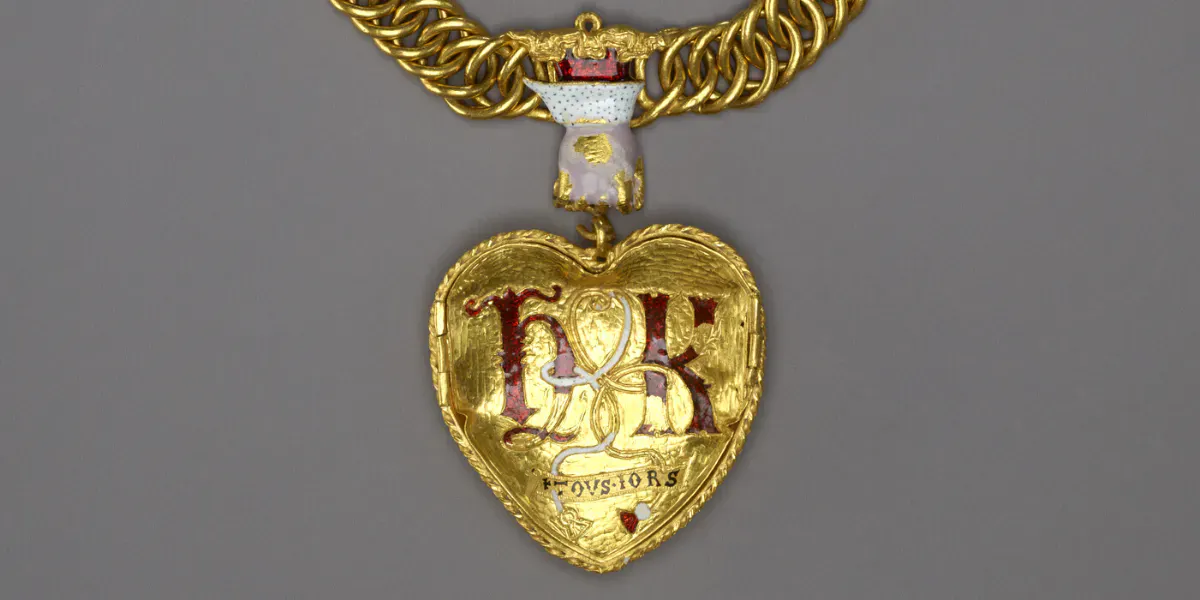
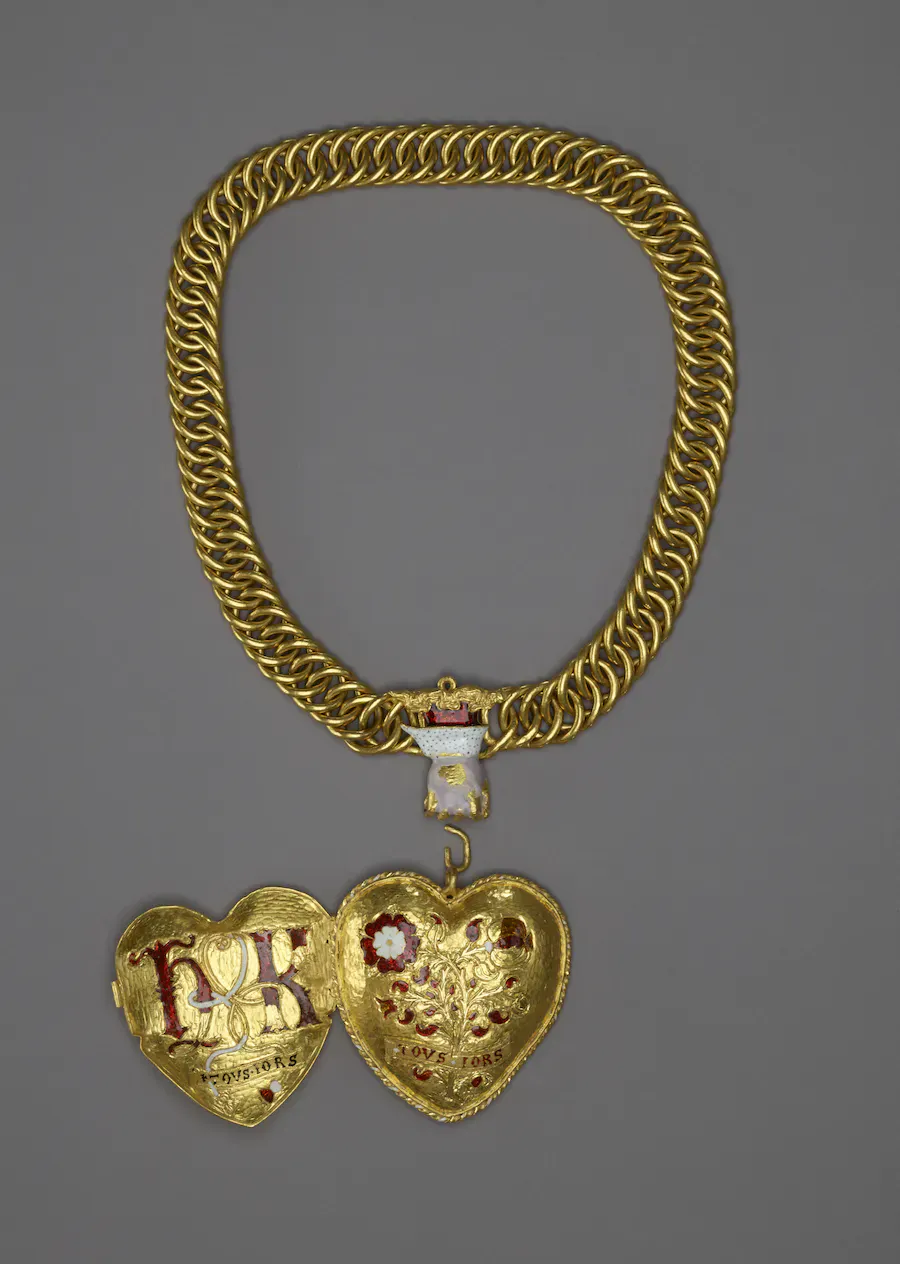
As he was about to return empty-handed after a day of exploration in a Warwickshire field, his detector beeped distinctly. He then began to dig up the earth and to his surprise he discovered a remarkable gold pendant adorned with the symbol of Henry VIII (1509-47) and his first wife Katherine of Aragon (1485-1536). The pendant is in the shape of a heart, linked to a heavy chain made up of 75 links by a clasp representing a hand.
Related: An $800K Penny Found by Metal Detector
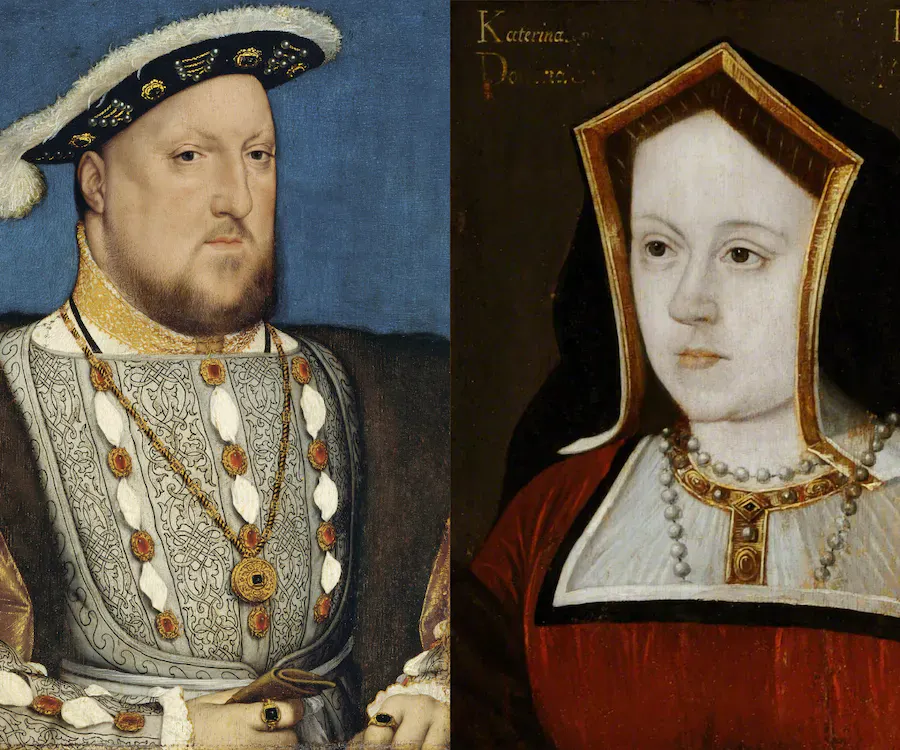
Henry VIII first met Katherine of Aragon in 1501 as he walked her down the aisle to marry his brother Arthur. After the sudden death of the young prince a year later, Katherine was betrothed to Henry. The two spouses were crowned together on June 24, 1509. Of their five children, only their daughter Marie survived. Desperate for an heir, Henry VIII would go so far as to break with Rome to divorce. Katherine was banished from court and separated from her daughter. The man nicknamed "the English Bluebeard" has gone down in history for his eight wives.
Related: 5 Famous Ladies in Red
Want to receive our latest articles straight to your inbox? Subscribe to our newsletter!
From 1486, the two-headed red and white rose (i.e. the "Tudor rose") was the symbol of the Tudor court. The pomegranate symbolizes the conquest of the Spanish city of the same name in 1492 by Katherine's parents, Ferdinand of Aragon and Isabella of Castile. The image of the fruit will therefore be associated with Katherine. The front of the pendant found in Warwickshire is adorned with a 'Tudor rose' intertwined with a pomegranate tree, with the legend +TOVS +IORS (a pun meaning 'forever'). The reverse shows the letters H and K (for Henry and Katherine), in Lombard script, connected by a ribbon, supplanting the legend +TOVS +IORS. According to experts from the British Museum, the object most likely dates from 1521. However, its direct link with Henry VIII or Katherine of Aragon and its presence in Warwickshire still remain unresolved.
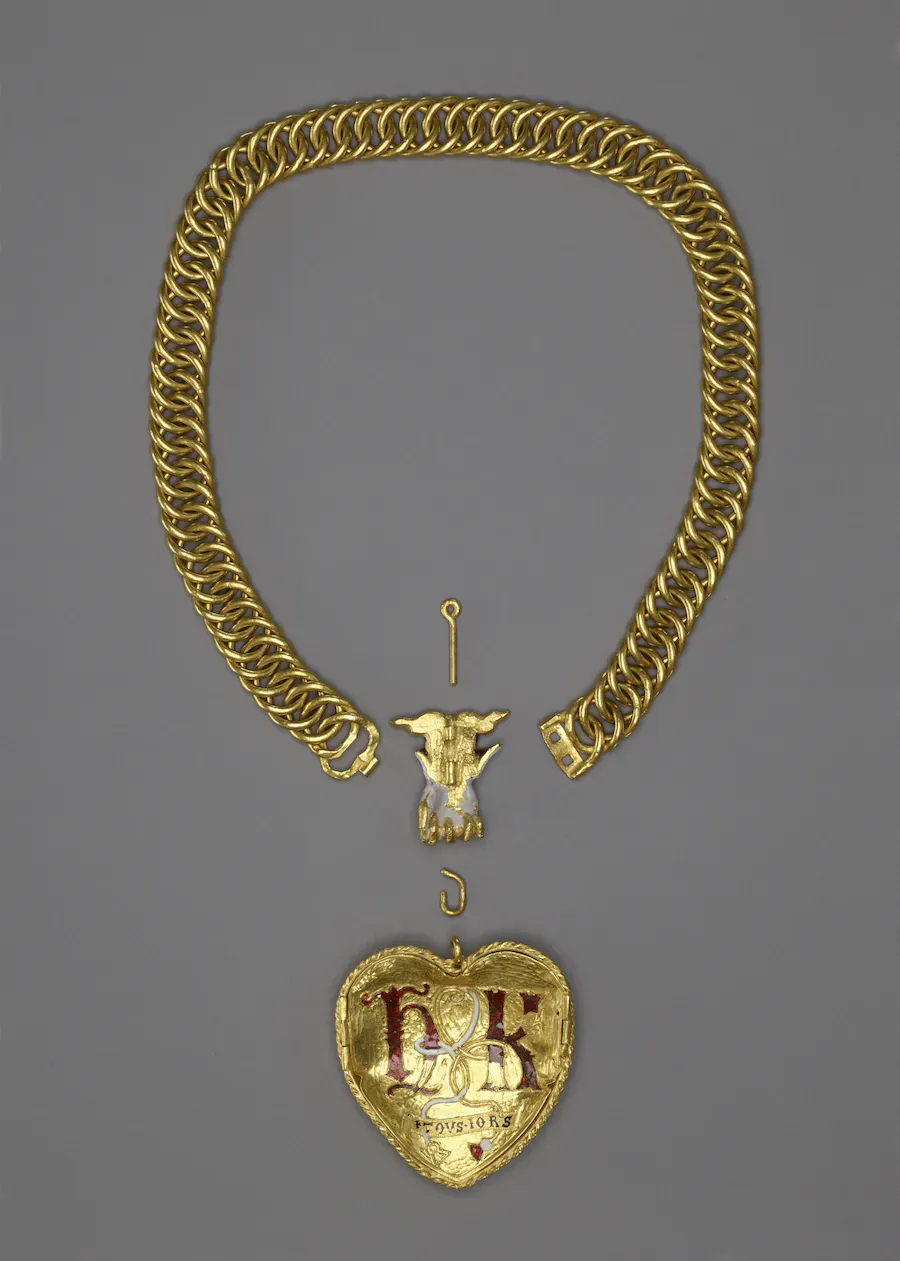
The 24-carat, 300-gram solid gold object is on display in a display case in the British Museum. The value of the jewel is still unknown, but Clarke, the man behind the discovery, is expected to split the large sum with the owner of the field.