
The catalog for Bukowskis' upcoming Important Winter Sale, which will be held on December 7-9, contains several works by art world stars from Sweden and beyond. Among the Swedish highlights are furniture by Georg Haupt and paintings by Anders Zorn and Carl Larsson. From the international objects, a tiara by Boucheron, a painting by the French artist Maximilien Luce and a Budai figure from the Jiajing period are particularly noteworthy.
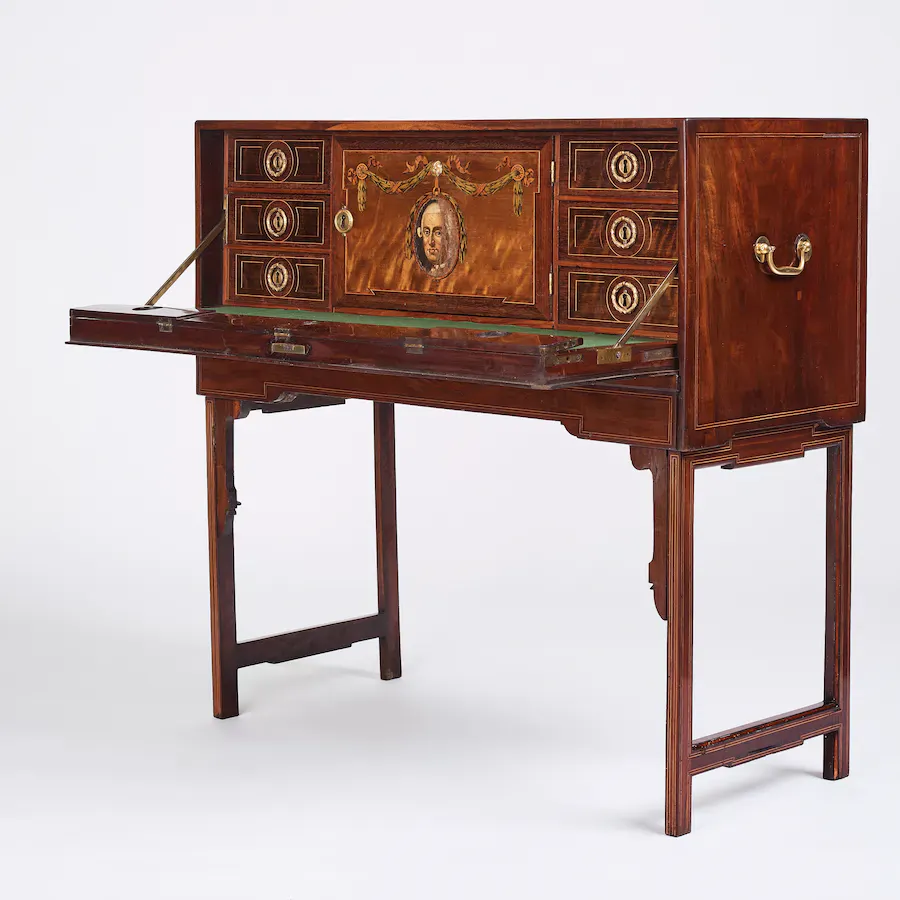
According to a receipt from 1775, Georg Haupt received payment for the repair of a 'traveling table', but no one knew which piece of furniture the receipt referred to - until now. This traveling secretary was previously unknown, probably because it resided in England. The mahogany and the design of the legs indicate that it was actually made during Haupt's time in London. The roads in Europe were improved during the 18th century, which greatly facilitated the opportunities to travel. Of course, it also had to be done in style, which led to a flurry of new furniture such as this elegant travel secretary by Georg Haupt. Its sparsely decorated exterior gives it a deceptively simple impression. The interior is richly decorated with inlays and shading, and there is an oval portrait in the middle of the largest door. The man in the portrait is as yet unknown, but it is, perhaps, the client.
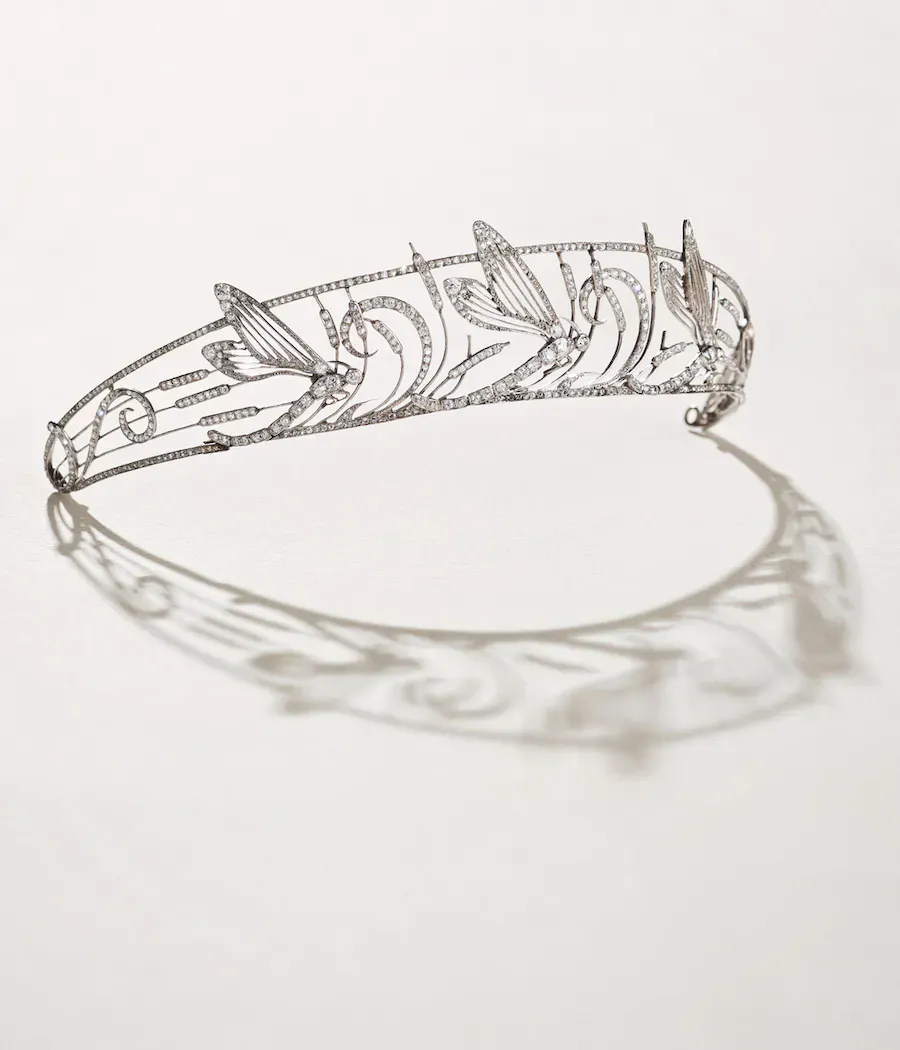
Tiaras had their heyday around the turn of the century, and the French jewelry house Boucheron was responsible for some of the most sensational creations. New technical innovations made it possible to construct designs that give a weightless, almost floating, impression. It was also a time of female liberation, and modern young women no longer wanted to wear the heavy, showy jewelry of previous generations. This particular tiara belonged to Anna-Lisa Björling, who was married to world-renowned opera singer Jussi Björling, and she probably wore it for the first time in 1957 at the premiere of Don Carlo at the Metropolitan Opera in New York City. The dragonflies dancing along the arch are a motif taken from Japanese art history, and they often appear in Hokusai's woodblock prints.
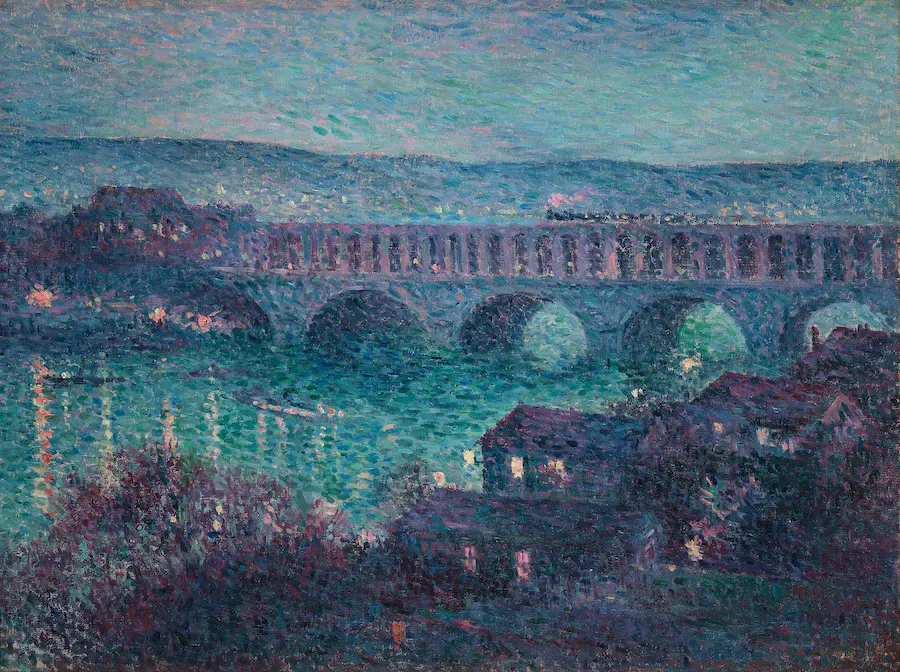
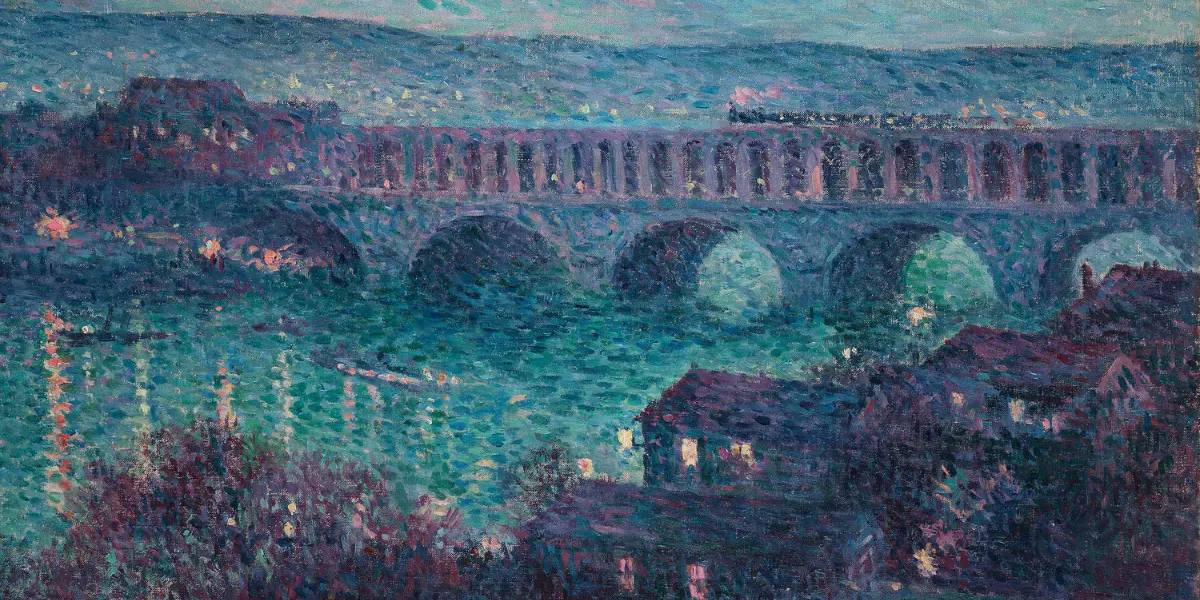
Few places and eras are as significant to art history as late 19th-century Paris. The French capital underwent revolutionary changes in just a couple of decades. In the surge of industrialization, the population flocked from the countryside to Paris, giving rise to a completely new urban culture with cafes and nightclubs. The city also experienced a radical renewal program, headed by Baron Haussmann. Old houses and narrow alleys were demolished in favor of the wide boulevards and bright limestone facades we associate with the city today.
All this change naturally impacted artists, most notably the Impressionists, to whose circle Maximilien Luce initially belonged. Artists such as Degas and Caillebotte broke free from the shackles of academic tradition and instead sought new imagery to depict their impressions of the modern times they lived in. Luce also strove to find a new language to depict the modern city, which can be seen in Le Viaduc d' Auteuil (Le Pont). The brushstrokes are short and fast, and instead of reproducing light and shadow with black and white, he has used blue and green tones. Interest in Luce's work has increased in recent years, particularly after his retrospective organized at the Musée d'Orsay in 2011. This particular painting has been exhibited at both the National Museum and the Liljevalch Art Gallery.
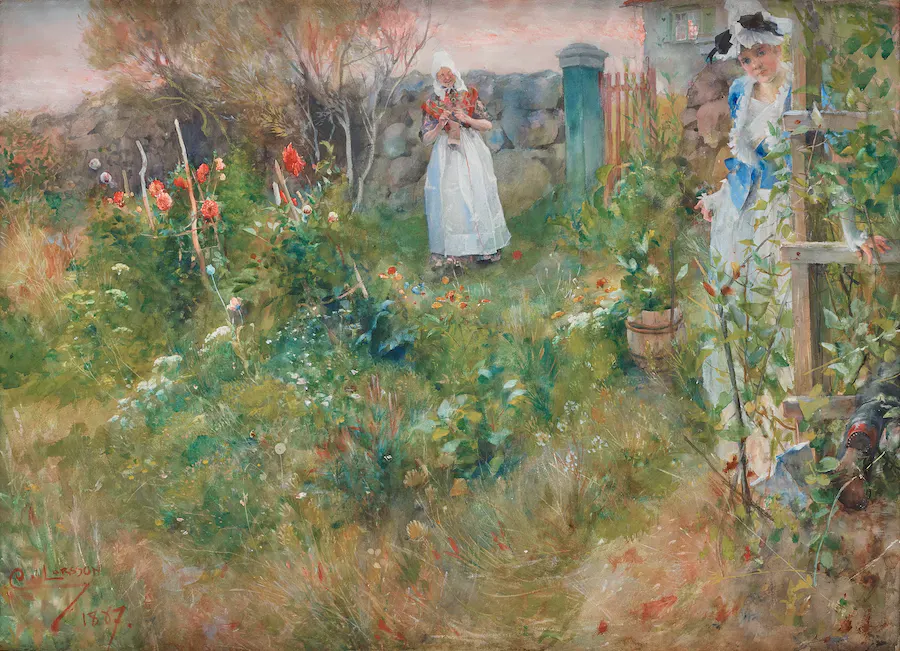
The young artist couple Carl and Karin Larsson spent the summer of 1887 in Äppelviken outside Varberg. Although it was a difficult time financially, they were able to enjoy a sanctuary there where they indulged in outdoor activities and let their children run free. Larsson captured this late summer idyll in the watercolor Evening Blush, which depicts Karin with her sister Stina. A small foot can also be seen in the lower right corner, which may belong to their eldest daughter Suzanne, who was born three years earlier. The title Evening Blush refers both to the light and to Karin's rosy cheeks. She shyly meets the artist's gaze and her beauty is reflected in the garden's flowers. The painting's first owner was the Gothenburg Art Association and it has been exhibited at both the National Museum and Liljevalch Art Gallery.
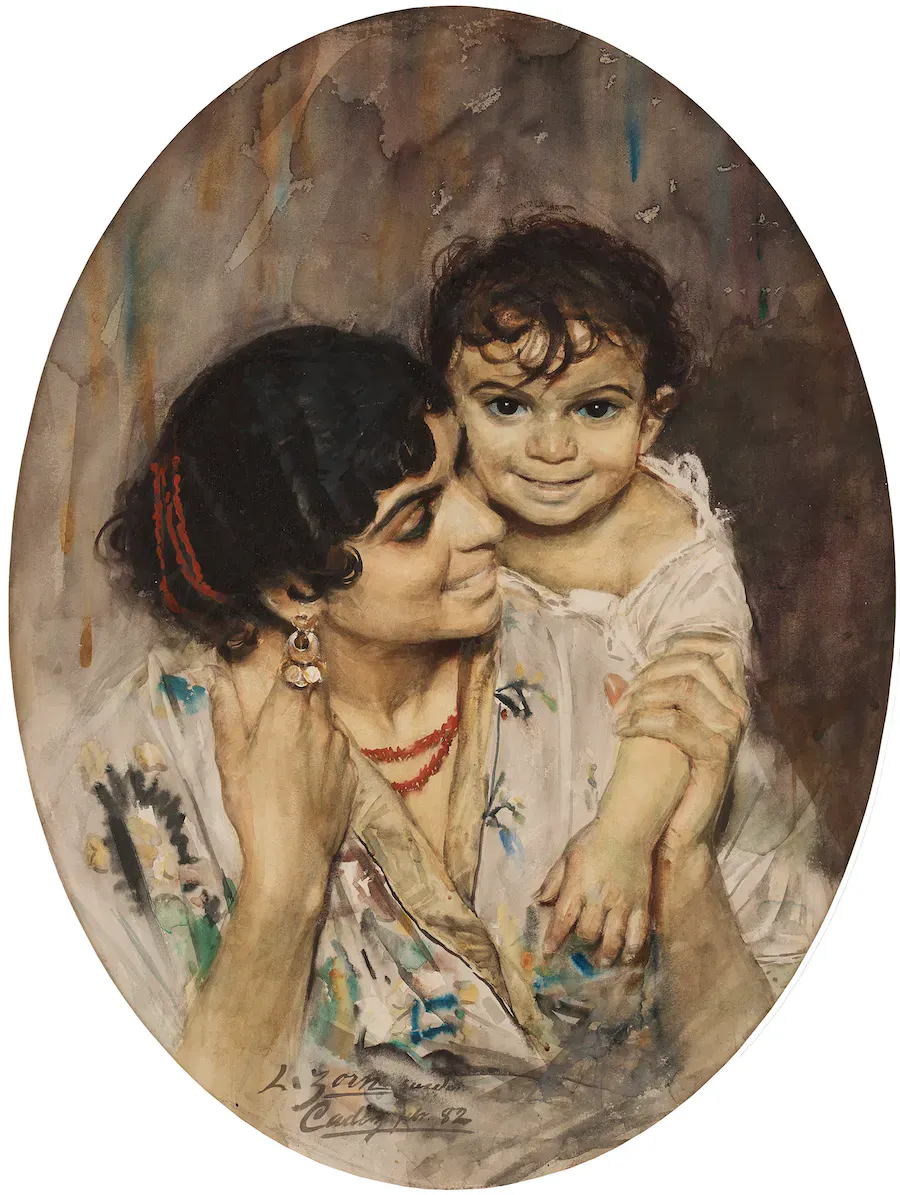
"I painted with a life and desire that I had never felt before. I was spiritually and physically in my element”. This is how Anders Zorn remembers his time in Spain during the 1880s. His journey began in Seville, but he later sought out Cadiz for its rich cultural treasures as well as for its mild climate and women. It was there that he painted Maternal Delight, which was exhibited for the first time at the Art Association in Stockholm in 1882. The watercolor painting depicts the tenderness between a young mother and her child, but it is clear that Zorn was fascinated by the Spanish woman's clothing, which must have intrigued him and he perhaps found it seductive. The red color in her coral jewelry, for example, is very accentuated. The composition also suggests that Zorn not only indulged in lazy diversions in Spain but also visited its museums. The pose in the watercolor is probably taken from Murillo's painting The Madonna and Child (1665-66) which can be viewed at the Museo de Bellas Artes in Seville.
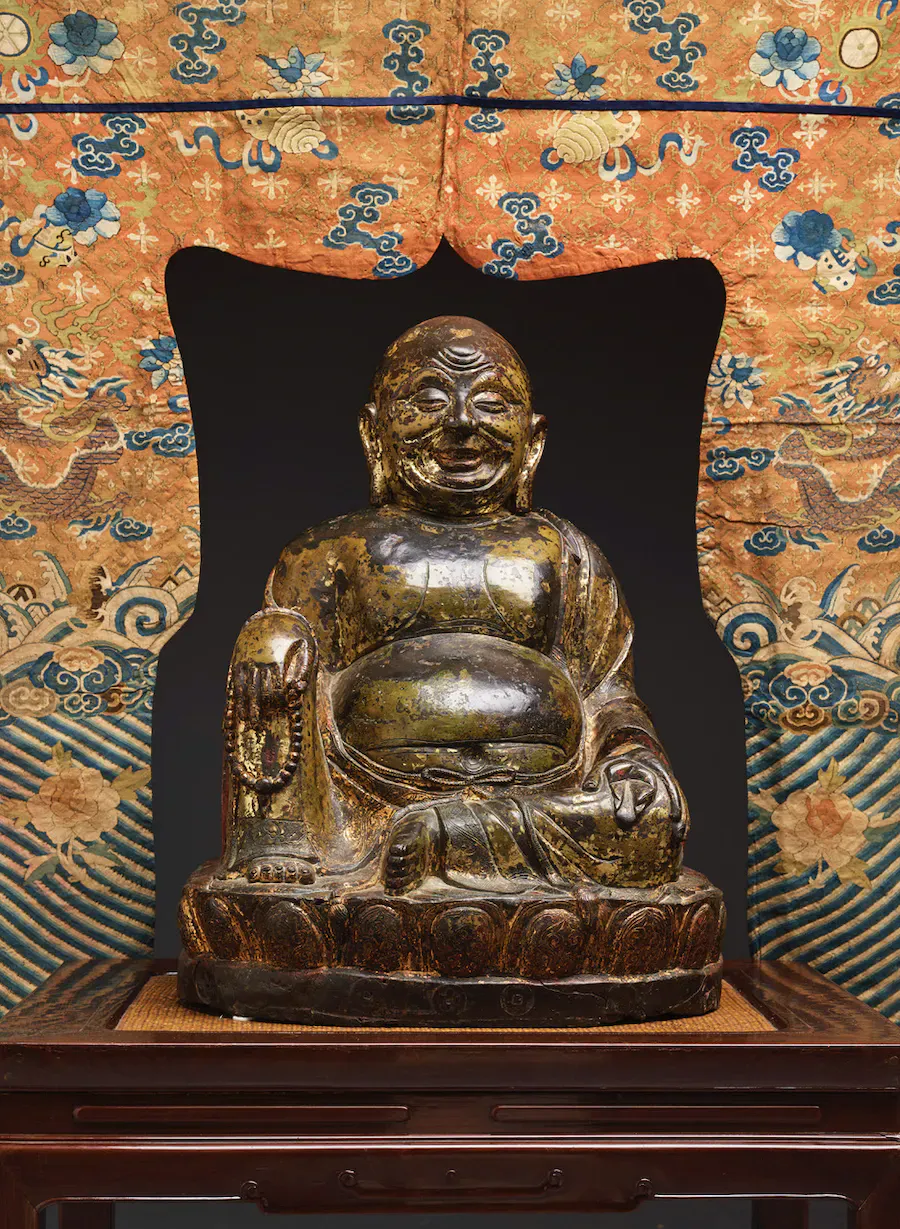
Emperor Jiajing was a devoted follower of Daoism and he cracked down heavily on other religions during his reign, particularly Buddhism. This is why Buddhist figures from this period are exceedingly rare. This figure, depicting the monk Budai, is also signed and is remarkably large. According to legend, Budai was a loving and generous monk who lived in China during the ninth century. Although he lived a life of poverty he was a happy man and he is often depicted with a broad smile, or even laughing.