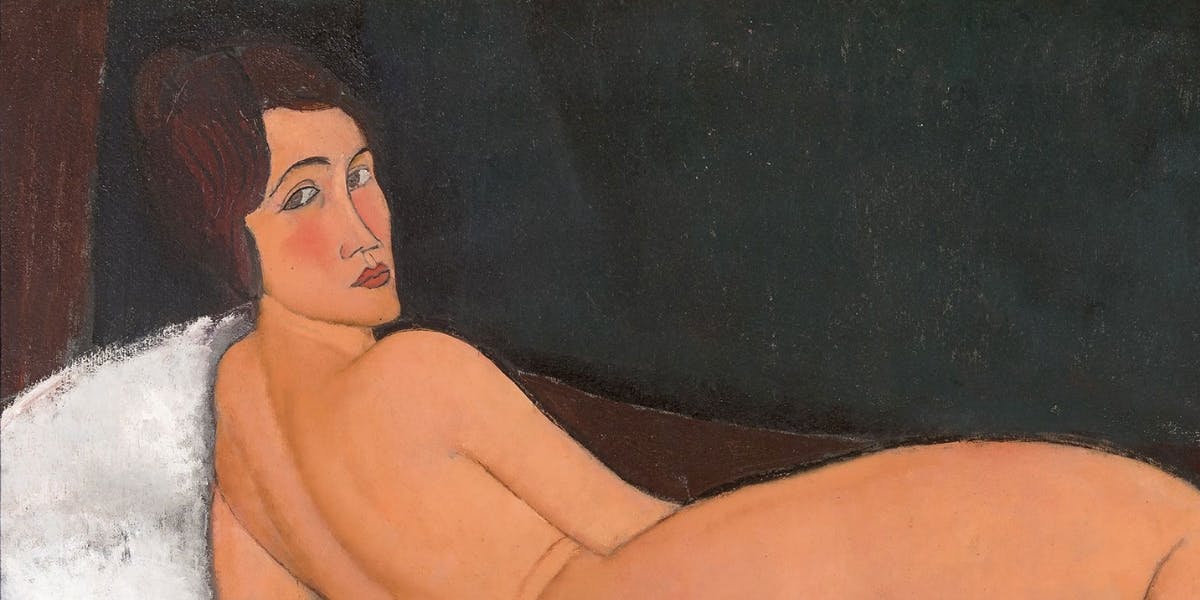
Considered to be one of the largest private collections of its genre to appear on the market in years, the Roger Moss collection reflects a lifelong passion for learning, travel and artistic expression. It will appear on 9 and 10 December at Cheffins, as a segment of the auction house’s ‘Fine Sale’. Many of the items are Chinese in origin, from both ancient and more recent dynasties, and stone sculptures, bronzes, ceramics and textiles abound. Highlights include a Buddhist stele, a water buffalo sculpture, limestone statue of the Buddha and a carved head of Christ from the Late Medieval Period.
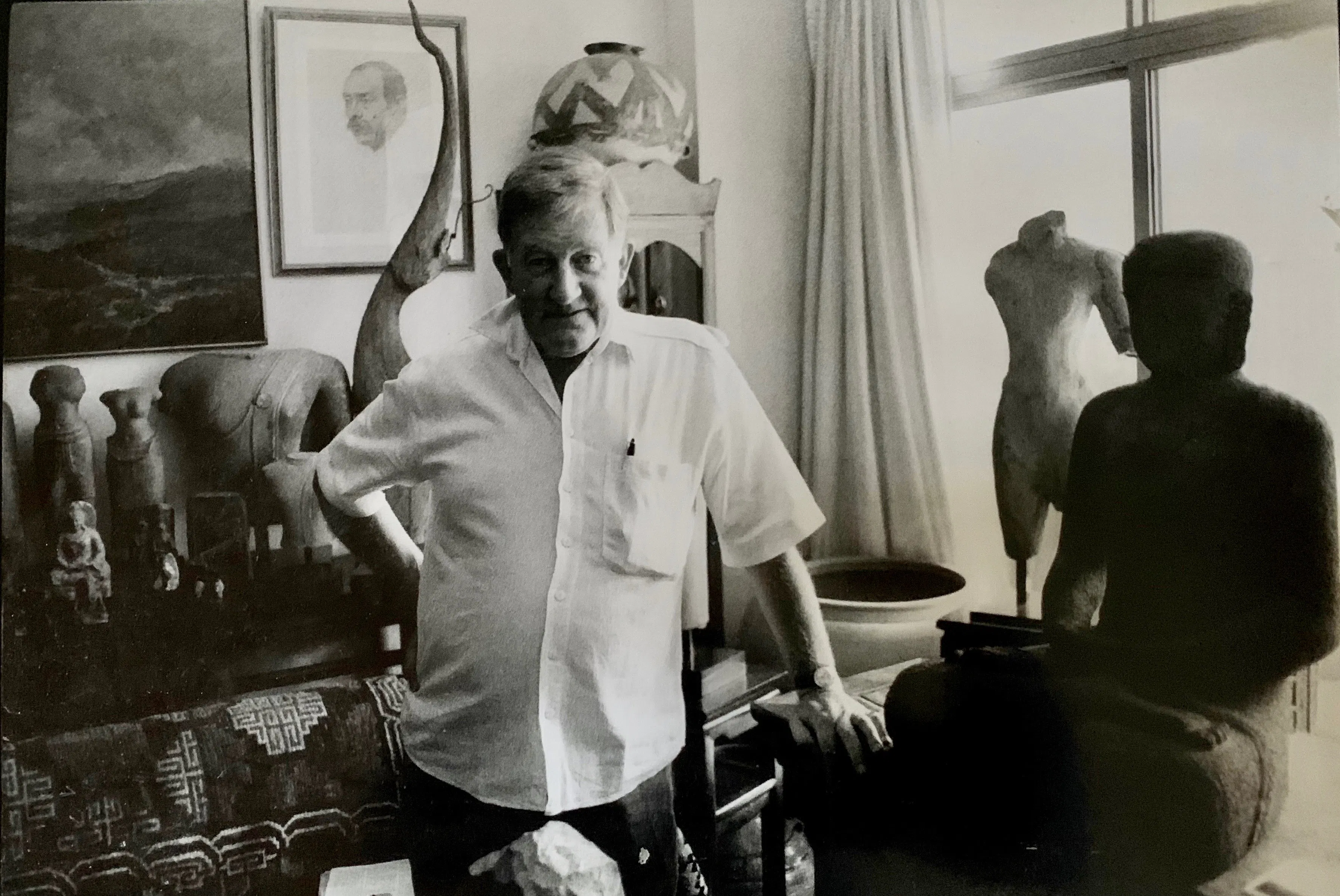
A lifelong collector, the late Roger Moss grew up in Yorkshire and studied Social Anthropology at Cambridge University before beginning an illustrious career in global finance. Moss was the Finance Director of British Airways, then, in 1984, became the Finance Director of the Mass Transit Railway Corporation in Hong Kong. While working in Hong Kong, Moss’s passion for Asian art developed, and he was on the board of The Hong Kong Ballet and president of the Oriental Ceramic Society. Upon his return to the UK in 2003, Moss bought an historic farmhouse in Yorkshire where he displayed his extensive library and the art that he had acquired over a lifetime.
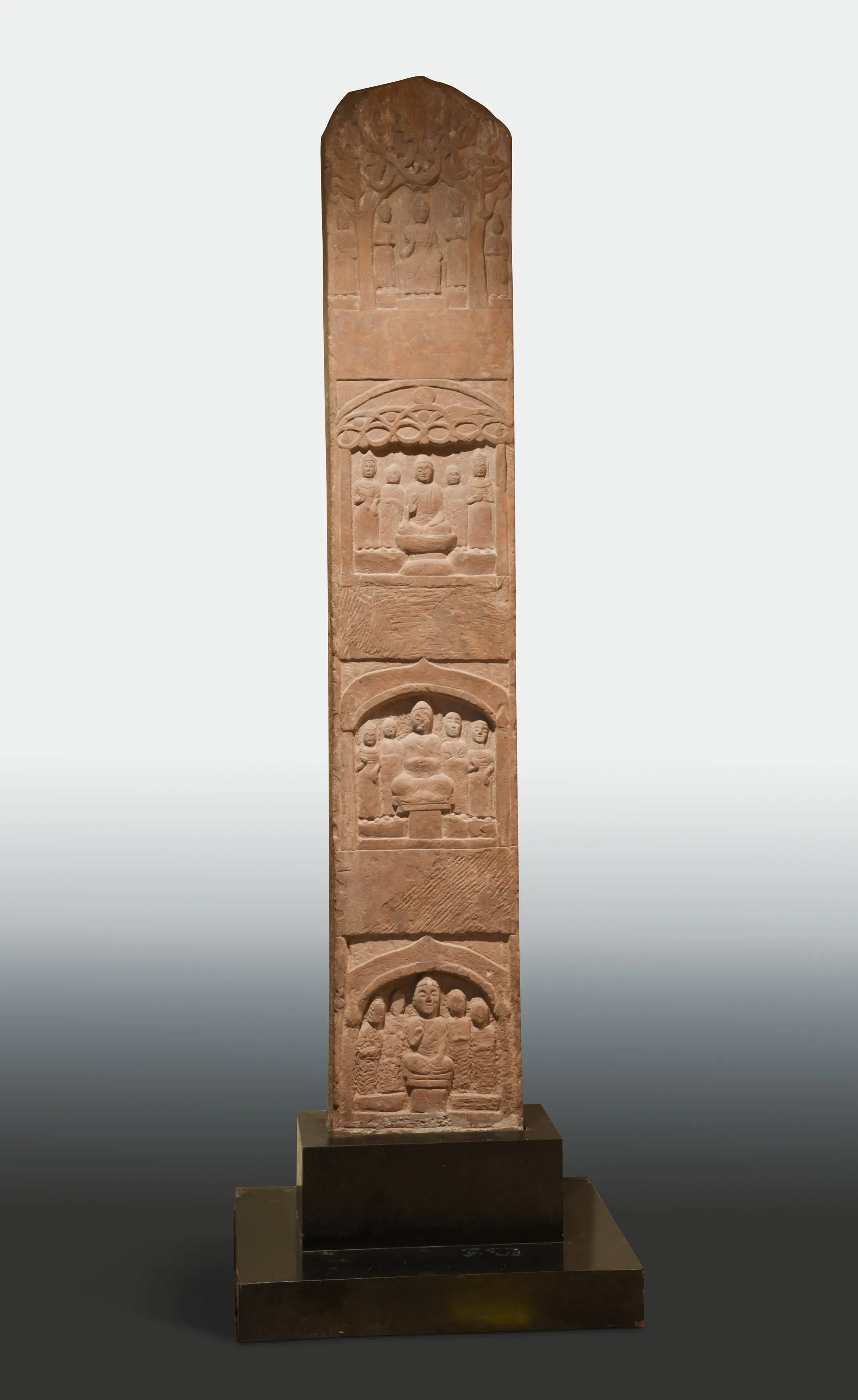
Dating from the Northern Wei Dynasty, this stele is carved on the front and back with six registers that depict scenes from the life of the Buddha. The uppermost panel shows the Buddha Shakyamuni under the legendary Bodhi tree, surrounded by figures. It was under this tree that the prince and spiritual teacher Siddartha Gautama sat and attained enlightenment, transcending his earthly life and becoming the Buddha.
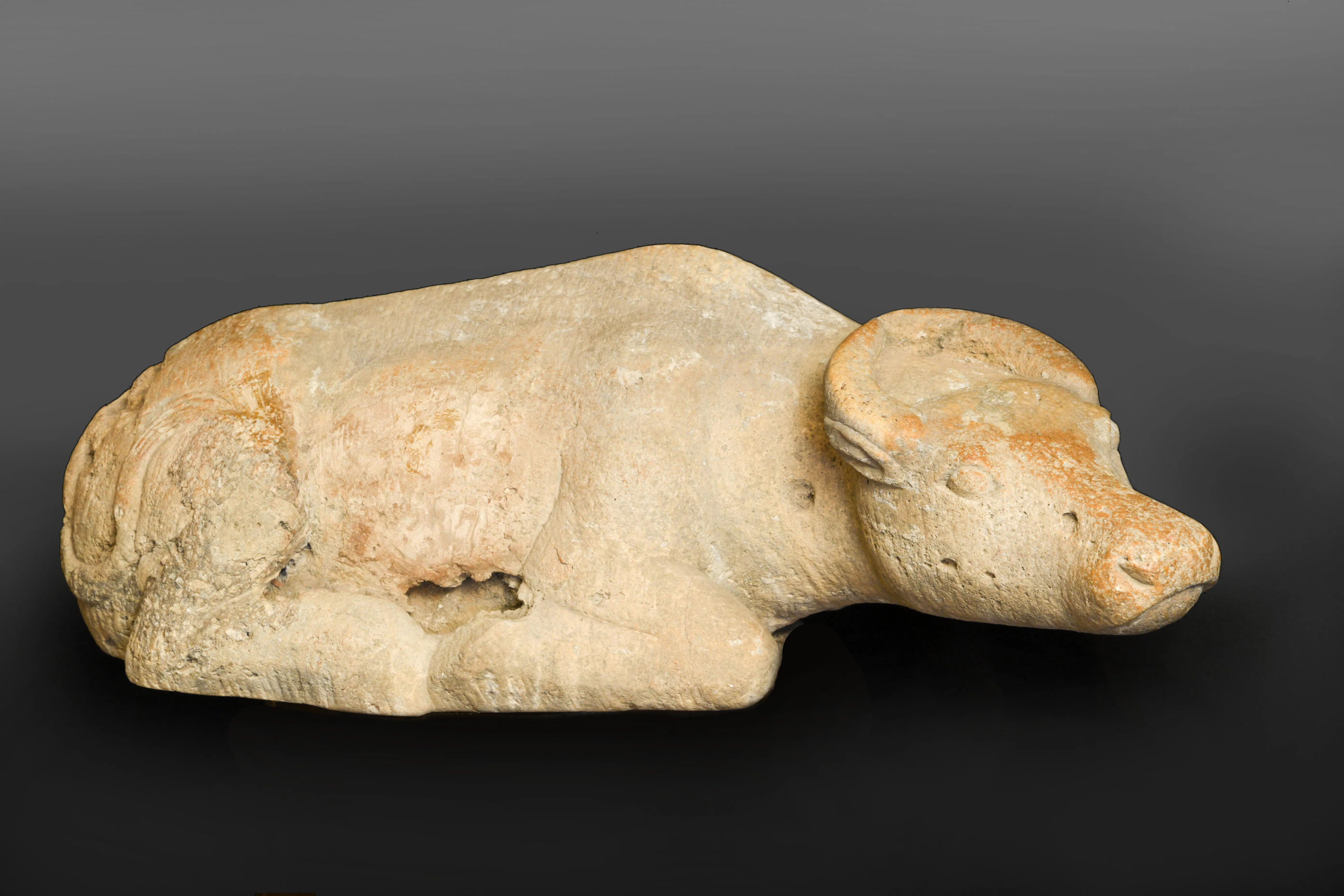
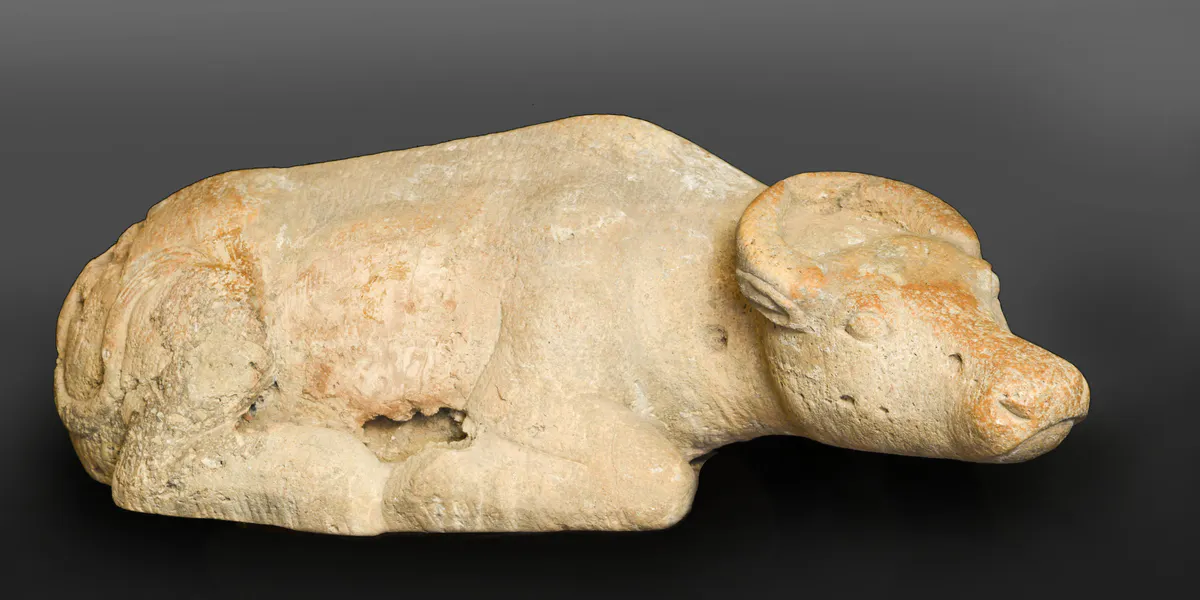
The ox or buffalo has long been an important figure in Chinese culture and mythology, present as one of the twelve signs of the Zodiac, and also an integral part of agricultural communities. Although it is well over a thousand years old, this stone sculpture of a water buffalo retains an extraordinary amount of detail. Its eyes gaze out with a placid expression, and individual hairs in the tail and ridges in the horns are still visible. These features hug the body and the legs are folded underneath, creating a compact form that helped ensure the sculpture’s preservation in its entirety.
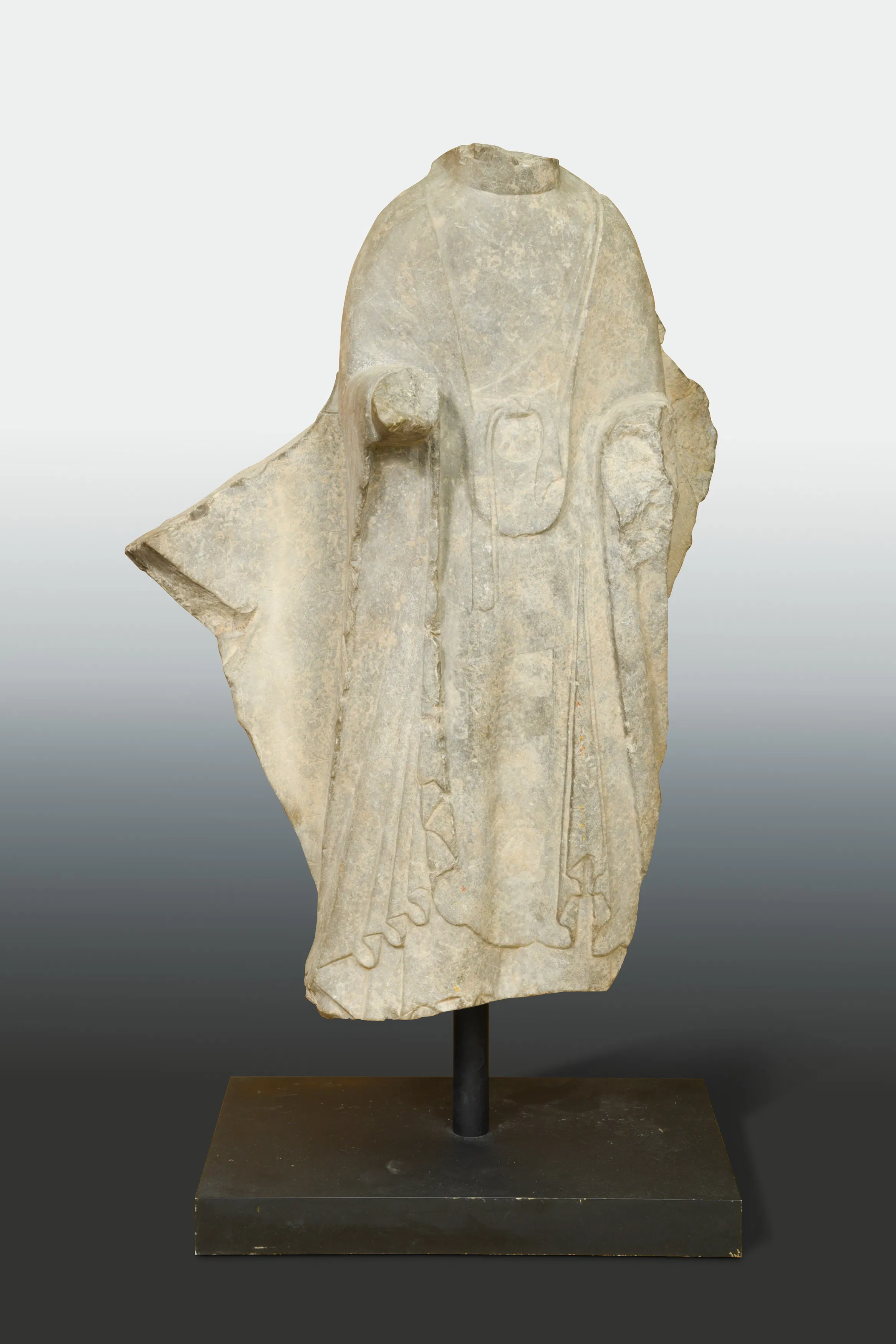
Probably from Qingzhou, in the Shandong Province, and made during the Northern Wei Dynasty, this luminous limestone sculpture depicts the torso of the Buddha. It was once part of a triad and is missing the hands that would have been held in mudras, or symbolic gestures such as the abhayamudra, which represents the dispelling of fear. These gestures appear frequently in the iconography of Asian art and are often included in dances or yoga practices as well.
The figure is dressed in a close-fitting kasaya, the clothing of a fully-ordained Buddhist monk. The robe falls softly from both shoulders, draping over the left forearm before descending into multiple pleats at the ankles. This outer robe is layered over an undergarment tied with a sash near the lower waist, and the implied delicacy of the cloth is clearly and skillfully represented in the carved limestone.
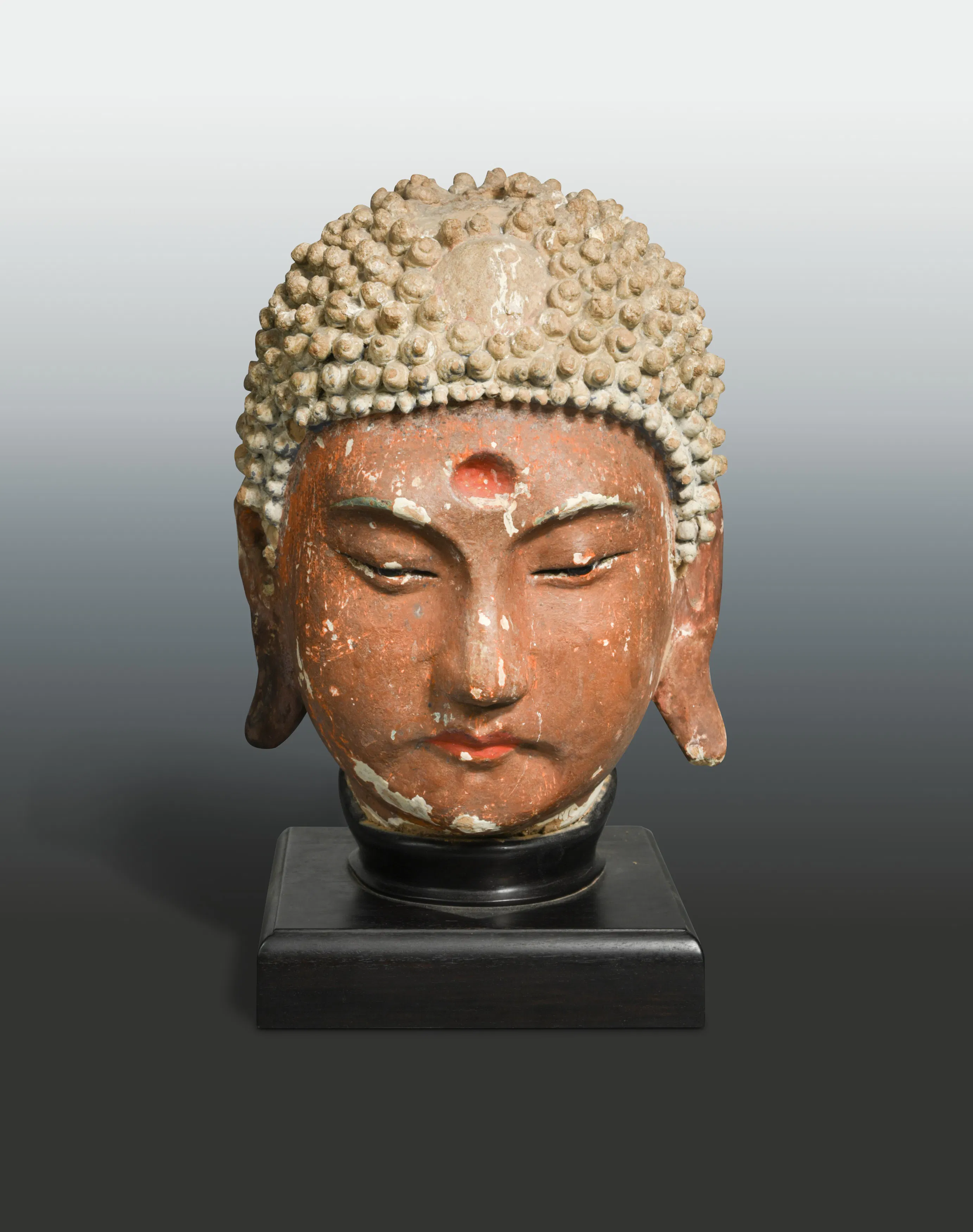
This exquisitely preserved head of the Buddha was made of stucco, then painted and finished with glass adornments. Several symbols of the Buddha are visible, including the ‘snail shell curl’ hair rising up into an ushnisha, elongated earlobes, and a recessed red urna in the forehead. The urna represents the ‘third eye’, or divine vision, and would have originally contained a glass bead to accentuate the detail.
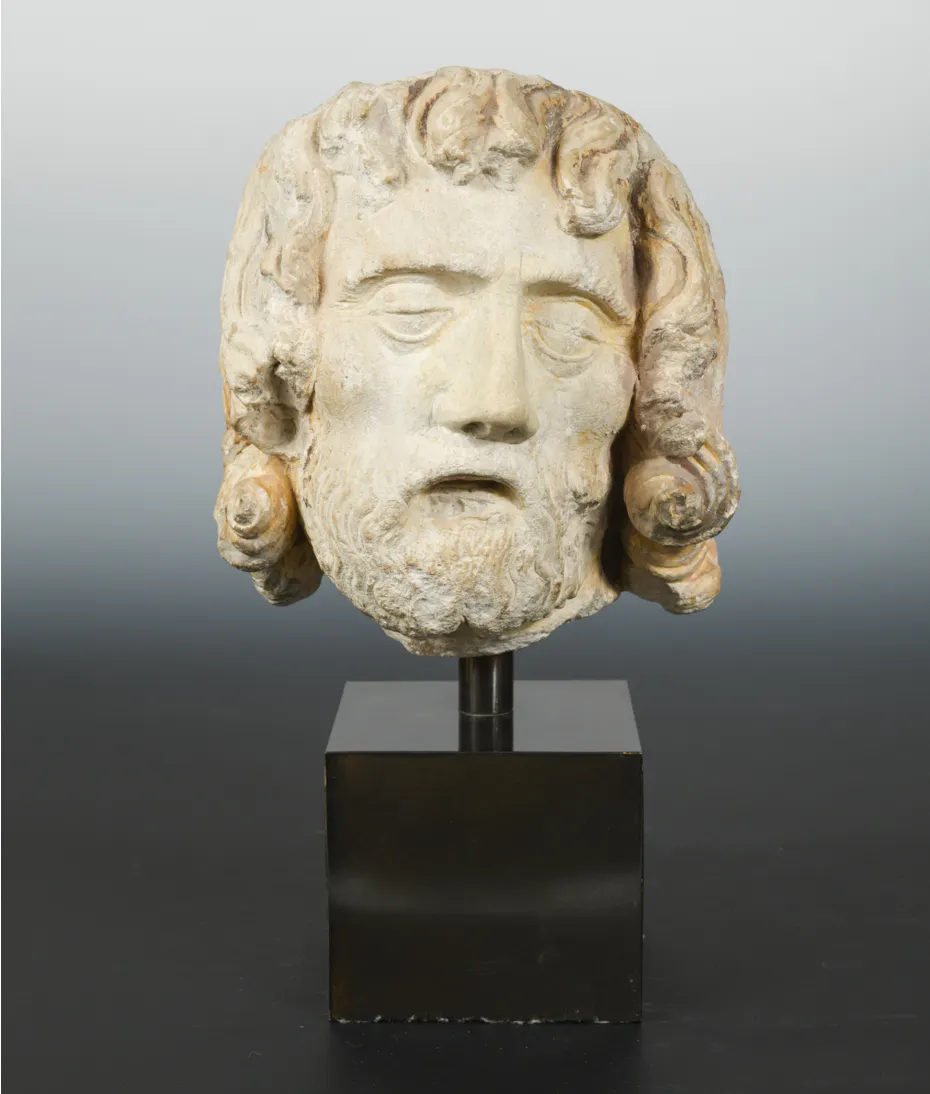
Although Roger Moss specialised in Asian art, he was not confined to a particular area or period and collected items from Europe and Africa as well. A comparatively recent artwork, this carved head of Christ was created in France around 1450. Made out of limestone, the head depicts Christ with long, curling hair and a short beard. His expression is anguished and his eyes are half-closed and downcast, accentuating his appearance of suffering before his divine ascension.
The ‘Fine Sale’, including the entirety of the Roger Moss collection, will take place on 9 and 10 December at Cheffins, located at 1-2 Clifton Road in Cambridge. In-person viewing may be scheduled by prior appointment, and a virtual catalogue is available. Registration has opened for live online bidding during the auction.