
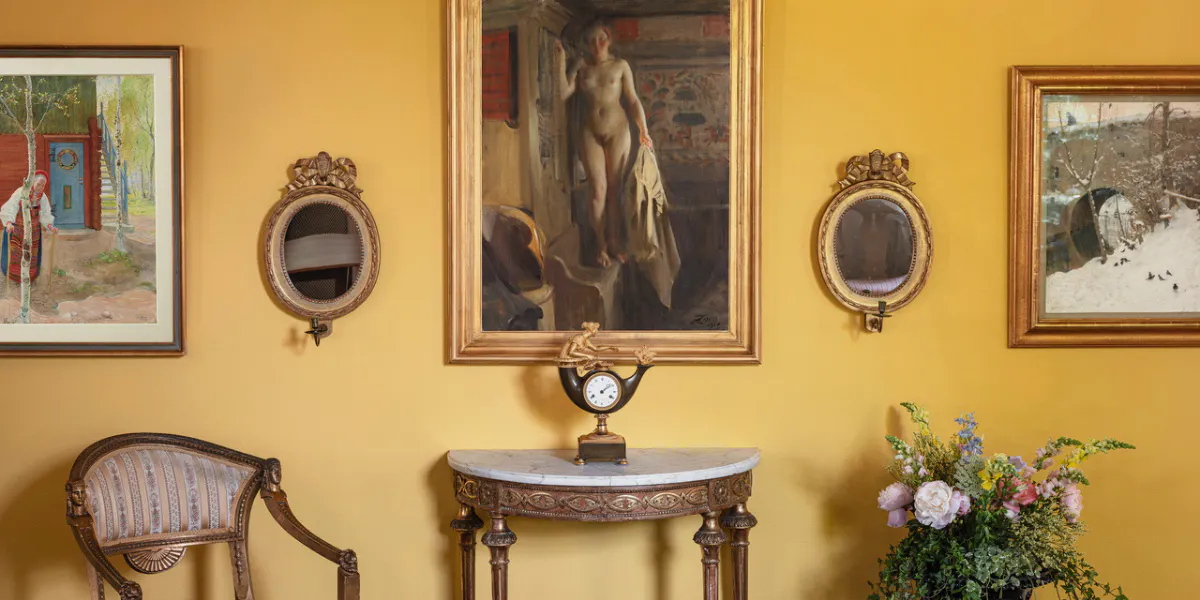
First-class furniture by Georg Haupt, jewelry by Cartier, art by Carl Larsson and Ivan Constantinovich Aivazovsky and an altar table from the Qing Dynasty are the focus as Bukowskis invites you to their Important Spring Sale from June 14-16. On the occasion of the jubilee year of 2023, a royal section will also be presented with a large selection of objects with royal provenance, including an imperial cigarette case made by Fabergé.
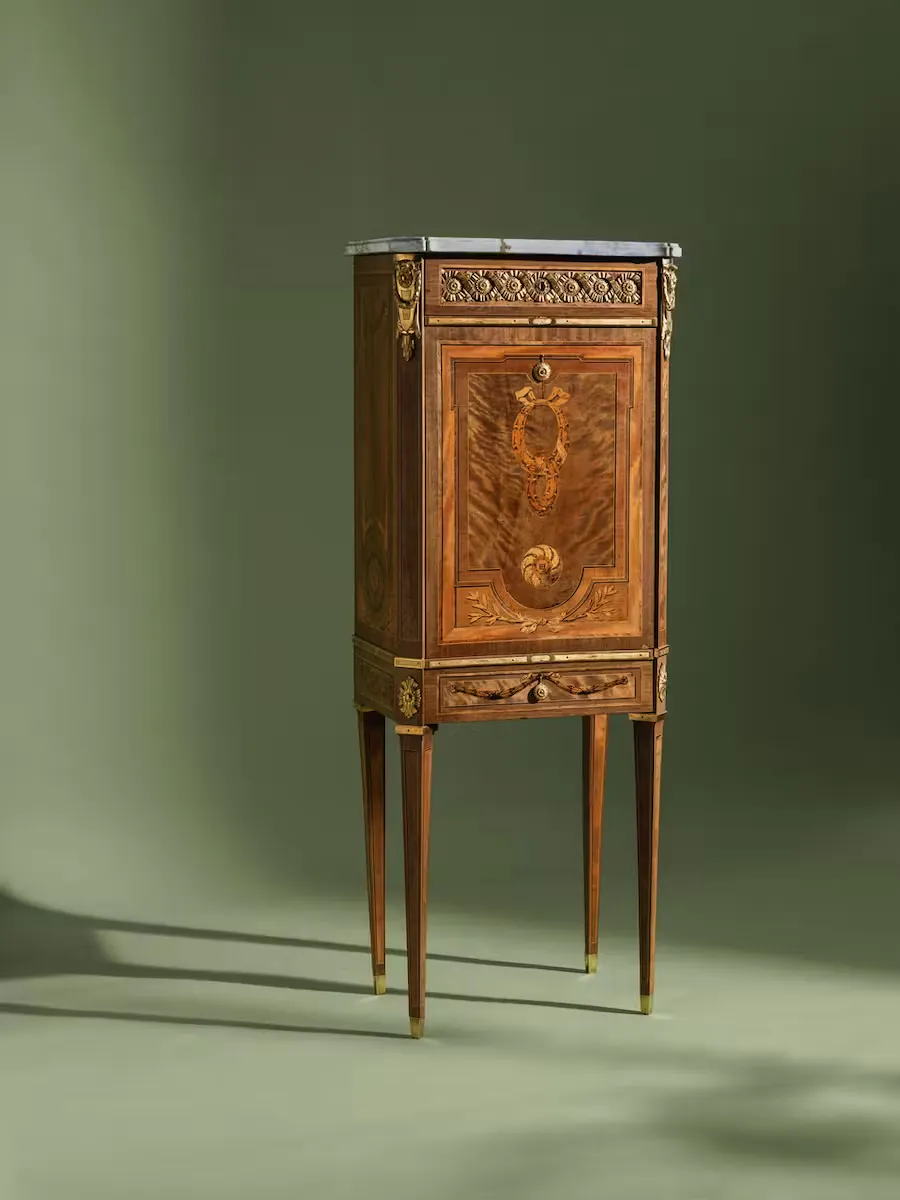
It is rare for works made by the Gustavian furniture maker Georg Haupt of this quality to come to auction. The slender legs, smooth veneers and rich marquetry are so elegant that there is no doubt about the originator of the furniture. It is not signed, but in the 18th century customers often placed their orders directly from the cabinet maker, which is why signatures were considered superfluous. The secretary not only shows great craftsmanship but is also extremely well-preserved. The inlays on the fronts of the boxes are particularly notable, and they have preserved their original color splendor and testify to how it looked in new condition. The decoration on the front of the secretary, in the form of a rosette-adorned laurel wreath, reappears in several of Haupt's royal commissions, including on the mineral cabinet for the Prince of Condé, which was ordered as a gift by Gustav III.
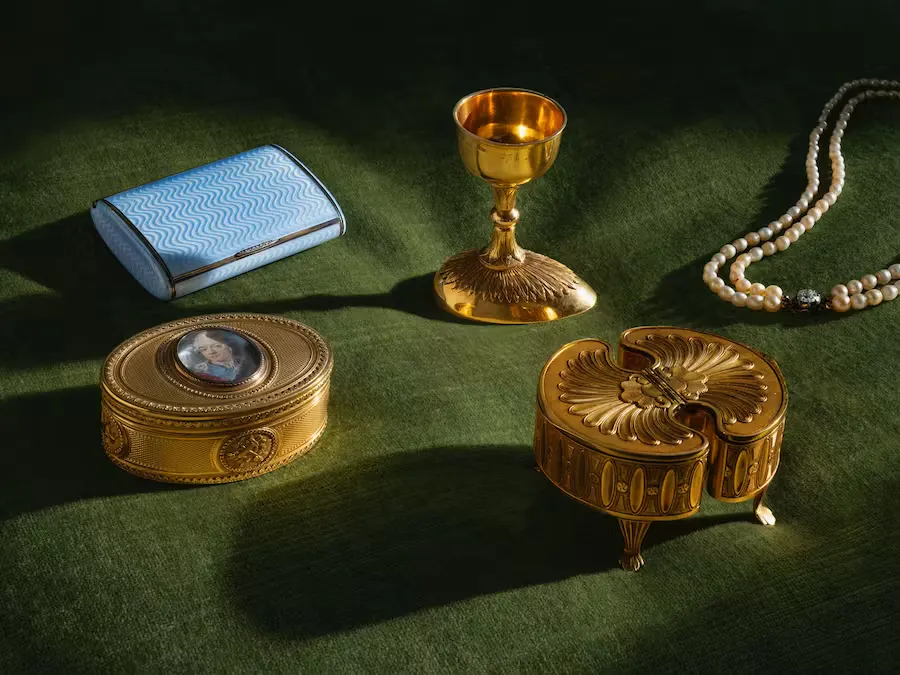
The sun was shining over Sörmland Bay when the imperial yacht Standart docked outside of Tullgarn Castle on June 28, 1909. Tsar Nicholas II and Tsarina Alexandra had crossed the Baltic Sea to visit their Swedish relatives Gustav V and Queen Victoria, and they brought this Fabergé-made cigarette case with them as a present for the Swedish king. It is clad in light blue enamel, the buckle is encrusted with rose-cut diamonds and the box is stamped by the master craftsman. All items produced by Fabergé have an inventory number engraved on them and on the inside of the lid, you can read 17443. The invoice was written in German as Alexandra did not speak Russian, and as the Tsar couple shared the cost it suggests that the gift was private. It was also a very fitting gift because both the Tsar and the King were heavy smokers.
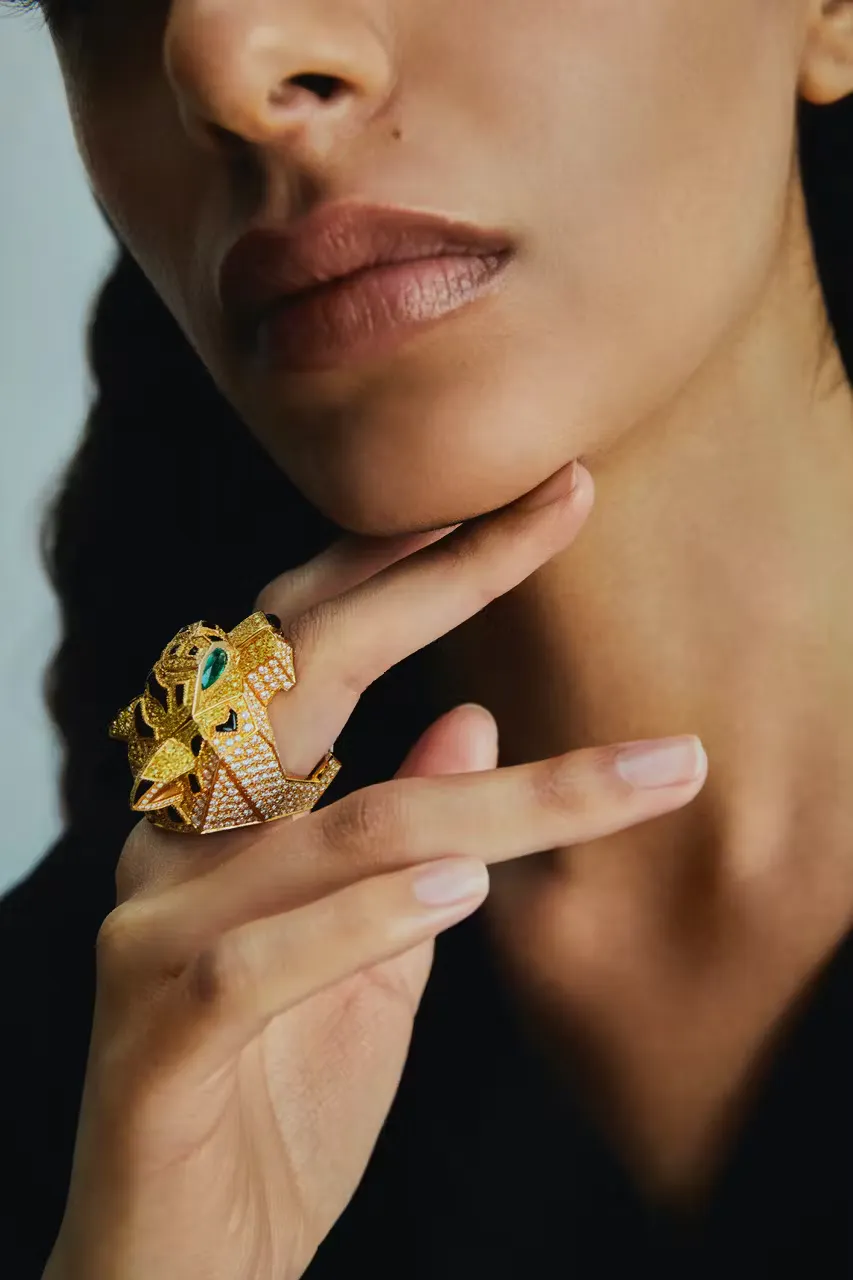
Cartier's panther design made its debut in 1948 when it graced the dainty arm of the scandal-ridden Duchess of Windsor at an event in Paris. The bracelet was designed by Peter Lemarchand on the order of the abdicated King Edward VIII and it included a large emerald from his own collection. However, the original idea for the panther motif is said to have come from the designer Jeanne Toussaint, who, during a safari trip with Louis Cartier at the beginning of the century, was fascinated by the feline and immediately proclaimed that they should recreate it in jewelry form.
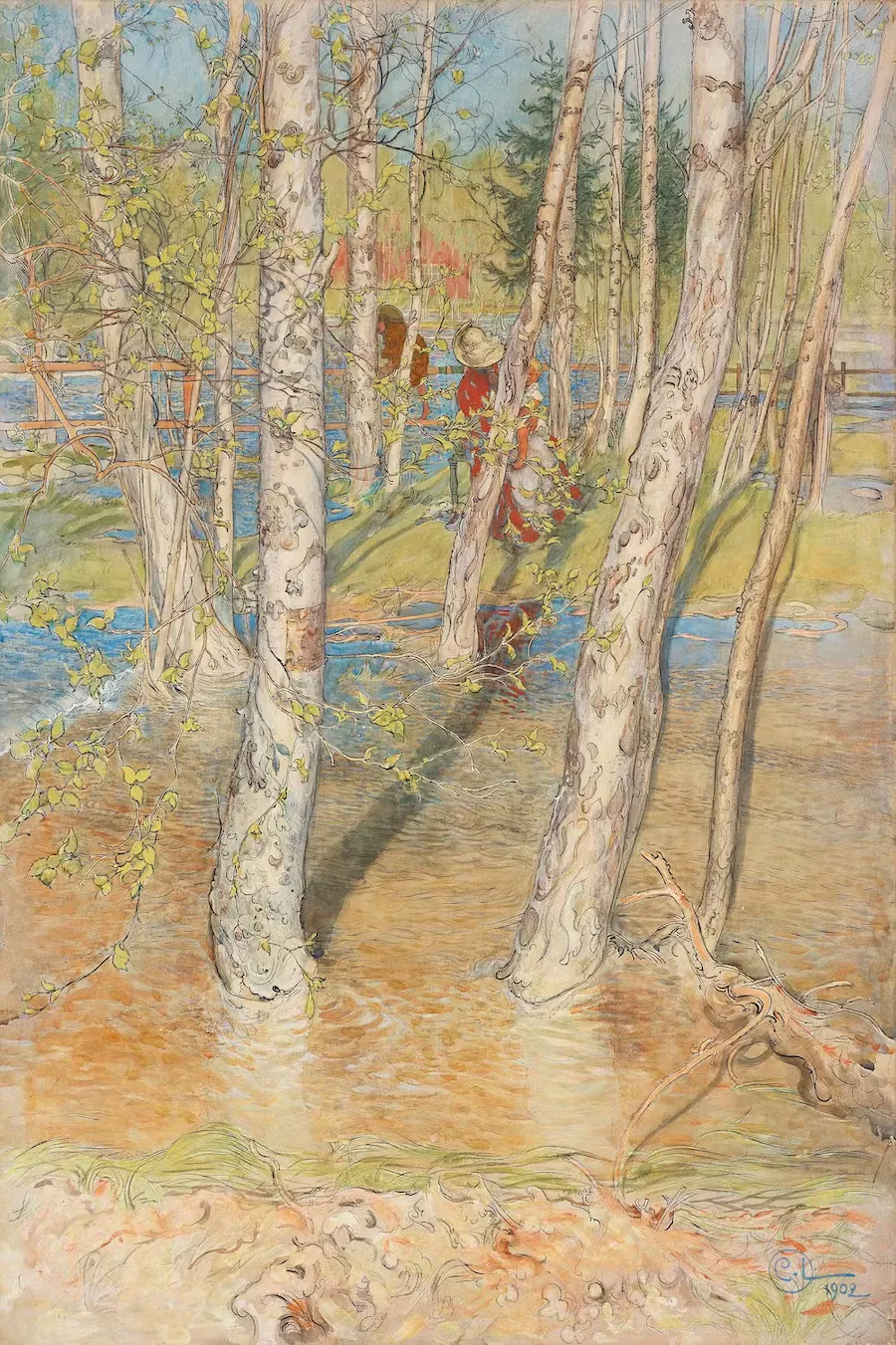
Every spring, the river in Sundborn, where Carl Larsson settled in 1889, overflows, and it is precisely that phenomenon that he effectively depicted in this work. Behind the graceful birch trees, his wife Karin can be seen on a chair with their son Torbjörn on her lap, while one of their daughters climbs in the background. It was during his stay in the French village of Grez-sur-Loing between 1882 and 1885, where many other Scandinavian artists had made a pilgrimage, that Larsson discovered the impressionist landscape paintings whose influence is clearly depicted here.
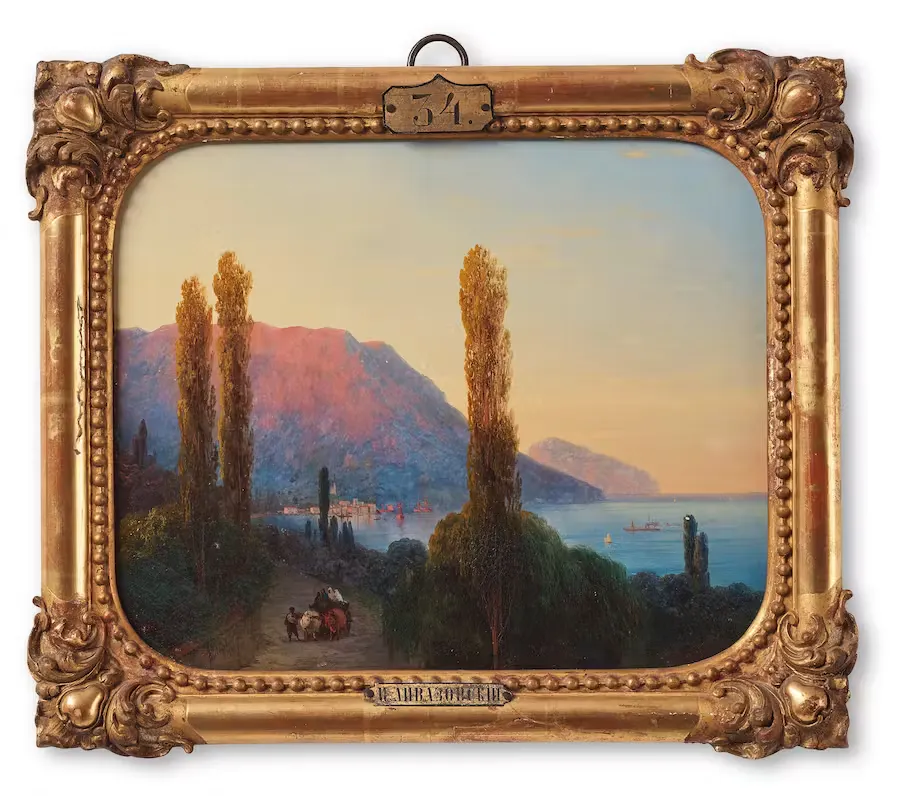
Ivan Constantinovich Aivazovsky grew up in simple circumstances in an Armenian family in the small village of Feodosia on the Crimean Peninsula, but during his lifetime became one of Russia's most celebrated artists. After studying at the Art Academy in Saint Petersburg, he made a name for himself with his maritime paintings. Here he depicts the coastal city of Yalta at sunrise, and the early morning light is effectively portrayed from the turquoise tones of the sea to the sharp peaks of the mountains. In 1865 he became a professor and member of the academy in Saint Petersburg but also founded his own art school in his home village of Fedosia. This work was bought by Tsar Alexander III and hung in the Alexander Palace in Tsarskoye Selo. After the 1917 revolution, the city seized the imperial collections and the palace was converted into a museum and opened to the public, but the Soviet state began auctioning off Russian art treasures to increase revenue for the treasury during the interwar period. That is how the painting was acquired by a Swedish collector and has been in the same family's possession until now.
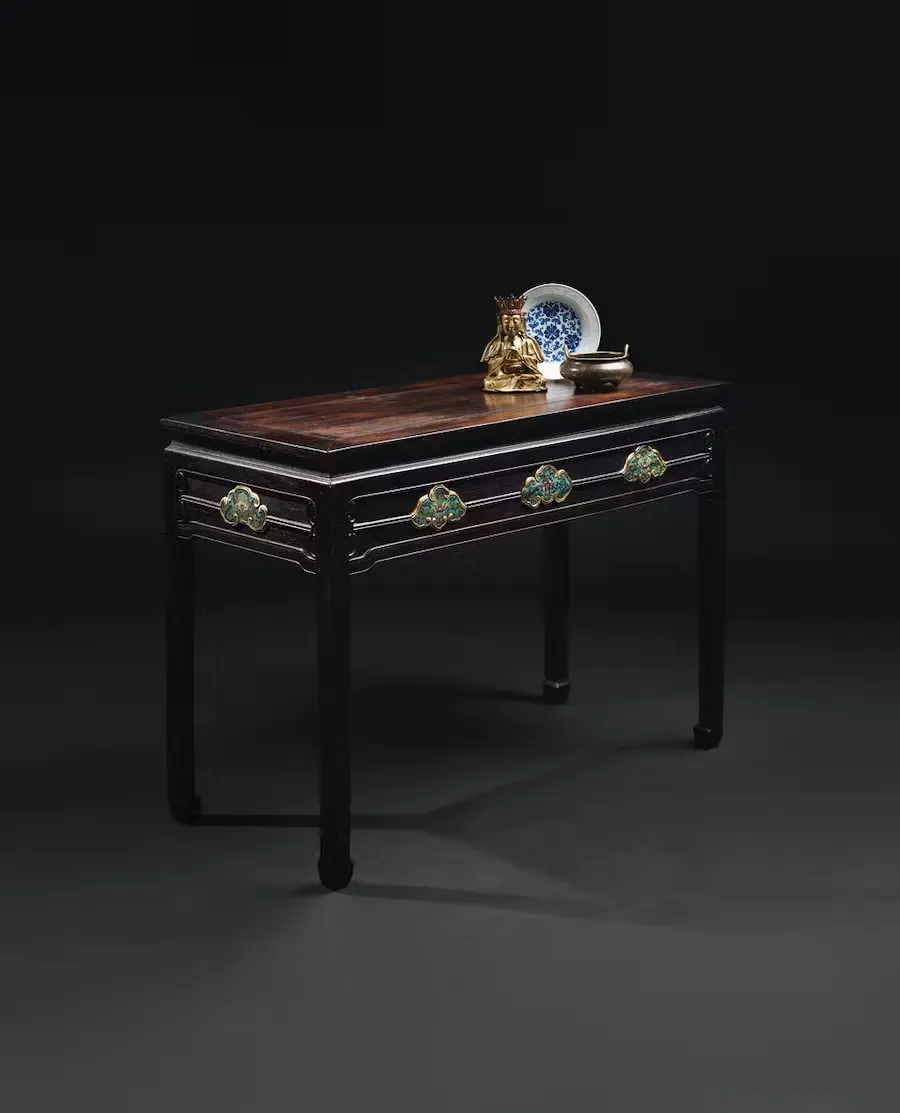
Made in the Qing Dynasty, this table is elegantly carved in dark zitan wood and decorated with crescent emblems and enamel and jade inlays. The breadth of the altar table suggests that it was originally used to display heavier objects, perhaps ceramic vases or gongshi, natural rock formations used for meditative purposes. The table belonged to the Swedish diplomat Klas M Böök, who was, among other things, an ambassador in Beijing and New Delhi.