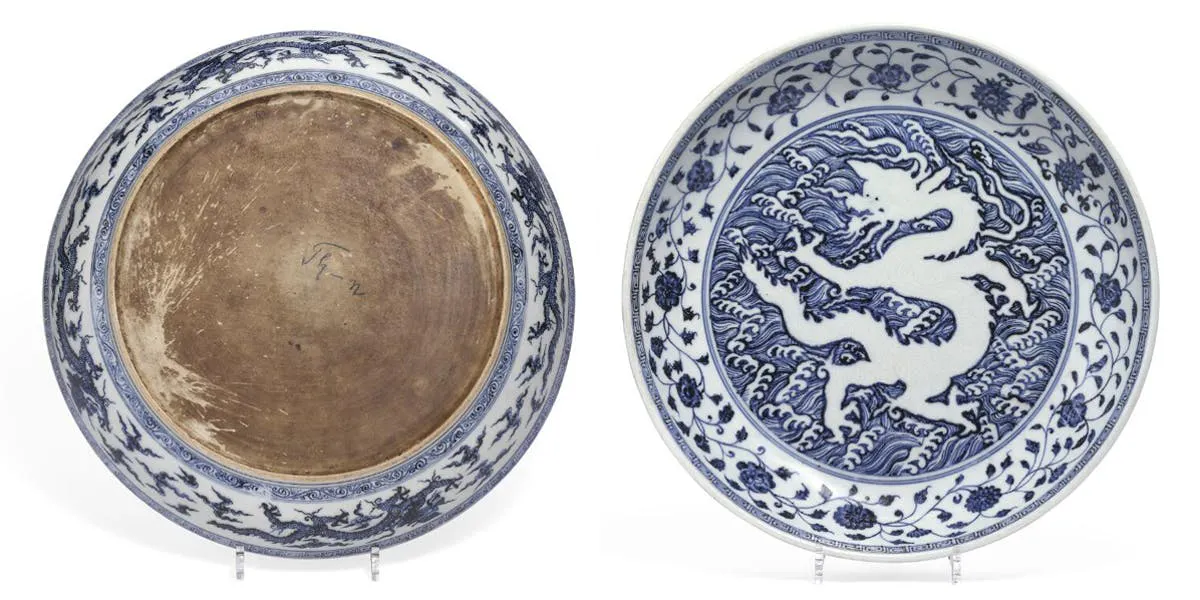
Bruun Rasmussen owes the highest sale in its history to a blue-and-white Chinese dish from the fifteenth century, presented on June 2 at an Asian Art sale in Bredgade, Copenhagen. After a bidding battle, the object decorated with a dragon motif dating from the 15th century was auctioned for the sum of 35.5 million Danish crowns (about $5.6 million).
The dish came from the large private collection of Swede Salomon Sörensen (1856-1937), who worked as an architect for the city of Malmö for three decades. Sörensen was an avid collector of Chinese and Japanese decorative arts and had great knowledge in this field.
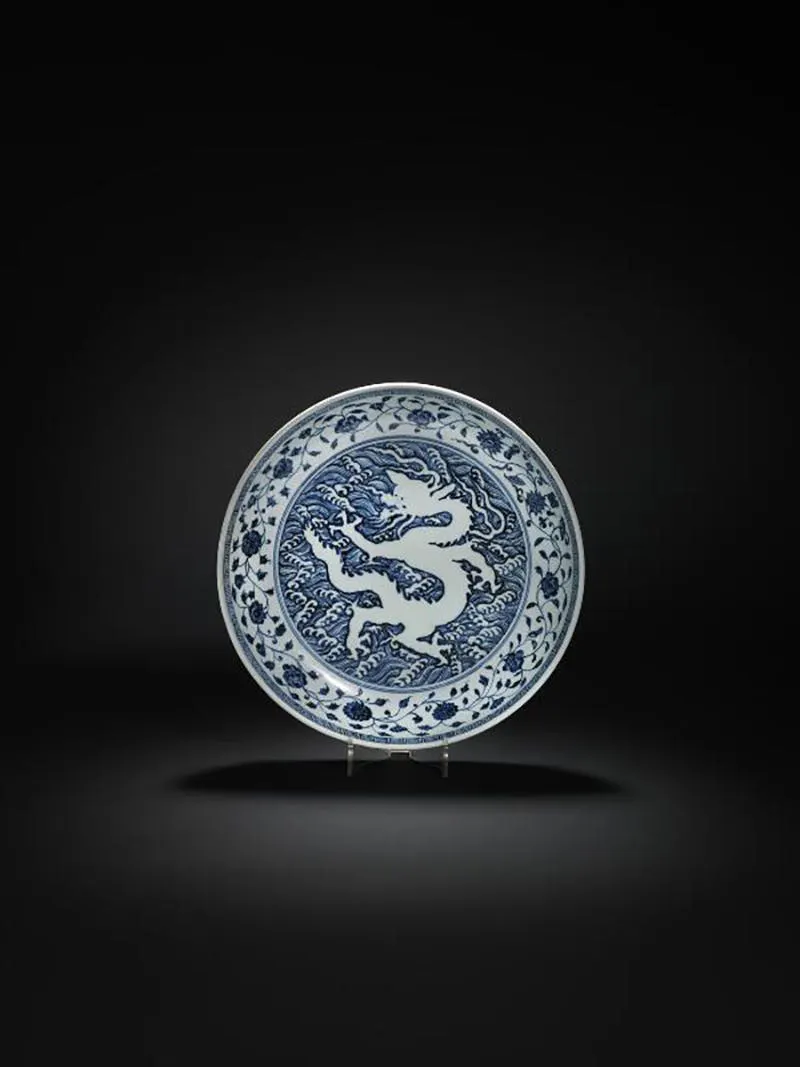
“We were well aware that the dish would fetch a good price and that there would be a great deal of interest in it. We were aware that it would appeal to collectors all over the world, not least in China. We had therefore also done our best to market the dish in different media. Yet, I have to admit that our estimate was a bit off the mark, but the result itself can certainly be described as having hit the bullseye,” said Ralph Lexner, Head of the Department of Asian Art and Antiques at Bruun Rasmussen Auctioneers.
Related: 8 Sensational Flea Market Finds
The dragon, a motif used in Asia for several centuries, is often depicted as a hybrid creature said to have the characteristics of different animal species, such as the serpent and the lion. In Chinese mythology, the dragon is associated with good fortune, dignity and strength, qualities at odds with our Western view, showing dragons as terrifying fire-breathing monsters.
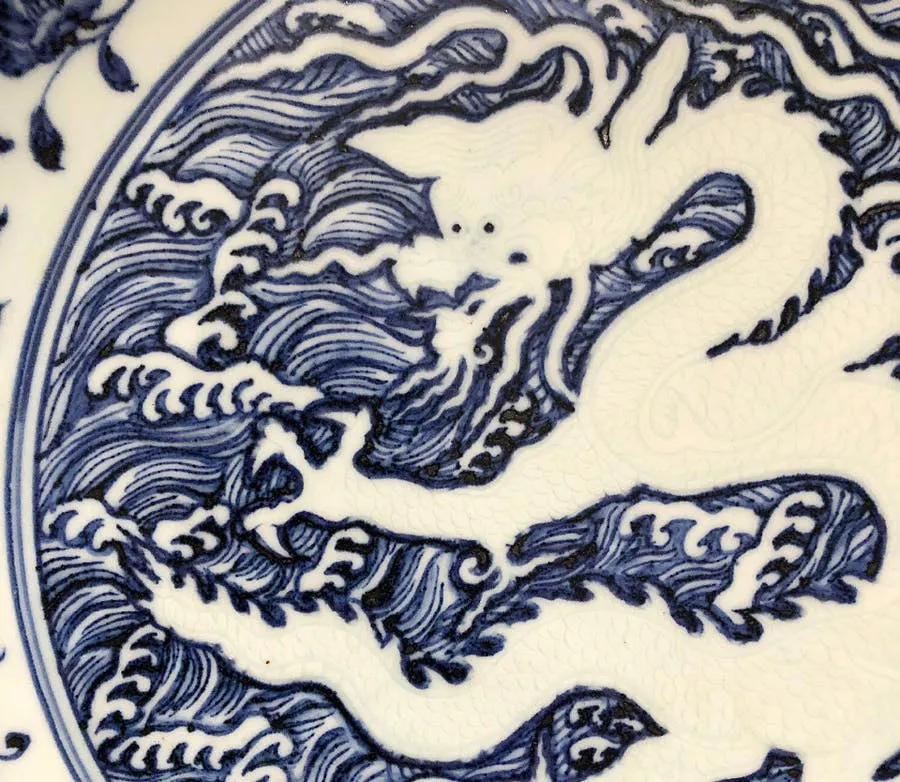
The dragon depicted on the dish has three claws, a symbol traditionally associated with dignity, while the imperial dragon is still depicted with five claws. One of the best-known and most widely used sources for ceramics from this region of the world is the 2003 book A Dictionary of Chinese Ceramics by Wang Qingzheng, which also features a similar dish with a three-clawed dragon on the first page.