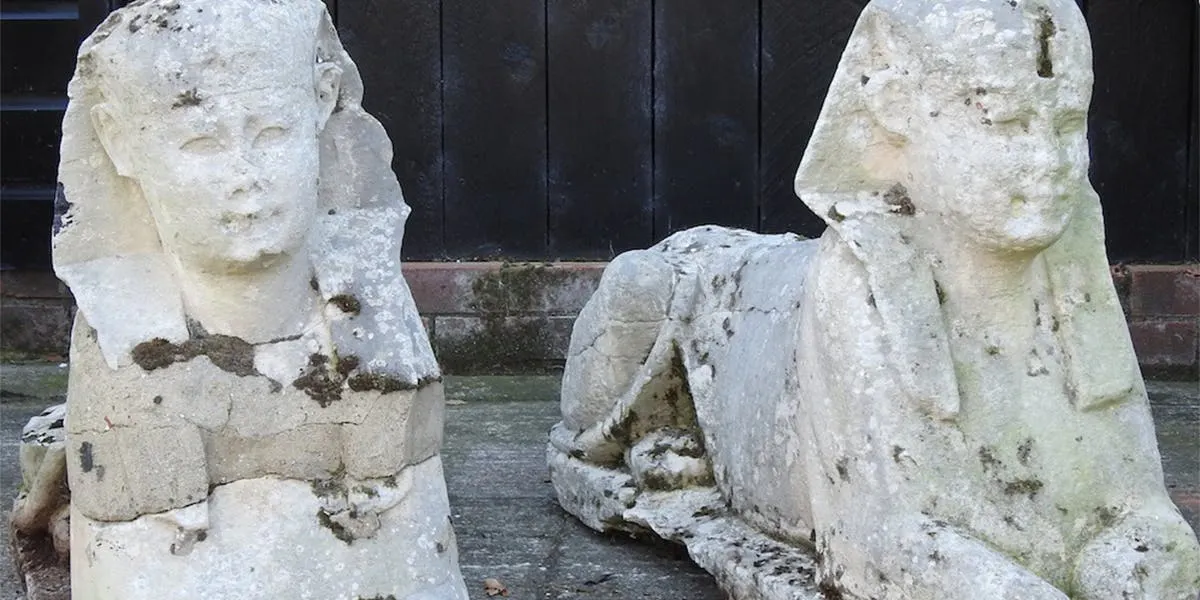
On October 9, at Mander Auctioneers, a small auction house in Suffolk, England, a pair of Egyptian stone sphinxes each measuring 110 x 35 x 68 cm came up for auction.
The consignors, a local couple who had wanted to part with the Sphinxes due to an imminent move, had bought them at auction fifteen years earlier for a few hundred pounds. For the next several years, the sphinxes were used as decorations in the couple's garden.
Due to the effects of wind and weather, and a fracture repaired with cement, the sculptures, estimated to be two hundred to three hundred years old, came up for auction at Mander Auctioneers with an estimate of £300-500 ($400-680). Bidding started at £200.
And then "The auction just went crazy," as auction house owner James Mander put it to CNN. Several online and phone bidders began competing for the two sculptures being offered together. The winning bid from an undisclosed gallery was ultimately £195,000 ($265,000).
Related: 6 Sensational Attic Finds
In fact, the eager bidders had recognized the two sphinxes for what they really are: original works of art from ancient Egypt, which, for unknown reasons over the past centuries, were mistaken for replicas of the 18th or 19th centuries and, as such, continued to be sold well below their value.
But who knows, perhaps the sphinxes were actually created as ‘garden decorations’ – albeit a long, long time ago in the pharaohs' kingdom on the Nile.
Find more news from the auction market with Barnebys Magazine