Rome wasn't built in a day, goes an ancient saying. And it's not even possible to visit it all in a single day. But, if you have little time available, we suggest a route that touches on some of the main monuments. Let's set off together for this virtual walk!
1. Roman Forum and Colosseum
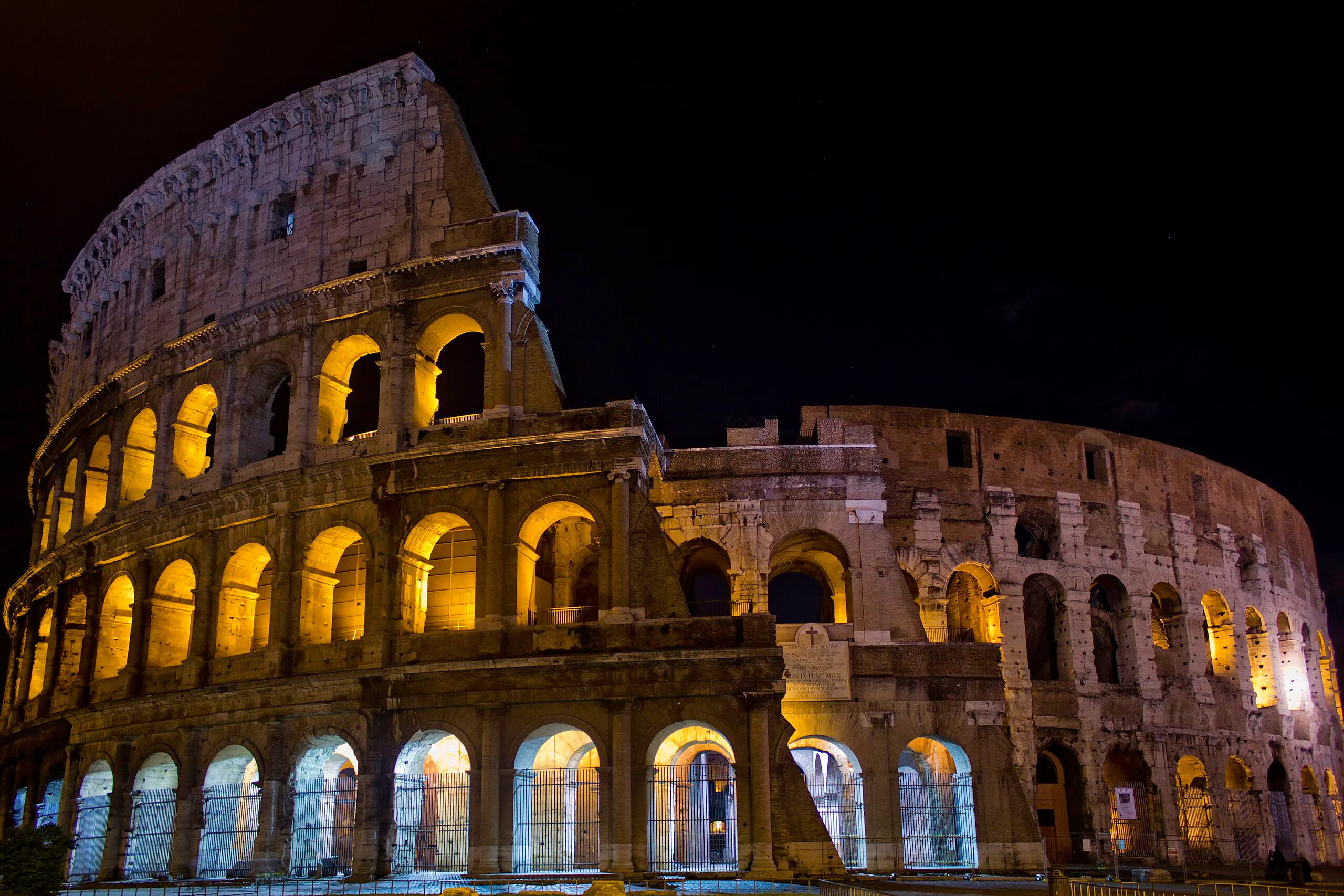
Our adventure begins in the heart of ancient Rome: the Roman Forum and the Colosseum. The archaeological area of the Roman Forum is a real journey through time, where the remains of ancient temples catapult us into the fascinating era of the great emperors. The Forum was the place where the city's political, religious and commercial activities took place.
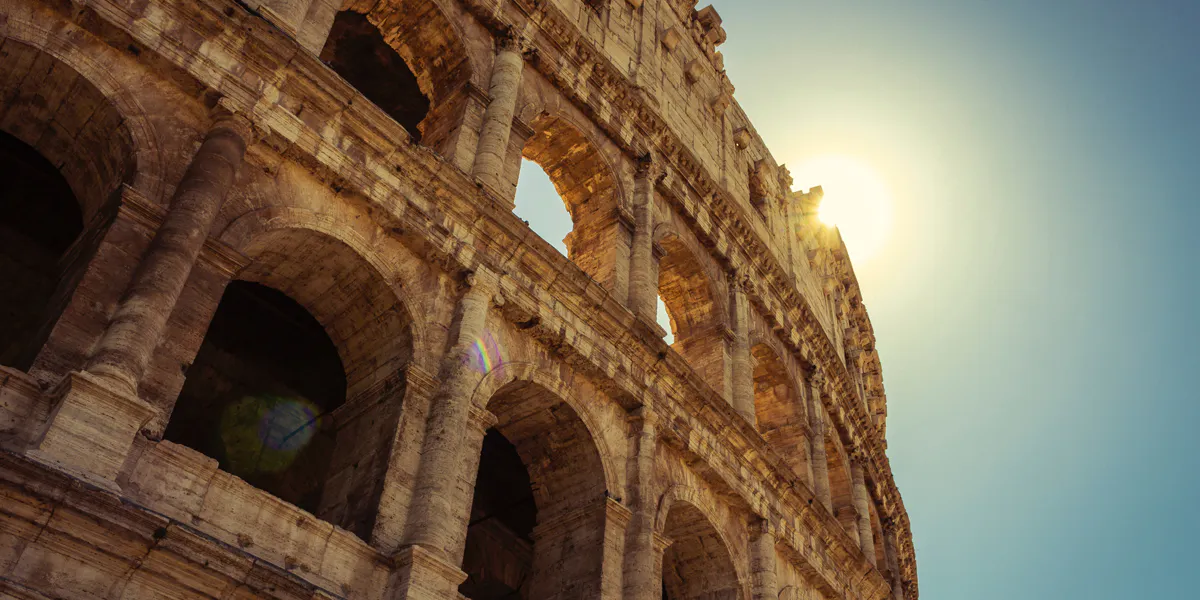
From the Forum we admire the Colosseum, a masterpiece of Roman engineering. This iconic amphitheater has hosted grandiose spectacles, from gladiator fights to theatrical performances. It was an emperor of the Flavian dynasty, Vespasian, who ordered its construction. For this reason, it was called the Flavian Amphitheatre. The name by which it is best known today, Colosseum (from the Latin term colosseus, meaning colossal), derives from its colossal dimensions or, according to other sources, from a colossal statue depicting Nero that stood nearby.
Related: Money Talks: Ancient Roman Coins

2. St. Peter's Square
Let's now head towards St. Peter's, one of the largest basilicas in the world, considered one of the main places of Catholic worship and a symbol of the Vatican. Its construction began under Pope Julius II in the 16th century and took over 100 years to complete. The structure constitutes one of the largest masonry roofs ever built, with an internal diameter of approximately 138 feet. In addition to its structural grandeur, it is full of priceless works of art, including Michelangelo's famous Pietà. It was Michelangelo himself who designed and built much of the magnificent dome, subsequently completed by Giacomo della Porta and Domenico Fontana after the master's death in 1564.
Few people know that under part of the nave of the Basilica are the Vatican Grottoes, a complex of great historical and religious importance, which contains the tombs of numerous pontiffs and important figures of the Church.
Related: The 5 Most Important Sculptures in Italy
3. Castel Sant'Angelo
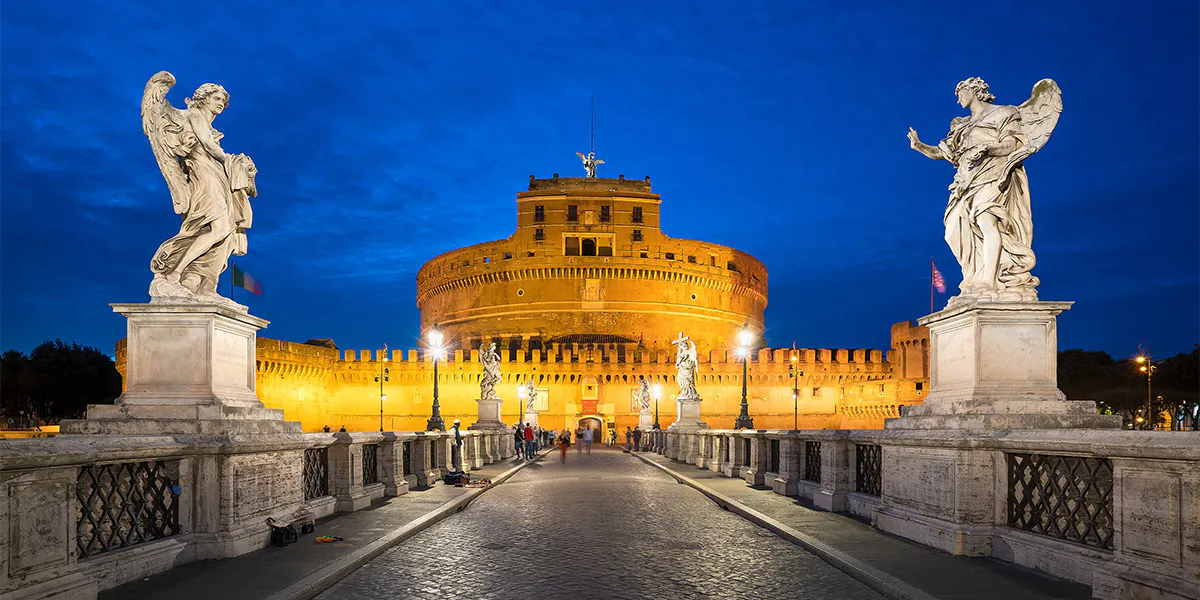
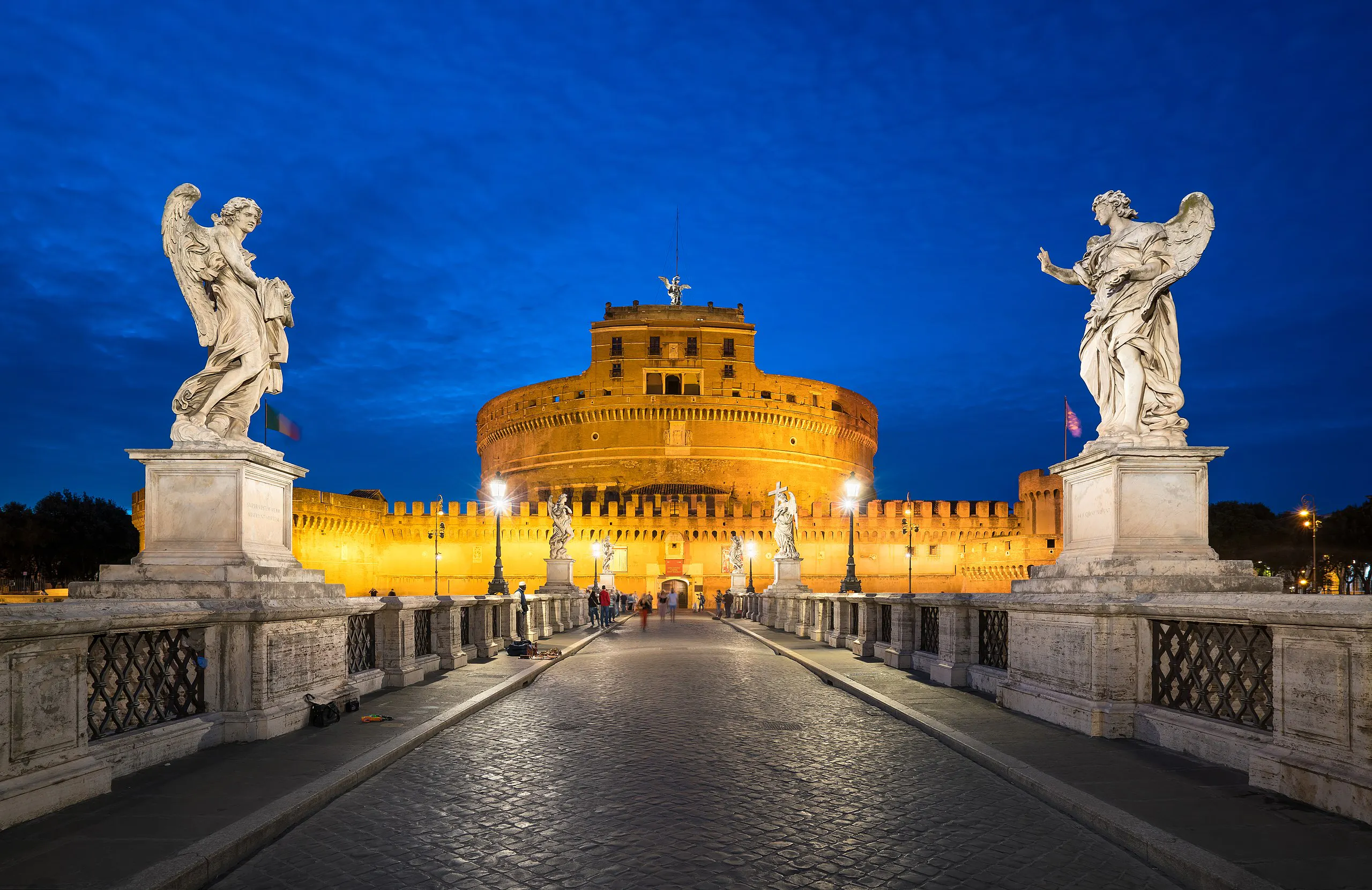
Continuing, we reach Castel Sant'Angelo, also known as Hadrian's Mausoleum, as it was initially conceived as a funeral mausoleum for the emperor Hadrian and his family around 134-139 AD.
The building, located in front of the Pons Aelius (today's Ponte Sant'Angelo or St. Angelo Bridge), has undergone several transformations over the centuries, also becoming a military fortress and a papal residence. Famous is its Passetto di Borgo, or simply Passetto, a long corridor that connects the Vatican City with Castel Sant'Angelo and which in the past served as an escape route for Popes in danger. The massive structure of Castel Sant'Angelo bears witness to centuries of Roman history, has a strategic position on the banks of the Tiber River and offers spectacular views of the city.
Want to receive more articles like this via email? Sign up to our newsletter!
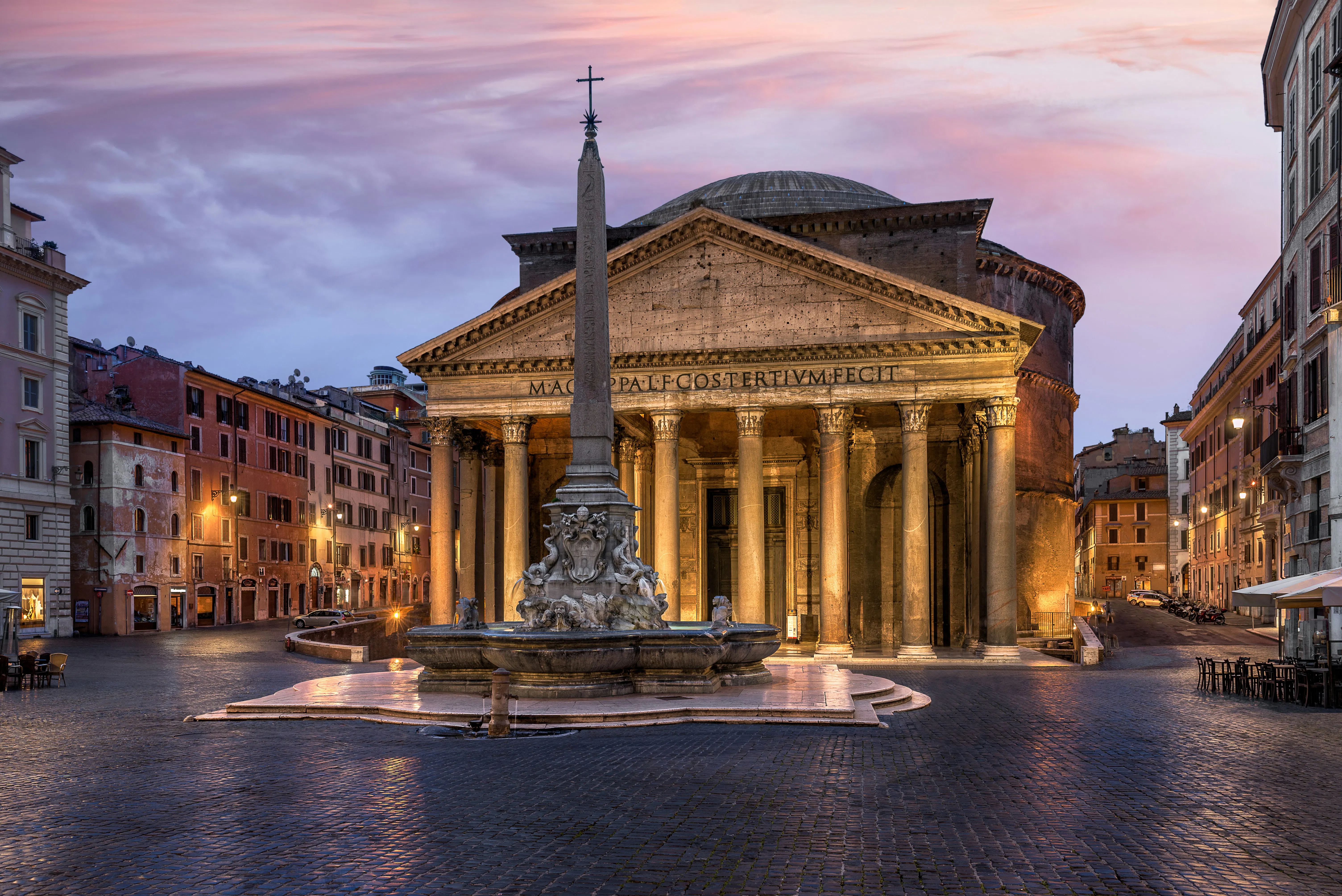
4. The Pantheon
Continuing our walk through the streets of Rome, we come across one of the architectural jewels of the Caput Mundi: the Pantheon. This is great masterpiece of Roman engineering and design has a fascinating history that dates back millennia.
The original Pantheon was commissioned by Marcus Agrippa, the Roman architect, statesman and general, in 27 BC. However, the building was destroyed by fire, and it is believed that the current majestic structure was rebuilt by Emperor Hadrian, presumably between 118 and 125 AD.
The Pantheon takes its name from the Greek "Pan", "all", and "theon", "gods", as it was initially a temple dedicated to the gods. It is known for the oculus (the Latin word for eye) in the center of the dome, a circular opening approximately 27 feet in diameter, which is the only source of natural light and ventilation. The interior of the Pantheon remains surprisingly dry even during heavy rains, thanks to an ingenious drainage system: the floor has a slight slope towards the center and there are 22 small drainage holes, which allow the water to flow away, preventing the formation of puddles.
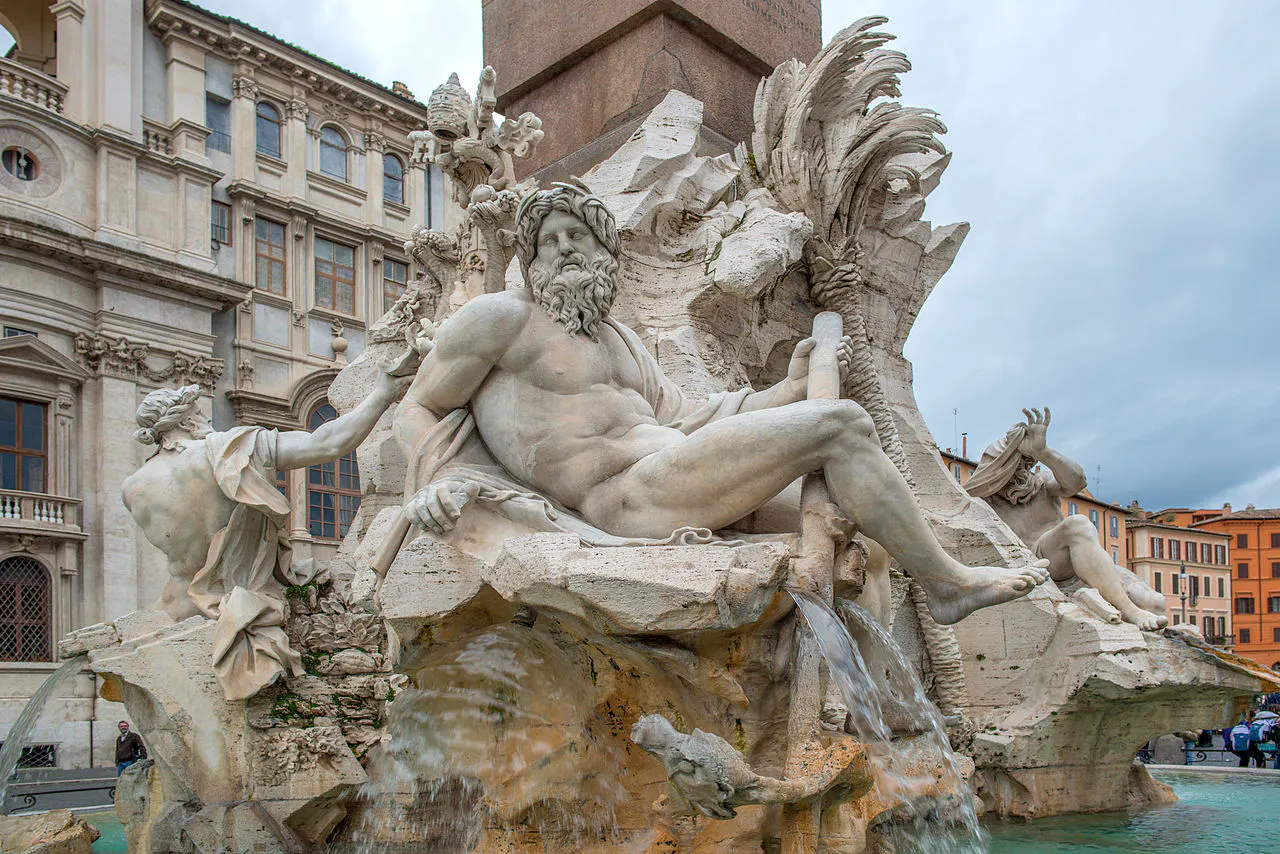
5. Piazza Navona
Continuing our journey, we reach Piazza Navona, one of the most iconic squares in Rome, located in the heart of the historic center of the city. It was built on the site of the ancient Stadium of Domitian (or Circus Agonalis) of which it retains its elongated shape. Above all, competitive games such as athletics competitions, called agones, were held there. Over time, the name has undergone some transformations: agones, in agone, then navone and finally Navona, perhaps due to the resemblance of the square to the profile of a ship.
In the center dominates the Fountain of the Four Rivers, a majestic baroque work of art by Gian Lorenzo Bernini which symbolizes the four main rivers of the four continents known at the time: the Danube, the Ganges, the Nile and the Rio de la Plata.
At sunset, the atmosphere of this square, surrounded by cafes, shops and restaurants is magical, with the lights reflecting off the waters of the fountain and the laughter of the patrons mixing with the sound of the street artists...a perfect union between past and present, where history blends with the liveliness of contemporary life.
Related: Piranesi's Magical Journey into the Art of Engraving
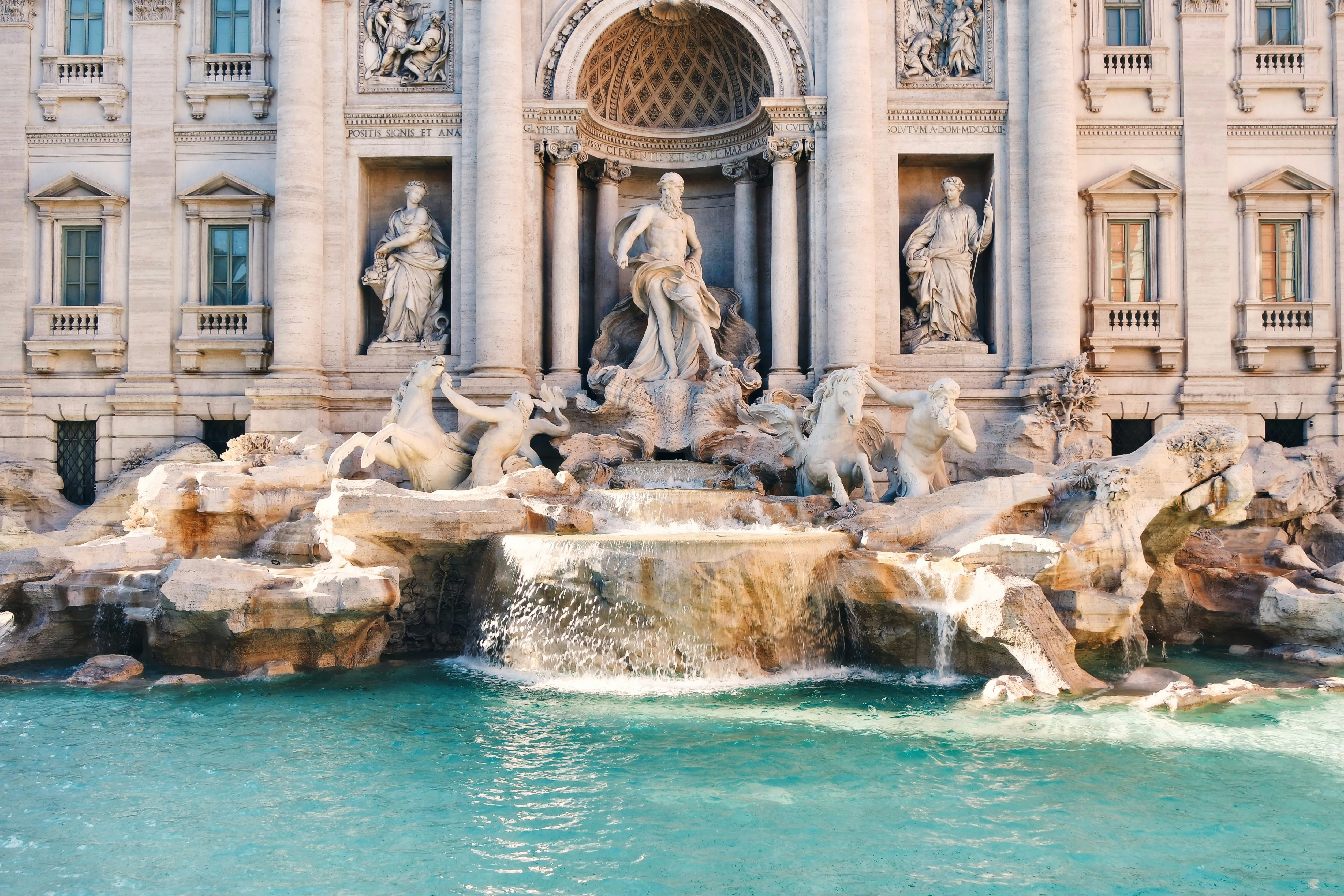
6. Trevi Fountain
To ensure a return to Rome, we need to go to the Trevi Fountain. According to tradition, you must turn your back to the Fountain, close your eyes and throw a coin into the water with your right hand on your left shoulder. This gesture is said to ensure your return to the Eternal City. Trevi is the largest of Rome's famous fountains. The name may have been inspired by a toponym relating to the convergence of three streets in the square, or by the triple outlet of the water from the original fountain.
You will surely remember Anita Ekberg's "bath" scene in the Fountain: one of the most iconic and memorable moments of the film La Dolce Vita, directed by Federico Fellini. In the scene, Ekberg sensually enters the fountain, inviting the film's protagonist, played by Marcello Mastroianni, to join her. The moment becomes a symbol of joy, freedom and the desire to live life to the full, embodying the spirit of the Roman dolce vita.
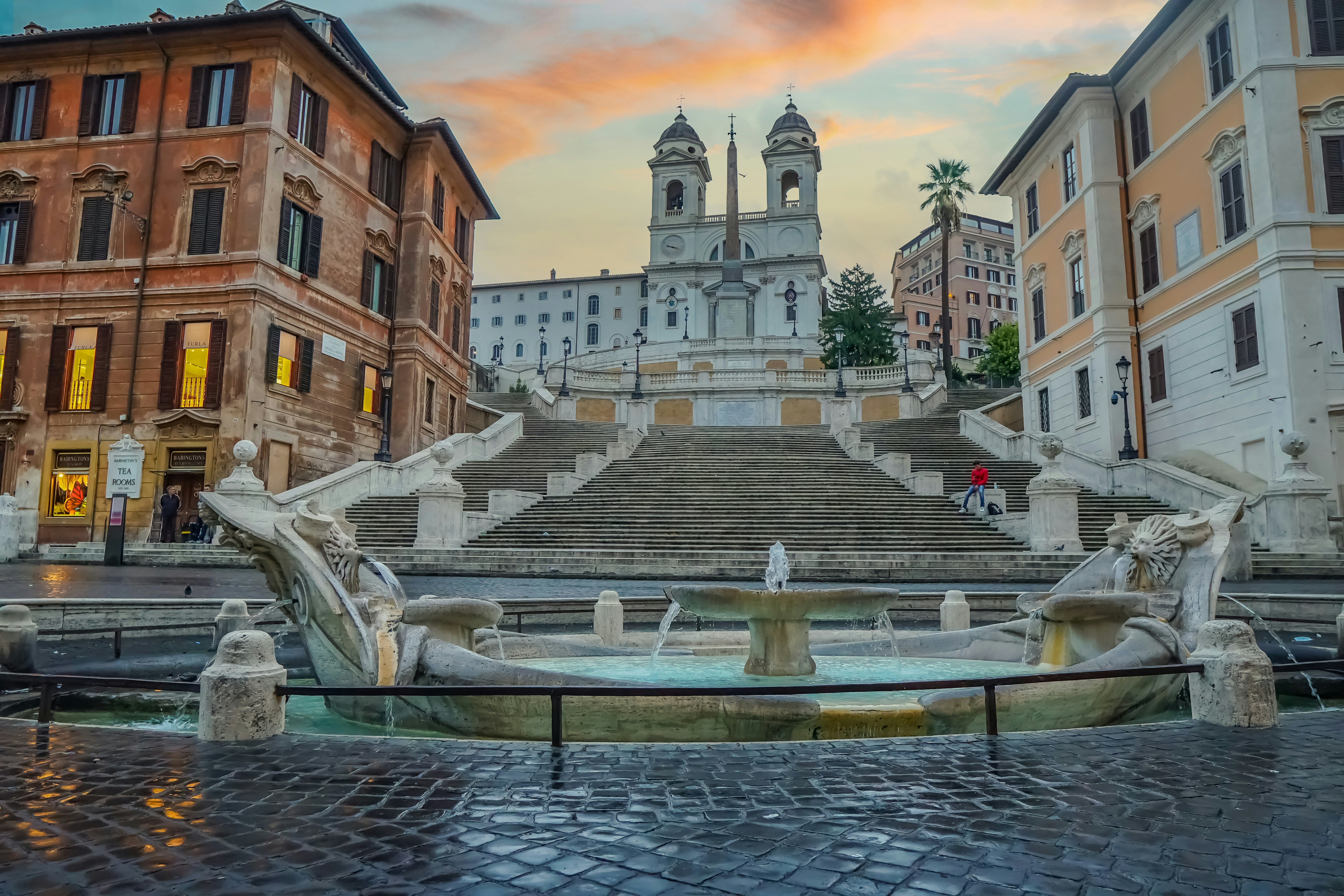
7. Piazza di Spagna, with the Spanish Steps and the Barcaccia
We end the day with the Piazza di Spagna, so called from the Palace of Spain, which houses the Spanish embassy to the Holy See. Here we can admire the majestic Spanish Steps. At the right corner of the staircase is the final resting place of the poet John Keats, who died there in 1821 at just 25 years old. On the left side of the staircase stands Babington's Tea Rooms, a tea room opened in 1893 which represents one of the historic venues in Italy.
At the foot of the Spanish Steps we can admire a particular fountain designed by Pietro Bernini and his son Gian Lorenzo between 1627 and 1629. Known as the Barcaccia, its name recalls an old vessel close to sinking. According to a popular version, it is believed that the particular shape of the Fountain was inspired by the presence, in the square, of a dry boat, brought there by the flood of the Tiber in 1598. Others maintain that the term "barcaccia" was used to describe a type of vessel - with low sides like those of Bernini's work - used in ancient times for the river transport of wine barrels.
![Karl Kaufmann, View of Rome [...]. Image © Charlton Hall (detail)](https://images.prismic.io/barnebys/c3e6a29c-c727-4f0c-a05d-a9cf41e20adc_Untitled+design+-+2024-03-28T133434.897.jpg?auto=format,compress)