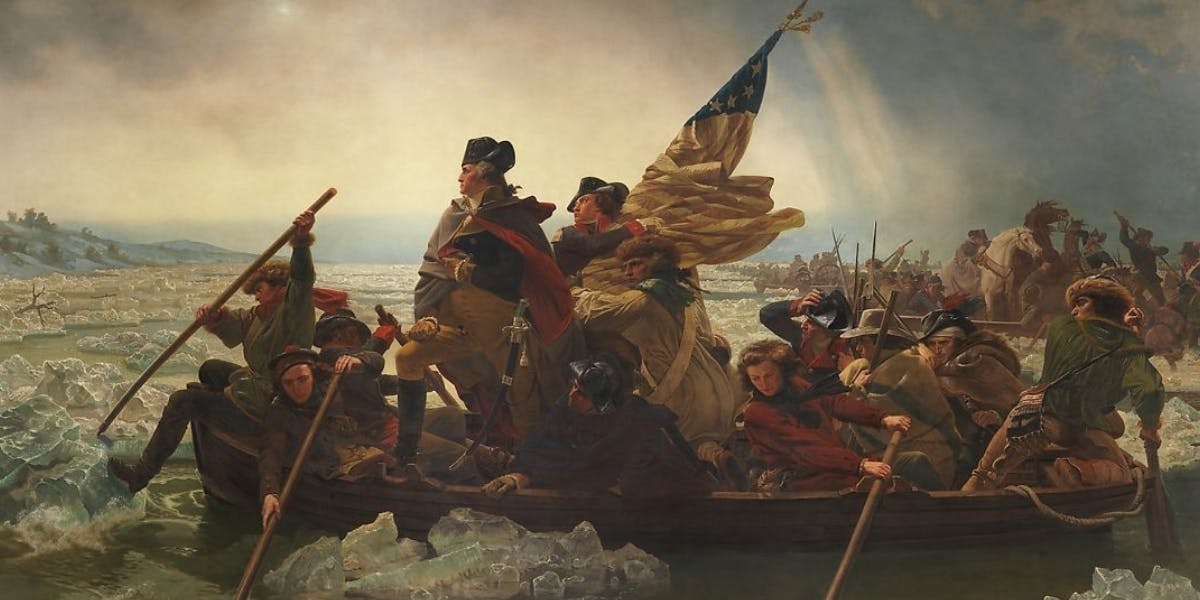
It has been 245 years since the signing of the Declaration of Independence on July 4th, 1776, marking America's freedom from British rule. In honor of the patriotic holiday, we have selected 6 of the most famous American paintings that celebrate life, liberty and the pursuit of happiness, the tenets on which our country was founded.
Emanuel Leutze, Washington Crossing the Delaware
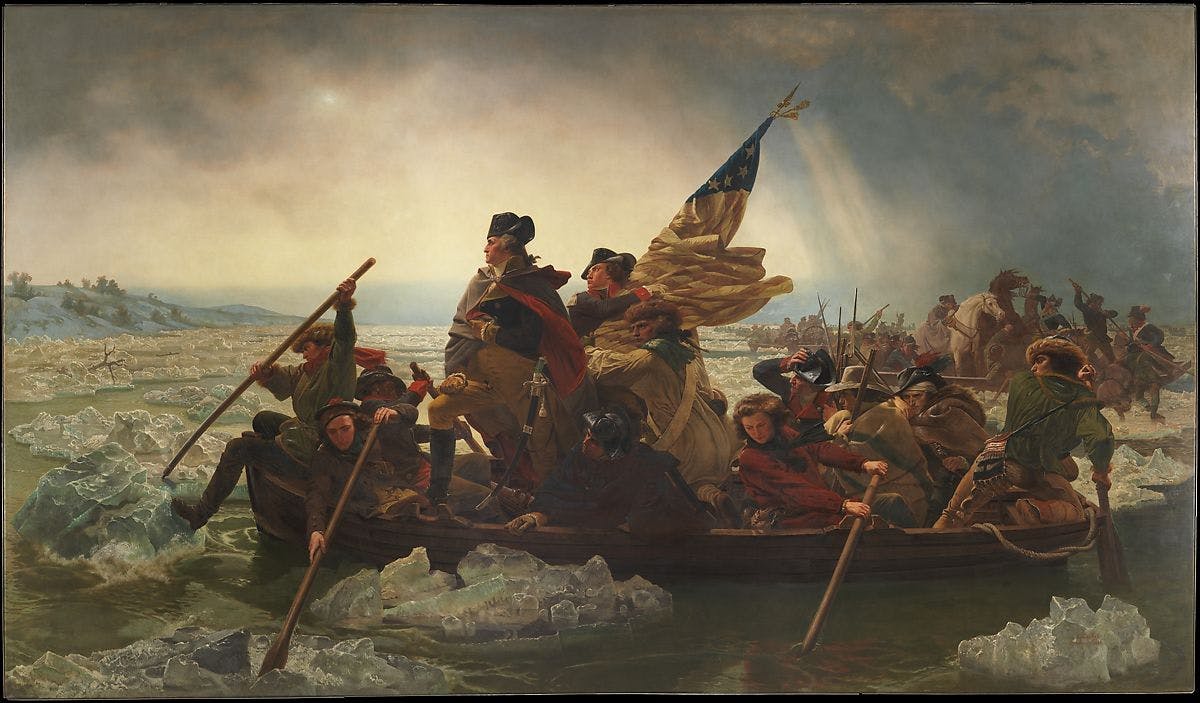
Spanning a whole wall at the Metropolitan Museum of Art, Emanuel Leutze's Washington Crossing the Delaware depicts a pivotal moment in America's war for independence on December 25, 1776. With General Washington at the helm of the row boat surrounded by icebergs and the American flag behind him, the 1851 painting is rich with the patriotic colors of red, white and blue.
Childe Hassam, The Avenue in the Rain
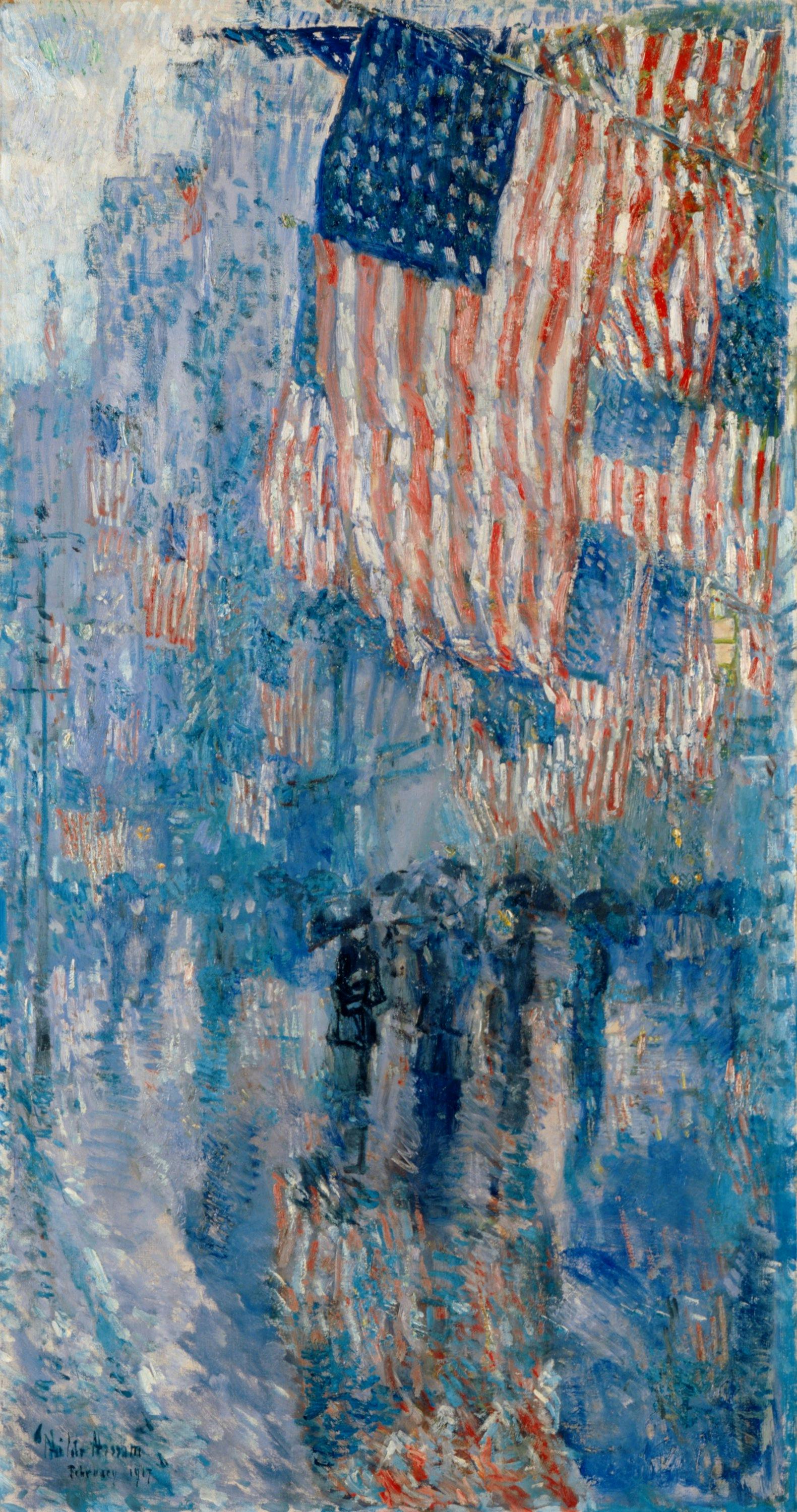
Hanging in the Oval Office in the White House, Childe Hassam's flag paintings are perhaps his most famous. This work was painted in 1917, right before America entered World War I, and shows rows of American flags hanging on Fifth Avenue in the rain. The Impressionist style shows influence from Monet's works of the French flag in Paris in the late 19th century, but is particularly timely to the American cause as patriotism surged with soldiers sent to Europe in April 1917.
Albert Bierstadt, Among the Sierra Nevada, California

Perhaps no other artist has captured America's dramatic landscape quite as majestically or dramatically as Albert Bierstadt. His work was popularized during the late 1860s and 1870s, as the Civil War ended and industrialism boomed. As the country's landscape changed, Bierstadt's work depicted the romantic, sweeping scenes of the West, from craggy mountain peaks to pristine coves edged by pine trees. His most famous painting, Among the Sierra Nevada, California, was painted in the 1860s during a trip to California and then shown throughout Europe the following year, introducing European audiences to the raw splendor of the undeveloped American West. It now is the pièce de résistance at the Smithsonian American Art Museum in DC.
Grant Wood, American Gothic
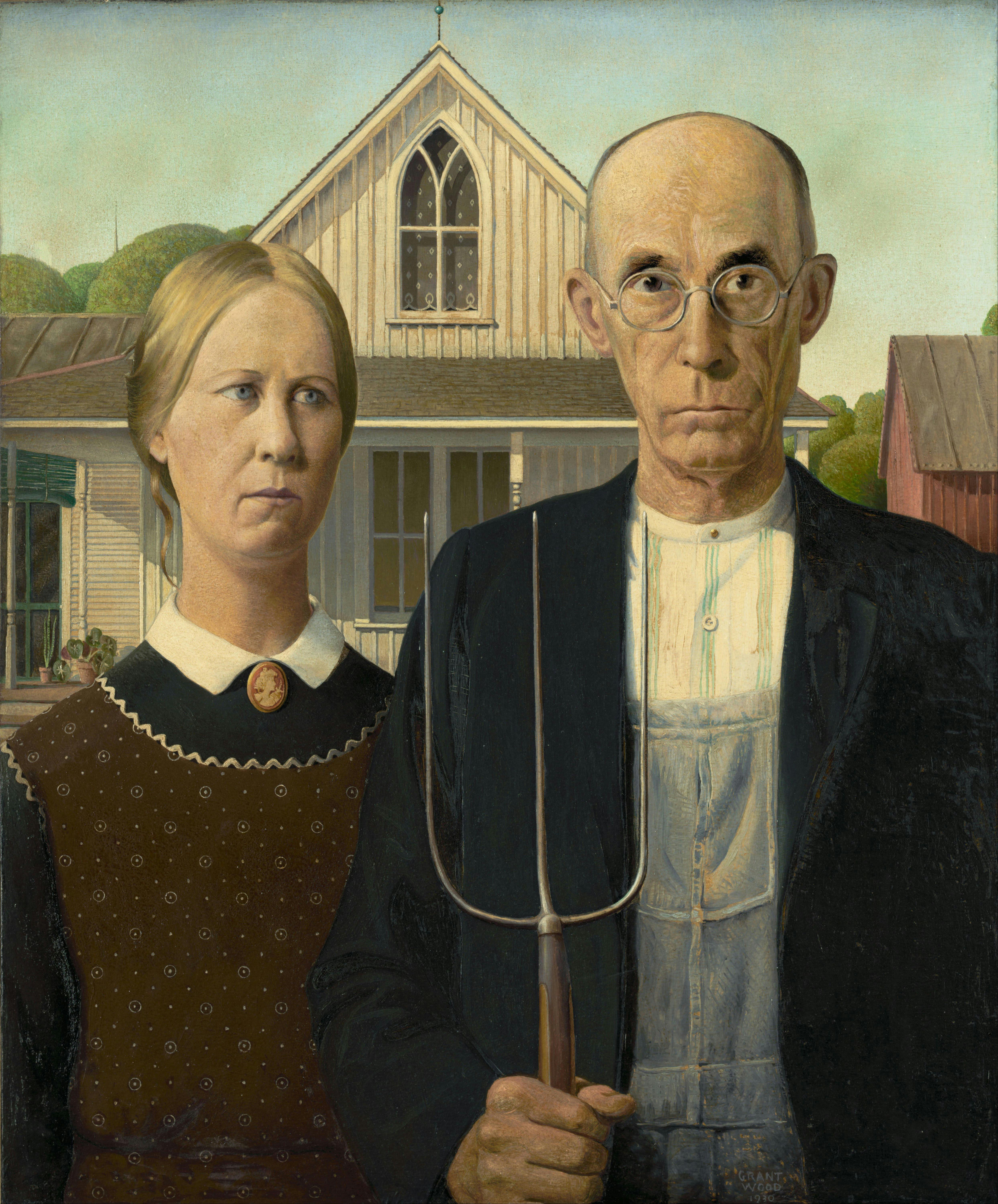
One of the most recognized and parodied images of American art, Grant Wood's American Gothic (1930) was seen both as a celebration and mockery of American rural life especially in the wake of the Stock Market crash of 1929 and the oncoming devastation of the Great Depression. The work, depicting the artist's sister and their local Iowa dentist, has become a symbol of the hardiness of the American spirit and strength despite great challenges.
Edward Hopper, Nighthawks
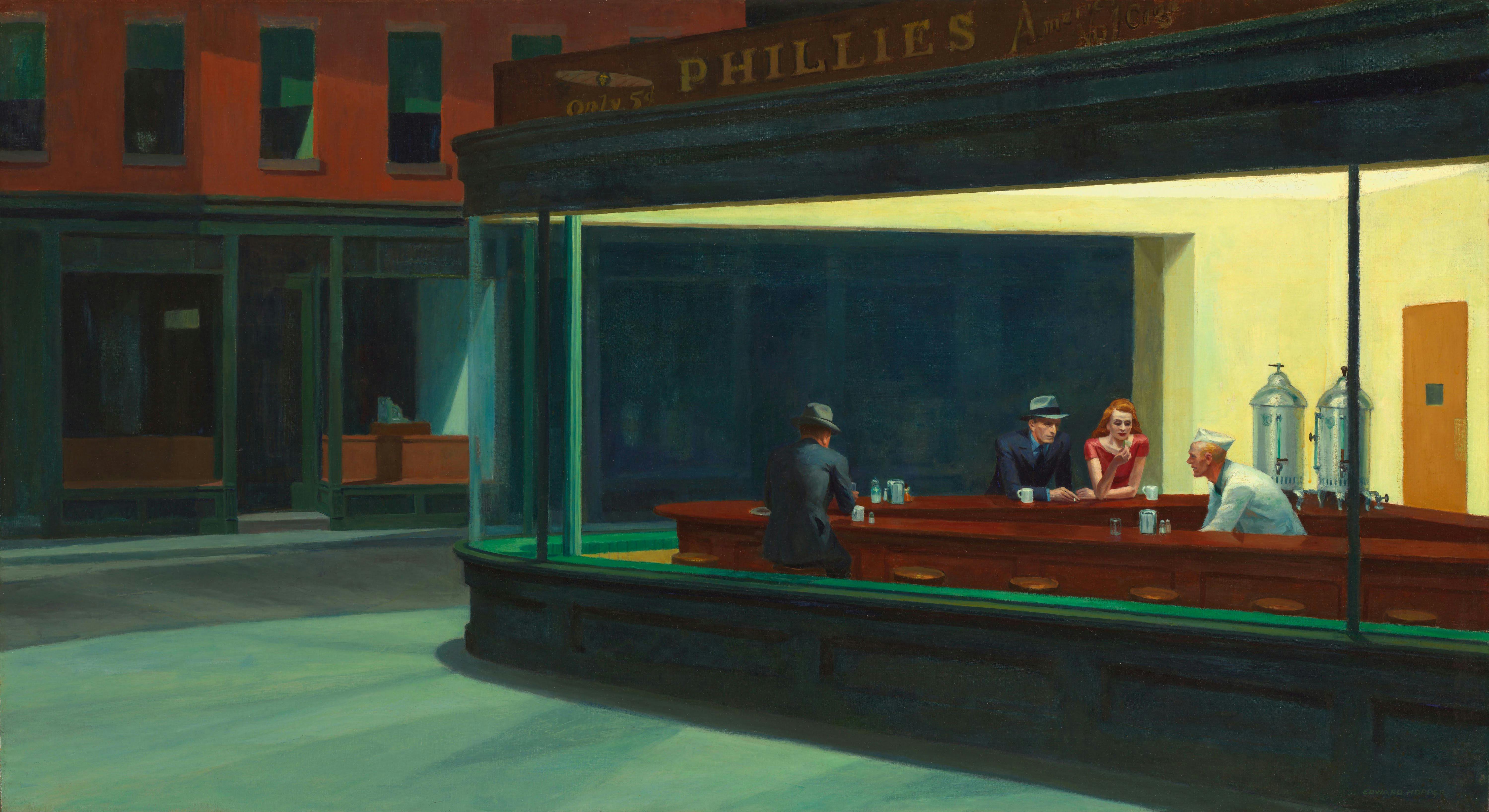
Like American Gothic, this painting is also found at the Art Institute of Chicago and is Edward Hopper's most famous painting. The illuminated diner on the dark street, presumably in New York, is characteristic of Hopper's city scenes that capture that milieu of the time. Often considered a treatise on the alienation and loneliness found especially in large cities during World War II, Nighthawks appears as if a still from a movie, cinematic in its vivid color and carefully ordered composition.
Jasper Johns, Flag
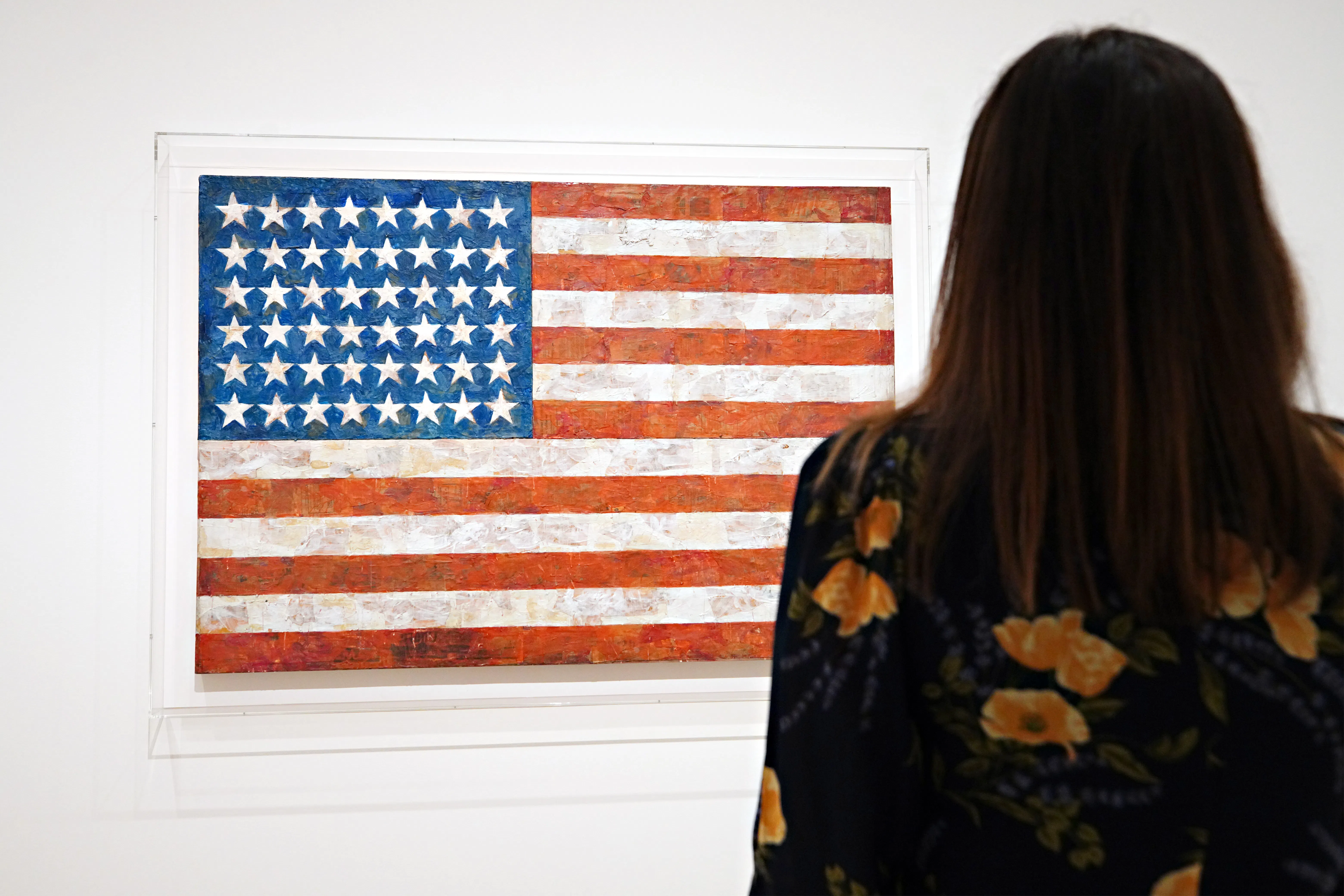
The American flag entered the modern art lexicon thanks to Jasper Johns in the mid 1950s after he left the U.S. Army and dreamed of the American symbol. The encaustic (hot wax) painting was produced during a time of resurgence in the interest in the flag with the McCarthy hearings and Flag Day. The work was purchased by Philip Johnson at the Leo Castelli Gallery and donated to MoMA in 1968. The flag would then become a recurring motif for Johns, with a 1958 version selling for $110 million in 2010.
Happy Fourth of July!