
全部拍賣 / Coins & Banknotes / Undated (1652) NE Shilling. Noe 3-A, Salmon 3-B, W-70. Rarity-7. EF-40 (PCGS).
Undated (1652) NE Shilling. Noe 3-A, Salmon 3-B, W-70. Rarity-7. EF-40 (PCGS).
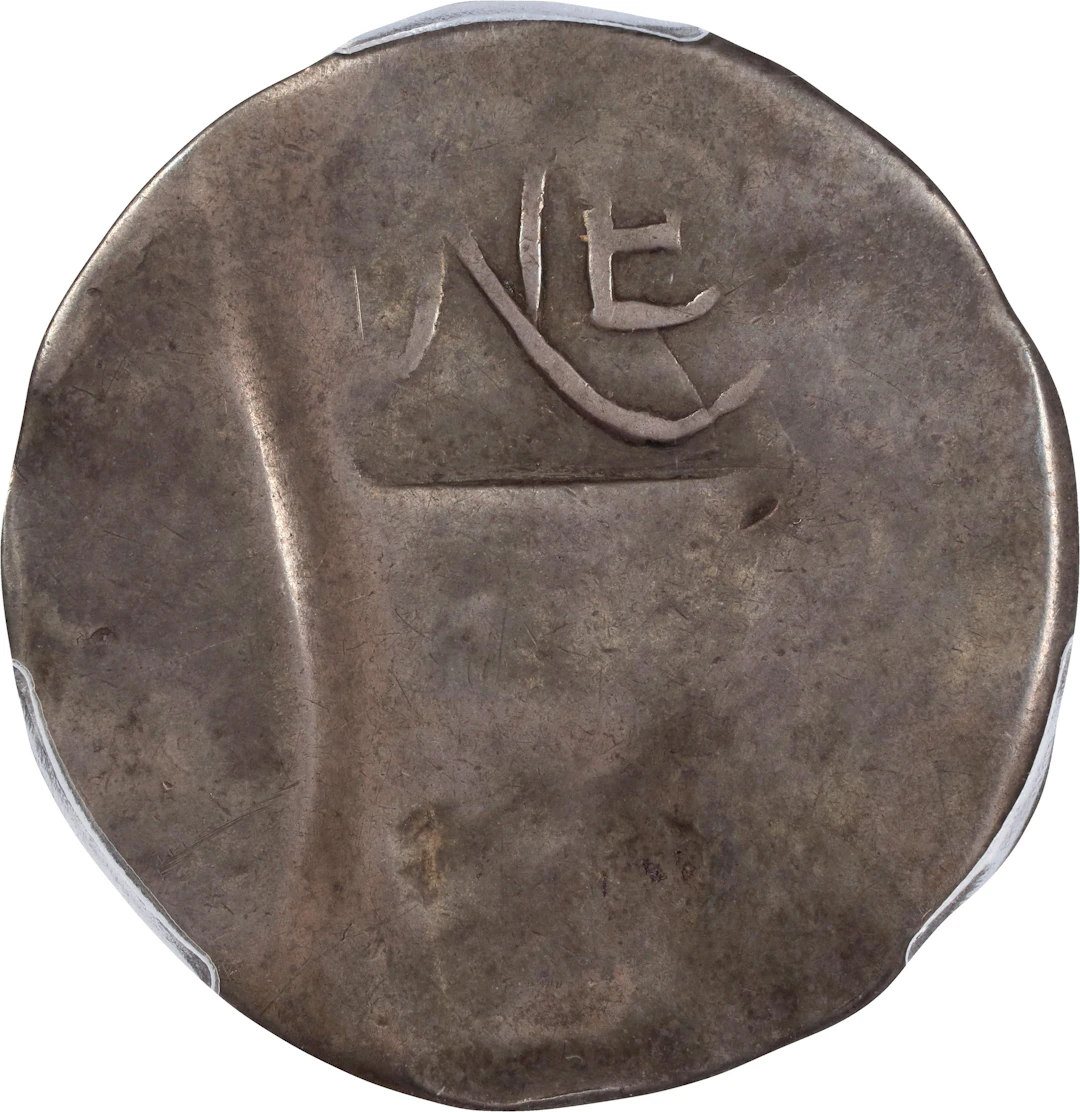
Very Rare Noe 3-A NE Shilling The Gable-Stearns Coin Undated (1652) NE Shilling. Noe 3-A, Salmon 3-B, W-70. Rarity-7. EF-40 (PCGS). 66.20 grains. As the first metallic currency struck in the Thirteen American Colonies , the NE coinage is easily one of the most famous - and important - of all colonial issues. Stack's Bowers Galleries is once again proud to present the famous Gable-Stearns example of the Noe 3-A NE shilling. We last offered this rarity in March 2015, as part of our sale of the celebrated Henry P. Kendall Foundation Collection, in which it realized $105,750 in a very different numismatic market. Its reoffering in this sale is an equally significant event for specialists in the silver coinage of Massachusetts Bay Colony and advanced collectors of U.S. colonial type coins. Aggressive bidding strategies are recommended for, once sold through this current venue, it is likely that this numismatic treasure will be off the market for another decade, if not longer, and surely as part of a world class cabinet built wholly or in part around American colonial coinage. The act passed on May 27, 1652, by the Massachusetts Bay Colony resulted in the first coins struck in British North America - in other words, the territory that would eventually become the United States. The establishment of a mint in the colony was in reaction to a shortage of circulating coinage as well as the problem of debased silver coins in commerce. John Hull was appointed mintmaster with Robert Sanderson, Sr. as his partner. They were the premier silversmiths in the British colonies at the time but lacked knowledge or experience as coiners. As such, the first coins that they produced for Massachusetts were made using the familiar techniques of silversmiths. Since a proper press for striking coins was also still in the future for the colony, the first coins produced by Hull and Sanderson were made using simple device punches similar to those of a silversmith's hallmark. These punches sufficed since the General Court of the Massachusetts Bay Colony mandated that the first coins carry only an NE design on one side, for New England, and an expression of the denomination in Roman numerals on the other. This is the historic, famous and rare NE coinage produced in denominations of shilling, sixpence and threepence. The first examples were produced sometime after the authorizing act became valid on September 1, 1652, although the exact date is unknown. It is also not known how long NE coinage remained in production, but new legislation that required a more complex design for the colony's coinage was issued less than two months later, on October 19. According to traditional numismatic wisdom, the improvement in design was intended to combat the problem of clipping and shaving of the NE coins, practices made too easy by the simple design. Louis E. Jordan, in the reference John Hull, the Mint and the Economics of Massachusetts Coinage (2002), states that Hull and Sanderson acquired the colony's first proper press - a rocker press - in 1654. Some have concluded that NE coinage would have had to continue until then because the succeeding coins of the more complex Willow Tree design would have required the rocker press for proper production. Writing in the outstanding 2010 reference The Silver Coins of Massachusetts, however, Christopher J. Salmon argues conclusively that the Willow Tree coinage was produced using the same techniques as its NE predecessors. We can conclude, therefore, that coinage of NE shillings, sixpence and threepence was confined to a few weeks from early September through late October 1652. Mintages were certainly limited, due to both time and the challenges of any mint's first coinage operations, especially one whose mintmaster and assistant were not skilled in their new craft and further burdened by the realities of living and working in 17th century New England. The minting process for the NE shillings began when silver plate or Spanish colonial or other silver coins in circulation in the wider Atlantic world at that time were brought to Hull and Sanderson's shop for melting and assay adjusting to bring the fineness up the sterling quality. Exactly how the planchets were produced is unknown, but it was probably through hammering or pouring the molten silver into ingot molds and, once cooled, drawing on a bench through cast iron rollers. Christopher J. Salmon continues the process in his work on Massachusetts Bay Colony silver: The NE stamp was applied with a punch similar in appearance and style to a silversmith's touchmark or hallmark punch. This was done on the 12 o'clock position of the silver blank. The flan was then turned over and struck with the denomination punch at the reverse side of the 6 o'clock position, so selected for symmetry, and more importantly, to avoid marring or entirely obliterating the impression of the NE punch. The punches would probably have been hit sharply with a large hand-held hammer with the cold flan placed on the surface of a large steel anvil embedded in a tree trunk, according to standard silversmith methods of the time. The punches that Hull and Sanderson used for the NE shillings wore down quickly, not surprising given their coining methods, and required regular recutting of the design elements to keep them usable. Writing in The Colonial Newsletter in 2010, Jack Howes demonstrated that all three NE shilling obverse punches are actually the same punch that had been significantly recut twice. Despite continual recutting, strikes from the punches were almost always incomplete, although this is also in keeping with silversmith practices of the time, hallmarks on contemporary silverware usually asymmetrical with one side of the mark slightly less defined than the other. Salmon ascribes this to "angulation of the punch during hammering." Numismatic scholars have identified six different varieties of NE shilling, using three different states of the same NE punch and four distinct XII denomination punches. Noe's variety 3-A represents a pivot point in the interconnected family of shilling dies. Obverse 3 is married to three different reverse dies: A (as here), B, and C. Reverse A is married to three different obverse dies: 1, 2, and 3 (as here). Indeed, the only die in the entire shilling family that is not married to either of these dies is reverse D, which was married to only obverse 1. This marriage appears to be the final hurrah of Reverse A, whose break has spread to surround the Roman numeral X of the denomination at both its left and top. Given the limited number of coins presumably struck and a high rate of attrition through commercial use and eventually melting, it is little wonder than the NE shilling as a type is an extreme numismatic rarity in the market of the 21st century. Including recent discoveries, no more than 70 examples of all varieties combined are believed extant, fully 22 of which are permanently impounded in institutional collections such as the American Numismatic Society, the British Museum, and the Smithsonian. Noe 3-A is a rare variety among a rare design type, and it was missing from some of the most important collections of Massachusetts silver ever formed, including Boyd-Ford and Hain. Only five examples of this variety are known to Howes, two of which are in museums (Massachusetts Historical Society and Yale). The reverse punch is especially boldly impressed on this piece, with both the top and bottom borders crisp, as is the left side. The denomination XI is well defined, though the final character is somewhat softened by an old vertical crease that is most prominent on the obverse, left of the punch. The surfaces are lovely, with a soft and even old gray tone showing subtle golden highlights. Some natural waviness is seen, along with some minor circulation marks. The rim is beveled from 3 o'clock to 5 o'clock on the obverse and around 9 o'clock on the reverse, as made. The obverse punch is mostly bold, just a bit soft at the top, with the crack below the letter E to the extremity of the N in its early state. With Noe's plate coin impounded in the MHS and the Watters (1917) coin among the treasures of the Mabel Brady Garvan Collection at Yale, that leaves just three specimens of the Noe 3-A NE shilling available for collectors. This is clearly the best of the three. Partrick owned Eliasberg's, graded VF Details by NGC by virtue of the notable scratches on both sides. Despite being called "Finest Privately Held," we prefer both the present example and the fairly nicked up Essex Institute coin, which remains very sharp (graded Extremely Fine in 1975) even though it is somewhat flawed. This was the only NE shilling in the legendary Stearns Collection, and likewise served as the sole example of the type in the collection of the Altoona department store magnate William F. Gable. Provenance: Property from an Alabama Family. Earlier from S.H. Chapman's sale of the William F. Gable Collection, May 1914, lot 147; Mayflower Coin Auctions' sale of the C.H. Stearns Collection, December 1966, lot 3, to the following, via Lester Merkin; our sale of the Henry P. Kendall Foundation, March 2015 Baltimore Auction, lot 2304. PCGS# 13. NGC ID: 2AR9. Click here for certification details from PCGS. Image with the PCGS TrueView logo is obtained from and is subject to a license agreement with Collectors Universe, Inc. and its divisions PCGS and PSA.
估價:$1
前往拍賣頁查看所有物品來自Stack's Bowers或Coins & Banknotes
估價:
$1
類似物品




類似物品的拍賣結果
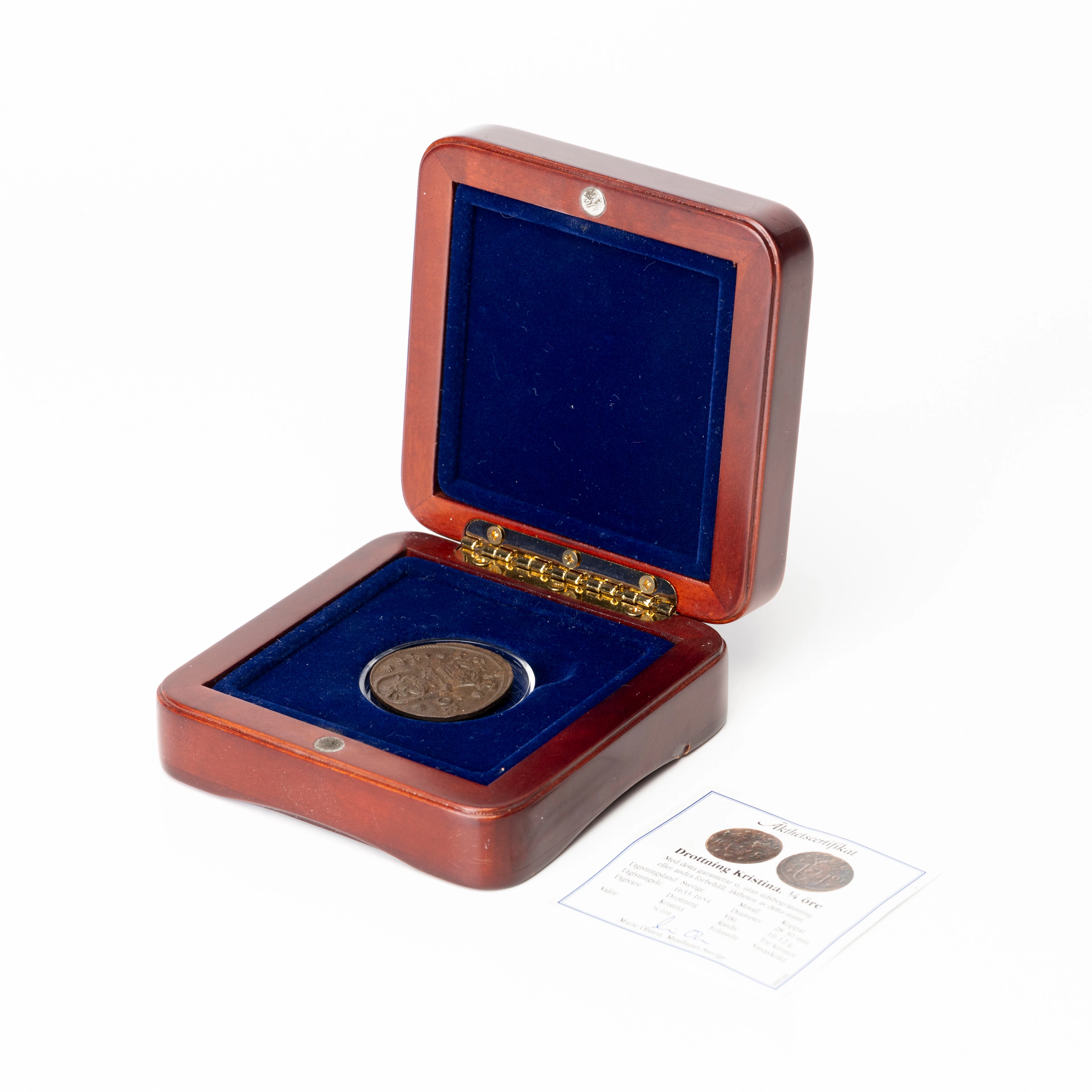
MYNT, koppar, Drottning Kristina, 1/4 öre, 1636.
10/22/2026
$35.24
估價: $80.88
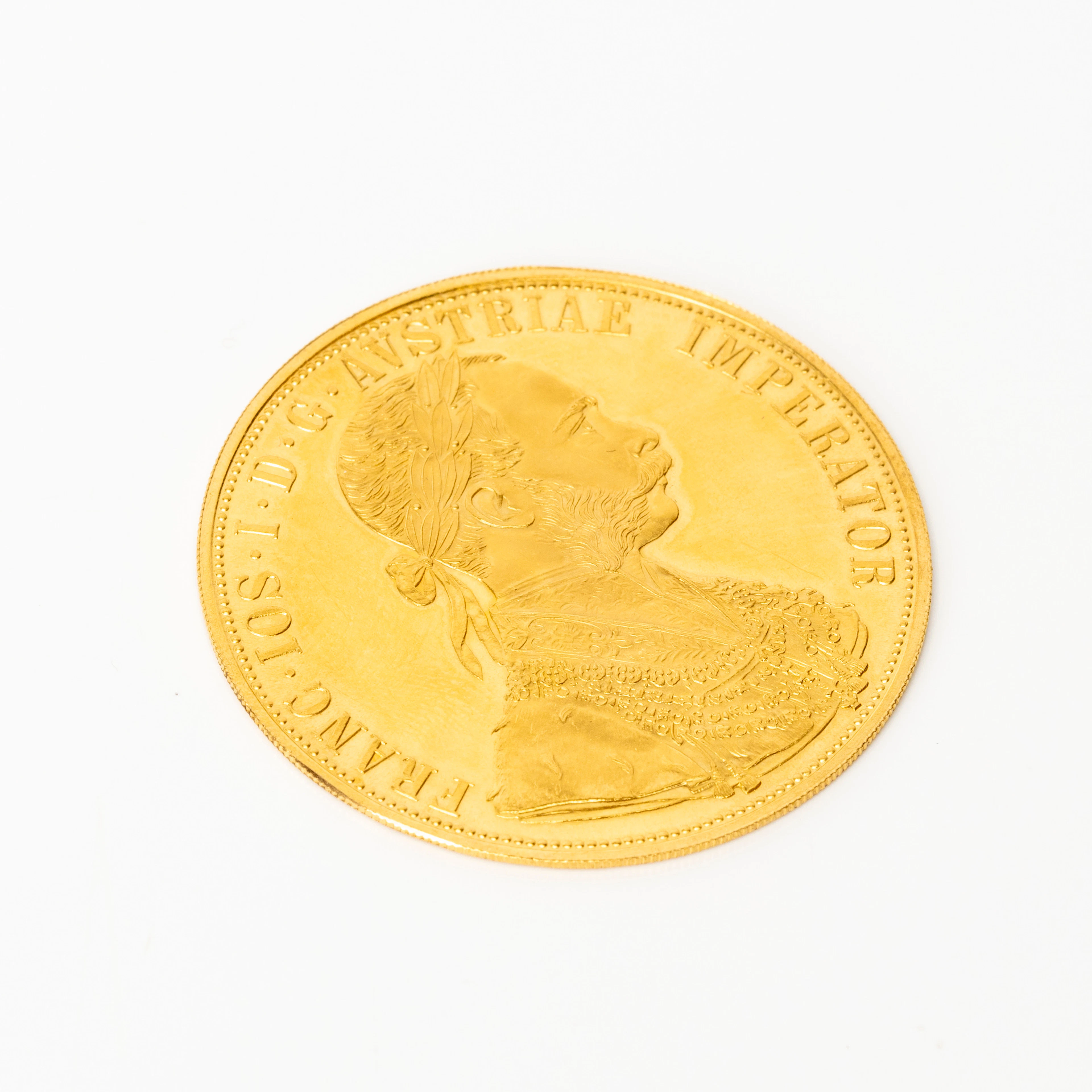
GULDMYNT, 4 dukat, Frans-Josef I, Österrike-Ungern, 1915, 21,6K guld, restrike.
10/22/2026
$1,722.04
估價: $1,516.54
讓您的拍賣觸及全球收藏家!
立刻發佈上架