
全部拍賣 / Arts & Graphics / Rosario Pulvirenti (1899-1966) - Gregge con contadino nella campagna

Rosario Pulvirenti (1899-1966) - Gregge con contadino nella campagna
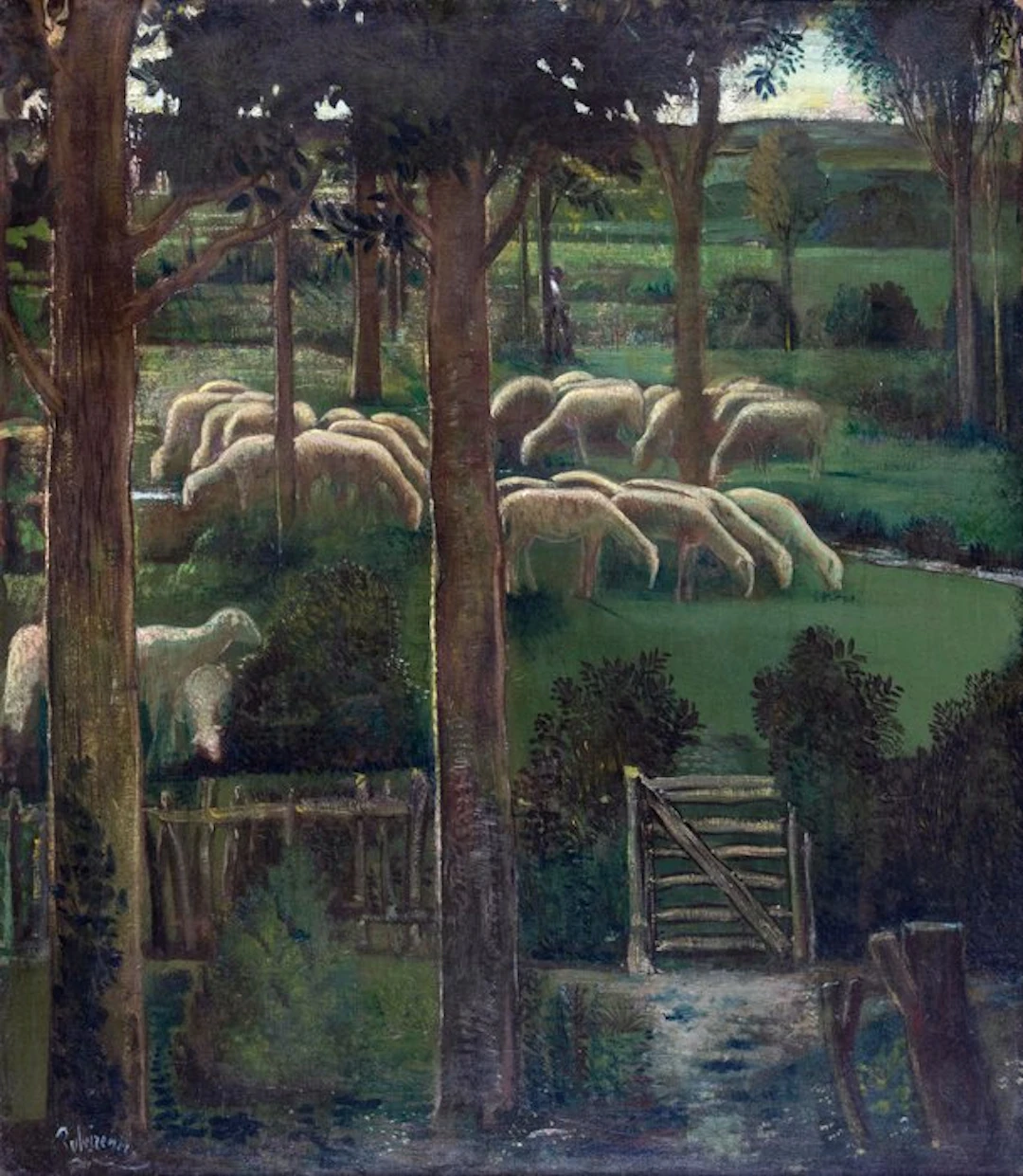
Rosario Pulvirenti was born in Aci Sant’Antonio (Catania) in 1899, in a small town at the slopes of Etna that has given birth to several Sicilian artists and intellectuals. His biographical path stands out clearly from the profile of a purely regional painter: from a young age he showed an intellectual and artistic curiosity that drove him well beyond the island’s borders, inaugurating a cosmopolitan and multifaceted career. Self-taught in formation, Pulvirenti chose as his main place of learning not traditional academies but the great Italian museums. He regularly attended the museums of Florence, where he studied and absorbed the lessons of the Renaissance masters and the great Tuscan painting tradition. This educational choice — unusual for a young Sicilian of his generation — already reveals his eclectic personality and his ambition to compare himself with the best of Italy’s visual culture. Direct contact with Florentine masterpieces sharpened his technical abilities in drawing and composition, providing him with a solid base on which to later graft the more modern and experimental influences of the twentieth century. Moving to Rome and the avant-gardes of the twentieth century After his Florentine period, Pulvirenti settled in Rome, a city that in the 1920s and 1930s was one of the liveliest and most contradictory centers of Italian artistic culture. In the capital he was fascinated by the avant-gardes of the twentieth century: the Roman artistic climate, torn between tradition and modernity, between the classicism of Italian twentieth-century art and the experimental impulses from Europe, left a deep mark on his painting research. In this context Pulvirenti developed a personal language capable of uniting the solidity of the drawing learned in the Florentine museums with a modern sensibility for composition and color. The painter showed a notable ability to assimilate diverse stimuli — from figure painting to portraiture, from landscape to sacred and mythological subjects — without ever rigidifying himself into a single expressive register. In Rome he held several solo and group exhibitions, earning praise from both public and critics. His presence in the Roman art scene of the interwar years places him in a rich and complex panorama, frequented by many of the protagonists of Italian painting of the early twentieth century. Artistic maturity and the last years During the 1930s and 1940s Pulvirenti consolidated his reputation as a figure painter, portraitist, and author of works on sacred and mythological subjects. His production was characterized by considerable thematic variety: alongside portraits — among which the famous Portrait of a Painter (1926) stands out — he painted still lifes, florally vibrant compositions such as Floral Triumph and Vase with Roses, landscapes, mythological and allegorical subjects, and religious works such as Madonna with Child and Madonna with Child and Angels. In the final years of his life he moved to Northern Italy, where he died in Varese in 1966, closing a long and geographically wide career that had taken him from Sicily to Tuscany, from Rome to Lombardy. His figure represents a significant example of an Italian early twentieth-century painter able to traverse eras, styles and geographies without losing a recognizable identity. Style and technique A cosmopolitan and eclectic painter The definition that best summarizes Rosario Pulvirenti’s artistic personality is that of a cosmopolitan and eclectic painter. His painting does not easily fit into a single current or movement: Pulvirenti drew freely from various traditions and tendencies, developing a personal visual language that changed and transformed over the decades. Training in the Florentine museums translates into solid technical mastery, evident especially in the construction of the human figure and in the care of the preparatory drawing. His quality as a draftsman is one of the aspects most appreciated by critics: the ability to lay out the figure with confidence and precision constitutes the backbone of many of his most successful compositions. Pictorial technique and palette Pulvirenti worked mainly in oil on canvas, also on supports such as cardboard and canvas mounted on cardboard, with a brushstroke that varies according to the subject: more controlled and refined in portraits and figurative subjects, freer and paste-like in floral compositions and landscapes. His palette is rich and lively, capable of great decorative effects, especially in floral still lifes, where colors unfold with chromatic generosity. In sacred and mythological subjects Pulvirenti shows a tendency toward a spectacular taste in composition, enhancing the scenic aspect of the scene. In figure works and portraits, the more academic component of his training emerges, with attention to the psychological expression of the subject. Recurring themes and subjects Rosario Pulvirenti’s production covers a wide thematic spectrum: - Portraits: among the subjects most appreciated by critics, revealing his quality as a draftsman and psychological interpreter of the model. - Sacred and religious subjects: Madonnas, angelic figures and devotional scenes, particularly sought after by traditional collecting. - Floral compositions and still lifes: among the works most frequently encountered on the antique market, characterized by lively chromaticism and strong decorative impact. - Landscapes: Italian views, natural scenes and outdoor settings reflecting his long geographic itinerary from South to North of the peninsula. - Mythological and allegorical subjects: evidence of his link with the great Italian painting tradition and the humanistic culture absorbed in Florentine museums. Principal works Among Rosario Pulvirenti’s most significant documented works that have changed hands at major Italian auction houses are: Ritratto di un pittore (1926) — oil on canvas, signed and dated in the upper left; one of the most cited and representative works of his mature phase, which went to auction at Cambi Auction House in 2024. Trionfo floreale — large-format floral composition with a strong chromatic impact, appeared multiple times on the international auction market. Vaso con rose — floral still life, one of the subjects most frequently attributed to the painter in recent years’ auctions. In the park — en plein air scene, auctioned in October 2023. Madonna and Child — sacred subject of classical tradition, sold at auction in October 2022. La Fonte Feronia — oil on canvas mounted on cardboard, mythological-landscape subject of notable compositional quality. Paesaggio con cascatella — oil on canvas 90×70 cm, signed bottom right; went to auction at Pandolfini Auction House. Nudo di donna (1925) — oil on canvas, presented by Bertolami Fine Art in an auction dedicated to modern and contemporary art with a section on art in Rome between the two wars. Maternità — oil on canvas 50×40 cm, signed top left; subject of great compositional tenderness. The variety of subjects testifies to the breadth of his research and his ability to move with ease between very different painting genres. Market and valuations of Rosario Pulvirenti’s works The current market The market for Rosario Pulvirenti’s works is active and increasingly interesting, with regular presence in the leading Italian and international auctions. His works frequently appear in catalogs of auction houses such as Cambi, Pandolfini, Bertolami Fine Art, Babuino and Drouot, confirming a solid demand from both Italian collectors and international appreciators of early twentieth-century Italian painting. The most dynamic market segment is floral compositions and still lifes, subjects that enjoy wide favor for their decorative character and chromatic vitality. High-quality portraits — especially those datable to the 1920s and 1930s — reach the highest quotations due to their rarity and the solid technique that characterizes them. Sacred subjects attract the interest of a more traditional and devotional collecting. Indicative price ranges The prices of Pulvirenti’s works vary according to type, subject, size, execution quality and condition: Low range (small studies, sketches, minor works on paper): generally between 500 and 2,000 euros. Medium range (floral still lifes of medium format, landscapes, compositions of good quality): values between 3,000 and 5,000 euros. High range (dated and signed portraits, large figurative compositions, high-quality sacred subjects): quotations between 10,000 and 20,000 euros. Works on paper (drawings, watercolors, studies): generally between 500 and 1,000 euros.
估價:$1,904.39
前往拍賣頁查看所有物品來自Catawiki或Arts & Graphics
估價:
$1,904.39
類似物品

類似物品的拍賣結果
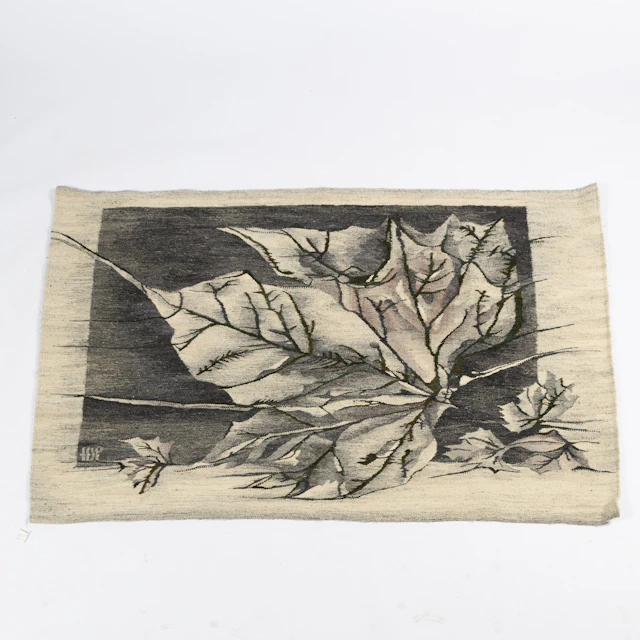
H SULKOWSKA. Väggbonad "Retro", signerad, Polen 1900-tal.
10/22/2026
$170.16
估價: $202.2

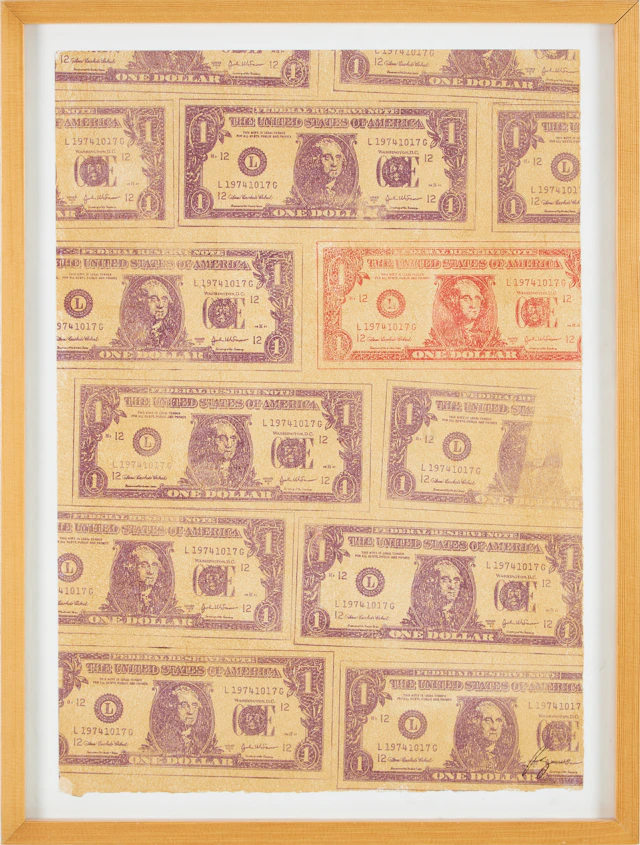
RICHARD RYAN (FÖDD 1974). dollarsedlar, monoprint, signerad.
10/22/2026
$40.27
估價: $101.1
讓您的拍賣觸及全球收藏家!
立刻發佈上架