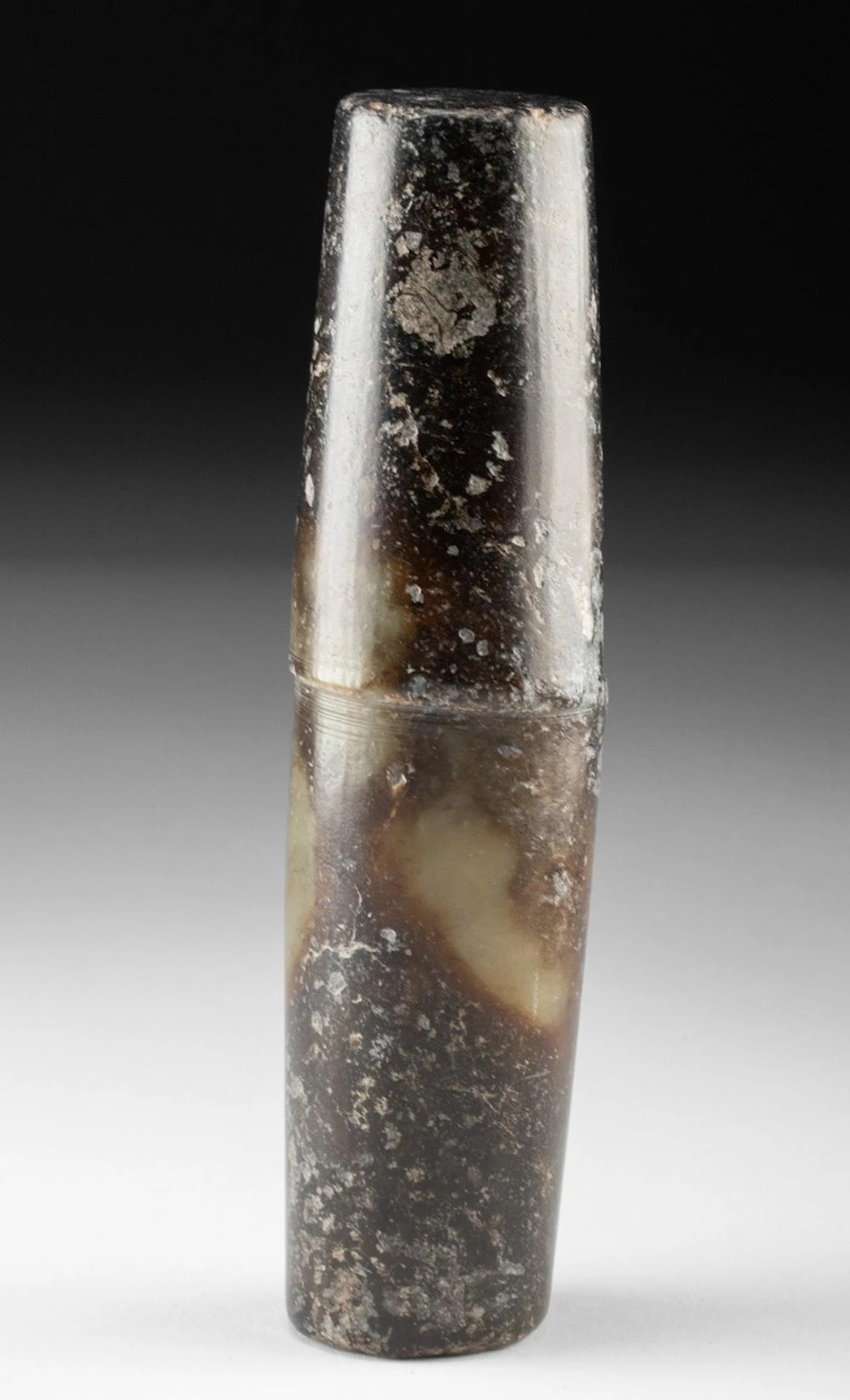
Qijia Culture Nephrite Jade Tube Core, Neolithic China
East Asia, China, Neolithic period, Qijia culture, ca. 2100 to 1600 BCE. A nephrite jade tube core, carved from dark, variegated nephrite with olive and brown tonal shifts, in the form of a tapered cylinder with a circumferential ridge marking the point where drilling was advanced from opposing ends. This feature identifies the piece as a tube core, the cylindrical remnant left behind after hollowing jade to create ritual tubes, beads, or other prestige objects. Such remnants were typically discarded, making surviving examples uncommon. The surface shows fine abrasion marks, softened edges, and areas of mineral encrustation, evidence of the grinding and drilling required to work nephrite, one of the hardest materials known to Neolithic craftspeople. Size: 7" L x 2" Diameter (17.8 cm x 5.1 cm) The stone retains a muted polish in places, suggesting repeated contact with abrasive tools and slurry over extended periods. Qijia jade production represents an important transitional moment in Chinese material culture, bridging earlier Neolithic traditions with the increasingly complex jade industries of the Bronze Age. Objects fashioned from jade were closely associated with ritual practice, social hierarchy, and cosmological belief, and even a byproduct such as this core reflects the cultural value placed on precision, endurance, and controlled transformation of natural materials. Today, this jade tube core stands not as a finished ornament, but as an eloquent trace of process. It preserves the negative space of an object once intended for symbolic use, offering a direct and tangible connection to the hands, tools, and time invested by Neolithic artisans over four millennia ago. Item # 200325
估價:$750
前往拍賣頁查看所有物品來自Artemis Fine Arts或Asian Art