拍品/northern india tradition of the gangetic valley Zd9hqsz 633086551 / 在售
拍品/northern india tradition of the gangetic valley Zd9hqsz 633086551
在售價格走勢
拍品/northern india tradition of the gangetic valley Zd9hqsz 633086551
在售價格走勢
讓您的拍賣觸及全球收藏家!
立刻發佈上架讓您的拍賣觸及全球收藏家!
立刻發佈上架訂閱即表示您同意 隱私政策。可隨時取消訂閱。
Barnebys HQ
Brahegatan 10
BOX 5038
114 37 Stockholm
全部拍賣 / Ancient Art / Northern India – tradition of the Gangetic Valley

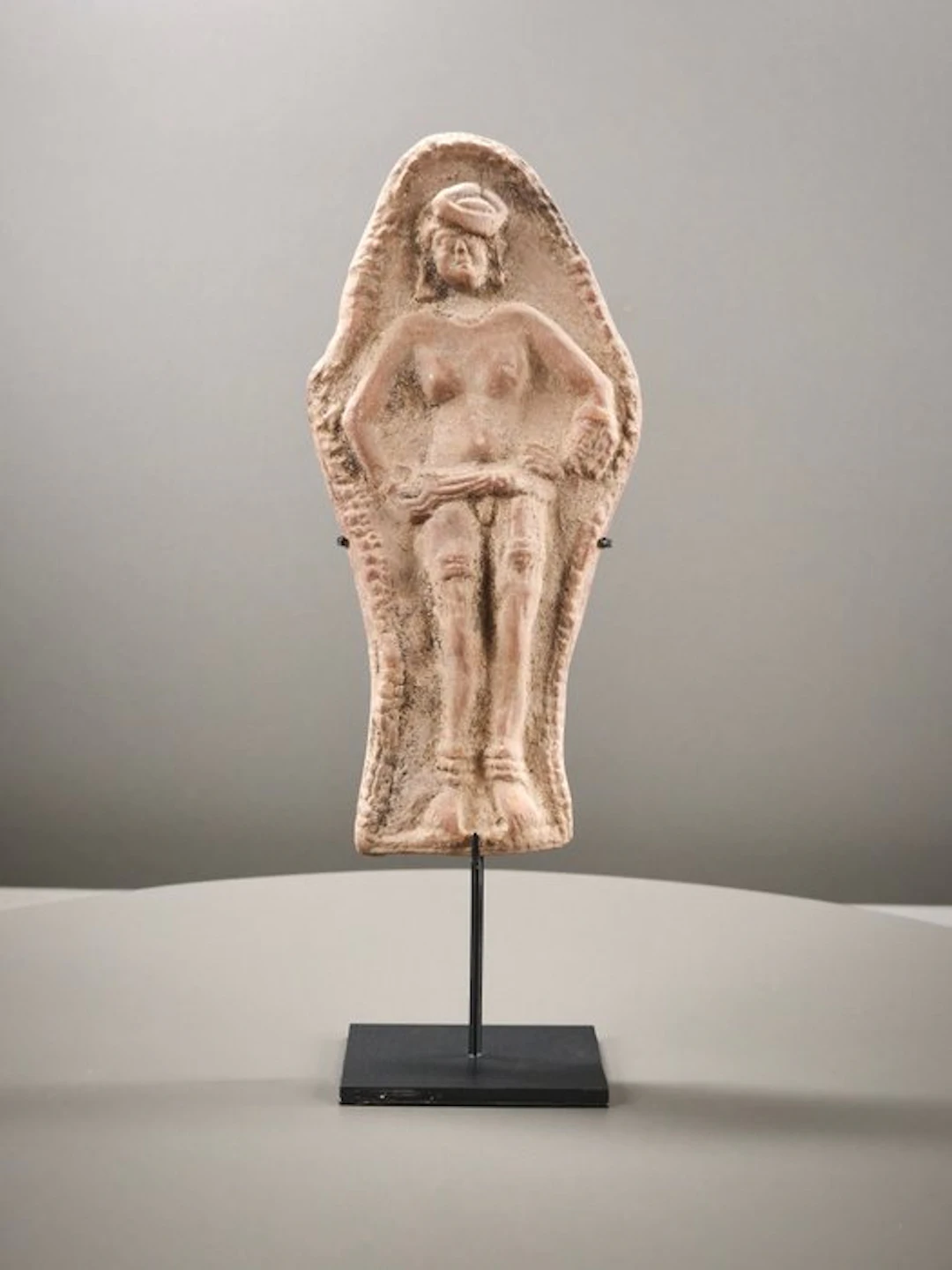
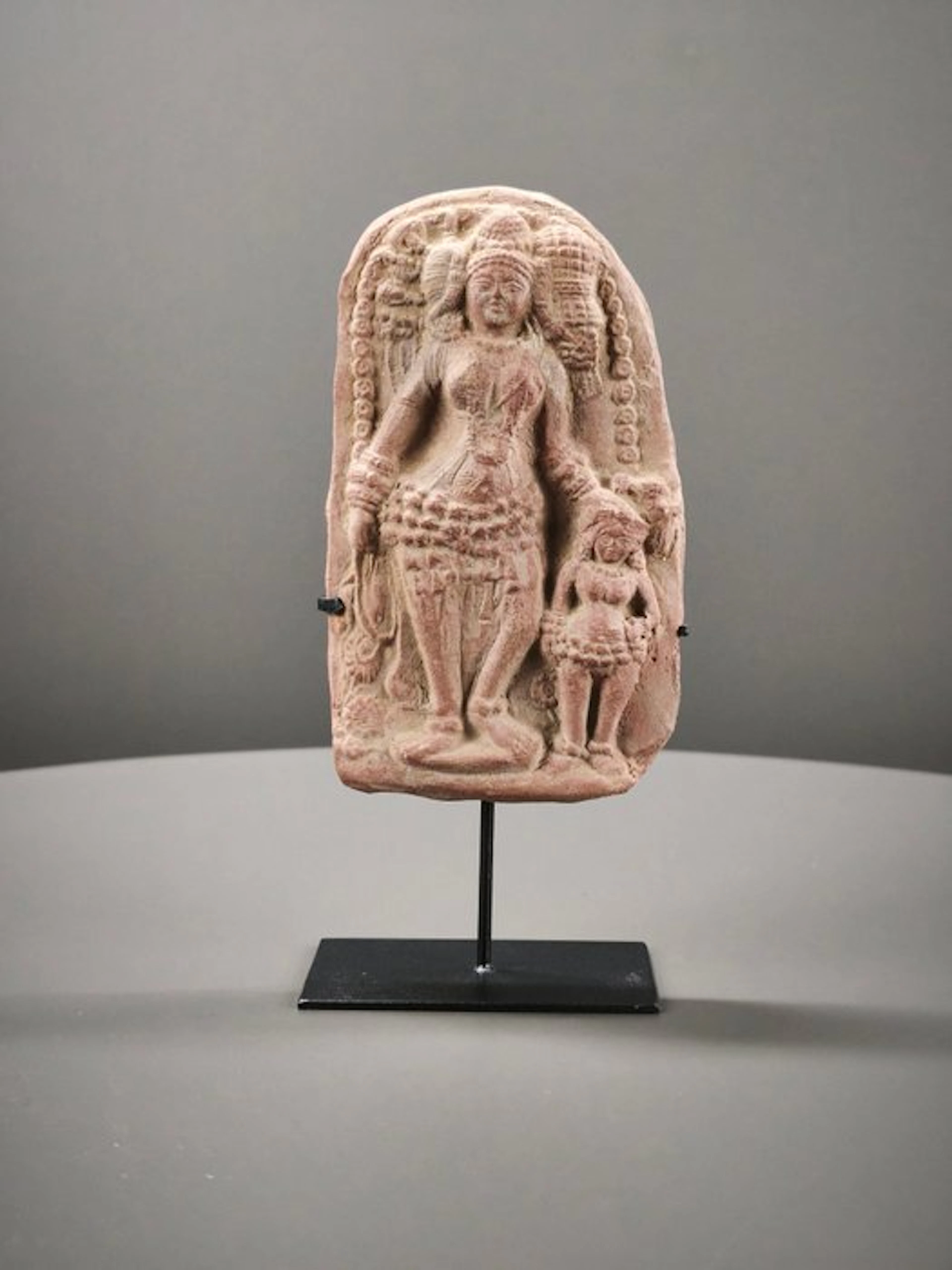
Large molded terracotta plaque depicting a standing female figure, probably a Yakṣī, Ancient India, Ganges valley tradition, Shunga period, late 2nd – 1st century BCE. Beautiful and important vertical-format figurative plaque portraying a standing, frontal woman occupying almost the entire field. The silhouette is characterized by a strongly modeled bosom, a cinched waist, and long legs placed close together. Both arms are drawn back toward the hip and belt region, in a stable and intentionally frontal posture. The head is topped with an elaborate headdress or circular hair arrangement, clearly set off from the face. Unlike certain famous female plaques from Chandraketugarh and Tamluk, no set of five weapons or distinct ornaments can be identified on this piece; as such, a more specific identification as Panchachuda is not retained. The accentuated feminine morphology, frontal stance, arm position, and the artistic context allow the figure to be linked to the broad repertoire of Yakṣī and auspicious female deities of ancient India, traditionally associated with fertility, prosperity, and abundance. Identification as a Yakṣī remains proposed with caution in the absence of an absolutely determinative iconographic attribute. The plaque is executed by uniface molding: the figurative relief is developed on the main face, while the reverse is flat, undecorated, and shows the irregularities characteristic of manual flattening and finishing after pressing the clay into a mold. Stylistically, the work belongs to the North Indian terracotta traditions and the Ganges valley during the Shunga period. Parallels can be drawn with productions from several major ancient centers, notably Kaushambi, Mathura, Chandraketugarh, and Tamluk. The relatively austere character of the jewelry and coiffure appears, however, closer to some productions of the middle Ganges Valley than to the highly ornate plaques of ancient Bengal. No exact archaeological site is claimed as the definite origin. The terracotta has a beige-pink to ochre-light tone, with natural surface variations and darker accumulations in some hollows. The most exposed reliefs show a soft, progressive abrasion, while protected areas retain more material and deposits. State: good overall condition for an ancient terracotta. The plaque is preserved almost entirely, with wear, abrasions, and small peripheral old losses. The face and some body details show more marked erosion, but the composition remains perfectly legible. No major rejoining, no significant reconstruction, and no major restoration are visible in the photographs and video reviewed. Shown on a modern metal base with no visible drilling of the plaque. Provenance: former private Belgian collection, acquired between 1979 and 2009, then passed down in 2023. Dimensions without base: 22.5 × 10.5 × 2.5 cm. Weight: 516 g. Height with base: 29.5 cm. No thermoluminescence analysis has been conducted. The proposed attribution and dating rest on stylistic, technical, material, and comparative study of the piece. video link: https://www.dropbox.com/scl/fo/3wp3n3oh8nnzcrxasyoy3/ALfs6EOeXjq1XdDeIhv87mo?rlkey=ydlz6ae5z8w1mr5rcv14nyrpc&dl=0
估價:$2,491.93
前往拍賣頁查看所有物品來自Catawiki或Ancient Art
估價:
$2,491.93
讓您的拍賣觸及全球收藏家!
立刻發佈上架