
全部拍賣 / Arts & Graphics / Nicolaes Berchem (1620–1683), Circle of - Europa y el toro - XL format

Nicolaes Berchem (1620–1683), Circle of - Europa y el toro - XL format
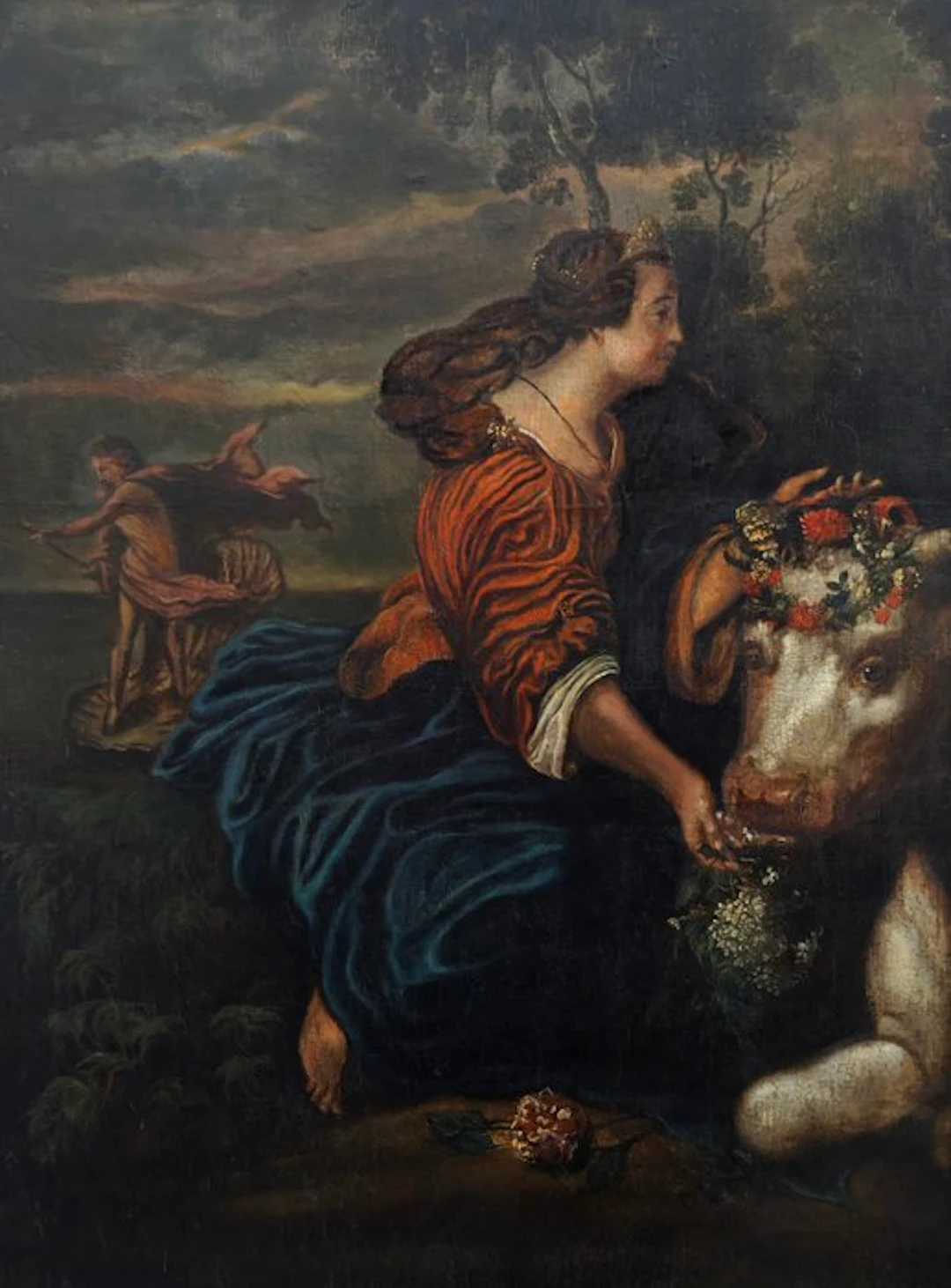
icolaes Berchem’s Context (1620–1683) Europe and the Bull / The Rape of Europa Oil on canvas 135 × 102 cm With frame: 146 × 113 cm Important and monumental painting of the Dutch school of the 17th century, closely related, both in conception and in certain stylistic and iconographic resources, to the pictorial universe of Nicolaes Pietersz. Berchem (Haarlem, 1620–Amsterdam, 1683), one of the great figures of the Italianate trend within Dutch Golden Age painting. The composition depicts the mythic episode of Europe and the bull, drawn from Ovid’s Metamorphoses. According to the classical tale, Jupiter, enamored of the Phoenician princess Europe, assumes the likeness of a magnificent white bull to approach her. Fascinated by the bull’s gentleness and beauty, Europe ends up entrusting herself to him before being led to the sea and abducted by the god. The painter here chooses one of the moments of greatest narrative richness in the episode. Europe appears majestically seated beside the white bull, whose powerful face occupies a large part of the foreground. The animal, adorned with a crown of flowers, ceases to function as a mere accessory element to acquire an extraordinary psychological and visual presence. Europe, richly dressed, directs her gaze toward the exterior of the composition while a second figure appears in the distance, blending into a twilight landscape. The monumental scale of the figures, the chromatic richness of the garments, the strong contrast between the illuminated areas and the shadowy landscape, and, especially, the extraordinary importance given to the animal, place the work within a particularly significant tradition of 17th-century Dutch painting. Relation to Nicolaes Berchem The painting shows interesting affinities with the works of Nicolaes Berchem, one of the most prominent representatives of the so-called Dutch Italians. The National Gallery of Art defines him as one of the most popular and successful Italianizing painters of his time and documents, within his extensive production, both pastoral scenes and Biblical and mythological subjects. Berchem developed a singular capacity to integrate human figures, landscape, and animals within a single narrative. That triple condition — history painter, landscape painter, and extraordinary animal painter — is especially relevant when analyzing the present work. The most suggestive comparison is with the famous Rape of Europa by Nicolaes Berchem, housed in the State Hermitage Museum. In that composition, as in the present painting, the white bull receives exceptional prominence. The Hermitage itself notes that that work demonstrates Berchem’s abilities as a history painter, landscape painter, and animal painter, highlighting especially the virtuoso rendering of the bull’s head. This feature has a clear parallel in the present work: the animal is not relegated to the landscape, but its head occupies the foreground and constitutes, together with Europe, one of the two major visual centers of the composition. The bull’s gaze directed at the viewer, the volumetric construction of the snout, the reflections on the white coat, and the floral ornamentation turn the animal into a individualized presence. This capacity to confer monumentality and character to cattle repeatedly appears in Berchem. The National Gallery of London highlights in A Man and a Youth ploughing with Oxen the robustness, musculature, and chromatic richness of the animals, while in other compositions by the master the cows function as essential elements of the pictorial structure and not merely pastoral accessories. The palette is also significant. The intense reddish and orange tones of Europe’s attire contrast with the deep blue-green of the large mantle crossing the foreground diagonally. These chromatic accents rise above a landscape built from greens, earth tones, and dark browns, a technique perfectly compatible with the Dutch Italianate painter’s search for chromatic contrasts. The National Gallery of Ireland precisely notes Berchem’s specialization in combining figures and animals with attractive color within Italianizing landscapes and recalls that his skill in this field led other artists to turn to him to incorporate figures and animals into their own compositions. Berchem and the Flemish tradition There is also another especially interesting aspect. Although Berchem is a fundamental figure in Dutch painting, his language did not remain isolated from the Flemish tradition. Studies on his Rape of Europa at the Hermitage have explicitly pointed out the affinities of that painting with Jacob Jordaens, a circumstance particularly relevant in a composition like the present one. The physical roundness of Europe, the abundant hair, the broad and heavy drapery folds, the intensity of color, and the markedly sensuous character of the scene recall that northern Baroque current in which the Dutch tradition dialogues with Flemish models. At the same time, the landscape responds to that Italian fascination that characterizes Berchem and other Dutch painters of his generation. There is even some historiographical debate today about whether Berchem actually traveled to Italy: while some sources have defended a possible journey, more recent research considers that he may have built his Italian imaginary from artists such as Pieter van Laer, Jan Both, and Jan Asselijn. The Rijksmuseum explicitly notes that there is no documentation of an Italian trip and that these masters were probably the main sources of his models. A monumental composition It should also be noted the exceptional format of the work: 135.26 × 102.24 cm, considerably large dimensions for a painting of this nature. Its scale allows the figures to achieve almost natural presence. Europe and the bull physically dominate the pictorial space, while the landscape and the secondary figure provide depth to the scene. The result is much closer to a true history painting of mythological subject than to a small cabinet scene. The composition is carefully articulated through diagonals: the wide blue mantle leads toward Europe; the body of the protagonist then leads to the bull’s head, and the gesture of the hand establishes the physical link between the two protagonists. The secondary foreground figure balances the visual weight of the large animal on the right. Of particular note is the treatment of the different materials: the shine of the fabrics, the flesh tones, Europe’s abundant hair, the white coat of the bull, the flowers and vegetation. All of this demonstrates an ambitious execution and an evident familiarity with the resources of great baroque painting in Northern Europe. Cataloguing By its formal, iconographic, and technical characteristics, the work can be placed within the 17th-century Dutch school, showing a close stylistic relationship with Nicolaes Berchem and, in particular, with that aspect of his output in which the master tackled mythological subjects through the combination of monumental figures, animals, and landscape. The comparison with the Rape of Europa housed in the Hermitage is especially pertinent both for the iconographic coincidence and for the extraordinary prominence given to the white bull. Berchem was also an enormously influential artist: he had numerous pupils and followers, and his compositions were widely copied and disseminated through engravings during the 17th and 18th centuries. The precise attribution, however, should remain open to future investigations, particularly the direct study of the painting’s surface, support, preparation, possible old interventions, and provenance. The quality and characteristics of the painting justify, in any case, its study within the context of Nicolaes Berchem and 17th-century Dutch mythological painting. State of conservation: the work shows signs of age and restorations/interventions compatible with its material history, noticeable in the photographs. It is recommended to carefully consult the images, which form part of the description. Framing: the painting is currently presented with a frame, reaching total dimensions of 146 × 113 cm. Due to the exceptional size of the work and for safety reasons during transport, shipping will be made without a frame. The frame is kept available to the buyer and may be collected in person or arranged for free pickup by the seller at no cost to the buyer.
估價:$3,371.15
前往拍賣頁查看所有物品來自Catawiki或Arts & Graphics
估價:
$3,371.15
類似物品

類似物品的拍賣結果
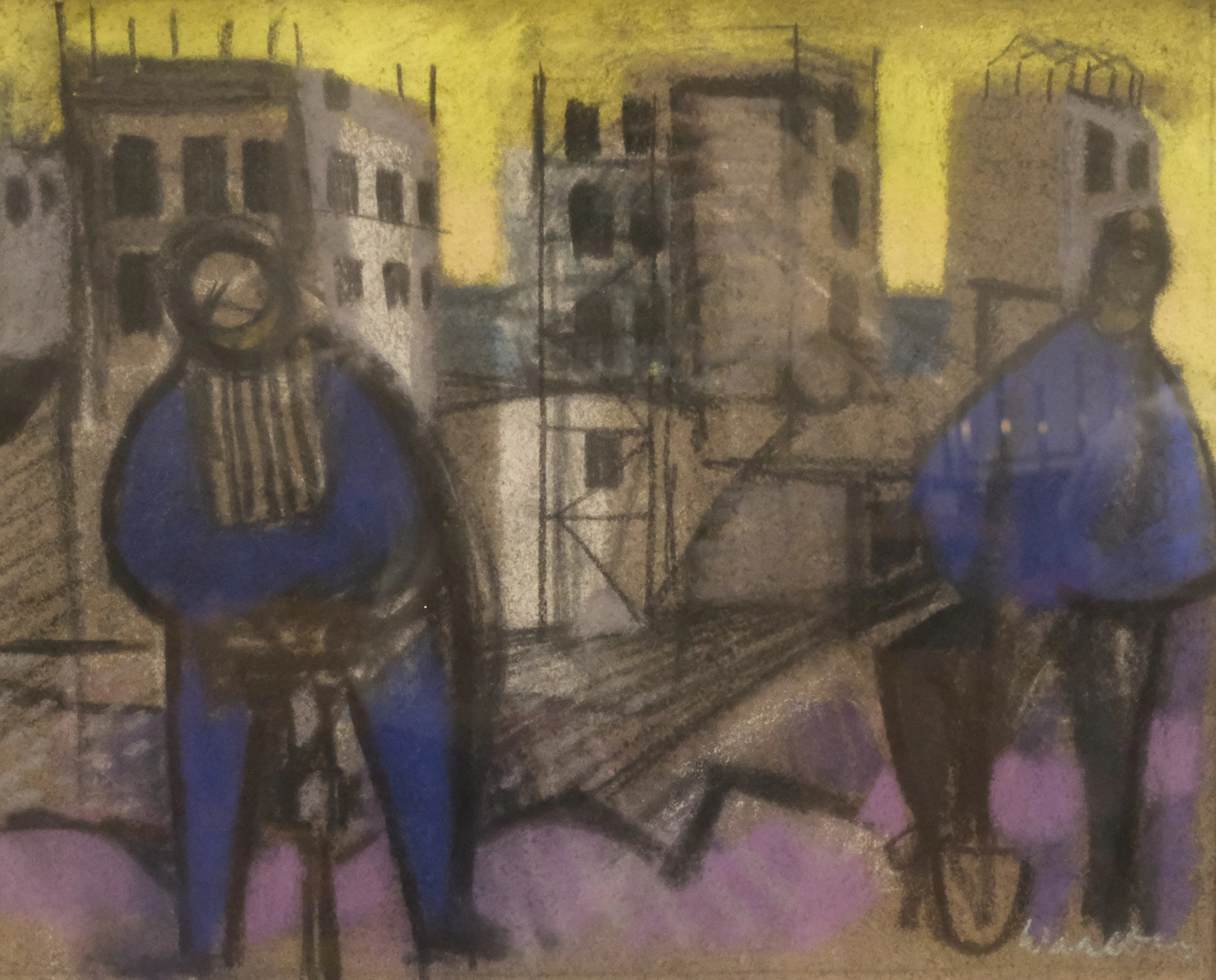
BERTIL WAHLBERG. PASTELL. ABSTRAKT KOMPOSITION, STADSMILJÖ MED ARBETANDE
10/16/2026

$30.26
估價: $50.23
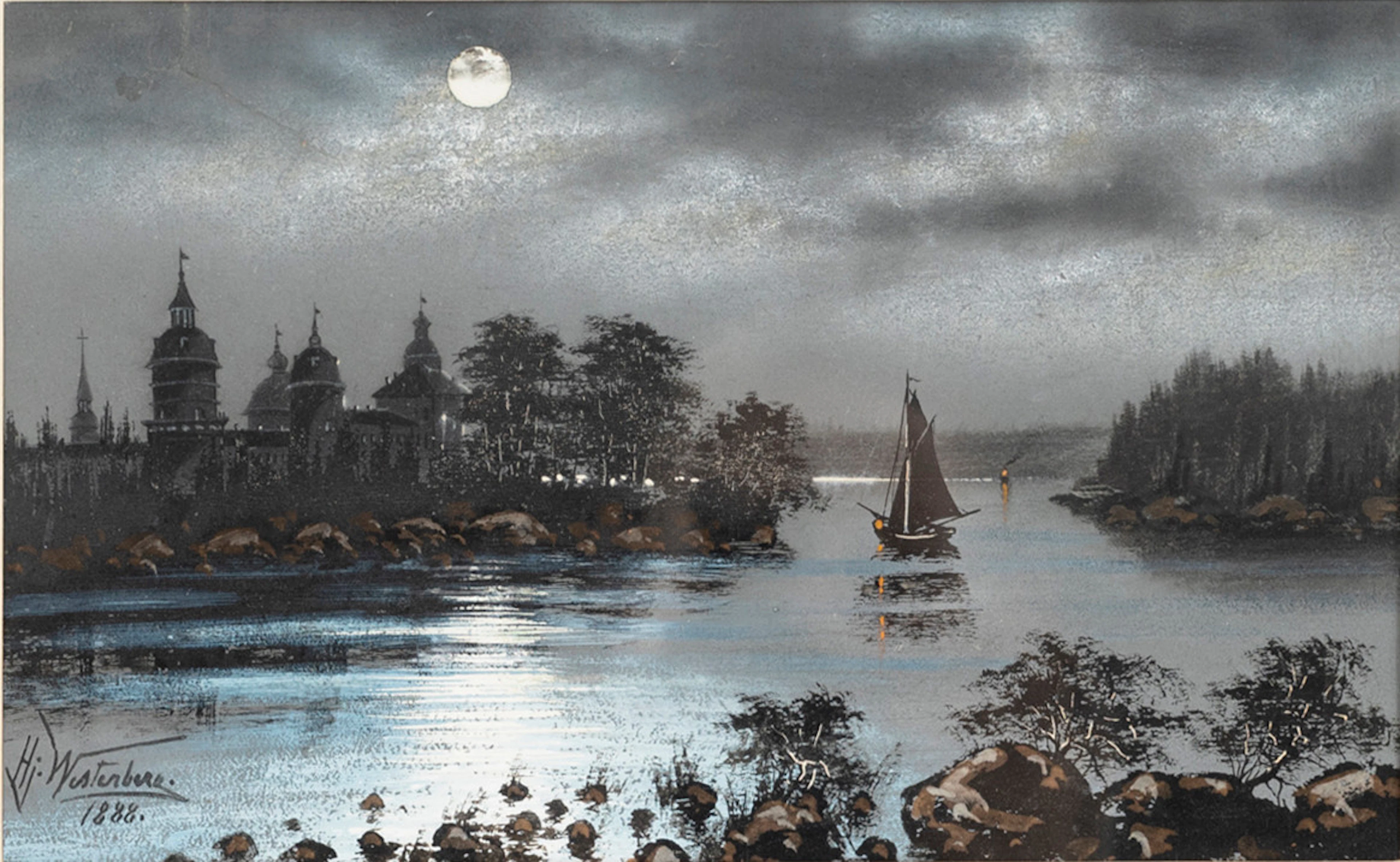
HJALMAR WESTERBERG (1854-1892). Båt i månsken, akvarell, signerad
10/16/2026
$40.35
估價: $150.01
APOLINARY SMOLAREK. Figurkomposition, olja på duk, signerad Apolinary.
10/16/2026
$151.32
估價: $251.17
讓您的拍賣觸及全球收藏家!
立刻發佈上架