
全部拍賣 / Ethnographic / Native Copper with a Rich Metallic Luster from the Iconic...

Native Copper with a Rich Metallic Luster from the Iconic...
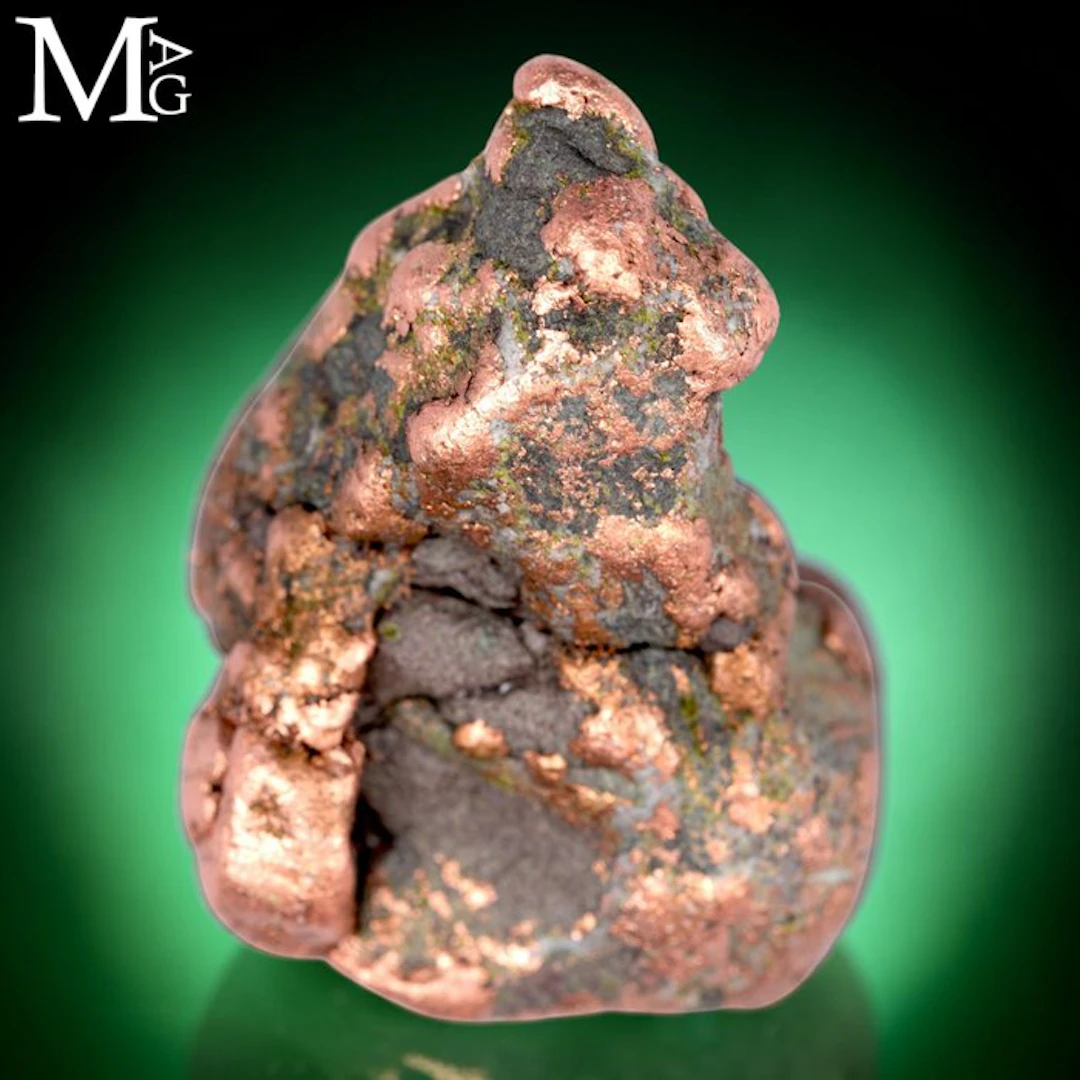
Outstanding Mesoproterozoic specimen of native copper with rich metallic formations — native copper nugget from Michigan, characterized by a compact, irregular, and strongly three-dimensional form. The surface features an articulated succession of rounded protuberances, cavities, depressions and thin ramifications, the result of the particular growth of the metal within the ancient volcanic rocks of the region. The specimen shows the typical red-copper color, brightened by intense pinkish and bronze metallic reflections. In several areas green, brown and gray tones are visible due to natural oxidation processes developed over time. The contrast between the shiny metallic surfaces and the patinated areas highlights the nugget’s morphology, making its irregularities and complex natural development clearly legible. Copper is one of the few metallic elements able to occur in nature in native state, i.e., in metallic form and not predominantly combined with other elements. It has chemical formula Cu, crystallizes in the cubic system, and is characterized by high malleability and ductility. In nature it can form crystals, plates, veins, branched aggregates and compact masses even of considerable size. The Keweenaw Peninsula region, overlooking Lake Superior, hosts the most famous native copper district in the world. Its origin is tied to the Midcontinent Rift, a vast continental fracture developed during the Mesoproterozoic. About 1.1 billion years ago, a long sequence of basaltic lava flows affected this area, accompanied by the formation of sedimentary and conglomeratic levels. Copper mineralization occurred subsequently, approximately between 1.06 and 1.05 billion years ago, when hot hydrothermal fluids circulated through fractures, cavities and porous zones of the ancient volcanic rocks. During cooling and reactions with the surrounding rocks, copper precipitated directly in metallic state, filling the available spaces and taking irregular, nodular and sometimes branched forms. The appearance of this nugget thus constitutes a direct testimony of that distant geological process. Its rounded and articulated surfaces do not derive from artificial processing, but from the natural growth of copper and the subsequent transformations it underwent during its very long stay underground. Michigan also represents one of the historically most important regions for copper extraction. The metal of the region was known and worked by native peoples thousands of years before the start of industrial mining in the 19th century. Its high purity and the ease with which it could be shaped by hammering made it a precious raw material for making tools, ornaments and ceremonial objects. A specimen of notable mineralogical and historical interest, in which the brightness of native copper alternates with the deeper tones of patina. An authentic nugget formed over more than a billion years ago and originating from one of the most important native copper deposits known in the world. Mineral: native copper Chemical formula: Cu Provenance: Michigan, United States Mineralization age: about 1.06–1.05 billion years
估價:$3.36
前往拍賣頁查看所有物品來自Catawiki或Ethnographic
估價:
$3.36
類似物品


類似物品的拍賣結果


讓您的拍賣觸及全球收藏家!
立刻發佈上架