
全部拍賣 / Contemporary Art / Miquel Torner de Semir (1938) - La sandía roja

Miquel Torner de Semir (1938) - La sandía roja
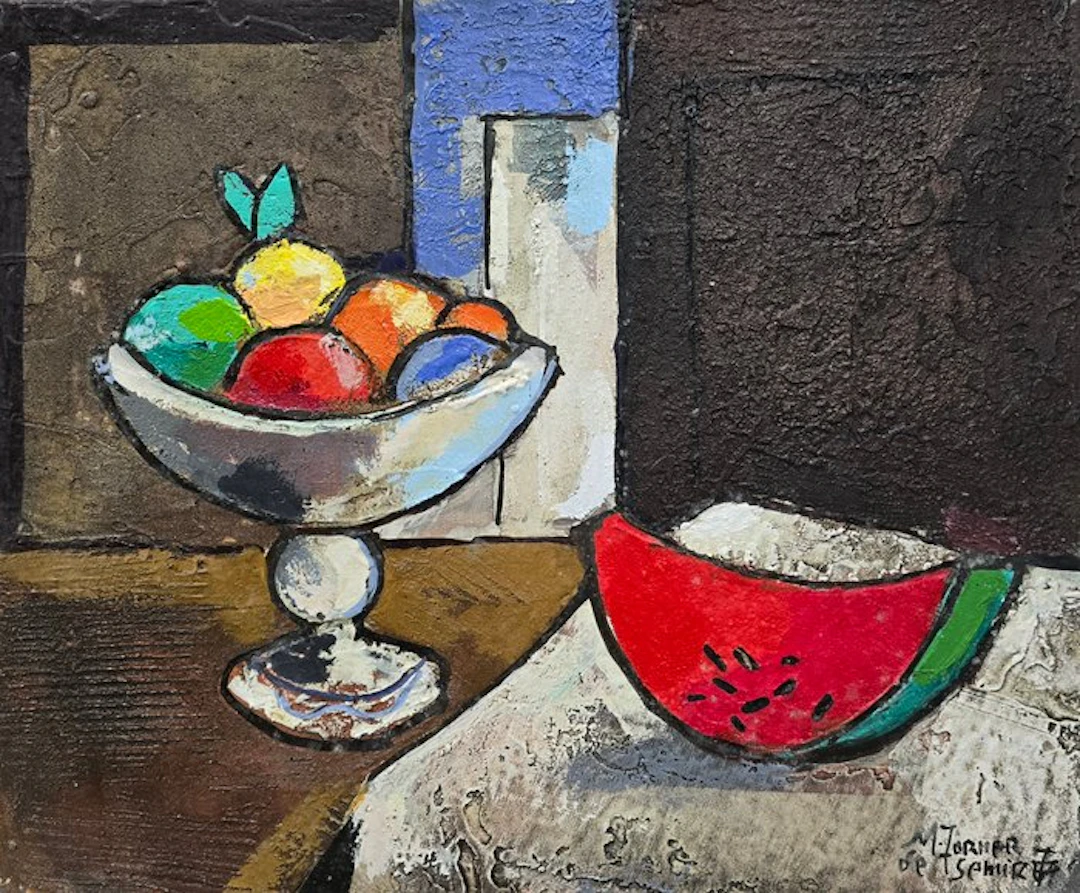
Pictura Galeria presents this magnificent artwork belonging to Miquel Torner de Semir, which depicts a colorful still life composed of a goblet full of fruits and a large slice of watermelon that stand out intensely against a dark background. The painting stands out for its excellent technique and the high pictorial quality it conveys. · Dimensions of the work: 46x55x2 cm. · Oil on canvas hand-signed by the artist in the lower right corner, Miquel Torner de Semir. · The piece is in good conservation condition. The work comes from an exclusive private collection in Girona. Important note: the included photographs form an integral part of the lot description. The work will be professionally packaged by an IVEX expert (https://www.instagram.com/ivex.online/), using high-quality materials to guarantee its protection. The shipping price covers both the cost of professional packaging and the transport itself. Shipping will be carried out by Correos or GLS with tracking. International shipping available. This painting presents a modern and expressive still life, featuring a tall elevated container filled with vividly colored fruits and a large slice of watermelon placed on a table. The composition brings everyday objects together within a dark and enigmatic atmosphere, where simple shapes acquire an intense presence. The image conveys a sense of abundance, vitality, and contrast, turning a collection of foods and containers into a scene full of visual energy. On the left stands a wide elevated goblet or fruit bowl, whose curved shape opens generously to hold numerous fruits. The container has a rounded base and a broad foot that gives it stability. Its light, gray, and blue tones contrast with the darkness of the background, making its silhouette clearly recognizable. The goblet appears to tilt slightly toward the viewer, proudly displaying the colorful contents inside. Inside the fruit bowl several pieces of different colors and sizes come together. A green fruit sits at the far left and adds a note of freshness, while a red spherical piece dominates the front area. Above them appear yellow and orange fruits that illuminate the ensemble, accompanied by another bluish form that introduces an unexpected color. This chromatic variety makes the container seem overflowing and creates a cheerful sense of abundance. The yellow fruit located in the upper area is recognized by the two green leaves that emerge above it. These leaves form a small pointed figure that breaks the predominating roundness and directs the gaze toward the top of the composition. Its turquoise color stands out against the dark brown background and establishes a visual relationship with the green fruit below. This small vegetal detail brings life and movement to the whole. The fruits are not depicted uniformly; each has its own identity. Some are round and compact, others seem partially hidden, and several overlap, creating a dense structure. Their dark outlines clearly separate them and reinforce the sense that they are piled inside the goblet. The mix of reds, greens, yellows, oranges, and blues makes the fruit bowl the brightest and most dynamic core of the painting. Behind the goblet appears a tall rectangular container, similar to a glass, a bottle, or a jug with very simple lines. Its surface combines whites, grays, and light blues, forming a vertical element that contrasts with the curves of the fruits and the fruit bowl. This figure acts as a point of equilibrium in the center of the composition and establishes a transition between the colorful left area and the wide dark background on the right. The verticality of this container adds depth and suggests it is placed farther back on the table. Its top seems to contain a blue zone, like a reflection or a small amount of liquid. Although its function is not completely defined, its presence is essential to organize space. Thanks to it, the eye does not pass abruptly from the fruit bowl to the darkness, but finds an intermediate figure that links both sectors. In the foreground on the right stands a large portion of watermelon. Its intense red pulp is one of the most striking points of the entire work. The triangular and curved shape of the fruit extends over the light surface of the table, while the green rind runs along the outer edge. A narrow white strip between the colors separates the pulp from the rind and enhances the vividness of the red. The small black seeds scattered over the watermelon introduce rhythm and detail. Their elongated and dispersed shapes break the large red surface and immediately reinforce the identification of the fruit. Some seeds appear grouped and others remain isolated, creating an spontaneous arrangement. These small dark elements interact with the black outlines of the objects and with the deep background that occupies much of the composition. The watermelon seems cut and ready to be eaten, which introduces a sense of immediacy. It is not merely a decorative fruit but a fresh food laid on the table, perhaps during a meal or a summer afternoon. Its color, size, and proximity to the viewer make it seem almost accessible, evoking associations with heat, freshness, and the sweet taste of ripe fruit. The table is visually divided into several zones. Under the goblet there is a solid, warm brown surface, while under the watermelon extends a light area with whites, grays, and beiges. This difference creates two realms within the same scene: a darker, earthier space for the fruit bowl and a brighter space for the watermelon. Both zones are in the center and form an interesting play of contrasts. The light area of the table presents numerous color variations that prevent it from looking like an empty surface. Grays, whites, browns, and small bluish nuances blend and create an aged and expressive appearance. This area serves as a visual support for the watermelon and allows the red to stand out with great intensity. At the same time, the irregularity of its boundaries adds dynamism to the foreground. The background is composed of large rectangular fields of dark color. On the left appears a brown plane framed by black tones, while the right side is dominated by a wide almost-black surface. Between them is a vertical blue stripe that partially surrounds the clear container. This geometric arrangement provides structure to the scene and recalls a wall divided into panels or windows. The large dark space on the right is not completely empty. Its surface shows subtle irregularities and variations that add depth and mystery. The darkness acts as a counterpoint to the luminosity of the fruits, making their colors even more intense. It also creates an intimate atmosphere, as if the objects were lit inside a silent room. The composition is built from a constant opposition between curved and straight forms. The fruits, the goblet, and the watermelon are dominated by curves and rounded volumes, while the glass and the background fields are organized by vertical lines and rectangular shapes. This coexistence of geometries provides balance and prevents the image from feeling static. The objects seem to relate to each other through their differences. Colors also establish a very rich dialogue. The warm tones of the fruits —reds, yellows, and oranges— convey energy, while greens and blues add freshness. The browns, grays, and blacks of the surroundings serve as a sober base and allow the main elements to stand out. The result is a scene balanced where each color finds its place without losing intensity. Beyond the representation of the foods, the work can be read as a celebration of abundance and simple pleasures. The fruits evoke nourishment, summer, generosity, and life, while the elevated goblet grants them almost ceremonial importance. The cut watermelon introduces the idea of a present and shared moment, as if the table were prepared to welcome someone. There is also an interesting relationship between permanence and transience. The containers seem solid and stable, but the fruits are perishable and remind us that beauty and abundance exist for a limited time. This reading adds depth to an apparently everyday scene. The still life invites enjoying the present and appreciating the richness of simple things before they change or disappear. Overall, this precious painting represents a still life full of contrast and vitality, formed by a goblet overflowing with fruits, a vertical container, and a large slice of watermelon on a table. The intense colors of the foods stand out against the dark background and transform the scene into a celebration of abundance, freshness, and everyday pleasures. The work conveys energy, warmth, and joy, while inviting contemplation of the hidden beauty in the simplest objects.
估價:$898.97
前往拍賣頁查看所有物品來自Catawiki或Contemporary Art
估價:
$898.97
類似物品


類似物品的拍賣結果


讓您的拍賣觸及全球收藏家!
立刻發佈上架