
全部拍賣 / Contemporary Art / Jordi Jové (1937) - Luz en la arboleda

Jordi Jové (1937) - Luz en la arboleda
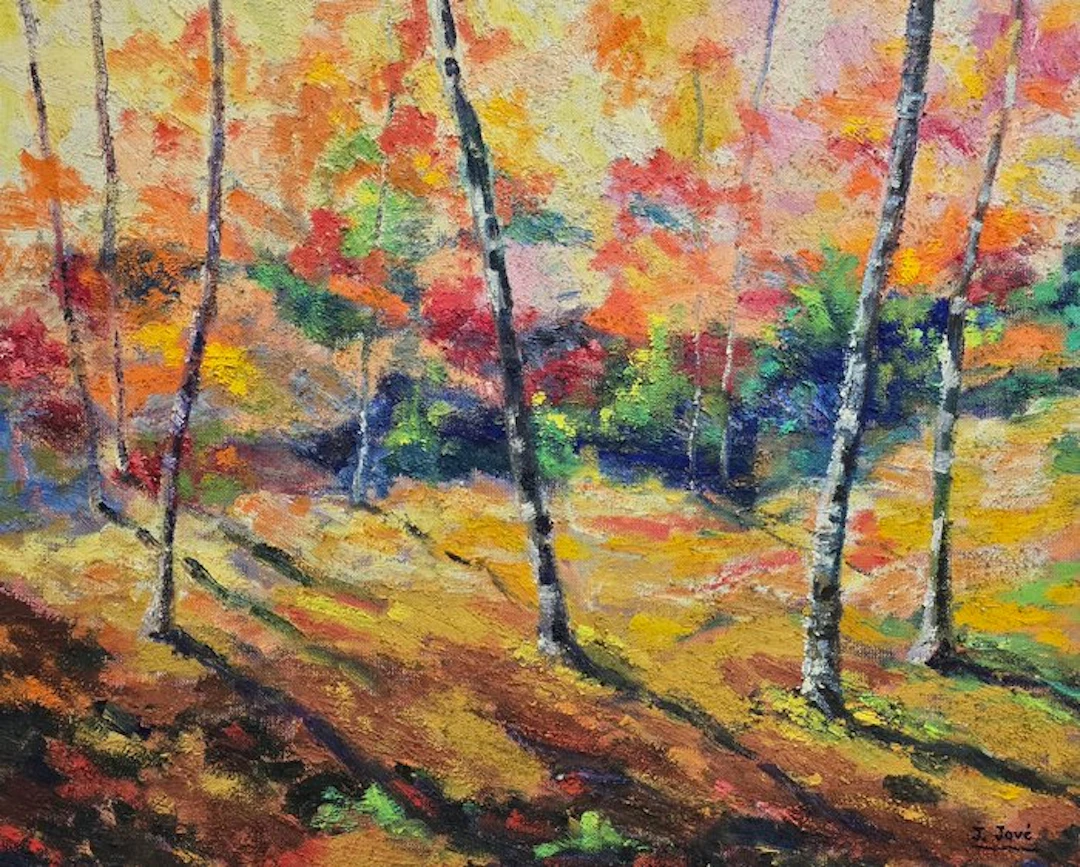
Pictura Galeria presents this magnificent work of art by Jordi Jové, depicting a forest in intense autumn colors as a symbol of transformation, renewal, and beauty in the passage of time. The painting stands out for its excellent technique and the high pictorial quality it conveys. · Dimensions of the artwork: 50x61x2 cm. · Oil on canvas hand-signed by the artist. · The piece is in good condition. The work comes from an exclusive private collection in Girona. Important note: the photographs included are an integral part of the lot description. Digital representation in an indicative mockup; there may be differences from the actual article in color, scale, and details. The artwork will be professionally packaged by an IVEX expert (https://www.instagram.com/ivex.online/), using high-quality materials to ensure its protection. The shipping price covers both the cost of professional packaging and the transportation itself. Shipping will be carried out by Correos or GLS with tracking. International shipping available. This painting presents a forest undergoing full autumn transformation, wrapped in an extraordinary richness of warm colors and pierced by numerous slender trunks that rise vertically toward the top of the composition. The scene shows a natural corner with no human presence, where trees, vegetation, and the leaf-covered ground become the sole protagonists. Golden yellows, oranges, reds, pinks, greens, and violets are distributed throughout the landscape, creating a luminous, enveloping, and deeply emotive atmosphere. The whole conveys the sensation of witnessing a fleeting moment of autumn, when the forest reaches its peak splendor before winter arrives. In the foreground, several tall, narrow trunks stand out, some of them covered by white, gray, and dark tones reminiscent of birch bark. Their forms traverse the composition from the ground to disappear at the upper edge, emphasizing the verticality and height of the forest. The trunks are not perfectly straight or aligned, but show slight tilts that add naturalness and movement. Each one has a distinct appearance, as if bearing the marks of time and previous seasons. One of the main trunks is placed near the center and gently leans to the right. Its dark color contrasts with the brightness of the background, making it a major visual axis. The base is surrounded by leaves and vegetation in yellows, browns, and reddish tones, while the upper part disappears among the canopies. This tree divides the landscape without interrupting it and helps organize the great chromatic abundance that extends around it. On the right side, two light trunks rise, standing out especially for their white and gray surfaces, crossed by small dark spots. Their luminosity creates a very attractive contrast with the greens, blues, and violets located behind. These trees seem closer to the viewer and act as a natural frame. The tilt of one of them directs the gaze toward the center of the forest and reinforces the sense of depth. On the left side, other thinner trunks appear, represented by browns, grays, purples, and blacks. Some are partially hidden among the foliage and others rise above lighter spaces. Their repetition creates a vertical rhythm that recalls the endless succession of trees within a grove. As they recede, their shapes soften and blend with the background, increasing the impression of distance. The upper part is dominated by an abundant mass of autumn leaves. Pale and golden yellows function as a source of light, while oranges, reds, and pinks add warmth and energy. In some spots, bright greens appear, recalling leaves that have not yet completed their transformation. This coexistence of colors allows us to imagine an intermediate moment of autumn, when each tree changes at its own pace. Reddish tones appear distributed throughout the forest like small focal points of intensity. Some areas take on a deep, dark red, while others approach coral, pink, or garnet. These variations enrich the scene and prevent the vegetation from appearing uniform. The red can be interpreted as a symbol of vitality, but also as a signal of an approaching cycle's end. The oranges and yellows dominate the atmosphere, giving the forest a sense of warmth. Although the scene represents a season associated with cooler temperatures, the golden light conveys contemplation and well-being. The viewer may imagine sun rays filtering through the canopies and igniting the leaves. This clarity seems to extend from the background and envelop each element of the landscape. In the center, a darker zone formed by deep greens, blues, violets, and blacks opens up. This band creates an essential contrast with the brightness of the foliage and could correspond to a denser part of the forest where light barely reaches the ground. Its darkness adds mystery and depth, inviting us to imagine a hidden path or a more sheltered area of vegetation. The gaze is drawn to this space, though it is impossible to know what lies beyond. Around that shady area, bushes of intense greens and bright yellows appear. Their irregular forms overlap and create different vegetation levels among the trunks. Some plants seem illuminated from above, while others remain almost completely submerged in shadow. This alternation reproduces the variety of light characteristic of a forest, where each gap between leaves creates a new contrast. The ground occupies much of the lower half and appears covered by a thick layer of fallen leaves. Yellows, ochres, browns, reds, and oranges mix to form a rich and changing surface. Some areas are especially luminous, while others take on darker tones suggesting moisture, unevenness, or accumulations of vegetal matter. The absence of a clearly defined path keeps the terrain looking free and natural. In the foreground, the earth shows diagonal and curved bands that lead the eye inward. These shapes can be interpreted as small slopes, roots, shadows, or zones where leaves have accumulated unevenly. The ground arrangement creates movement and avoids overly horizontal organization. The viewer seems to stand on a gentle hillside from which the forest depth is observed. In some spots of the ground, very vibrant greens may correspond to moss, grass, or small plants resistant to seasonal change. These accents add freshness and contrast with the dried leaves. Their presence reminds us that autumn represents not only the end of a cycle but also the continuation of life beneath the fallen vegetation. Even amid transformation, the forest retains signs of growth. The shadows of the trunks project onto the ground in dark, elongated lines. These diagonals provide direction and reinforce the impression that light comes from an elevated point. Some shadows cross the golden areas and create strong contrasts, while others blend with the browns and violets of the soil. This play between light and dark makes the landscape feel alive and changing. The absence of visible sky allows the forest to envelop the viewer completely. The upper part does not offer an open exit, but remains covered with foliage and trunks. This choice generates a sense of immersion, as if the observer were walking among the trees rather than looking at them from afar. The space becomes intimate, close, and protected. Despite the abundance of elements, the composition maintains a notable balance. The vertical trunks provide order, while color masses introduce freedom and movement. The clear trees on the right balance the dark density of the center, and the bright areas in the background balance the deep browns of the foreground. Each part contributes to an overall harmony based on contrasts. The scene conveys serenity, but not immobility. The leaves seem to vibrate, the colors merge, and the trunks suggest the movement of a gentle breeze. One can imagine the sound of branches, the crunch of dry leaves underfoot, and the distant murmur of the forest. This capacity to awaken sensations makes the image an almost physical experience and transports the viewer into the interior of the landscape. Autumn appears represented as a season full of beauty and abundance, not only as a period of loss. The leaves changing color transform the forest into an extraordinarily luminous space. Reds, yellows, and oranges celebrate the intensity of nature before the winter rest. The scene suggests that every transformation can contain its own form of splendor. The depth of the forest is built by layering trunks, shrubs, and masses of foliage. The nearest elements present strong contrasts and defined contours, while those in the background become lighter and blend with the ambient luminosity. This transition creates the impression of a broad space that continues far beyond the visible limits. The forest seems to have no definite end. The painting invites slow contemplation. The gaze can first rest on the white trunks, continue to the red and golden leaves, delve into the blueish center, and finally return to the foreground ground. Each journey reveals new relationships between colors and forms. The work does not rely on a single main element, but on the coexistence of all of them. It can also be interpreted as a reflection on the passage of time. The trees remain standing while their leaves change, fall, and are reborn with the cycle of the seasons. The ground collects what the canopies have left behind, turning it into part of the landscape and nourishment for the future. This relationship between permanence and change provides a symbolic and emotional dimension to the scene. Taken together, this painting constitutes a vibrant and enveloping celebration of the forest in autumn, where slender trunks, golden and reddish leaves, deep shadows, and the leaf-covered ground form a composition filled with harmony. The wealth of colors conveys vitality, while the depth of the grove awakens serenity and mystery. The work invites you to imaginatively enter among the trees, feel the crunch of the leaves, and contemplate the beauty of a nature that transforms. The landscape symbolizes the passage of time, renewal, and the splendor that can be found even in moments of change.
估價:$224.74
前往拍賣頁查看所有物品來自Catawiki或Contemporary Art
估價:
$224.74
類似物品




類似物品的拍賣結果



讓您的拍賣觸及全球收藏家!
立刻發佈上架