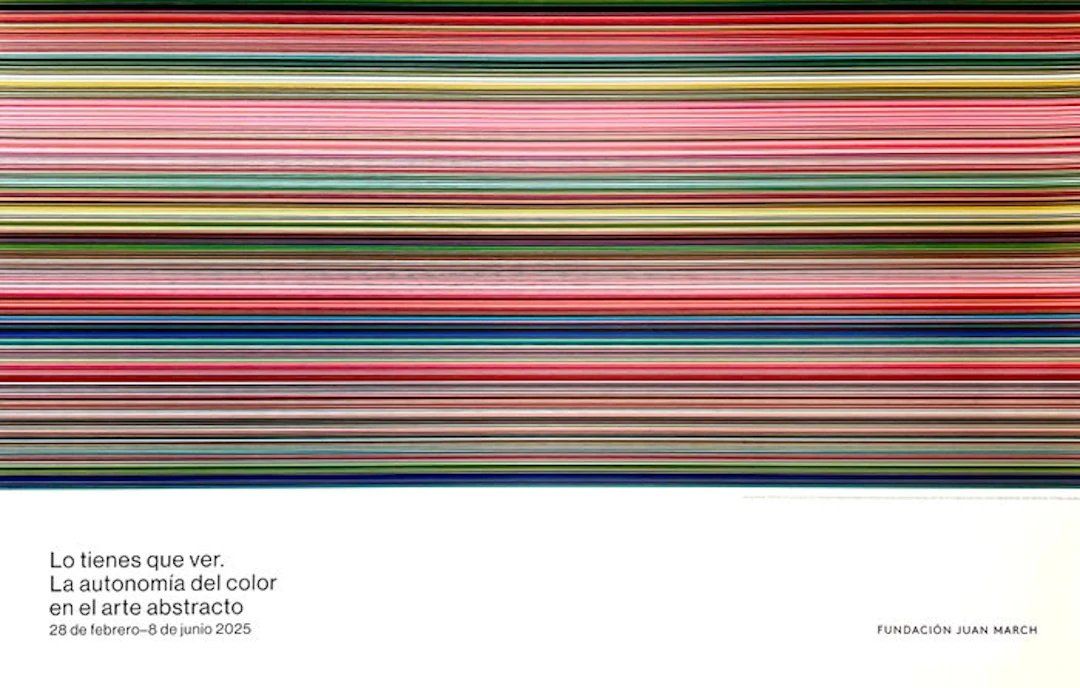
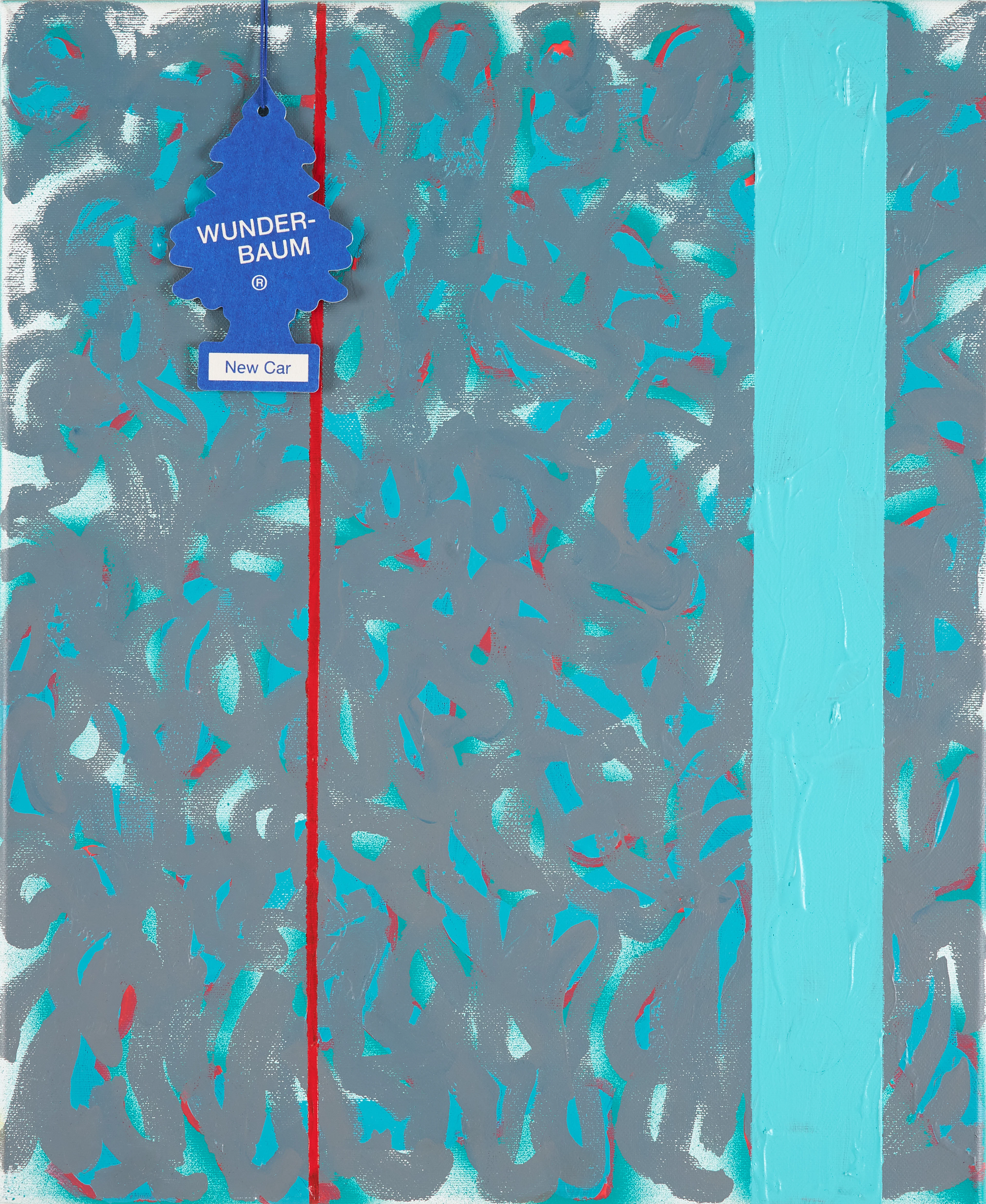
Gerard Richter (after) - STRIP (921-2) / Lo tienes que ver…
Gerard Richter offset (*). Edited on the occasion of the exhibition “Lo tienes que ver…” at the Fundación Juan March in 2025. Reproduction of the work STRIP (921-2) a piece created by Richter in 2011 and part of the collection of the Fondation Louis Vuitton in Paris. Published by Fundación Juan March. Authorized print with copyright. Large Format. *** LAST REMAINING COPIES *** - Sheet dimensions: 96.7 x 61.5 cm - Year: 2025 - Condition: Excellent (this work has never been framed or exhibited, always kept in a professional art folder, and is therefore in perfect condition). - Provenance: Private collection. The work will be carefully handled and packed in reinforced cardboard packaging. The shipment will be tracked with a tracking number. The shipment will also include transport insurance for the final value of the work with full reimbursement in case of loss or damage, at no cost to the buyer. (*) Gerhard Richter, still active and well over ninety, dared to oppose Adorno by affirming that even after Auschwitz there is poetry. This author, born in 1932 in Dresden, trained at his Academy of Fine Arts and resident in West Germany since 1961, has essentially made the reflection on how possible it was to make art after Nazism and the Holocaust the center of his production. He preferred to destroy some of his early canvases, sometimes titled Execution or Hitler (1962); pieces that would be followed, in the mid-to-late sixties with better material fortune, by Aunt Marianne, Uncle Rudy or Mr. Heyde, based on previous photographs and alluding both to the German past and to his own family history. In parallel, he began compiling historical visual testimonies, sometimes private, such as photos, newspaper cuttings, and sketches, in what he called his Atlas, from which he has continued to draw sources to this day; that archive includes, again, images of concentration camps which in the nineties he tried to use as pictorial motifs for the first time, but he discarded the idea. Richter understands art as a catalyst for problems and as a problem in itself: he has been interested in the other side of painting, the ability to affirm the meaning of the act of painting only to deny it afterward and emphasize the distances between painting that represents motifs and that other painting that reflects on itself and not on reality. When he decided to leave East Germany, he did so after discovering Fontana’s and Pollock’s work at the Kassel Documenta in 1958: both represented a shock for him in concluding that his search would have to be based on the struggle against painting without abandoning it. Under the influence of other European writers (Giacometti and Dubuffet), he began to reproduce photographs in oil and, eager to move away from the German tradition, began an artistic path that he wanted to be independent, halfway between philosophical skepticism and gravity. Those photographs that fed Richter’s work were, at the same time, very bitter to him: he felt they withered and led a nomadic and miserable life; also that he could remake them, rescue them. For the German, the painter should not seek to express the character of his model, and when he works from a photo, he will not represent an individual, but an image that will have nothing to do with him. The purpose of likeness would be useless. Expanding on that idea, painting from a photo would erase conscious thought: the artist does not need to make decisions. There is no notion of originality, the temptation to describe, sentimentality, thematic or iconographic content… For all these reasons, the public must also change its ways of seeing and thinking: if the canvas no longer imitates, and cannot be interpreted as a document, one must look for an unreal space in which irony fits. What do his techniques consist of? Richter copies in oil on primed canvas, with precision and without the intention to add or remove, anonymous photos with no aesthetic pretensions nor apparently emotional value. He neither alters nor distorts the original images, and his reason is prior to his art: I don’t need to deform as Bacon does; the objects are already quite terrifying. The dominant grays in many of his pieces connect to that zero desire to express opinion; again, to his words, gray is more qualified than any other color to represent nothing at all. He breaks, however, with that mechanization the finding that would become his signature: the smudging of contours that contrasts with the sharpness of classical photography and that makes us simultaneously confront the real image and its dissolution. I don’t need to deform as Bacon does; the objects are already quite terrifying. Regarding the selection of images that feed his production, Richter does not choose them randomly. One of the most emblematic is the aforementioned Uncle Rudy (1965), his own uncle: seemingly a friendly man wearing the Nazi army uniform. The artist dedicated this work to the victims of the SS during the punitive action against the Czechoslovak population of Lidice, in 1984; we can understand it, therefore, as a reflection on acts of commemoration and mourning in his country, in the postwar era. He was also obsessed with pain and death, as again shown in Shot 2 (1988), a manifestation of his despair before the dilemma that our eye allows us to identify things and, at the same time, prevents and restricts understanding of reality. In 2014, and for the Birkenau series, his starting point were four photos of the Auschwitz-Birkenau concentration camp itself, secretly taken in 1944 by Jewish prisoners who risked their lives to take them. They show both the field’s terrain and the interior of crematorium V, with numerous bodies, and they are the only surviving images of these extermination spaces that come from the victims. They were not published until after World War II and, in 1967, Richter had already included several of them in his Atlas, but it would not be until the appearance of some in Georges Didi-Huberman’s essay In Images Despite Everything (2008), in which the philosopher used them to analyze how the Holocaust could be represented, that he felt compelled to use them in his work. He transferred four scenes, with charcoal and oil paint, to individual canvases and then painted on them from abstract parameters, so that with each added layer, the original motifs disappeared until they ended up not being visible. We have referred to specific pieces, but to understand Richter’s work we must study it as a whole: his various styles have been simultaneous and thus ambiguous. In one and the other, he has sought technical mastery, and globally they seem to articulate a grand opera: he has cultivated monochrome and expressionism, hyperrealism and abstraction. Landscape, portrait, and still life. His color samples are well known, which challenged a certain decorative tendency in European abstraction; they are industrial catalogues that influence what painting has of showy brilliance and undermine the foundations of styles. The fruit resembles a fresco of that discipline in the 20th century. Like Josef Albers, he also explored color fields based on the geometric shape of the square from the mid-1960s, when he was fascinated, almost obsessed, by the color sample cards produced industrially, with their smooth perfection and precision in reproducing tones and their variation possibilities. For Richter, those squares evoked the opposite of emotional emphasis, expressiveness, or the sublime, that is, the properties that, until the early decades of the last century, had been considered inherent to painting."
估價:$170.1
前往拍賣頁查看所有物品來自Catawiki或Arts & Graphics