
全部拍賣 / Ancient Art / Gau amulet box - Tibet - 19th century

Gau amulet box - Tibet - 19th century
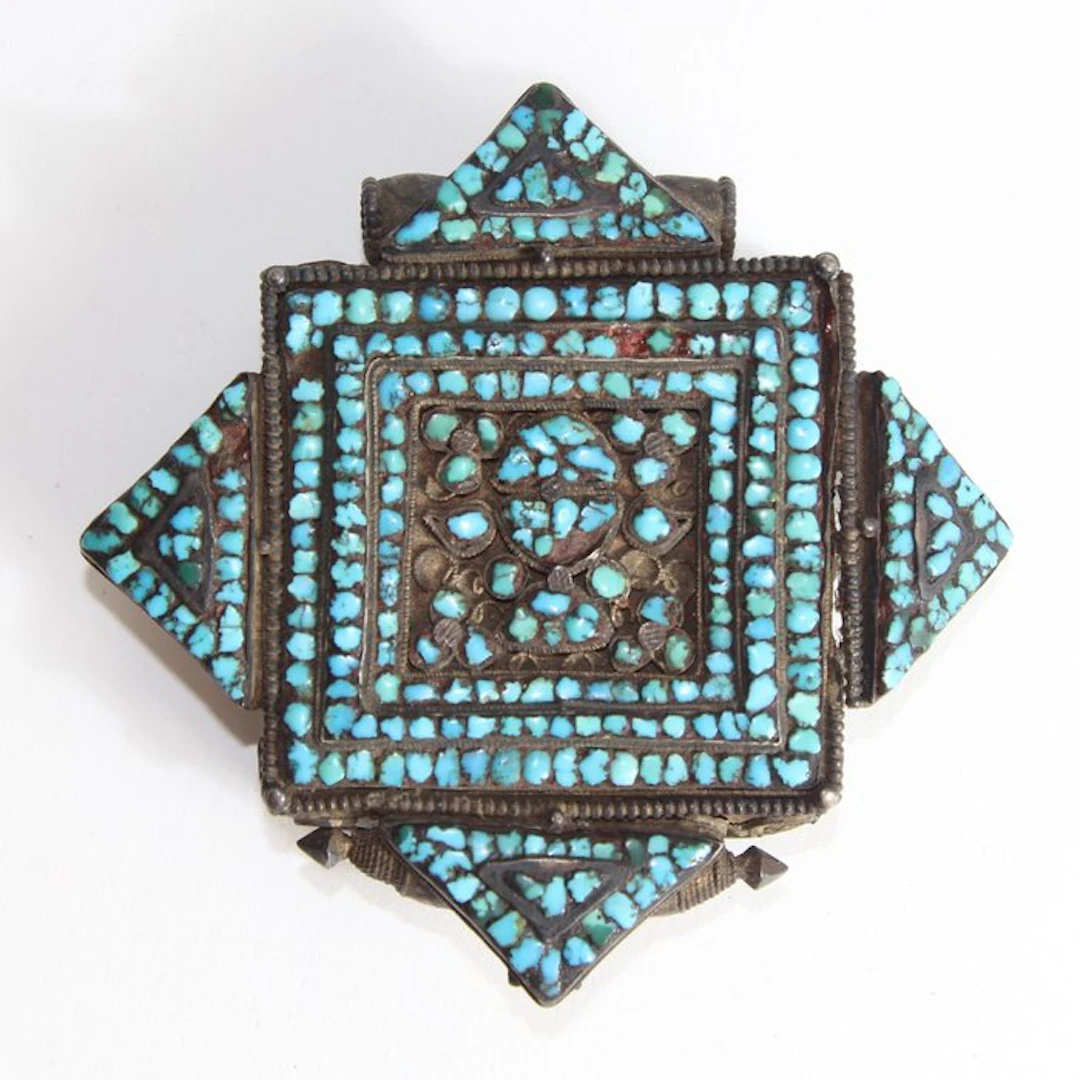
Antique Tibetan Gau – 19th Century – Exceptional Turquoise-Inlaid Buddhist Reliquary – Silver-Coloured Metal – Rare Geometric Design A remarkable 19th-century Tibetan Gau (Ghau) – an intricately handcrafted Buddhist portable shrine or amulet box, richly decorated with turquoise-coloured stone inlays and distinguished by its extraordinary architectural form. This fascinating piece of traditional Tibetan craftsmanship combines religious significance, highly elaborate metalwork and striking geometric design. Its unusual square body, four projecting triangular ornaments and densely arranged turquoise inlays create an almost architectural composition of remarkable visual impact. Design and craftsmanship The Gau features an exceptionally elaborate square central compartment surrounded by four triangular projections, producing a distinctive eight-pointed, star-like silhouette. The upper surface is organised into several concentric square borders, meticulously decorated with hundreds of individually fitted, turquoise-coloured stone fragments. Their vivid shades of sky blue, turquoise and green contrast beautifully with the dark, naturally aged metal. At the centre, a raised ornamental panel displays a richly detailed composition of stylised floral and scrolling motifs, likewise embellished with turquoise-coloured inlays. The four triangular projections introduce a fascinating geometric contrast to the square central body. Each is decorated with further mosaic-like inlays arranged in symmetrical patterns, emphasising the object's strong sense of balance and symmetry. Delicate beaded borders, finely worked metal scrolls and ornamental elements along the sides demonstrate the considerable attention devoted to every aspect of its manufacture. Particularly interesting are the cylindrical fittings with decorative terminals, visible along the sides, which contribute to the complex three-dimensional appearance of the piece and reflect its original function as a portable devotional object. A portable Buddhist shrine – Meaning and function A Gau, also spelled Ghau or Gao, is a traditional Tibetan Buddhist portable reliquary or prayer box. Such objects were intended to carry sacred substances and protective religious items close to the body. Historically, these small shrines could contain: Rolled prayers, sacred mantras and written blessings Small images of the Buddha or Buddhist deities Consecrated substances and miniature religious offerings Protective amulets and other sacred objects The Gau was more than an ornamental accessory. It served as a personal sanctuary in miniature, allowing its owner to carry the protective presence of Buddhist teachings and sacred objects during everyday activities, pilgrimages and long journeys. Gau boxes were traditionally worn suspended from a cord, chain or textile strap, often against the chest. Depending on their size and construction, they could also be carried among personal possessions or placed on a household altar. The distinctive geometric configuration of this example gives it an especially impressive appearance. The square central shrine and its four projecting triangular elements establish a powerful symmetrical composition, while the turquoise-coloured decoration reflects the importance of turquoise in Tibetan material culture, where the stone has long been associated with protection, prosperity and well-being. Construction and condition The reliquary consists of a decorated metal body with a removable square cover, revealing the hollow compartment intended for the storage of sacred objects. The interior and reverse show substantial age-related patination, surface oxidation, traces of use and wear consistent with an old handcrafted devotional object. The turquoise-coloured inlays display attractive variations in colour, shape and surface texture. Small irregularities, wear and possible historic losses are visible, contributing to the authentic character of the piece. The metal has acquired a deep, darkened patina that beautifully enhances the vivid blue-green decoration. The box is presented empty, allowing its traditional construction and internal compartment to be appreciated. Dating and cultural significance Attributed to Tibet, 19th century. This Gau belongs to the long tradition of Himalayan Buddhist devotional metalwork, in which elaborate craftsmanship was employed to create portable sacred objects of both spiritual and artistic importance. Its unusual star-like outline, exceptionally dense turquoise-coloured decoration and richly worked metal surfaces make it a particularly decorative and collectible example of this fascinating tradition. An impressive object for collectors of Tibetan and Himalayan art, Buddhist ritual objects, antique jewellery, ethnographic artefacts and historical metalwork. A captivating miniature shrine – combining the spiritual traditions of Tibet with an extraordinary display of geometric ornament, colour and traditional craftsmanship. Origin: Tibet / Himalayan cultural region, attributed Period: 19th century, attributed Object: Gau / Ghau – Portable Buddhist reliquary or amulet box Materials: Silver-coloured metal, turquoise-coloured stone inlays Technique: Handcrafted metalwork, ornamental relief decoration, stone inlay Form: Square central reliquary with four projecting triangular ornaments Condition: Antique condition with patina, oxidation and age-related wear, as illustrated Interior: Hollow compartment, presently empty Construction: Removable cover Please examine the photographs carefully, as they form an integral part of the description and document the craftsmanship, construction and condition of this unusual antique object.
估價:$336.07
前往拍賣頁查看所有物品來自Catawiki或Ancient Art
估價:
$336.07
類似物品
類似物品的拍賣結果

讓您的拍賣觸及全球收藏家!
立刻發佈上架