
全部拍賣 / Arts & Graphics / Francisco Fortuny Masagué (1864–1942) - The soldiers' rest

Francisco Fortuny Masagué (1864–1942) - The soldiers' rest
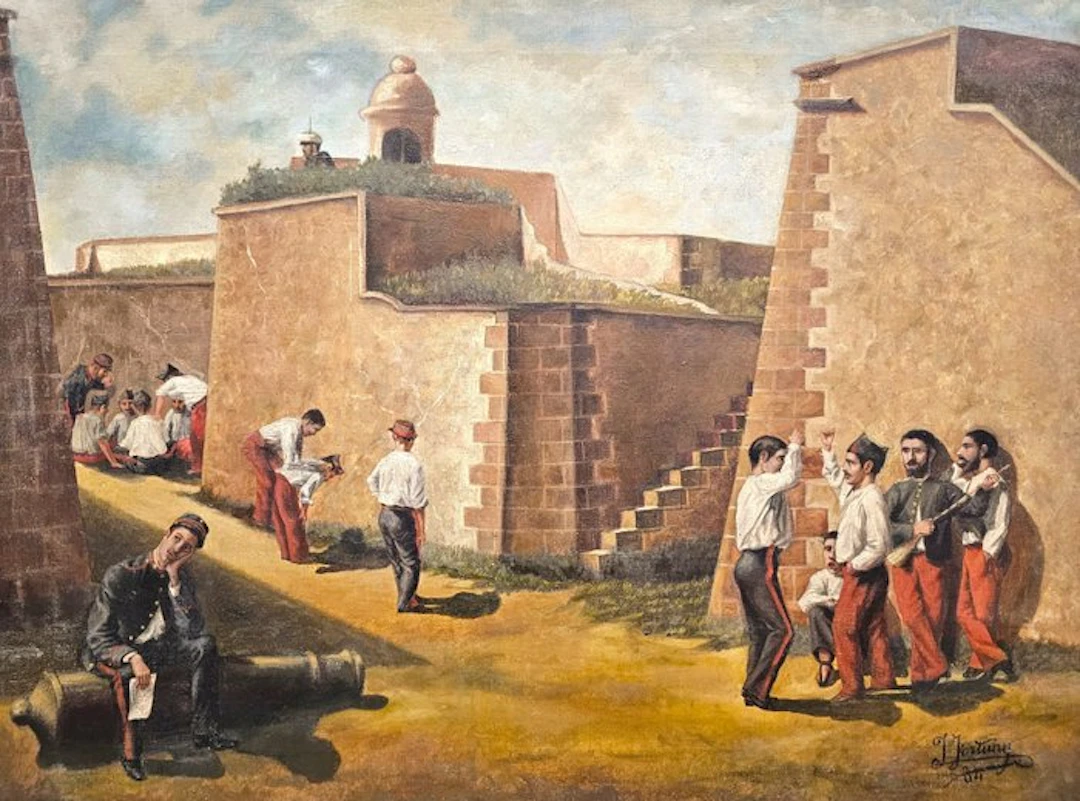
1. TECHNICAL DATA Author: Francisco Fortuny Masagué (1864–1942) School: Catalan / Spanish school Chronology: 1884 Genre / theme: Military and genre scene Technique: Oil on canvas Support: Canvas on wooden stretcher Dimensions of the work: 75 × 100 cm Orientation: Horizontal Signature: Signed “F. Fortuny” in the lower right corner Date: Dated “84” next to the signature Condition: Condition corresponding to the age of the work. Shows natural signs of aging, light wear, and superficial dirt typical of a painting from the late 19th century. The reverse, the canvas and the stretcher present characteristics compatible with their age. Please examine the photographs carefully, which form part of the description. 2. DESCRIPTION Interesting oil on canvas dated 1884 and signed “F. Fortuny,” belonging to Francisco Fortuny Masagué (La Pobla de Montornès, Tarragona, 1864 – Buenos Aires, 1942). The composition depicts a military-tinged scene set inside or near a fortified enclosure. Various groups of soldiers are distributed throughout the space in everyday poses: talking, resting, reading, or gathered in small clusters. The painter places particular emphasis on narrating the scene. The figures are individualized through different poses and attitudes, creating a sequence of small episodes that guide the eye across the entire composition. The predominance of red trousers, white shirts, and dark uniforms provides an attractive chromatic sequence against the earthy ochre tones of the architecture. The work presents an academic, narrative conception typical of history and genre painting of the late 19th century, with special attention to drawing, the spatial arrangement of the figures, and the description of the attire. 3. STYLISTIC AND COMPOSITIONAL ANALYSIS The composition is organized around different architectural planes that structure space and allow many characters to be distributed without losing narrative clarity. On the left, a soldier sits on an artillery element, isolated from the rest of the group and portrayed in a contemplative mood. In the middle ground, small groups of soldiers appear, while the main narrative nucleus concentrates on the right, where several soldiers converse near one of the walls of the enclosure. The architecture acts as a true theatrical setting, through large geometric surfaces in ochre, brown, and earth tones against which the figures stand out vividly. The execution shows evident academic training, particularly noticeable in the anatomical construction of the characters, the differentiation of poses, the treatment of the uniforms, and the perspective organization of the scene. Add to this a narrative will that foreshadows a very significant characteristic of Francisco Fortuny’s later trajectory: his ease in reconstructing historical episodes through compositions populated by clearly individualized characters. 4. PSYCHOLOGICAL AND NARRATIVE DIMENSION The painting does not depict a heroic military episode or a combat action, but a quotidian moment of waiting or rest. This choice lends the scene a notably human character. The soldiers are shown talking, reading, resting, or simply observing. The foreground figure, seated with his head resting on one hand and a paper in the other, even introduces an introspective note that contrasts with the animation of the group on the right. The result is a military scene conceived from a genre perspective, where the primary interest lies in observing the characters and their relationships within a shared space. 5. SIGNATURE, DATE AND CONTEXT OF THE AUTHOR The work appears signed in the lower right corner “F. Fortuny” and dated immediately below “84,” corresponding to 1884. The chronology is especially interesting within Francisco Fortuny Masagué’s biography. Fortuny began his artistic training at the Llotja School in Barcelona in 1879. After studying Applied Arts, he continued higher studies in painting, sculpture, and engraving, which he completed in 1883. Therefore, a work dated 1884 corresponds precisely to the period just after his formal training, when the artist was about twenty years old and beginning his professional career. In 1885 his participation in the First Exhibition of watercolors, drawings, oil paintings, and sculpture organized by the Barcelona Watercolorists Center in the Martorell Museum is documented, where he presented two oil paintings. Subsequently he developed a significant career as painter and illustrator, especially noted for his historical, military, and narrative scenes. In 1887 he emigrated to Buenos Aires, where he developed much of his career and became a prominent illustrator of Argentine historical episodes. This painting, dated 1884, thus positions itself in a particularly early stage of his production, immediately after leaving the Llotja and before his professional consolidation. Its academic execution, narrative character, abundance of characters, and military theme are coherent with the types of interests that would later occupy an important portion of his production. The work is presented with the indicated authorship of Francisco Fortuny Masagué, naturally subject to evaluation and review by the appropriate expert. 6. OTHER POINTS OF INTEREST Francisco Fortuny Masagué was a painter, draftsman, and illustrator and developed an extensive production between Spain and Argentina. His Barcelona-based academic training formed the basis of a figurative language characterized by narrative clarity, drawing, and the ability to organize complex compositions with numerous characters. Although he would later be especially known for his illustrations and reconstructions of Argentine historical events, his oil painting activity is documented from the early years of his career. This work is particularly interesting for its early date, 1884, situated at a moment very close to the completion of his higher studies in Barcelona and before his definitive move to Buenos Aires. The reverse preserves a traditional wooden frame and a canvas with aging and oxidation visually compatible with an antique work. Overall, it also holds undeniable documentary value as an example of late 19th-century Spanish military and genre painting. 7. SHIPPING AND CONDITIONS The work will be shipped well-packaged and protected. All our shipments are carried out by a professional specialized company, using sturdy packaging, foam protections, and materials suitable for the characteristics and dimensions of each work. We ship worldwide. The photographs form an integral part of the description and allow for a detailed observation of the work’s condition. Due to the piece’s age there may be small marks, wear, craquelure, ancient restorations, or alterations typical of the passage of time that should be considered normal in a historical work of this nature.
估價:$3,025.19
前往拍賣頁查看所有物品來自Catawiki或Arts & Graphics
估價:
$3,025.19
類似物品

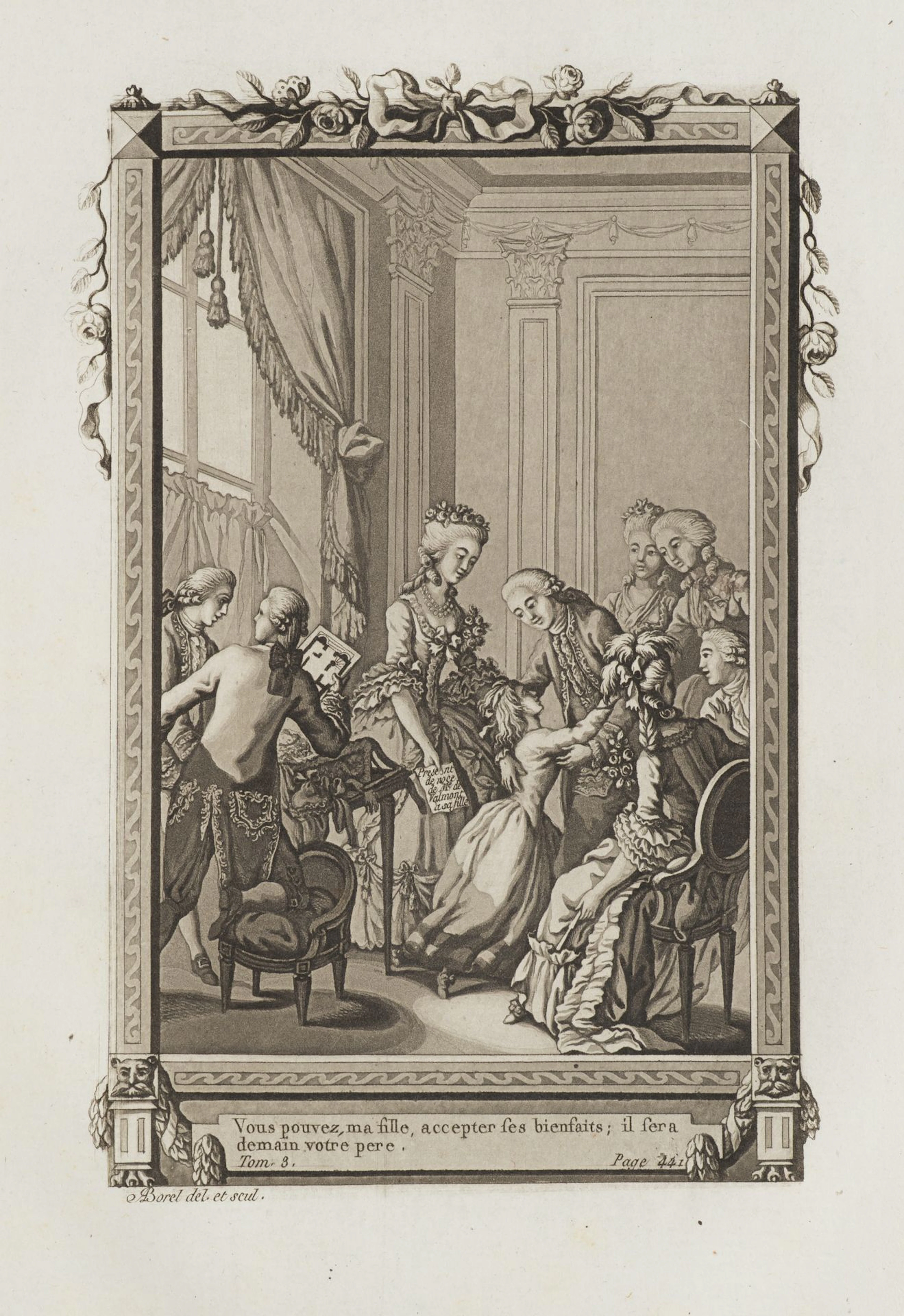
類似物品的拍賣結果
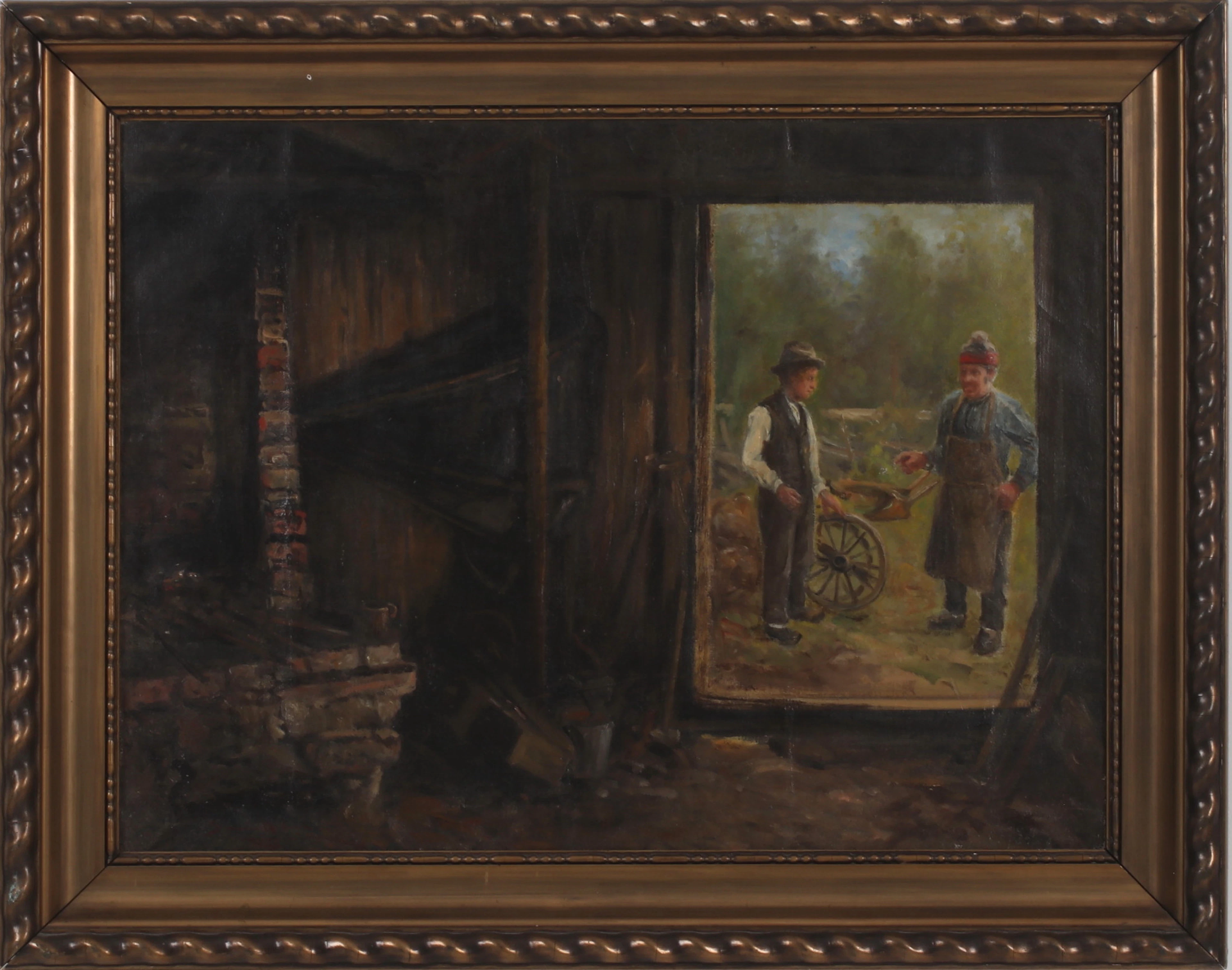
SEVERIN NILSSON. "Samtal vid smedjan", olja på duk, signerad.
10/09/2026
$300.02
估價: $501.49
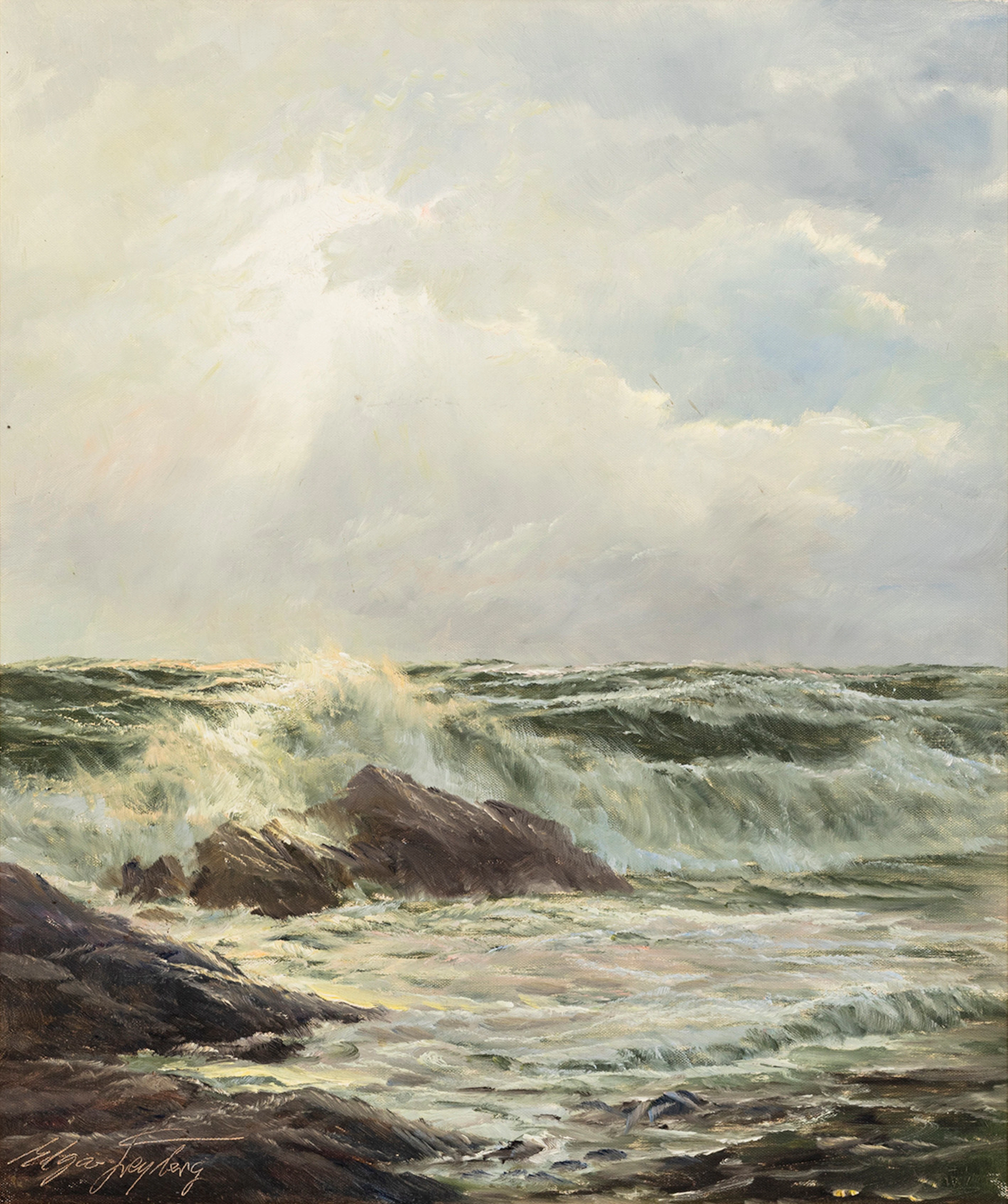
EDGAR FREYBERG. Stormigt hav, olja på duk, signerad.
10/09/2026
$151.11
估價: $200.59
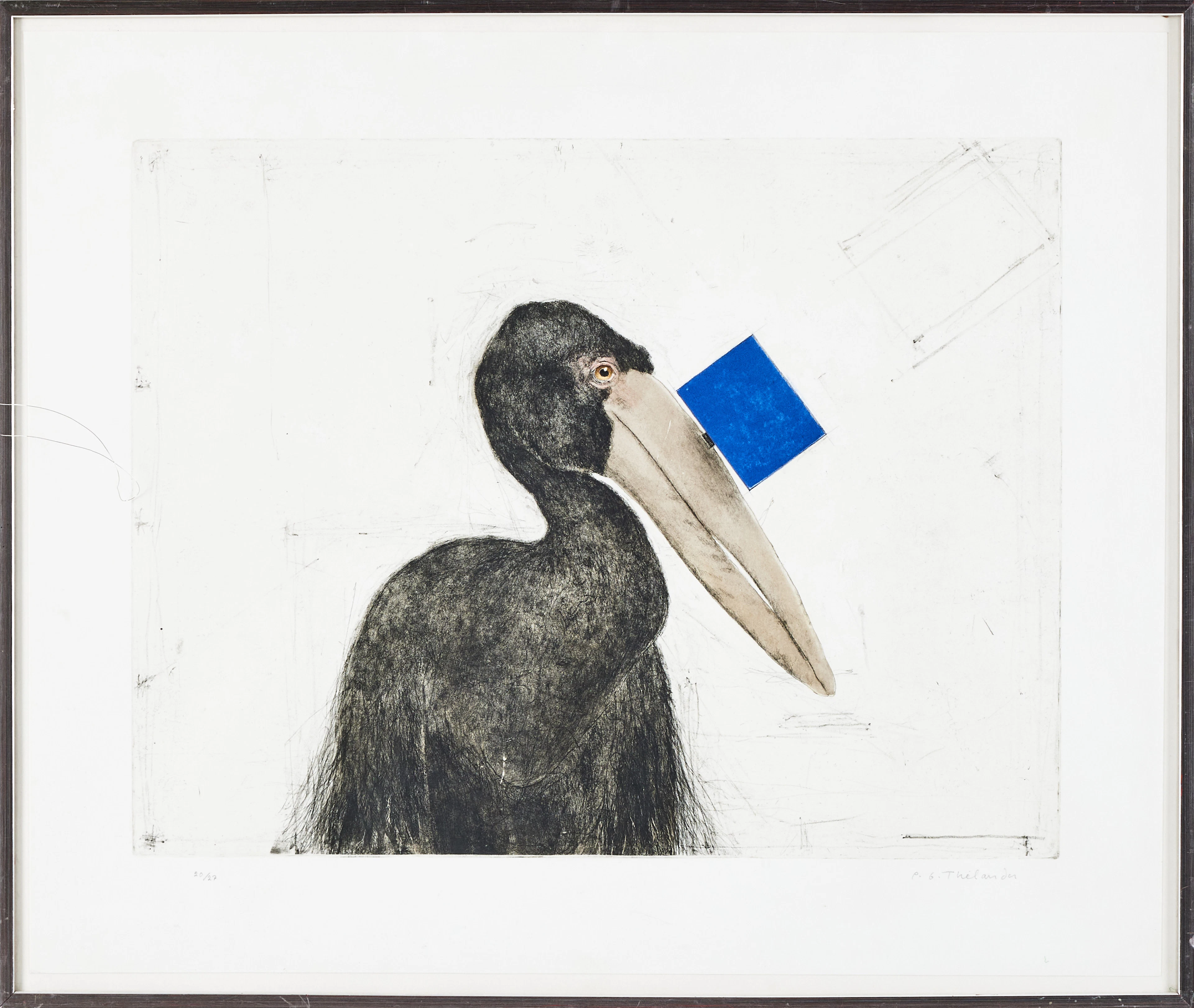
PÄR GUNNAR THELANDER. Komposition med pelikan, etsning med kolorering
10/09/2026
$354.52
估價: $200.59


讓您的拍賣觸及全球收藏家!
立刻發佈上架