
全部拍賣 / Ancient Art / Etruscan Terracotta Cinerary Urn with TL test

Etruscan Terracotta Cinerary Urn with TL test
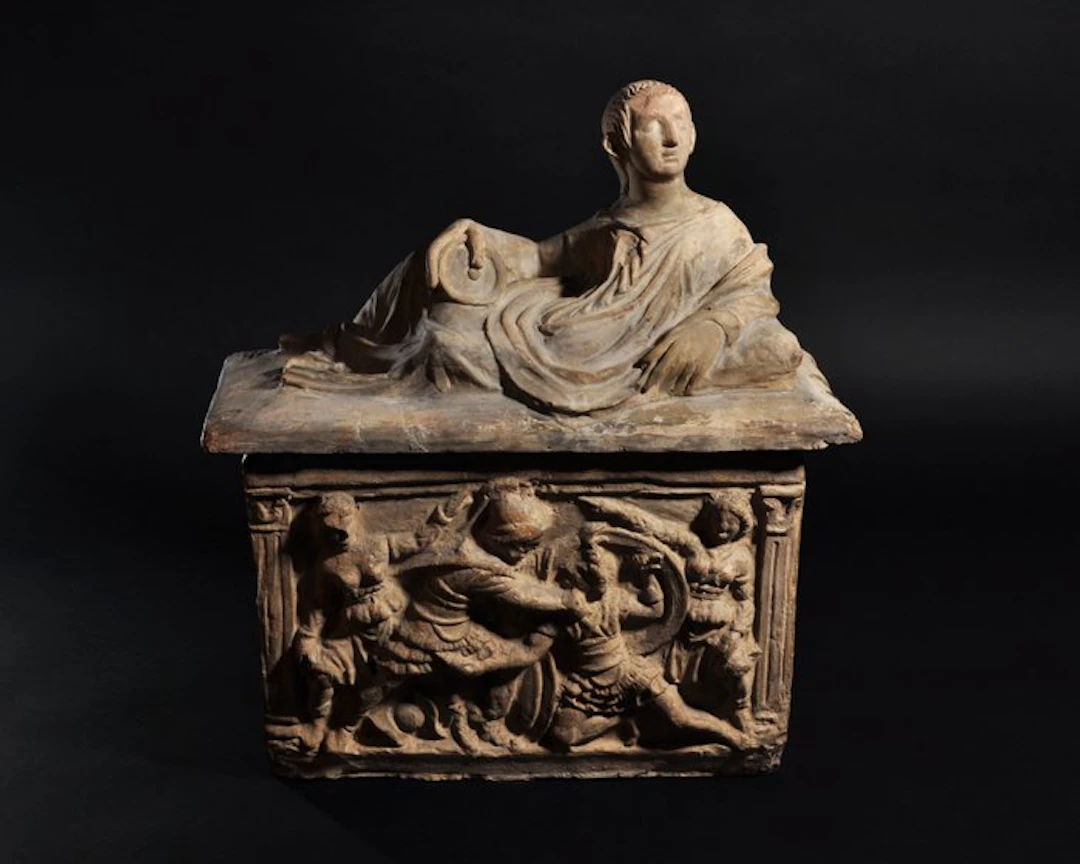
Exceptional Etruscan Cinerary Urn with Mythological Relief Etruria, 2nd century BC A rare and museum-quality Etruscan terracotta cinerary urn dating to the 2nd century BC. The urn measures 46.5 cm in height (including the lid) and 46.5 cm in maximum width. It is made of light brown terracotta, with both the front relief and the reclining figure on the lid mould-made according to the characteristic production techniques of the Hellenistic Etruscan workshops. The lid is surmounted by a fully sculptural reclining young man resting on his left elbow upon a cushion, while his right hand, placed on his knee, holds a phiale (libation bowl). He is depicted wearing a long garment with short hair, representing the deceased as an ideal symposium participant—a symbol of noble living that applied equally to earthly life and the afterlife in Etruscan funerary belief. The undecorated body of the urn features an elaborate relief panel on the front, framed by pilasters and a simple architrave. The scene depicts the dramatic climax of the legendary duel between Eteocles and Polynices, the sons of Oedipus. At the centre, the two armoured brothers mortally wound one another in single combat: Eteocles thrusts his sword into the throat of his already fallen opponent, while Polynices, kneeling, delivers a fatal blow upward into his brother's abdomen. The duel is flanked by two winged female figures, interpreted either as death demons or the Erinyes (Furies), reminding the viewer of the curse pronounced by their father. This episode derives from the Theban cycle and the myth of the Seven Against Thebes, one of the best-known stories of Greek tragedy. The subject was popular in Hellenistic Etruria, reflecting the strong influence of Greek theatre and mythology on Etruscan funerary art. Although the violent imagery may appear unusual for a funerary monument today, such scenes were highly appreciated in antiquity as powerful expressions of the tragedy, suffering, and inevitability of death. The front relief was produced from the same mould as the closely related examples preserved in the collections of Paris and Munich, making this urn an important example of a well-documented workshop tradition. The urn is accompanied by certificate of authenticity issued by Galerie Günter Puhze (2010), thermoluminescence (TL) analysis by QED Laboratoire, and import certificate from Spanish Ministry of Culture. Provenance Private collection, Berlin. Acquired in 2010 from Galerie Günter Puhze, Freiburg. Previously in the Bateman Collection, sold at Sotheby's in 1893. The Supplier warrants that he obtained this lot legally. Provenance statement seen by Catawiki. Important information. The seller guarantees that he is entitled to ship this lot. The seller will take care that any necessary permits will be arranged. The seller will inform the buyer about this if this takes more than a few days. Important: For destinations out of Spanish territory: all our objects will be shipped after obtaining CERTIFICATE OF EXPORTATION by Ministry of Culture of Spain. We inform our clients that it may take between 4-8 weeks. #Masterpiece26
估價:$28,011.07
前往拍賣頁查看所有物品來自Catawiki或Ancient Art
估價:
$28,011.07
類似物品
類似物品的拍賣結果

讓您的拍賣觸及全球收藏家!
立刻發佈上架