
全部拍賣 / Ethnographic / enormous Megalodon tooth - Fossil tooth - otodus megalodon - 139 mm - 113 mm

enormous Megalodon tooth - Fossil tooth - otodus megalodon - 139 mm - 113 mm
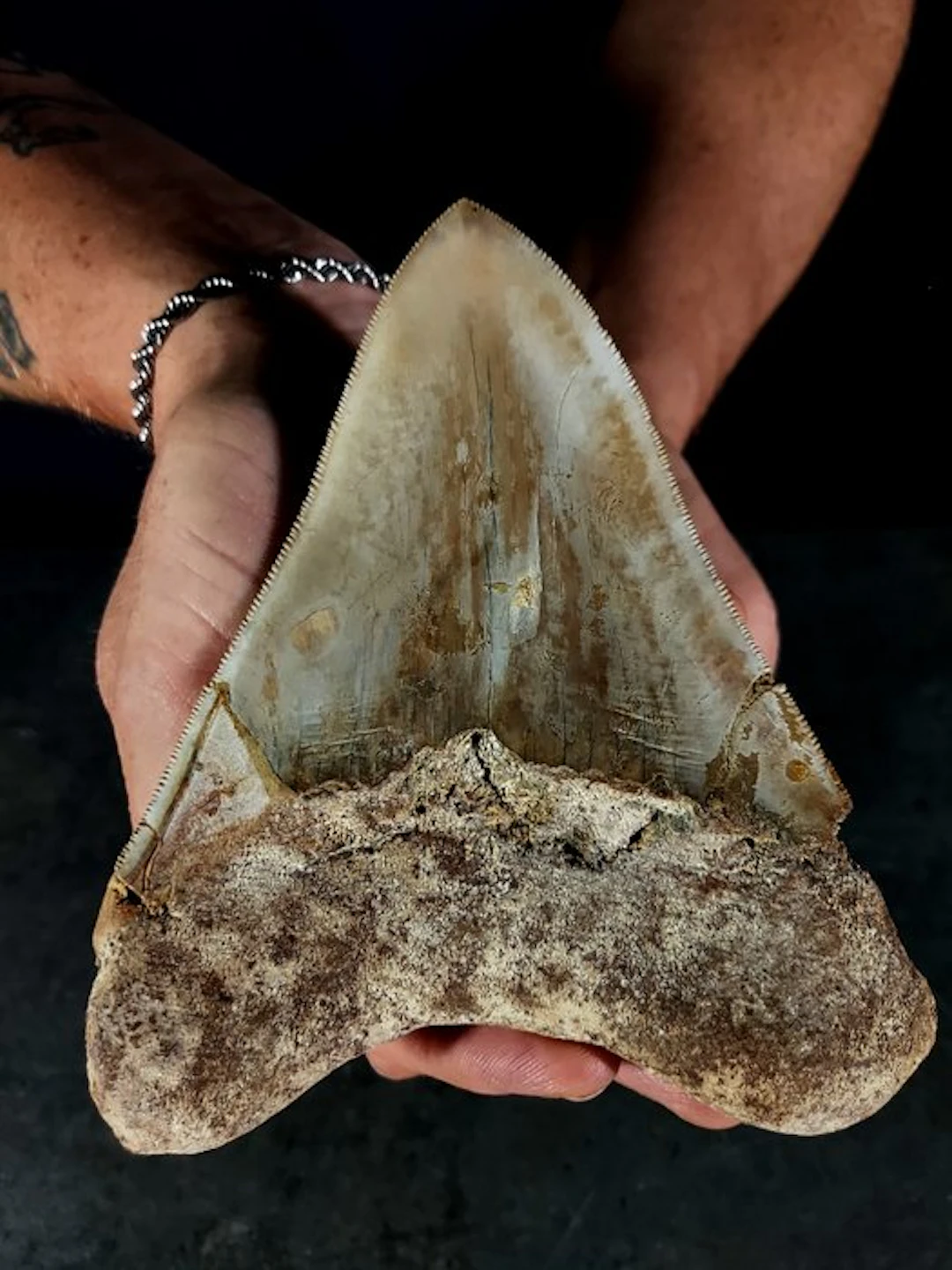
Otodus megalodon. The species name, megalodon, derives from Greek and means "great tooth"), commonly known as megalodon or megalodonte, is an extinct species of giant shark that lived from the Early Miocene to the Early Pliocene, about 23-3.6 million years ago. In the past it was thought that O. megalodon was a member of the Lamnidae family and a close relative of the great white shark (Carcharodon carcharias), but subsequent studies have reclassified it within the extinct Otodontidae family. Although it is considered one of the largest and most powerful predators ever lived, the megalodon is known only from fragmentary remains and its appearance, as well as its maximum size, are uncertain; several scientists still debate whether the animal looked more like a chunkier version of the great white shark (Carcharodon carcharias), the basking shark (Cetorhinus maximus) or the sand tiger shark (Carcharias taurus). The most recent estimate with the smallest error range suggests a maximum length of up to 17.3 meters. The teeth of this species were thick and robust, built to grip prey and break bones, and its enormous jaws could exert a bite force between 108,500 and 182,200 newtons. The megalodon probably had a major impact on the structure of marine communities, as the fossil remains available to us show that it had a cosmopolitan distribution. The usual prey of these animals were other large marine creatures, such as whales, seals and sea turtles. The juveniles inhabited warm coastal waters and fed on fish and small whales. Unlike the great white shark, which attacks its prey from below, the megalodon likely used its powerful jaws to crush the thoracic cavity, perforating the heart and lungs of its prey. Despite its size, the megalodon was in competition with other large marine predators, such as the predatory whale Livyatan, macroraptorial sperm whales and, perhaps, ancestral orcas (Orcinus). Because this shark preferred warmer waters, it is believed that ocean cooling associated with the onset of the glacial eras, together with lowering sea levels and the consequent loss of suitable breeding areas, may have contributed to its decline. A reduction in mysticete diversity and a shift in their distribution toward polar regions could have reduced the predator’s primary food source. The extinction of the megalodon coincides with the gigantism trend in mysticetes. A beautiful lot, exceptional allure as a symbol of a timeless predator: impressive megalodon tooth. Stand not included, made with reclaimed material and used for photographic purposes only. Happy bidding.
估價:$952.19
前往拍賣頁查看所有物品來自Catawiki或Ethnographic
估價:
$952.19
類似物品





類似物品的拍賣結果


讓您的拍賣觸及全球收藏家!
立刻發佈上架