
全部拍賣 / Furniture, Design & Mirrors / Decorative ornament - Primitive art - Antiguo cubo de...

Decorative ornament - Primitive art - Antiguo cubo de...
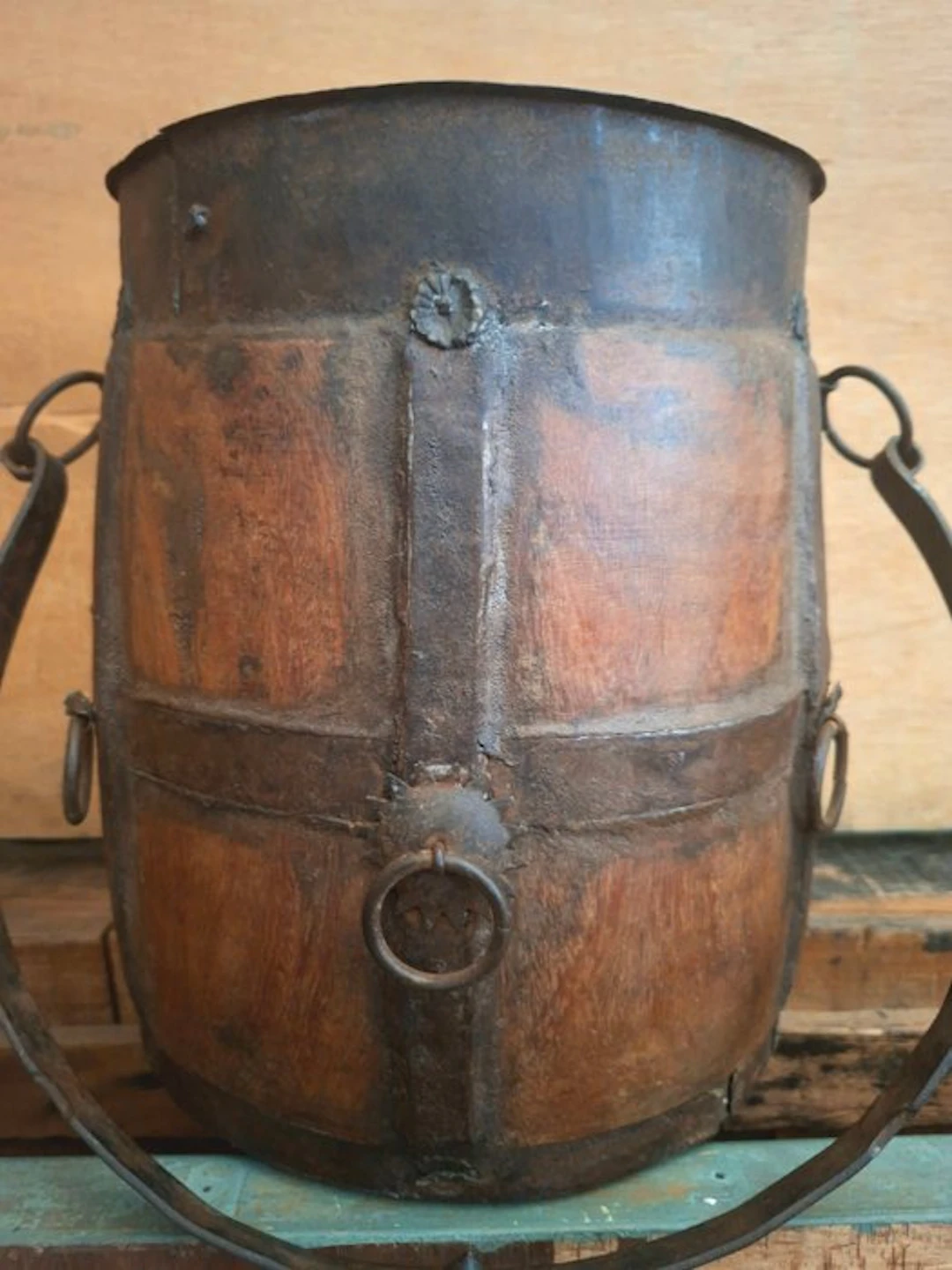
Primitive art - Antique monoxylon well bucket in wood and iron c. 1850 – Collectible Rural ethnography and Popular art. Water, forge and wood (circa 1850) Exceptional piece of rural ethnography and Primitive Art, dating to the mid-19th century. We find ourselves before a pure object of wood technology for agricultural and livestock use that stands out for its constructive purity. Unlike late or industrial buckets, this bucket maintains its original configuration, free from the modifications or patches common in the early 20th century. As a piece of rustic subsistence craftsmanship, it embodies the work of a shepherd, a farmer, or a rural carpenter who needed an indestructible tool and built one with what they had at hand. Thanks to that resistance, this bucket gave drink to generations of the same family, washed the clothes of newborns, refreshed the farmhands after hard days of harvest, and satiated the beasts of burden in the stable. Its current wear, marked by the indentations of the manually hollowed interior, the settled cracks of the bottom, and the iron worn by friction, is the fingerprint of thousands of round trips from the darkness of the well to the fireside of the home. Construction and Technical Rarity (Monoxylon) The uniqueness of this object lies in its monoxylon nature: it is sculpted and hollowed patiently by hand from a single solid block of wood of great density (possibly elm), historically selected for its extreme resistance to continuous immersion. Its very existence was born from the collaboration of two human beings fundamental to the community: the master carpenter and the blacksmith. The first used his skill with gouges and adzes. The second protected the piece with a dense iron framework. The interior organically exposes the traces of primitive roughing tools, giving life to a watertight and robust vessel designed, expressly, to resist the hardest treatment imaginable in rough stone wells. Engineering of the Handcrafted Forge To contain the hydraulic stresses of the solid trunk, the piece is protected by a framework of sweet iron beaten on the anvil. It presents a cage of flat bars arranged in a cross and perimeter hoops joined by rivets with a head carved with a chisel in the shape of a radiated sun. In an era without commercial logos, these stars were the "brand pride" of the local 19th-century blacksmith; he decorated important pieces so that the whole town would know, upon seeing the bucket rise in the well, which forge had forged it. The petals have grooves made with a chisel directly on the hot iron, which fulfilled the technical function of driving into the surface fibers of the wood to block any displacement of the ironwork. The bucket retains intact the metallic collar of the mouth - which acts as a perimeter reinforcement to protect the wood lip from impacts during extraction -, its large forged mobile handle, the upper traction ring and the lower lateral rings for guide ropes. The metallic arm shows irregularities and an elegant faceted narrowing with manual indentations in the design, achieved by striking the red-hot iron on the anvil, a clear proof of handcrafted forge. State of Conservation and Patina: The piece is hydrated and preserved with museum-grade microcrystalline wax to preserve its the ironworks and nourish the raw wood without altering its valuable historical patina or detracting from its rustic texture. The interior of the bucket shows a very characteristic darkened wear, caused by the humidity of the thousands of water fillings during its years of use in the well. The base or floor of the bucket retains the natural fendas and cracks that appear on any solid wood trunk as it dries over time. These openings are fixed, stabilized and held thanks to the strong pressure exerted by the external iron framework. Without modern restorations or additions. Without woodworm. The object is completely ready for its immediate exhibition in high decoration. Dimensions: • Height: 29 cm • Upper diameter (mouth): 22.5 cm • Base diameter: 24 cm **The photographs form part of the description.
估價:$201.67
前往拍賣頁查看所有物品來自Catawiki或Furniture, Design & Mirrors
估價:
$201.67
類似物品

類似物品的拍賣結果
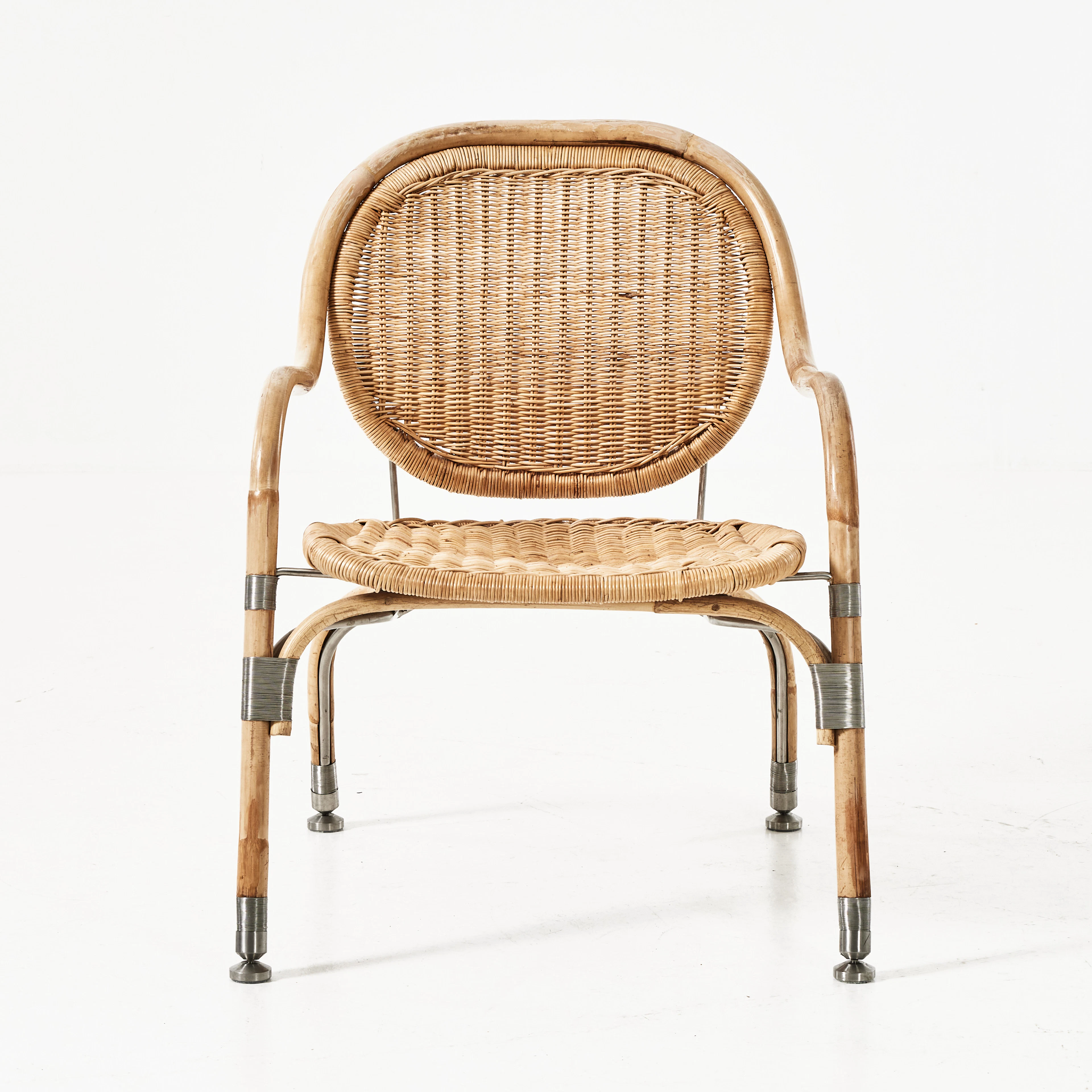
MATS THESELIUS. Fåtölj, "Nätön", IKEA, formgivningsår 2001, skyltmärkt.
10/09/2026
$320.02
估價: $401.19

VITRINSKÅP, för hörn, Åmells Möbler, 1900-talets andra hälft, rokokostil
10/09/2026
$320.02
估價: $300.89
讓您的拍賣觸及全球收藏家!
立刻發佈上架