
全部拍賣 / Books, Maps & Manuscripts / de Monconys - Journal des Voyages - 1666

de Monconys - Journal des Voyages - 1666
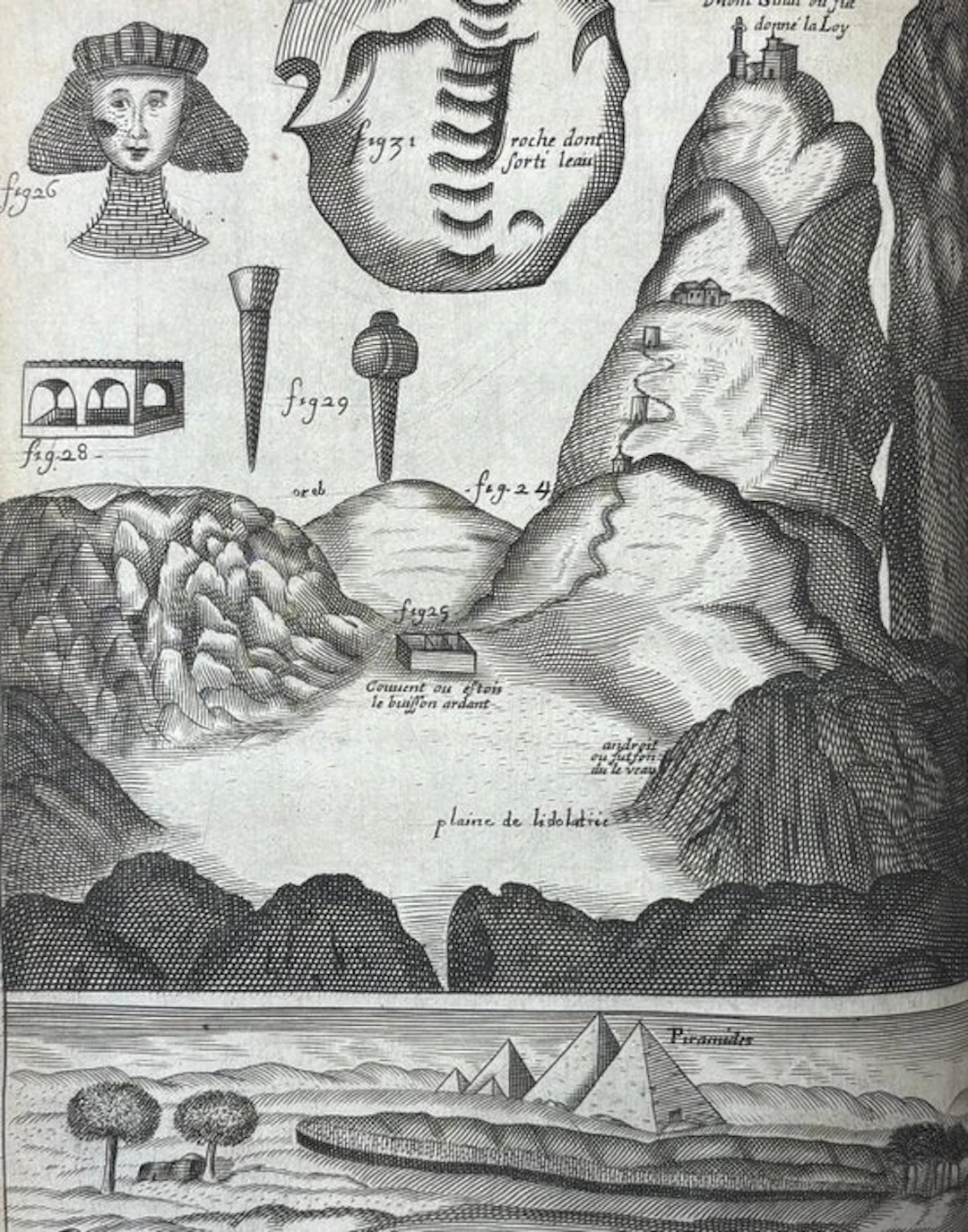
The Journal des voyages of Balthasar de Monconys A journey through knowledge, wonders, and the civilization of the Seicento Lyon, Horace Boissat and George Remeus, 1666 There are books that guard a history, and books that guard an entire era. The Journal des voyages de Monsieur de Monconys belongs to the latter, rare category: a work in which travel becomes a tool of knowledge, observation turns into understanding, and intellectual curiosity becomes testimony of a world in deep evolution. Published in Lyon in 1665–1666, in several parts, this volume represents a precious testimony of European culture in the seventeenth century. Its pages return to us an era in which geographic, scientific and cultural frontiers were becoming increasingly permeable, while scholars, diplomats, collectors and philosophers traversed Europe in search of new knowledge. The volume presented here is the second part of the work, printed in 1666, dedicated to travels through England, the Netherlands, Germany and Italy. Its importance lies not only in the places described, but in the extraordinary variety of interests that animate the narrative: architecture, the visual arts, physical experiments, mathematics, chemistry, customs of peoples, natural rarities and encounters with illustrious personalities. It is a book that invites us to observe the world in its multiplicity, without rigidly separating scientific culture from artistic and humanistic culture. [1][2] The author: Balthasar de Monconys, a gentleman and observer of the world Balthasar de Monconys (1608–1665) was a French traveler, diplomat and magistrate, animated by an intellectual curiosity that led him far beyond the borders of his homeland. Counselor to the king and holder of judicial offices in Lyon, he belonged to that category of educated men of the Seicento for whom travel was a privileged form of education and inquiry. His figure stands at a crucial moment in European history. The Seicento was indeed the century in which the tradition inherited from antiquity and the Renaissance confronted itself ever more intensely with direct observation, experimentation and the search for new explanations of natural phenomena. Monconys embodied this spirit through an eclectic and concrete approach. In his reports there is room not only for great monuments and works of art, but also for instruments, machines, scientific curiosities, chemical preparations, plants, animals and everyday practices. His gaze falls on both manifestations of culture and the material aspects of life. He died in Lyon on 28 April 1665, before he could see published the entire collection of his travels. His intellectual legacy was therefore entrusted to his son, the lord of Liergues, who promoted its posthumous publication. The Journal is thus also a family memory: an attempt to rescue from oblivion the experience of a man and pass it on to future generations. [1][3] The printer and the birth of the volume The copy bears the editorial indication of Lyon, at Horace Boissat and George Remeus, two names associated with the printing that gave public form to Monconys’s accounts. In the seventeenth century, printing constituted one of the main instruments of circulation of ideas in Europe. To print a work of this kind meant making observations accessible to a broader audience, observations that would otherwise have remained confined to the private notes of a traveler or the memory of a few interlocutors. The choice to accompany the text with numerous engravings also reveals a precise conception of the book: not merely a container of words, but a tool of consultation, comparison and learning. The images of buildings, devices and objects allowed the reader to visualize what the text described, giving the narration a documentary dimension of particular value. The posthumous publication, curated by Monconys’s son, testifies to the collaboration between author, family, publishers and the cultural world, essential to transform a personal experience into a shared heritage. The antique book, in this sense, is not only the result of an intellectual activity: it is also a historical artifact, in which paper, typography, engravings and binding preserve the concrete trace of the material culture of its own time. The content: Europe as a laboratory of knowledge The second part of the Journal des voyages accompanies the reader through four great areas of European civilization: England, the Netherlands, Germany and Italy. The journey does not merely record geographic movements; it builds a kind of intellectual atlas of the continent. England offers the opportunity to observe coins, practices, physical phenomena and technical curiosities. The Netherlands and Germany widen the gaze toward different commercial, cultural and scientific realities. Italy, finally, appears as a space of extraordinary historical, artistic and religious density, where classical and Renaissance heritage continues to exert a decisive influence. One of the most fascinating aspects of the work is its ability to bring together topics that today tend to be placed in separate disciplines. A mechanical device may sit next to a work of art; a reflection on nature may follow the description of a building; a chemical curiosity may coexist with an account of a meeting. This variety is not accidental. It reflects a conception of knowledge in which understanding arises from the readiness to observe, compare and question reality. The engravings that accompany the volume play an essential role in this project. The depicted buildings, geometric structures, instruments and objects are not mere ornaments: they constitute a form of visual documentation, capable of fixing details and making them accessible even to those who did not undertake the journey personally. It is precisely in this union of word and image that the work reveals one of its greatest strengths: to transform individual experience into an archive of knowledge potentially useful to scholars, the curious, and travelers. The historical context: the scientific revolution and the Grand Siècle To fully understand the value of the Journal, one must place it within the great movement of cultural transformation that swept across Europe in the Seicento. In 1637 René Descartes published the Discours de la méthode, destined to exert a deep influence on modern thought. In 1642 Galileo Galilei died, a central figure in a revolution that had placed observation and mathematics at the center of inquiry into nature. In 1660 the Royal Society of London was founded, an institution that contributed to the promotion of experimental research; in 1665 the Journal des sçavans began publication, among the first European periodicals devoted to the diffusion of erudite knowledge. In 1666, the year of publication of this second part, the Académie royale des sciences was founded in Paris. These events should not be understood as necessarily documentable direct influences on Monconys’s work, but as expressions of the same historical climate: a growing trust in the possibility of expanding knowledge through experience, discussion, and the circulation of information. Alongside science, politics also helped define Europe’s face. Louis XIV’s France was moving toward the full assertion of absolute monarchy; courts, academies and diplomatic networks were places where political prestige, culture and research intersected. The journey of a learned man could thus assume a function that went beyond knowledge of places: it allowed comparison of institutions, customs, technical skills and forms of social organization. In this frame, Monconys appears as a particularly significant witness. His interest in machines, physical experiments and natural curiosities aligns with the sensibility of a century that was redefining the relationship between traditional authority and direct observation. Italy, Florence and the great European artistic heritage The journey to Italy assumes a special meaning within European culture. For centuries the peninsula had been a privileged destination for those wishing to know art, architecture, antiquities and the institutions of classical culture. Florence, in particular, represented one of the emblematic places of this heritage. The city of the Medici had contributed decisively to the blossoming of the Renaissance, linking its name to figures such as Filippo Brunelleschi, Leon Battista Alberti, Michelangelo Buonarroti and Galileo Galilei, the latter born in Pisa but closely tied to the Medici court and to Tuscan culture. In the Seicento, Florence continued to be a center of great artistic and scientific importance. The memory of the Renaissance coexisted with new forms of collecting, with court culture and with interest in scientific instruments and demonstrations. The Medicean tradition of supporting the arts and sciences provides a significant historical backdrop for understanding how much Italian culture retained in the eyes of European travelers. It would not be correct to attribute to Monconys, without a precise check of individual pages, specific observations on every Florentine monument or figure. It is, however, legitimate to place his journey within the broader European Grand Tour pre-litteram tradition: that practice, alive long before it became codified in the eighteenth century, that urged educated men to seek in Italy a source of knowledge, comparison and formation. The Journal thus testifies to a Europe in which artistic heritage was not perceived solely as the inheritance of the past, but also as an object of study and a stimulus for dialogue among different cultures. The meaning of the work: knowing through travel The deepest value of the Journal des voyages lies in its idea of knowledge. Traveling means stepping outside the boundaries of the familiar, confronting what is different, and testing one’s beliefs against experience. Monconys does not construct a narrative that is solely celebratory of the cities visited. His interest extends to the most disparate realities, from monuments to daily practices, from the works of painters to experiments, from natural wonders to the secrets of technique. This openness makes the work a precious testimony to the encyclopedic curiosity of the Seicento. At the same time, the book reminds us that knowledge never arises in a vacuum. Every observation depends on the knowledge, expectations and intellectual tools of its own time. For this reason the Journal can be read on two levels: as a source of information about the places and objects described, but also as a document of the mentalité of an era seeking new paths to interpret the world. Its pages preserve the charm of a Europe observed before the full emergence of modern scientific institutions, when research proceeded through a combination of erudition, personal experience, letter exchange and individual curiosity. Conclusion: a tangible witness of Europe’s memory The Journal des voyages de Monsieur de Monconys is much more than a travel report. It is testimony of a historical moment in which Europe learned to look at itself through the comparison of peoples, traditions, works of art and new scientific knowledge. The figure of Balthasar de Monconys gives us the image of a man for whom curiosity was a form of intellectual discipline. The editorial work of his son and the Lyonnais printing of Horace Boissat and George Remeus transformed his observations into a work destined to outlive its author, crossing the centuries and reaching us today. To leaf through these pages today is to come into contact with a civilization that sought to widen its horizons through travel, reading, experiment and contemplation. The engravings, the antique typography and the traces left by time impart to the volume a presence that no modern reproduction can entirely restore: that of an object that has traversed history while preserving its materiality. It is precisely this dual nature, both intellectual and physical, that makes it so precious. On the one hand there is the content, testimony to the curiosity and cognitive ambition of the Seicento; on the other is the antique copy, a tangible document of the history of the book and the transmission of knowledge. In it we encounter the journey of a man, the culture of a century, and the long memory of European civilization. And perhaps this is its most solemn meaning: to remind us that every authentic book is a threshold through which the past continues to speak to the present. Collation and state of preservation: volume I: 4 pp, (491 pp) 11 plates volume II: 2 pp, (503 pp) 11 plates Excellent state of preservation, with slight foxing and stains to note but overall excellent and very rare book. Express shipping in only 24 working hours across Europe, while for non-EU countries 48 working hours will be required.
估價:$1,345.54
前往拍賣頁查看所有物品來自Catawiki或Books, Maps & Manuscripts
估價:
$1,345.54
類似物品

類似物品的拍賣結果
1 bt. Champagne "Cristal", Louis Roederer 2016 A (hf/in). Oc. – Bruun
10/15/2026

$210.41
估價: $210.76
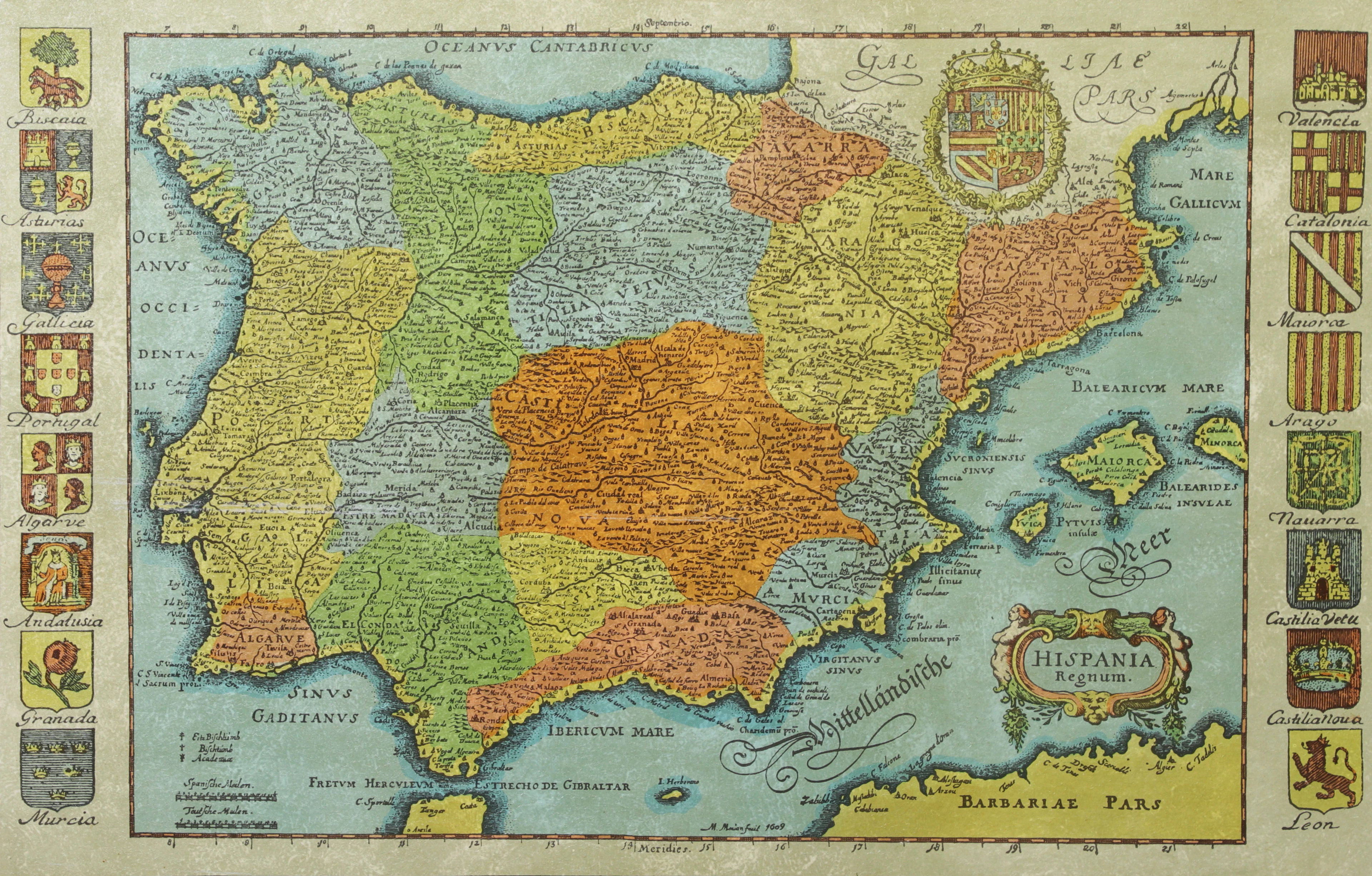
KARTA, Spanien, inramad, 1900-talets andra hälft.
10/14/2026
$30.14
估價: $50.17
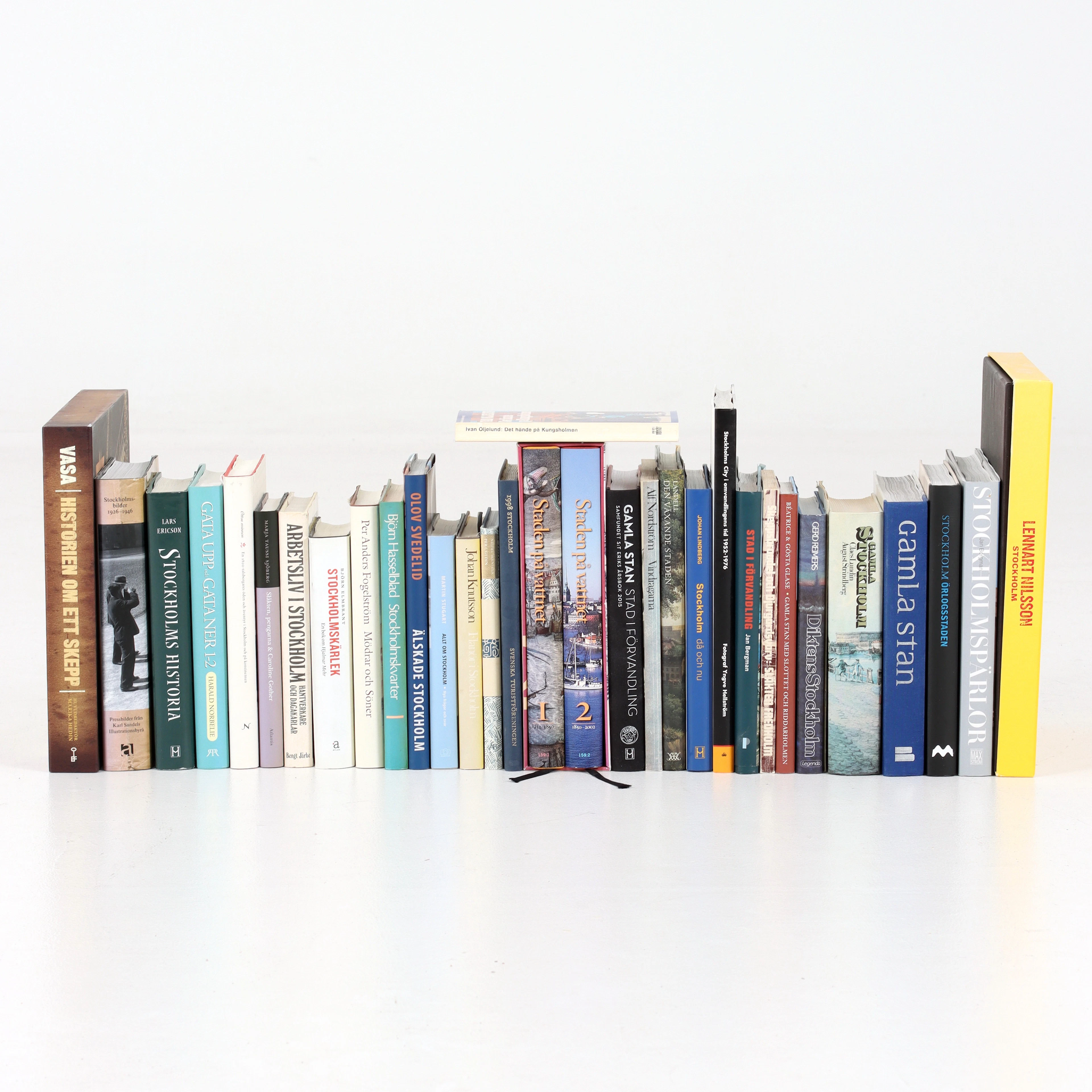
BÖCKER om STOCKHOLM, 31 st, 1900-talets senare del.
10/14/2026
$52.74
估價: $60.21
讓您的拍賣觸及全球收藏家!
立刻發佈上架