
全部拍賣 / Arts & Graphics / Da Palma il Vecchio (XIX), After - La Bella

Da Palma il Vecchio (XIX), After - La Bella
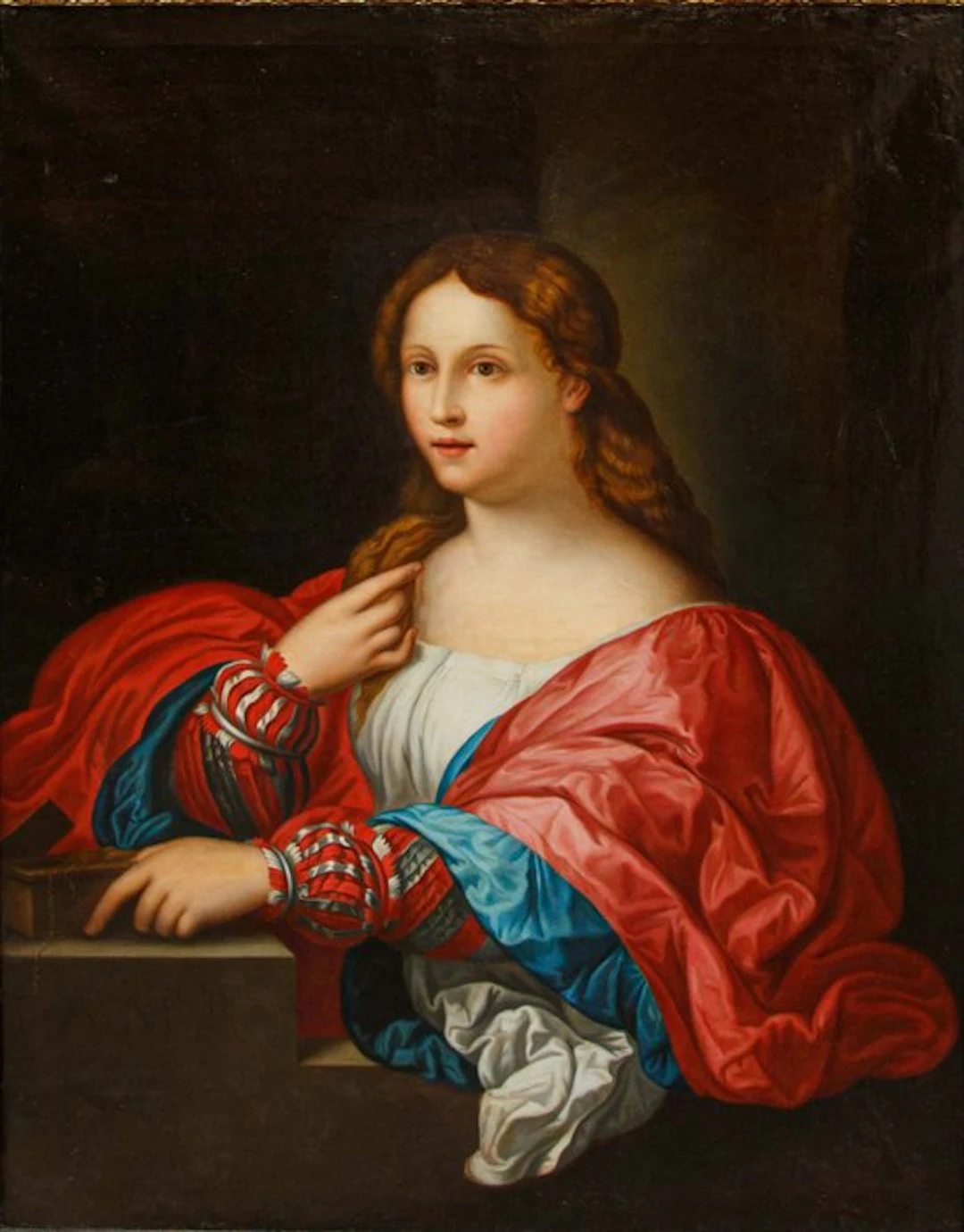
ineteenth century, by Palma il Vecchio La Bella Oil on canvas, 102 x 75 cm With frame, 119 x 93 cm The painting under examination directly takes up the famous prototype by Jacopo Negretti, known as Palma il Vecchio (Serina, roughly 1480 – Venice, 1528), called La Bella, a half‑figure portrait of a young woman that recalls the celebration of the aesthetic ideal of Venetian Renaissance. The female figure rises against a dark background and is captured with her gaze slightly turned toward the observer, characterized by a pale, luminous complexion and soft coppery-blonde hair that falls over the shoulders. With her right hand the woman elegantly brushes a lock of her thick hair, guiding it toward the chest, while the left hand naturally rests on a stone base placed in the foreground. The gown features a deep neckline that reveals the throat and upper bust, highlighting a finely frilled white shirt atop which rests a sumptuous cloak in vivid red, enriched by emerald-green silk inlays and turned-back cuffs with multicolored inserts. Palma il Vecchio was, in fact, one of the protagonists of Venetian Renaissance painting. Moving to Venice at a very young age from Bergamo, he absorbed and reworked the lessons of masters such as Giorgione, Giovanni Bellini, and Titian. His style was distinguished by the majestic use of softened color, the柔 softness of the flesh tones, and an extraordinary tactile rendering of fabrics. Highly valued by public patrons for his Sacred Conversations, as well as by private collectors for allegories and portraits, he gave life to the famous ideal thread of the “Beautiful Women”—figures of radiant bridal beauty and poised sensuality that became a genuine aesthetic model of the era, within which our canvas fits. Among the curiosities associated with this prototype is the eternal debate about the figure’s identity: whereas in the past these sensual images were often linked to famous courtesans of the time, modern art-historical criticism interprets the depiction as an allegorical or ideal image of wedded beauty, rich in allusions to fertility, modesty, and preparation for marriage, where the act of brushing or touching the hair alludes to bridal grooming rituals. In Palma il Vecchio’s autograph masterpiece (today housed at the Museo Thyssen-Bornemisza in Madrid) there is also on the stone parapet an enigmatic inscription in capital letters, “A M B N D,” which scholars have long tried to decipher as an acronym of a amorous motto or dedication that still surrounds the painting with an aura of charm and mystery. The development of this particular pose and the monumental setup of the figure show a close and direct derivation from Titian Vecellio’s figurative language, in particular from his famous masterpiece Sacred and Profane Love of 1514. Palma il Vecchio reprises and reworks the figure of the left‑handed bride positioned on the left of the Titianian sarcophagus, borrowing from it the elegance of the red drapery, the warm chromatic rendering of the flesh tones, the softly modeled face, and the presence of the marble parapet used as a spatial and compositional device. Titian’s lesson in the use of soft color and the tactile rendering of fabrics and precious textiles is here assimilated by Palma, who transforms the complex Titianesque allegory into an image of seductive serenity and individual beauty. The critical and executive fortune of this subject was extraordinary, so much so that over time it generated numerous replicas and variations by workshops and collectors fascinated by the myth of Venetian painting. The collecting history of the original prototype of Palma il Vecchio testifies to its enduring prominence: the canvas first belonged to the prestigious Roman Sciarra-Colonna collection, a historical passage in which the painting was initially known and cataloged under the title La Bella di Tiziano, demonstrating the strong Titianesque imprint perceived by contemporaries. Subsequently, the work was purchased by Baron Edmond de Rothschild and exhibited in the halls of the Château de Ferrières, where it remained until the mid‑20th century. It was later sold to Guy de Rothschild and transferred to Villa Favorita, the famous residence of Castagnola on Lake Lugano linked to the Thyssen-Bornemisza family, before finally arriving at its current and definitive location in the collections of the Museo Thyssen-Bornemisza in Madrid. The frame is provided as a courtesy, therefore it cannot be grounds for return or complaint. For works purchased abroad: after payment, the procedure to obtain an export license (ALC) will be started. All antiques shipped overseas from Italy require this document, issued by the Ministry for Cultural Heritage. The procedure may take from 3 to 5 weeks from the request; therefore, as soon as we have the document, the painting will be shipped.
估價:$2,247.43
前往拍賣頁查看所有物品來自Catawiki或Arts & Graphics
估價:
$2,247.43
類似物品

類似物品的拍賣結果
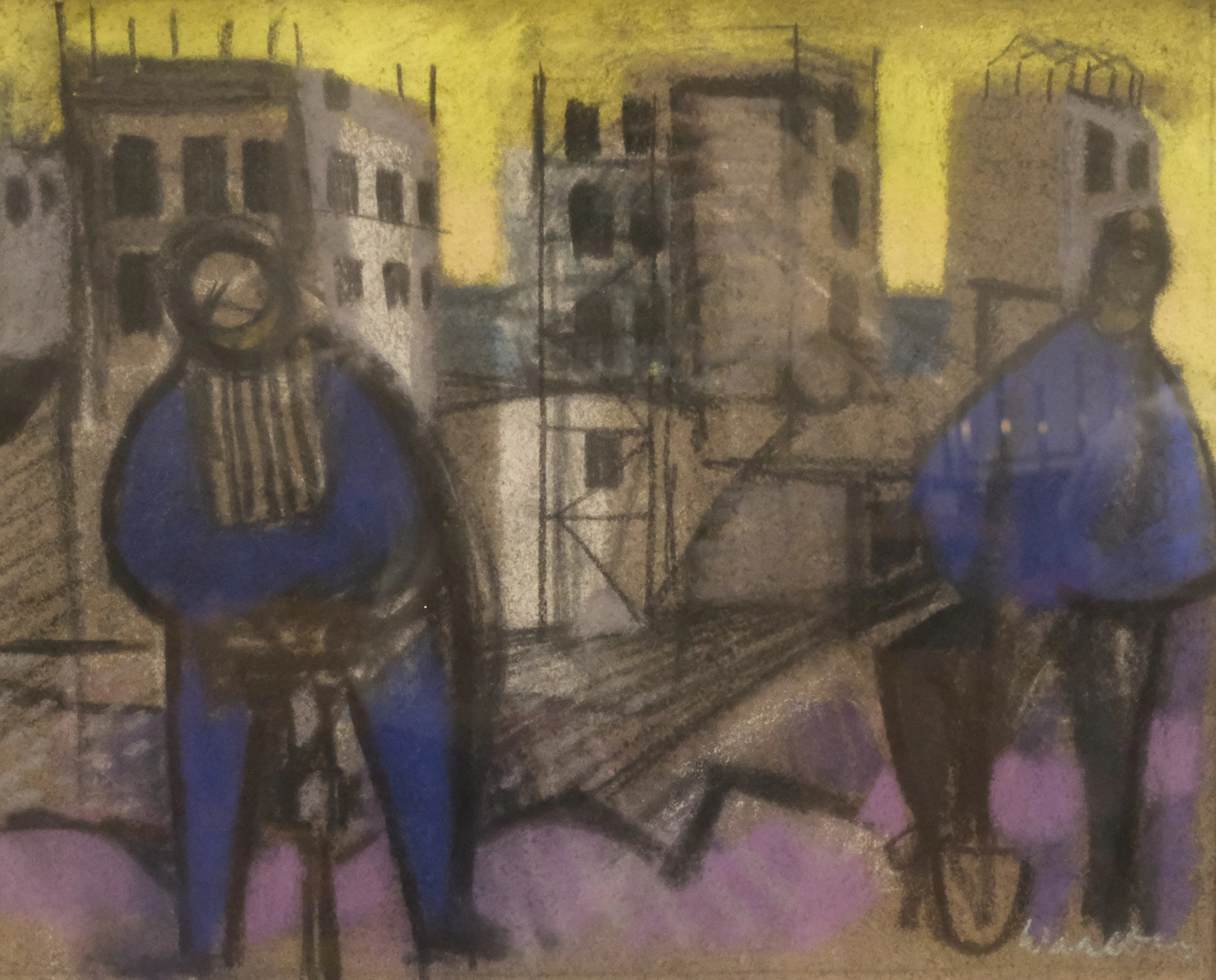
BERTIL WAHLBERG. PASTELL. ABSTRAKT KOMPOSITION, STADSMILJÖ MED ARBETANDE
10/16/2026

$30.26
估價: $50.23
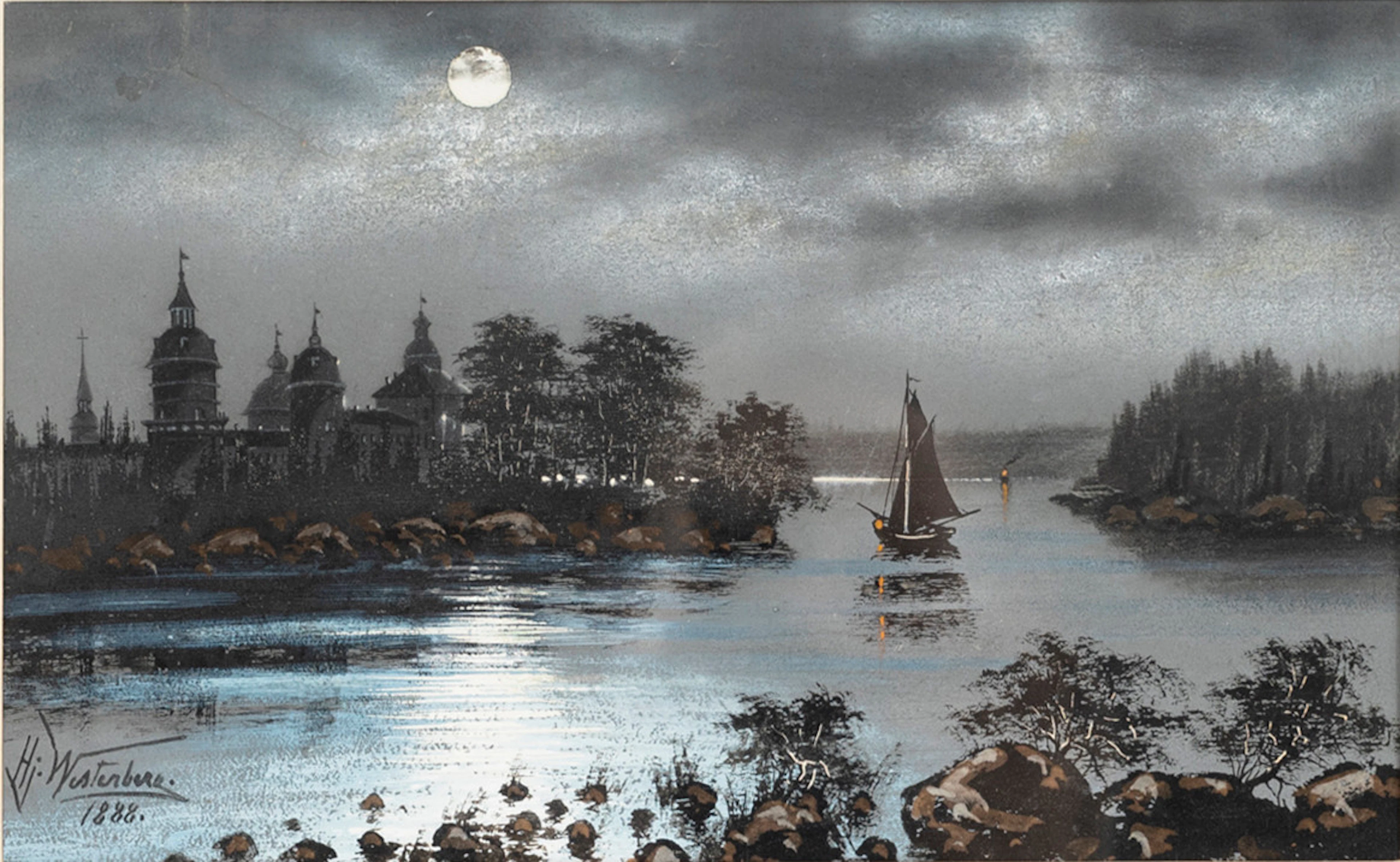
HJALMAR WESTERBERG (1854-1892). Båt i månsken, akvarell, signerad
10/16/2026
$40.35
估價: $150.01
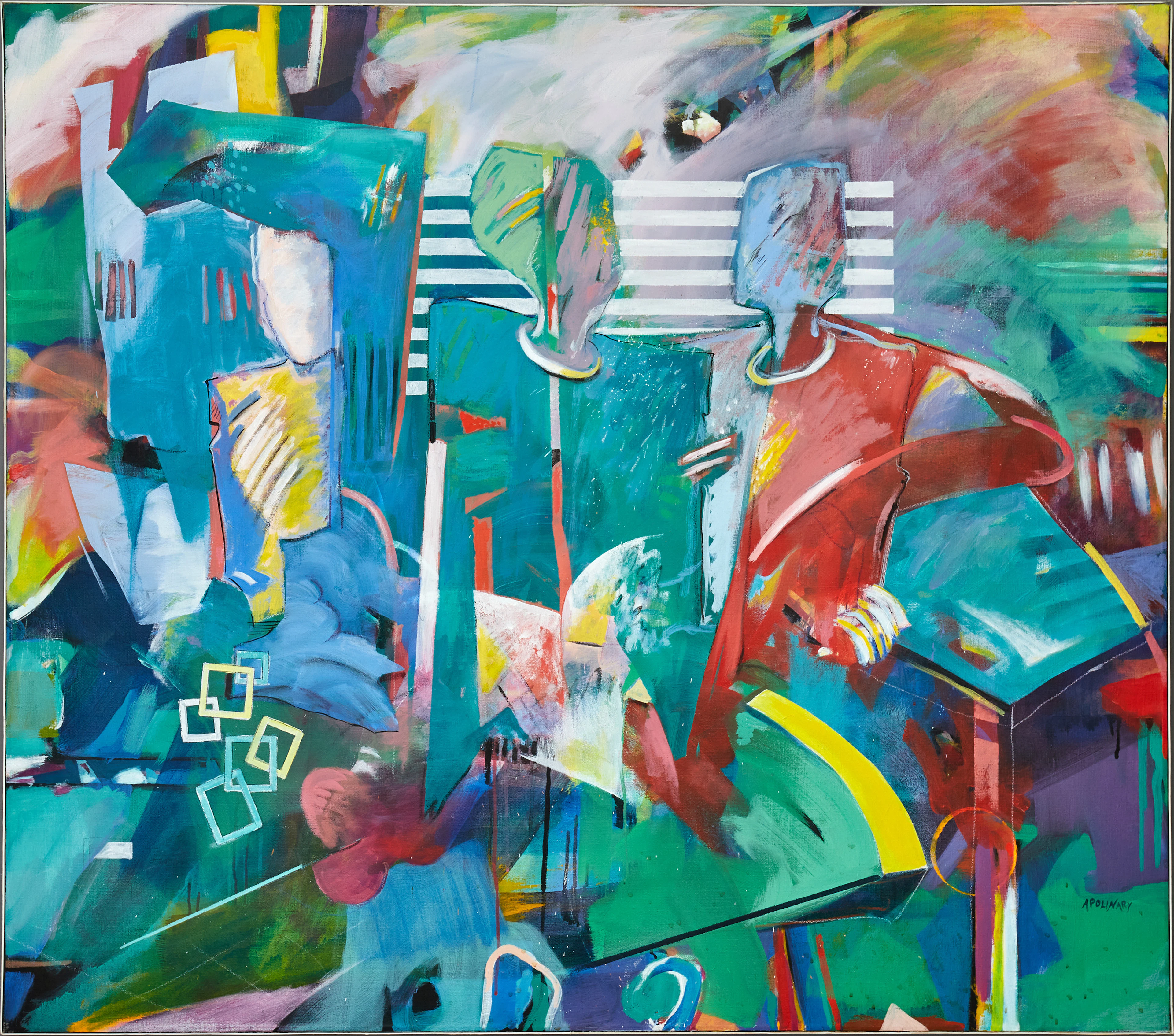
APOLINARY SMOLAREK. Figurkomposition, olja på duk, signerad Apolinary.
10/16/2026
$151.32
估價: $251.17
讓您的拍賣觸及全球收藏家!
立刻發佈上架