
全部拍賣 / Ancient Art / Central Europe – Late Bronze Age Bronze Hallstatt Bronze...

Central Europe – Late Bronze Age Bronze Hallstatt Bronze...
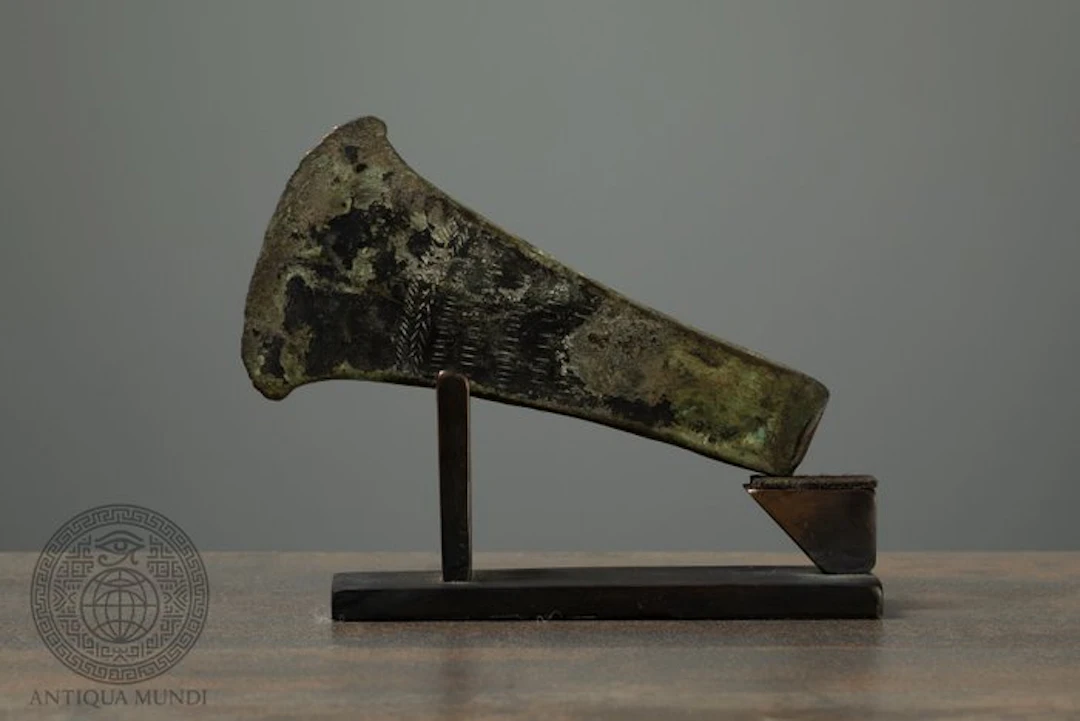
Distinctive bronze flat axe attributed to the Central European Late Bronze Age / Early Iron Age tradition and the broader Hallstatt cultural sphere. The axe has a characteristic elongated, slightly wedge-shaped body, expanding markedly towards the broad, curved cutting edge. The opposite end is comparatively narrow and rectangular and would originally have been secured to a wooden haft. Viewed from the side, the axe has a relatively slender profile, while the cutting end broadens considerably to form a pronounced, slightly crescent-shaped blade. The surface displays an attractive and highly varied green, olive-green and dark brown to almost black age patina, with areas of mineral encrustation and corrosion products. Incised Decoration A particularly interesting feature of the axe is the presence of deliberately incised geometric markings on both faces. The decoration consists of groups of short, regularly arranged incised strokes. Several sections form herringbone or chevron-like patterns, while other areas consist of closely spaced parallel or slightly oblique lines. These markings appear intentional and organised rather than accidental scratches resulting from use. Geometric incised decoration is well documented on prehistoric bronze axes and other metal objects. Parallel strokes, herringbone patterns, chevrons, cross-hatching and related linear motifs occur in different variations throughout the Bronze Age and into the Hallstatt period. The precise meaning of such markings cannot generally be determined with certainty. They may have served a decorative, symbolic, identifying or possibly notational function. It is tempting to interpret groups of repeated strokes as tally marks – for example as records of events, achievements or even defeated enemies – but such an interpretation cannot be archaeologically demonstrated for the present object. They should therefore be catalogued conservatively as intentional incised geometric or possibly notational markings. Their presence nevertheless gives the axe a particularly individual character and distinguishes it clearly from undecorated utilitarian examples. Typological Classification The object belongs to the broad family of prehistoric bronze flat axes, characterised by a solid cast body without a socket and by a blade that expands from a comparatively narrow butt towards a broad cutting edge. Axes and related bronze implements continued to play an important role during the transition from the Late Bronze Age to the Early Iron Age in Central Europe. Within the Hallstatt cultural sphere, bronze weapons and tools occur in numerous regional variations, including both functional and elaborately decorated examples. The combination of the broad cutting edge, relatively narrow butt, solid flat construction and deliberately incised decoration makes the present example particularly attractive from a typological point of view. Dating On typological grounds, the axe can be placed broadly within the Late Bronze Age to Early Iron Age tradition of Central Europe, most plausibly within the wider Hallstatt cultural sphere. A dating of approximately the 9th–7th century BC is proposed. As no archaeological find context is available for the individual object, the cultural attribution and dating should be understood as typological rather than based on a documented excavation context. Condition Good age-appropriate condition. The axe is substantially preserved, including the broad cutting edge and narrow butt. The surface shows extensive ancient patination ranging from olive and green to dark brown and almost black, together with mineral deposits, corrosion products and areas of surface wear. The cutting edge displays age-related irregularities and wear. Of particular importance, substantial portions of the incised geometric decoration remain clearly visible on both faces, including groups of parallel strokes and herringbone or chevron-like motifs. Surface variations, corrosion, deposits, scratches and wear are consistent with the age and archaeological character of the object. Please examine all photographs carefully, as they form an integral part of the condition description. Included in the Sale The sale includes exclusively the ancient bronze axe head. The modern display stand visible in the photographs is used solely for presentation and is not included in the sale. Provenance Formerly in the Madeleine & Erich Dammann Collection, Germany. Acquired during the collectors’ extensive travels between 1950 and 1970. The collection is documented in Germany by 1970 through historical photographs of the family residence and subsequently remained in continuous family ownership. The objects were acquired privately during the collectors’ travels. As was customary for private purchases made at local markets during the 1950s and 1960s, purchase receipts or invoices were generally neither issued nor requested. Historical photographs and biographical documentation relating to the Dammann Collection are available and support the long-standing provenance of the collection.
估價:$449.05
前往拍賣頁查看所有物品來自Catawiki或Ancient Art
估價:
$449.05
類似物品
類似物品的拍賣結果
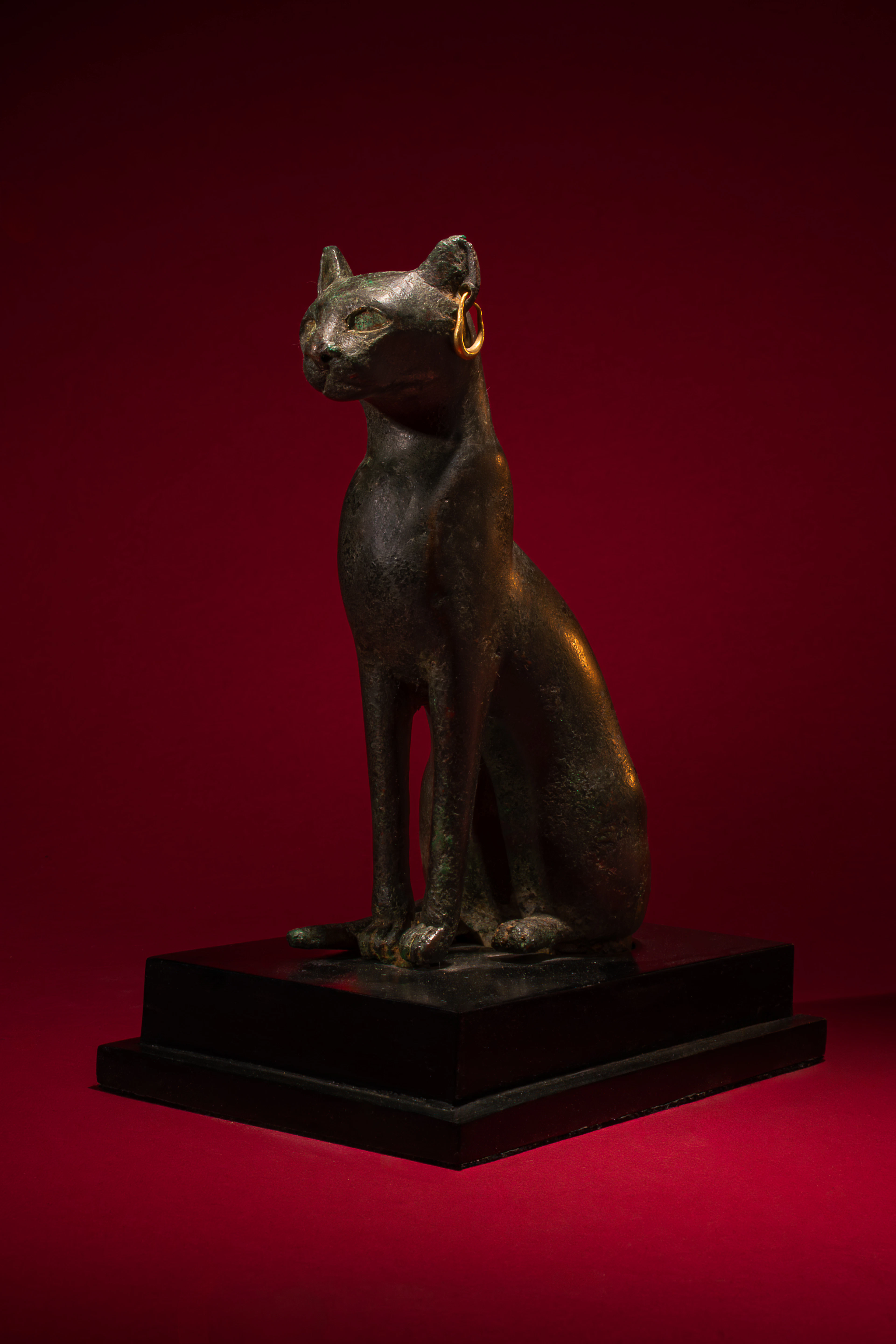
RARE EGYPTIAN BRONZE CAT STATUETTE WITH GOLD EARRINGS - LARGE SIZE
06/21/2026

$29,141.2
估價: $26,836.62
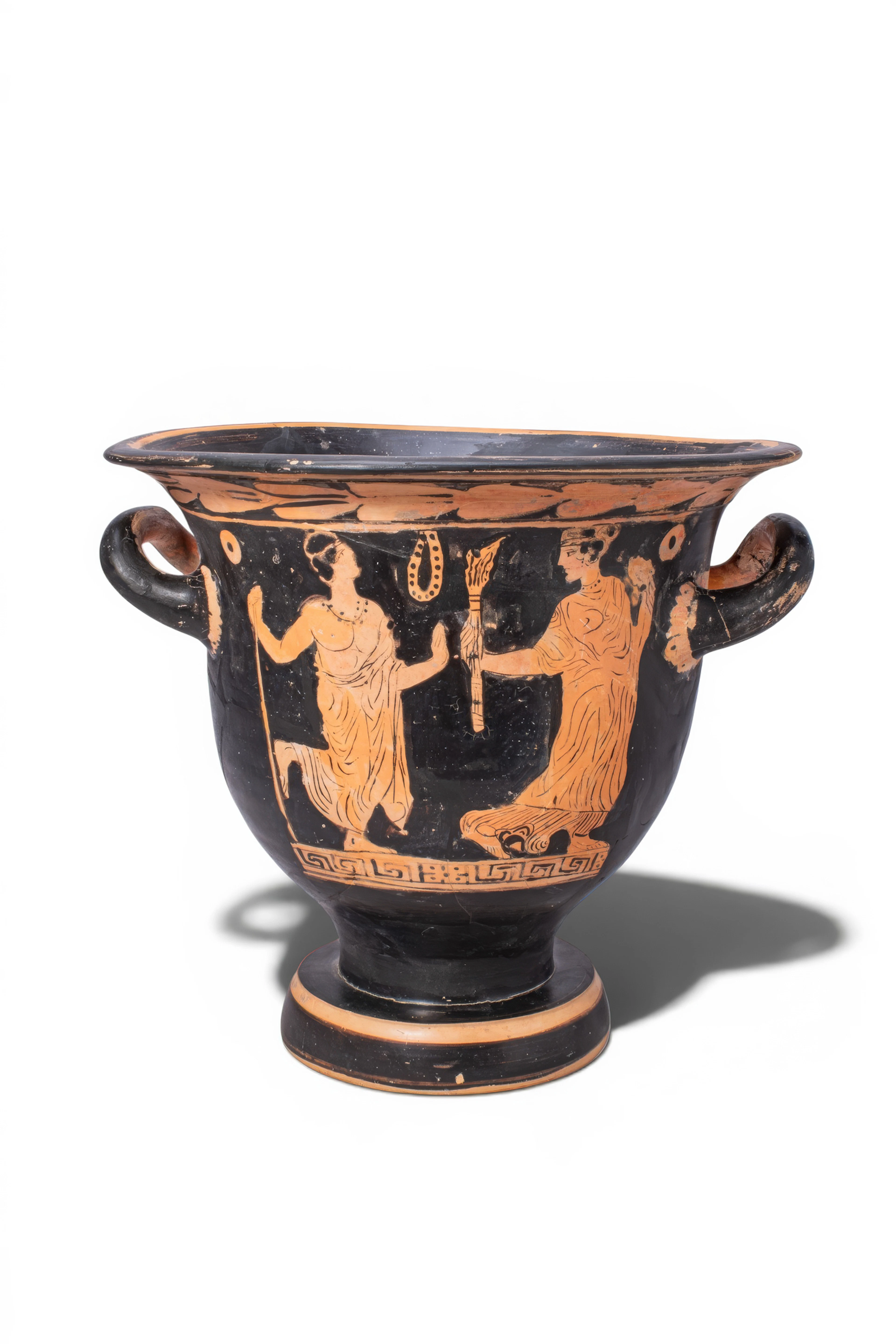
APULIAN RED-FIGURE BELL KRATER WITH KOMASTOS AND MAENAD - TL TESTED
06/21/2026
$3,443.96
估價: $2,640.96
讓您的拍賣觸及全球收藏家!
立刻發佈上架