
全部拍賣 / Books, Maps & Manuscripts / Antonio Ghislandi

Antonio Ghislandi
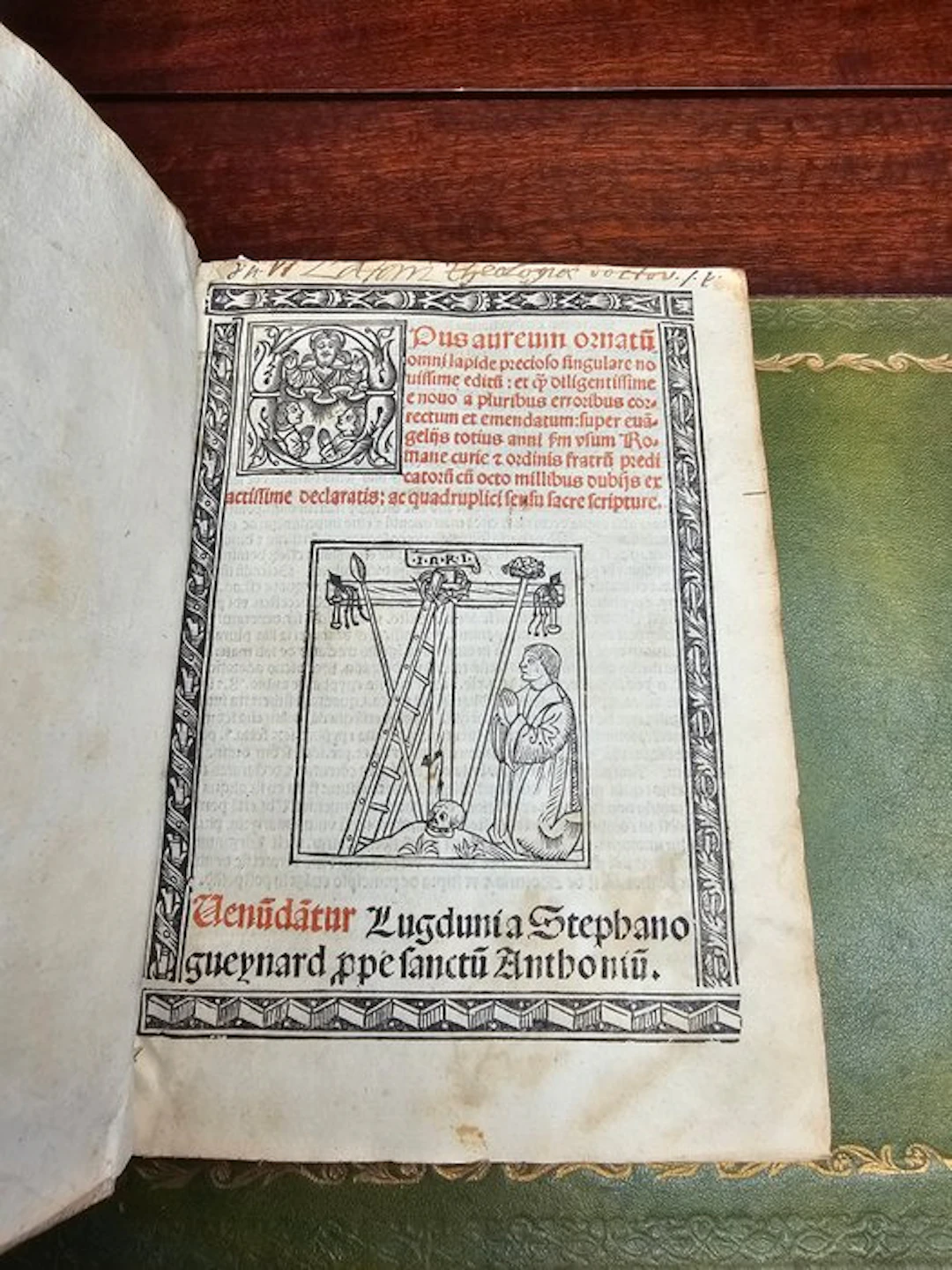
Antonio Ghislandi – Opus aureum on the Gospels for the entire year – Lyon, 1510 – Post-incunabula with woodcuts and a red and black title page Lyonese edition of 1510 of Antonio Ghislandi’s Opus aureum, in Latin Antonius de Gislandis, a Dominican from Giaveno. Printed by Jean de Vingle and offered for sale by bookseller Étienne Gueynard, named on the title page. The colophon bears the date 23 November 1510. A complete exemplar, octavo format, with a red and black title page within a woodcut frame, a devotional vignette repeated at the colophon, and numerous figurative and ornamental wood-engraved initials. Full parchment binding with title handwritten on the spine. THE WORK AND ITS CONTENT The Opus aureum is a wide Latin commentary on the Gospels of the entire liturgical year, in accordance with the use of the Roman Curia and of the Order of Preachers. Its organization follows the religious calendar, articulating the exposition in relation to Sundays and feasts. The text opens with the first Sunday of Advent. The subsequent sections guide the reader through the Christmas cycle, Epiphany, and Lent; the second part, as the colophon specifies, covers the period from Easter to the end of the year. This structure relates the study of the Gospels to the rhythm of celebrations and to the needs of preaching. The Gospel readings form the starting point for doctrinal explanations, interpretive questions, and reflections on Christian conduct. The volume thus allows us to approach how Scripture was read, commented on, and used in religious teaching in early Cinquecento. THE FOUR SENSES OF SCRIPTURE One of the most characteristic elements of the work is its interpretation according to the four senses of Scripture, announced in the title and recognizable in the text rubrics: Historice, Allegorice, Tropologice, and Anagogice. The historical reading considers the narrated events and the literal meaning of the gospel passage. The allegorical reading develops its spiritual meaning in relation to the mysteries of faith. The tropological (moral) interpretation yields lessons for the life and conduct of the believer. The anagogical reading directs reflection toward salvation and heavenly realities. The same episode is thus examined from complementary perspectives. The book’s interest also lies in the possibility of concretely observing this method of reading, which brings to sixteenth-century print a exegetical tradition developed over preceding centuries. In the section In desponsatione, for example, the bridal theme is interpreted in relation to Christ and the Church, to the conduct of spouses, and to the spiritual union with God. An example of the transition from the gospel theme to its doctrinal, moral, and contemplative applications. A REPERTOIRE OF QUESTIONS AND ARGUMENTS The frontispiece announces “eight thousand doubts” clarified: an editorial statement that emphasizes the breadth of the work’s program. The text presents numerous interpretive questions, with explanations and references to religious authorities. The initial alphabetical table of contents constitutes an important consultative tool. It gathers terms related to sacraments, virtues, sins, biblical characters, and places, accompanied by cross-references to sections of the work. Among the topics are baptism, charity, confession, conscience, the Eucharist, and marriage. The reader can thus access the commentary also through a specific theme, not necessarily following the order of the liturgical calendar. The combination of Gospel exposition, questions, and alphabetical index makes evident the volume’s usefulness as a study instrument and as a repository for sermon preparation. THE AUTHOR AND THE DOMINICAN ENVIRONMENT At the opening of the commentary, the author is named as Antonio de Gislandis of Giaveno, of the Order of Preachers, and described as a doctor of theology and inquisitor. Membership in the Dominican order is a significant element for understanding the work’s approach. The explanation of Scripture, attention to doctrinal questions, and search for moral applications are arranged here in a commentary intended to render the gospel text a subject of study and instruction. PRINTING AND WOODCUTS The title page is printed in red and black within an ornamental woodcut border, with a large figurative initial. The central vignette depicts the cross with the INRI cartouche, a ladder, the instruments of the Passion, a skull at the base, and a kneeling figure in prayer. The composition reappears below the colophon, creating a visual link between the book’s opening and closing. Numerous figurative and ornamental wood-engraved initials punctuate the text and the alphabetical table. The larger initials enclose figures within decorative structures and contribute to the pages’ visual variety. The initial leaf of the commentary presents additional rubrics in red. The text is set in Gothic type, mainly in two columns, with running titles, foliation, and printer’s signatures. HISTORICAL AND COLLECTOR INTEREST Printed in 1510, the volume belongs to post-incunabula. It preserves numerous features of the fourteenth- and fifteenth-century production: Gothic composition, extensive use of abbreviations, two-column layout, and integrated woodcut decoration within the text. For the collector of early Cinquecento books, the interest lies in the coexistence of these elements in a dated edition identifiable by the frontispiece and colophon. For collectors of illustrated books, the two-color title page, the Passion woodcut repeated at the end, and the figurative initials are particularly significant. The images accompany a study text and enrich its presentation, preserving a link to its religious function. The content also offers reasons of interest for collections dedicated to the history of theology, exegesis, and preaching. The work’s structure demonstrates how a commentary could unite explanations of liturgical readings, spiritual interpretation, moral instruction, and research tools by topic. The Lyon printing of a work by a Dominican author originating from Giaveno also testifies to the circulation of religious texts between the Italian area and France. The written inscriptions add traces of the history and possession of this particular exemplar. BIBLIOGRAPHIC DATA AND CONDITION Author: Antonio Ghislandi, Antonius de Gislandis. Short title: Opus aureum super evangeliis totius anni. Place: Lyon, Lugduni. Printer: Jean de Vingle, Johannes de Vingle. Bookseller indicated on the frontispiece: Étienne Gueynard, Stephanus Gueynard. Colophon date: 23 November 1510. Language: Latin. Format: octavo. Extent: [8] preliminary leaves, 441 numbered leaves and a final blank leaf. Complete exemplar. BOUNDARY AND OWNERSHIP NOTES Ancient full parchment binding in ivory color, with two spine cords, title handwritten in ink, and visible stitching. At the top margin of the frontispiece there is a partially trimmed, handscribed ownership note attributed to Caton, a doctor of theology. Under the woodcut of the colophon there is another hand-written inscription in brown ink, partially erased. CONDITION The parchment shows yellowing, creases, and waviness, with wear and small tears near the headbands and ends of the spine. The leaves show sporadic foxing, browning, and moisture stains, especially in the corners, with more evident halos on some preliminary leaves. A small tear without loss to leaf 145. The text and woodcuts are generally legible. The handwritten annotations described above are present.
估價:$1,344.28
前往拍賣頁查看所有物品來自Catawiki或Books, Maps & Manuscripts
估價:
$1,344.28
類似物品



類似物品的拍賣結果

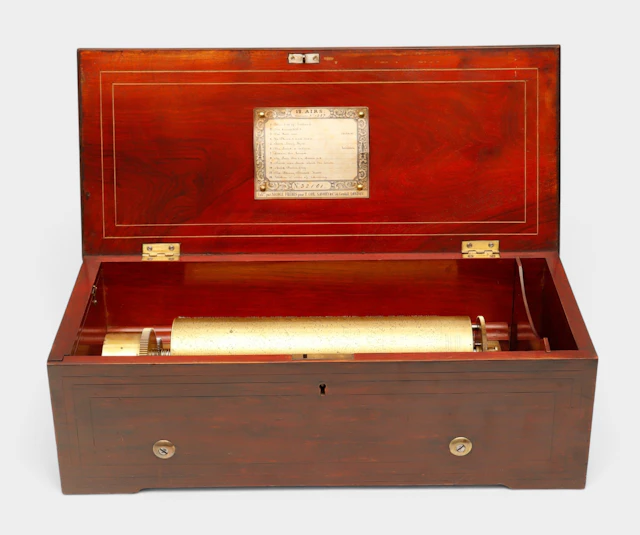
Caja de música suiza de doce canciones de Nicole Frères, hacia 1848-1852.
10/22/2026
$1,512.31
估價: $1,460.33
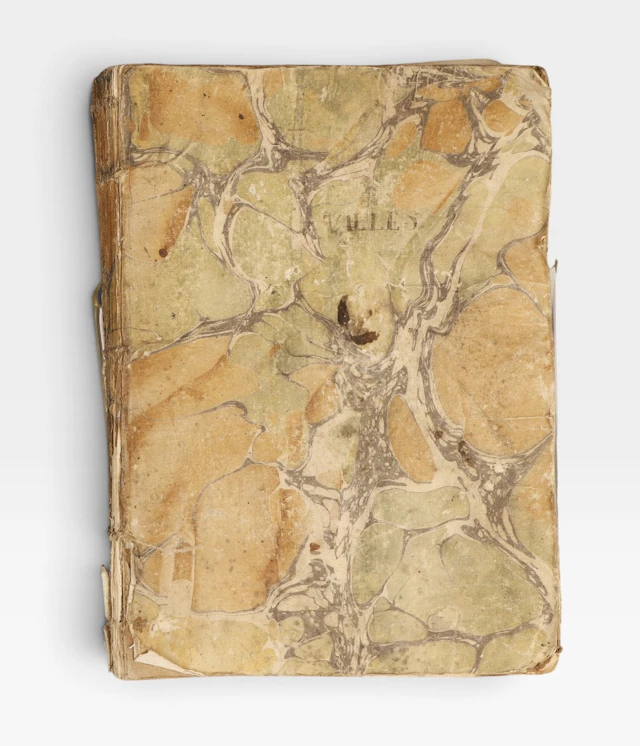
Guerra de la Independencia, Cataluña, 1808-1809.
10/22/2026
$145.63
估價: $157.63
讓您的拍賣觸及全球收藏家!
立刻發佈上架