
全部拍賣 / Ancient Art / Ancient Roman Bronze Ten Roman Bronze Coins – Collection...

Ancient Roman Bronze Ten Roman Bronze Coins – Collection...
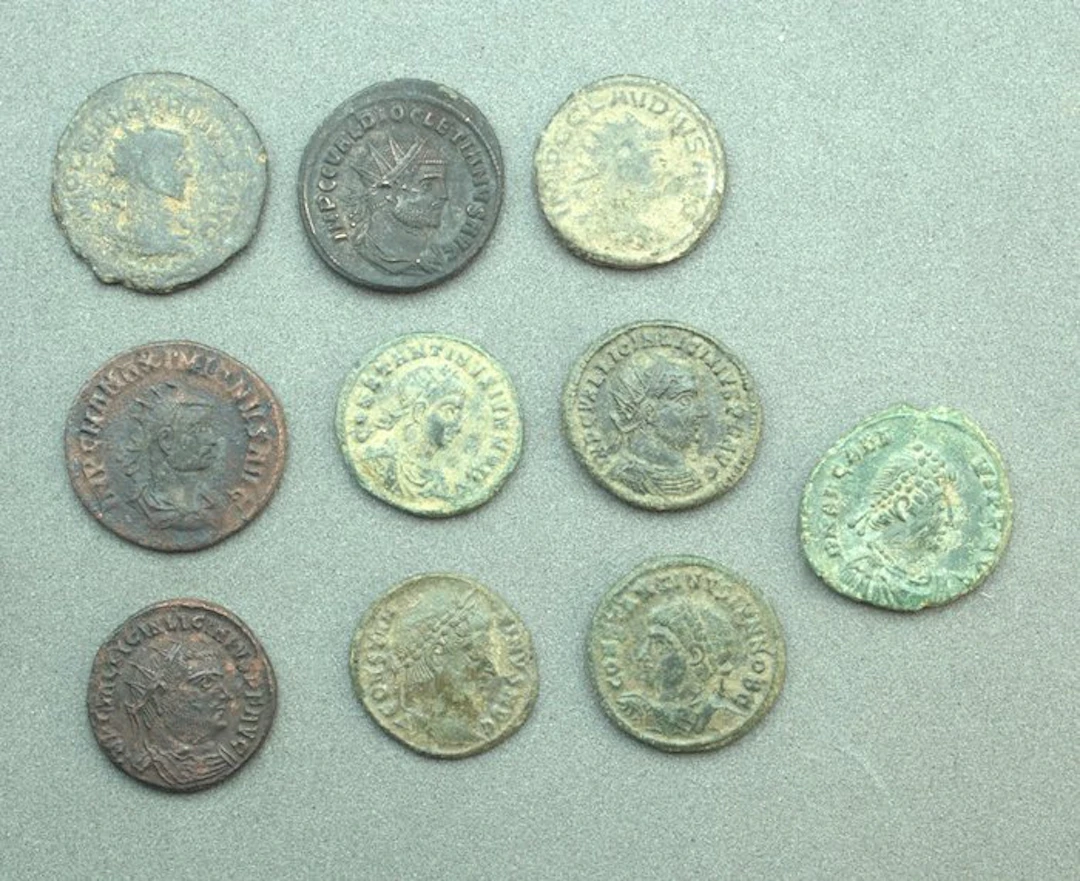
Ten Roman Bronze Coins – Collection including Probus and Diocletian Culture / Period: Ancient Roman Date / Period: 3rd–4th century AD Material: Bronze / copper alloy Dimensions: 17–25 mm Condition: Good archaeological condition, with varying degrees of wear, patination, surface deposits and corrosion consistent with age No shipping outside the European Union. Due to complex export regulations concerning cultural goods, this item cannot be shipped outside the EU. Please ensure you have a delivery address within the European Union before placing a bid. Provenance information: Object Registration ID: 883 The current owner (S.N.J. S.) purchased this collection of ten Roman bronze coins. The supplied provenance record contains incomplete placeholder information concerning the previous owner and acquisition dates. No reliable further information concerning the earlier ownership history of the collection is available. Background Information: This collection comprises ten Roman bronze and copper-alloy coins dating principally to the 3rd and 4th centuries AD. Based on the surviving portraits, legends and reverse types visible in the photographs, the group represents several emperors of the later Roman Imperial period. Where inscriptions are incomplete or insufficiently legible, no specific emperor or exact date should be assigned without further numismatic examination. Among the identifiable coins is an antoninianus of Emperor Probus (AD 276–282). Probus ruled during the later phase of the Crisis of the Third Century and issued extensive radiate coinage through several imperial mints. Also clearly represented is an antoninianus of Emperor Diocletian (AD 284–305). The photographed example bears the obverse legend IMP C C VAL DIOCLETIANVS AVG, with a radiate, draped and cuirassed bust facing right. The reverse is of the CONCORDIA MILITVM type, depicting Diocletian receiving Victory from Jupiter, with B between the figures and XXI in the exergue. This type belongs to Diocletian's pre-reform radiate coinage and reflects the importance placed on military unity and imperial stability during the establishment of the Tetrarchic system. Several further coins display recognisable late 3rd- and 4th-century characteristics, including radiate and diademed imperial portraits, standing deities or personifications, architectural reverse types and wreath designs. Some may be attributable more precisely from their inscriptions and mint marks, but the supplied photographs do not justify assigning every specimen to a named emperor with certainty. Roman coinage served both as currency and as an important means of imperial communication. Portraits identified the reigning ruler, while reverse designs proclaimed military success, political stability, religious devotion and the legitimacy of imperial government. Bronze denominations circulated extensively in ordinary transactions and were handled by soldiers, merchants, craftsmen and inhabitants of towns and rural communities throughout the Empire. Imperial mints produced these coins under state supervision and distributed them through the extensive commercial, administrative and military networks of the Roman world. Coins of this period circulated over considerable distances and are found throughout the former Empire, including present-day Germany and the Netherlands. Together, these ten coins illustrate the changing appearance of Roman currency during a transformative period extending from the later 3rd-century military emperors into the reorganised Empire of the 4th century. They form tangible evidence of the monetary system that connected people, markets and imperial administration throughout the Roman world.
估價:$236.29
前往拍賣頁查看所有物品來自Catawiki或Ancient Art
估價:
$236.29
類似物品
類似物品的拍賣結果

讓您的拍賣觸及全球收藏家!
立刻發佈上架