
全部拍賣 / Ethnographic / A bronze sculpture - Vere - Nigeria (No reserve price)

A bronze sculpture - Vere - Nigeria (No reserve price)
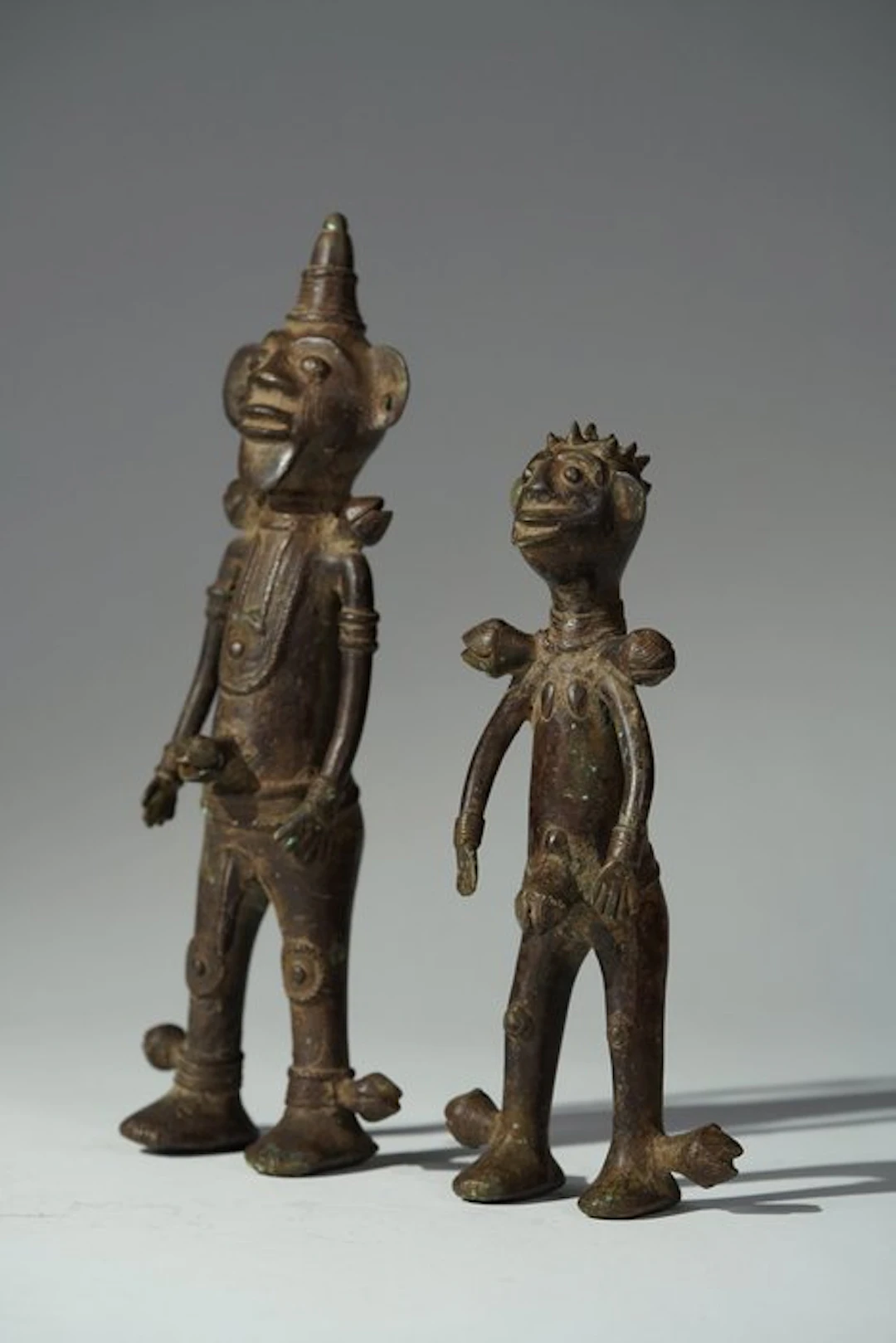
Vere Bronze Couple, Jimeta Region, Nigeria Vere (Verre), Jimeta region, Adamawa State, Nigeria Cast copper alloy This remarkable pair of standing male and female figures belongs to the distinctive copper-alloy casting tradition of the Vere, or Verre, of northeastern Nigeria. Although the two sculptures differ in height, coiffure and anatomical details, they share a closely related formal vocabulary and appear conceived as complementary figures. Their elongated bodies, prominent facial features, extensive jewelry and carefully articulated ornaments create images in which social identity and bodily adornment are given exceptional prominence. The taller figure has a slender body surmounted by a disproportionately large head. A high conical coiffure or headdress rises from the crown in several horizontal registers and terminates in a rounded point. The face is strongly modeled, with large circular eyes, a broad projecting nose, prominent lips and conspicuous ears. The head is tilted slightly upward, giving the figure an alert and commanding presence. A long ornament descends over the chest and terminates in a circular element at the abdomen. Additional projections at the shoulders and bands around the upper arms, knees and ankles contribute to the figure's elaborate appearance. The arms hang close to the sides, with the hands carefully differentiated into individual fingers. The shorter figure provides an intriguing counterpart. Its head is crowned by a series of small pointed projections arranged around the upper perimeter, producing an almost radiating silhouette. The large eyes, projecting mouth and prominent ears closely correspond to the facial conception of the taller figure, yet the treatment of the head gives this sculpture an unmistakably individual character. The breasts identify the smaller figure as female. Two elongated oval ornaments appear on the upper chest, while bracelets encircle the wrists. As on the male figure, the knees are marked by circular motifs. Both sculptures display additional projecting elements near the ankles, whose exact significance is difficult to determine from the photograph alone. The figures are strikingly frontal. Their long legs terminate in broad, flattened feet that provide visual stability, while the narrow torsos direct attention upward toward the enlarged heads. The relative disproportion between head and body is deliberate and contributes strongly to their sculptural presence. The metal surfaces range from deep brown to almost black, with scattered green oxidation and warmer copper-colored passages appearing on projecting details. The precise composition of the alloys cannot be established visually, making “copper alloy” more appropriate than a specific metallurgical identification. Regional characteristics The Vere, generally referred to as Verre in specialist literature, live principally in the Adamawa region of northeastern Nigeria and adjacent Cameroon. Their territory lies within an exceptionally diverse cultural environment where communities including Chamba, Bata, Mumuye and numerous smaller groups have interacted over long periods. The recorded attribution to the Jimeta region therefore places the pair within an important zone of cultural exchange. Among the most distinctive features of Verre material culture is a sophisticated tradition of copper-alloy working. Verre smiths and casters produced personal ornaments, bells, weapons, ritual objects and anthropomorphic figures. Metal ornaments could function as visible indications of wealth and social position, making the extensive representation of jewelry on these figures particularly significant. The present pair emphasizes precisely this relationship between body and ornament. Necklaces, bracelets, armlets, anklets and other modeled accessories are not secondary additions. They structure the bodies visually and divide the elongated figures into successive zones. The tall headdress of the male and the radiating coiffure of the female further differentiate their identities. The representation of a male and female figure as a complementary pair may suggest ideas of social partnership, marriage, ancestry or gendered status. Nevertheless, it would be premature to identify them specifically as an ancestral couple or marriage pair without field documentation. Their relationship is visually persuasive, but the original ritual or social function of Vere anthropomorphic bronzes is not sufficiently uniform to allow a precise interpretation from appearance alone. Of particular interest are the unusual projecting forms at the ankles. Comparable details in regional metal sculpture can represent ornaments or other attached elements, but their exact identification here remains uncertain. Their repetition on both figures indicates that they were intentional components of the figures' appearance rather than incidental casting features. The Jimeta attribution should also be understood geographically. Jimeta, now part of the Yola metropolitan area, lies within the broader Adamawa cultural landscape. It should not automatically be interpreted as defining a separate “Jimeta style.” The more meaningful context is the wider Verre artistic environment and its interaction with neighboring peoples. Stylistically, the pair demonstrates the distinctive expressive possibilities of lost-wax casting. Thin limbs, projecting ears, elaborate headdresses and numerous small ornaments could all be modeled directly in wax before casting. Subtle differences between the two figures are therefore significant: each sculpture was individually conceived rather than mechanically reproduced. The visual strength of the pair lies ultimately in the tension between similarity and difference. Both share the same elongated anatomy, enlarged head, prominent eyes and mouth, broad feet and profusion of ornaments, yet each possesses a distinct identity. Presented together, they form a particularly compelling expression of Vere figurative metalwork and of the importance accorded to personal adornment and social presence in the artistic traditions of the Adamawa region. Selected Literature Fardon, Richard, Christine Stelzig and Klaus Piepel. Surviving Works: Context in Verre Arts. A major study of Verre material culture, particularly relevant to brass casting, personal ornament and anthropomorphic sculpture. Berns, Marla C., Richard Fardon and Sidney Littlefield Kasfir, eds. Central Nigeria Unmasked: Arts of the Benue River Valley. Los Angeles: Fowler Museum at UCLA, 2011. Fardon, Richard. Between God, the Dead and the Wild: Chamba Interpretations of Ritual and Religion. Edinburgh: Edinburgh University Press, 1990. Useful for the broader cultural and ritual environment of the Nigeria-Cameroon borderlands. Fardon, Richard. “Verre Art.” In studies devoted to the arts and material culture of the Adamawa region. Particularly relevant for understanding the distinctive position of Verre metalworking within northeastern Nigeria. Some of the information and photos are generated by artificial intelligence and is based on published sources from the fields of ethnography, archaeology, and art history documents. All information and photos are protected by copyright. Inv. No. MAZ30953 Informant: Amadou Dogo Height: 32 cm / 25 cm Weight: 1,4 kg / 850 g
估價:$224.08
前往拍賣頁查看所有物品來自Catawiki或Ethnographic
估價:
$224.08
類似物品

類似物品的拍賣結果
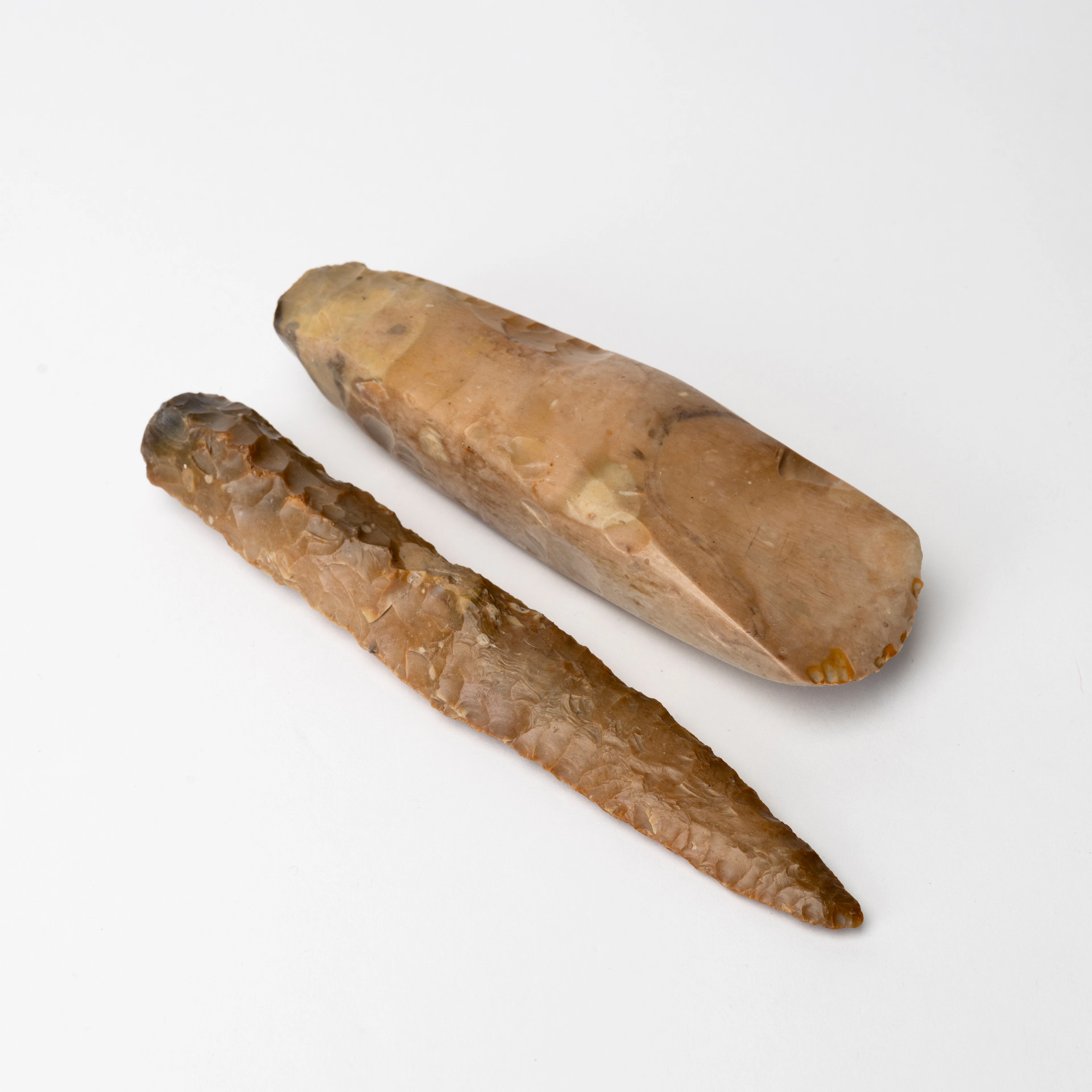
FLINTYXA samt FLINTDOLK, sannolikt yngre stenåldern, neolitikum.
10/08/2026
$365.62
估價: $200.02
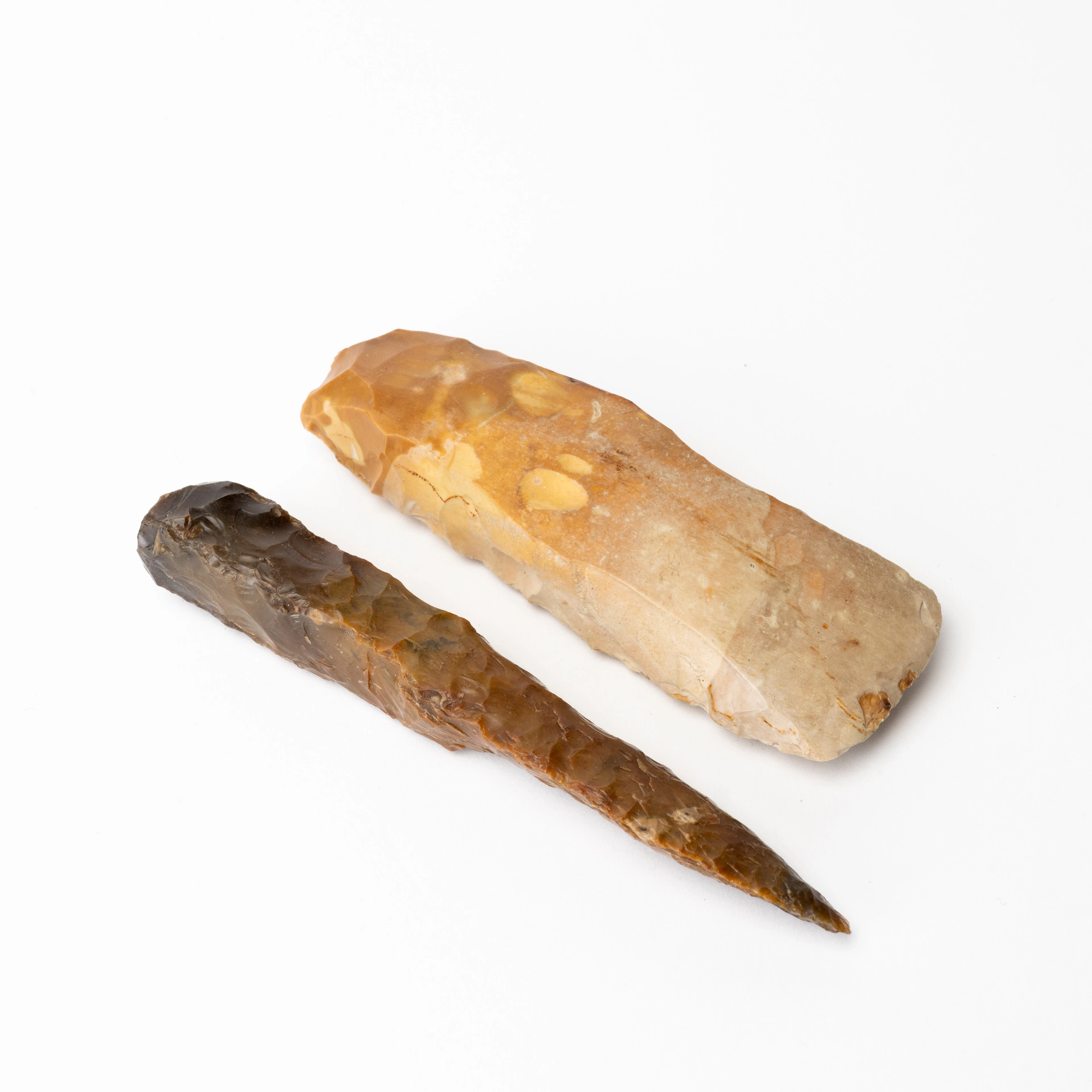
FLINTYXA samt FLINTDOLK, sannolikt yngre stenåldern, neolitikum.
10/08/2026
$145.11
估價: $160.01
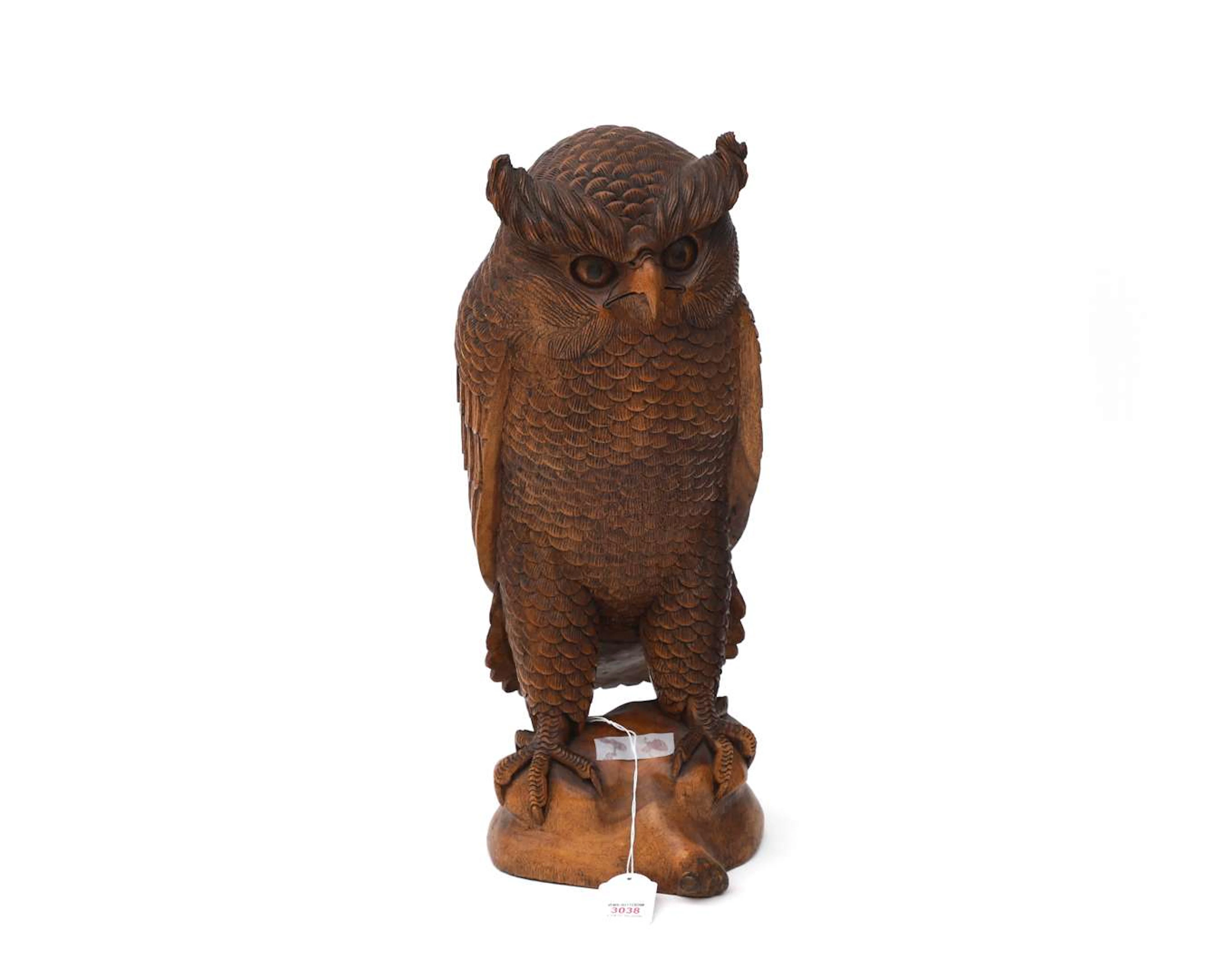

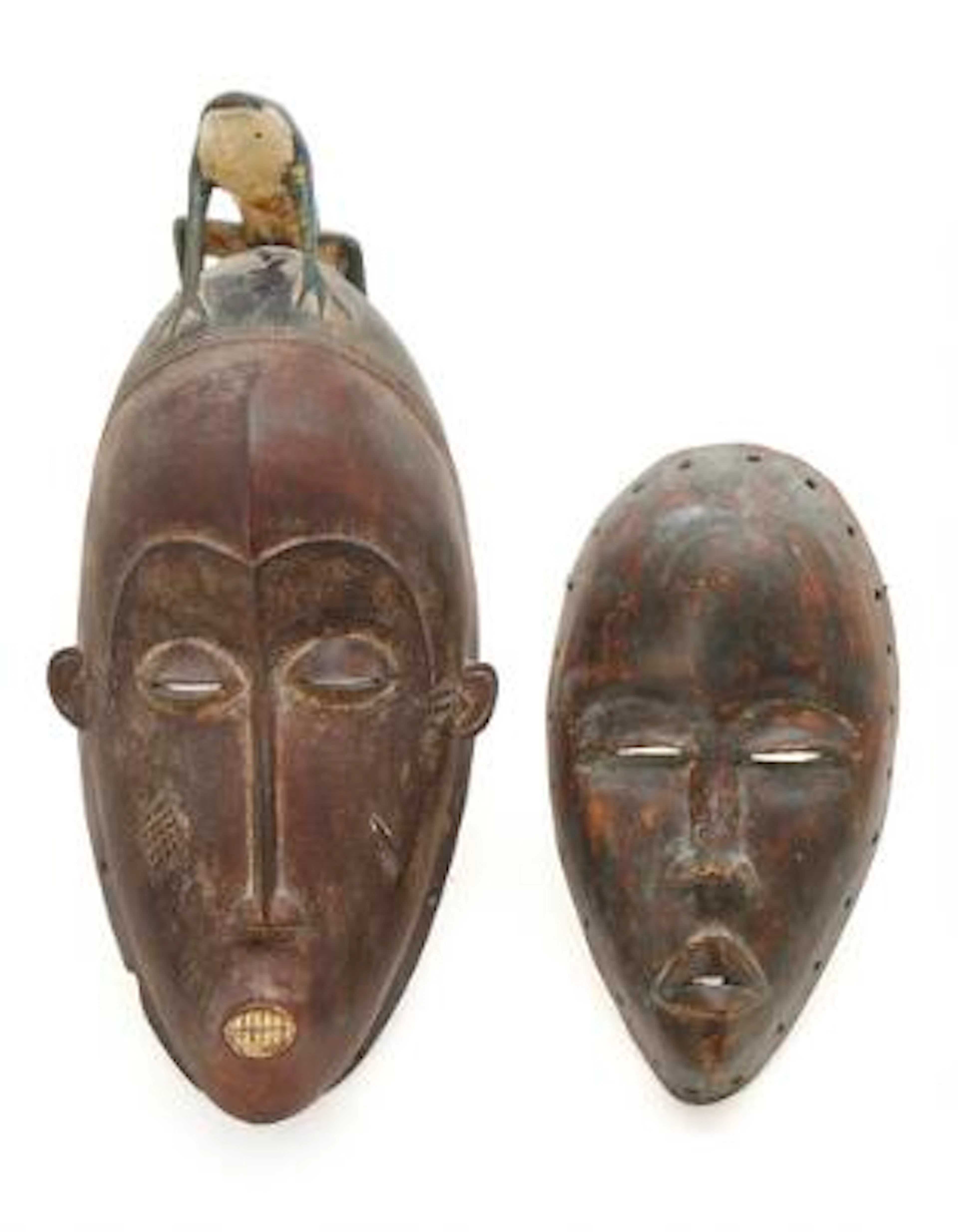
Two masks of carved patinated wood. Baoule and Dan style. H. 41 cm.
10/08/2026

$1,198.93
估價: $617.09
讓您的拍賣觸及全球收藏家!
立刻發佈上架