
全部拍賣 / Silver & Gold / 3 Spratling & Sucesores de Spratling Silver Spoons

3 Spratling & Sucesores de Spratling Silver Spoons
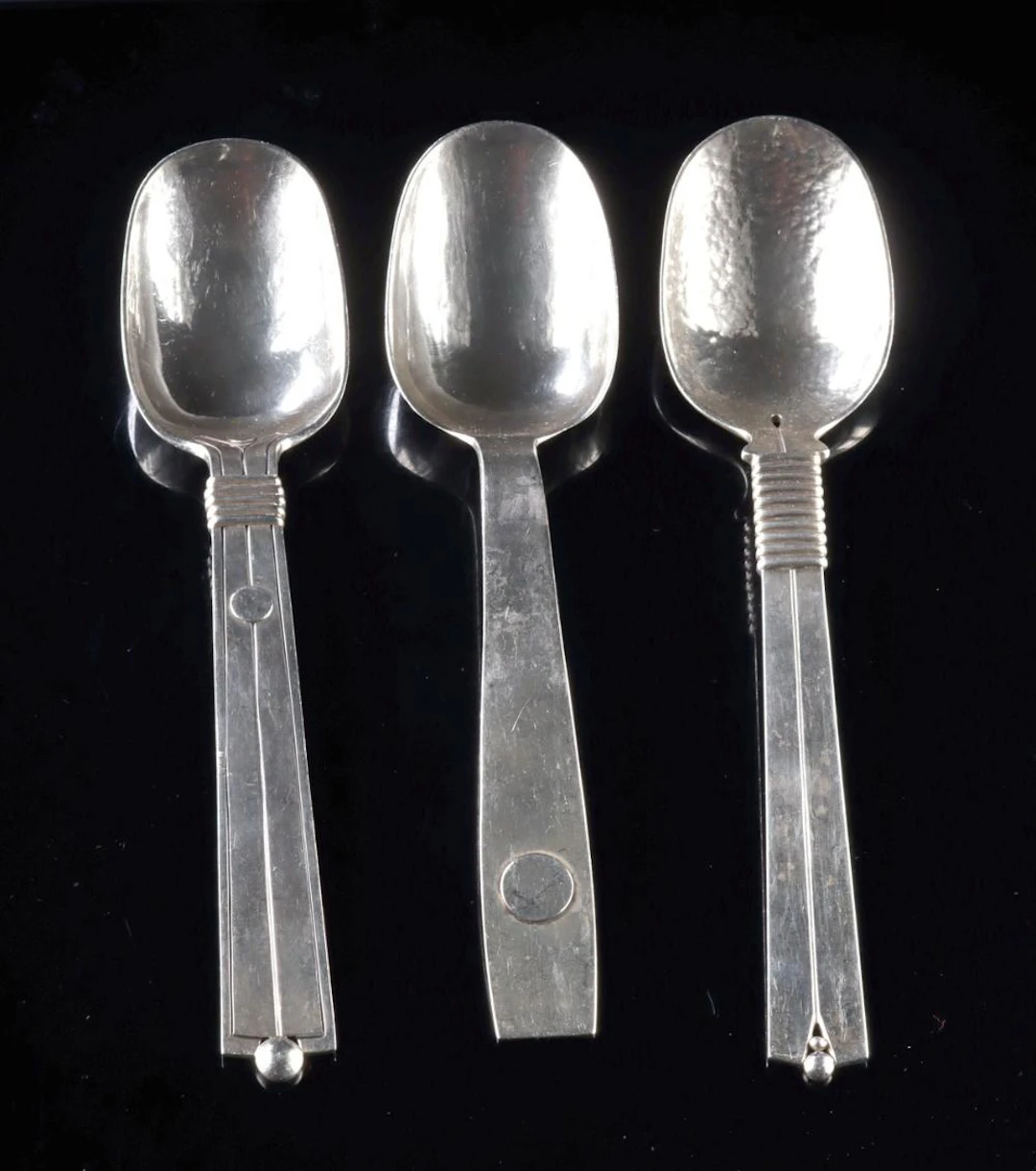
William Spratling (American/expatriate in Mexico, 1900-1967). Silver spoon with circle, 1951 to 1956. Stamped with the WS script and the eagle 63 hallmarks on verso; Sucesores de William Spratling. Two silver spoons with neck rings, ca. 1979 or later. Each stamped with the WS script square and "TS-24" on verso. A refined trio of silver spoons that quietly traces the legacy of one of Mexico's most celebrated designers, William Spratling, whose work helped define the modern identity of Taxco silver. Each spoon presents a clean, sculptural silhouette, with gently rounded bowls and tapering handles that emphasize balance and restraint, hallmarks of Spratling's enduring aesthetic. The central example, produced between 1951 and 1956, bears the distinctive WS script alongside the eagle 63 hallmark on the verso, placing it firmly within the third design period of Spratling's own workshop. Silver quality: 93% to 94%; total weight: 238.3 grams Its form is spare and confident, reflecting the designer's mature style, where pre-Columbian inspiration meets streamlined modern design. Flanking this piece are two spoons produced by Sucesores de William Spratling, dating from 1979 to later, each stamped with the WS script square hallmark and "TS-24" on the reverse. These later works continue the visual language established by Spratling, preserving the same understated elegance while reflecting the evolution of the workshop after his passing. Subtle variations in surface finish and handle detailing distinguish them from the earlier example, offering a layered view of continuity and change within the atelier. Together, the group forms a compact study in Mexican silver design, where craftsmanship, heritage, and modern form converge. William Spratling made his initial visit to Mexico in 1926, and returned each summer for the next several years. Finally, in 1929, Spratling actually moved to Mexico to be an expatriate, becoming an active member of the vibrant artistic circles of Mexico. Spratling promoted the art of none other than Diego Rivera to New York galleries which led to Rivera's participation in the first exhibition of Mexican visual culture held in the United States, funded by the Carnegie Institute, that opened at the Metropolitan Museum of Art in New York. Not only did Spratling assist in curating the exhibition, but he also lent a number of his own pieces. During this same time period, Spratling was working on drawings for the expanding Morrow (US Ambassador to Mexico Dwight Morrow and his wife, the poet Elizabeth Cutter Morrow) home in Cuernavaca. Many of these drawings were included in the book written by Elizabeth Morrow entitled, "Casa Manana" (Knopf, 1930). It was Ambassador Morrow who suggested that Spratling explore developing the silver industry in Taxco. Trying to find a way to support himself as an expatriate artist, Spratling took notice of the Taxco's silver-mining history and opened a workshop called the Taller de las Delicias, which translates to "Factory of Delights". Years later, he would write: "Nineteen-thirty-one was a notable year in modern Mexican silversmithing. A young silversmith from Iguala named Artemio Navarrete went to Taxco to work for a small silver shop, founded with the germ of an idea, where Artemio, as a nucleus, began to form silversmiths. The present writer, encouraged by his friends Moises Saenz, Dwight Morrow and Diego Rivera, had set up that little shop called 'Las Delicias.'" Penny Chittim Morrill, Ph.D., who co-authored "Mexican Silver: 20th Century Hand-wrought Jewelry & Silver" with art dealer Carole Berk is the primary authority on Spratling's work. Morrill was the guest curator for the 2002 traveling exhibition entitled, "William Spratling and the Mexican Silver Renaissance: Maestros de Plata," organized by the San Diego Museum of Art. In her catalogue essay, Morrill stated, "In establishing silver as an artistic medium, what Spratling achieved was a delicate balance, a synthesis of abstract tendencies in the existent folk art tradition and in contemporary fine art, resulting in a visualization of concepts and ideas. As importantly, the Taller de las Delicias, became the paradigm for other silver designers to follow. Las Delicias was a community in which imagination and innovation were fostered and encouraged as the men learned the art of silversmithing while producing for profit. In the hierarchy of the workshop, these silversmiths advanced according to their ability, enthusiasm, and technical expertise." Item # 201211
估價:$400
前往拍賣頁查看所有物品來自Artemis Fine Arts或Silver & Gold
估價:
$400
類似物品

類似物品的拍賣結果
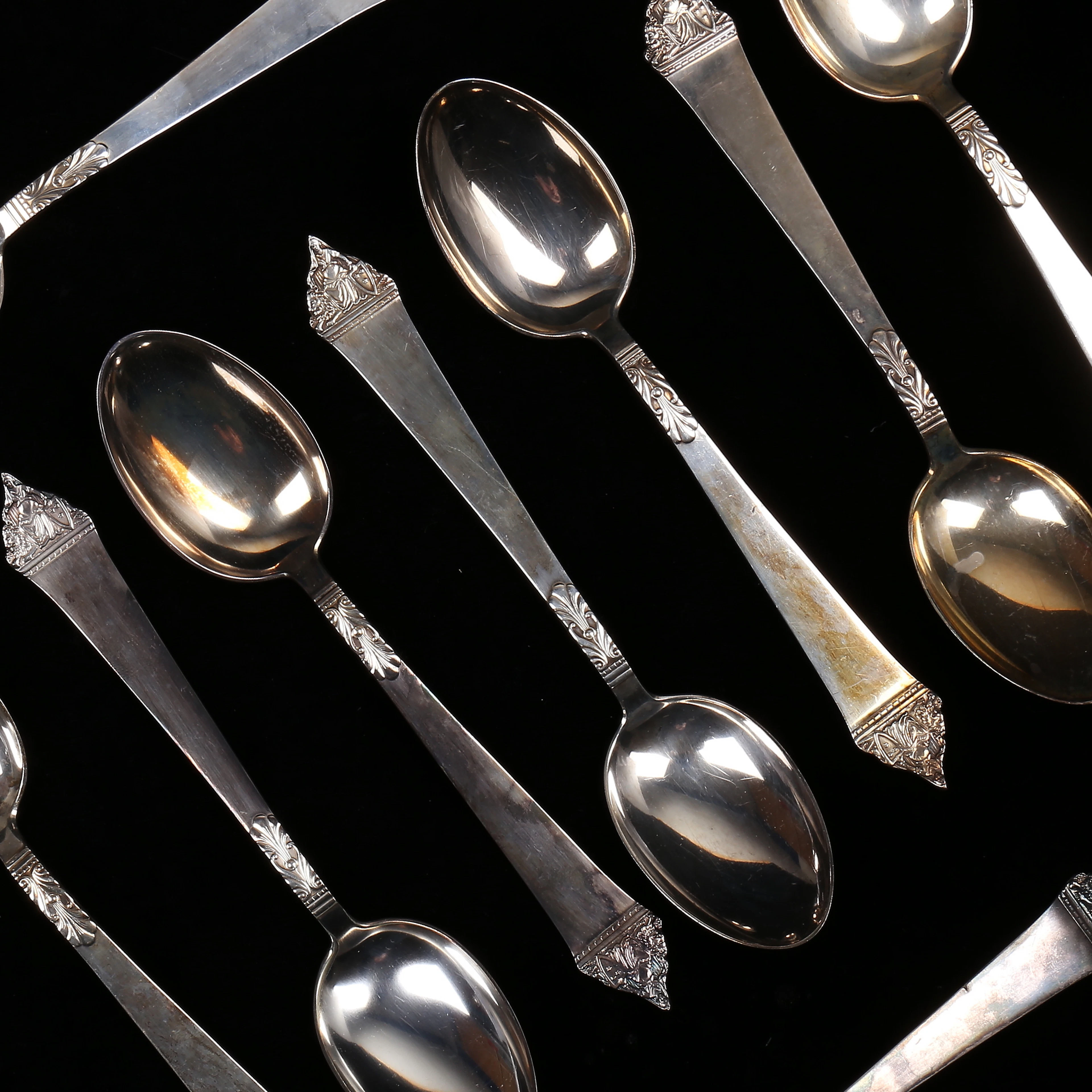
MATSKEDAR, 9 st, silver, C G Hallberg, 1940/50-tal, vikt 700 gram.
10/18/2026
$826.48
估價: $1,008.84
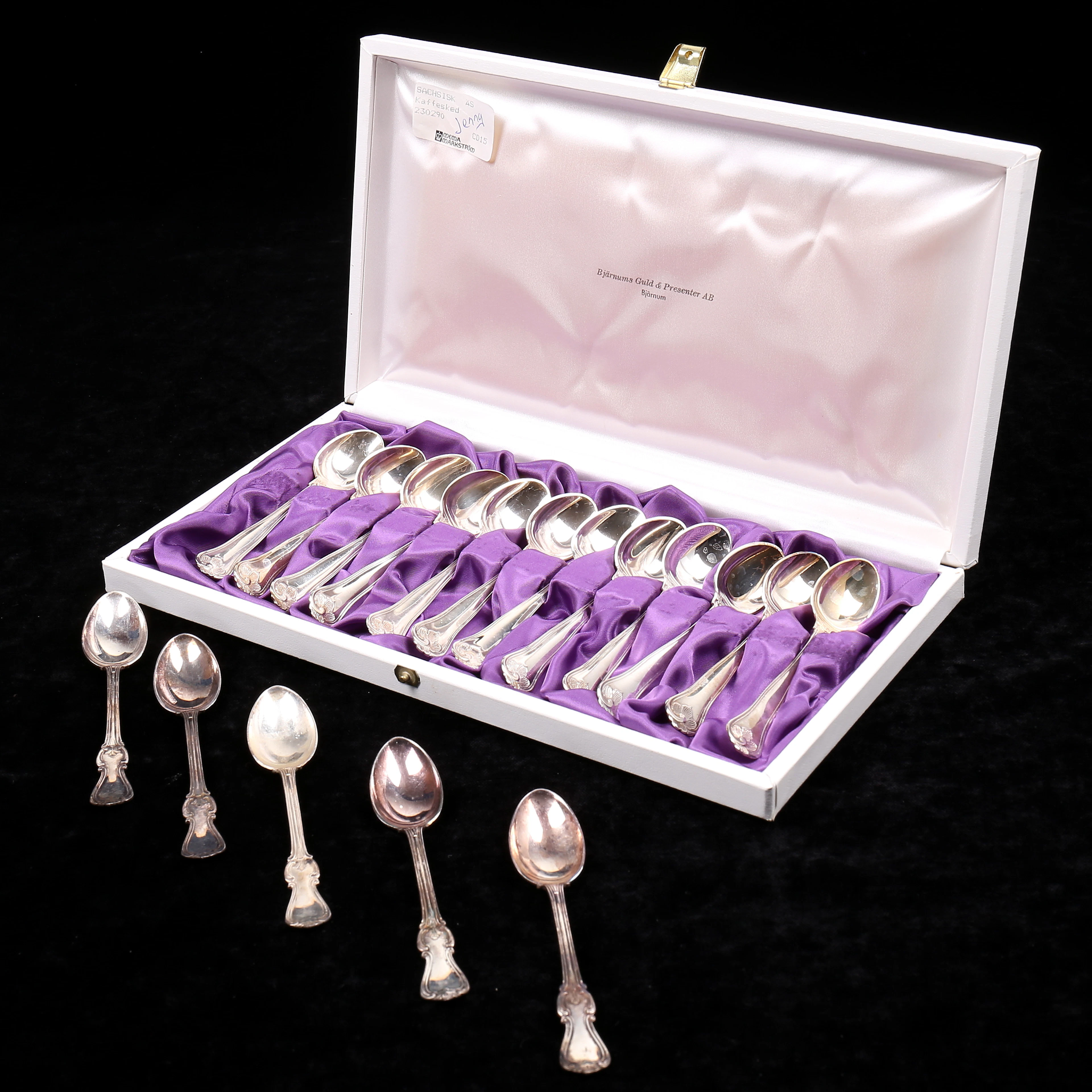
KAFFESKEDAR, 17 st, silver, "Sachsisk" och "Olga", vikt 268 gram.
10/18/2026
$312.45
估價: $252.21
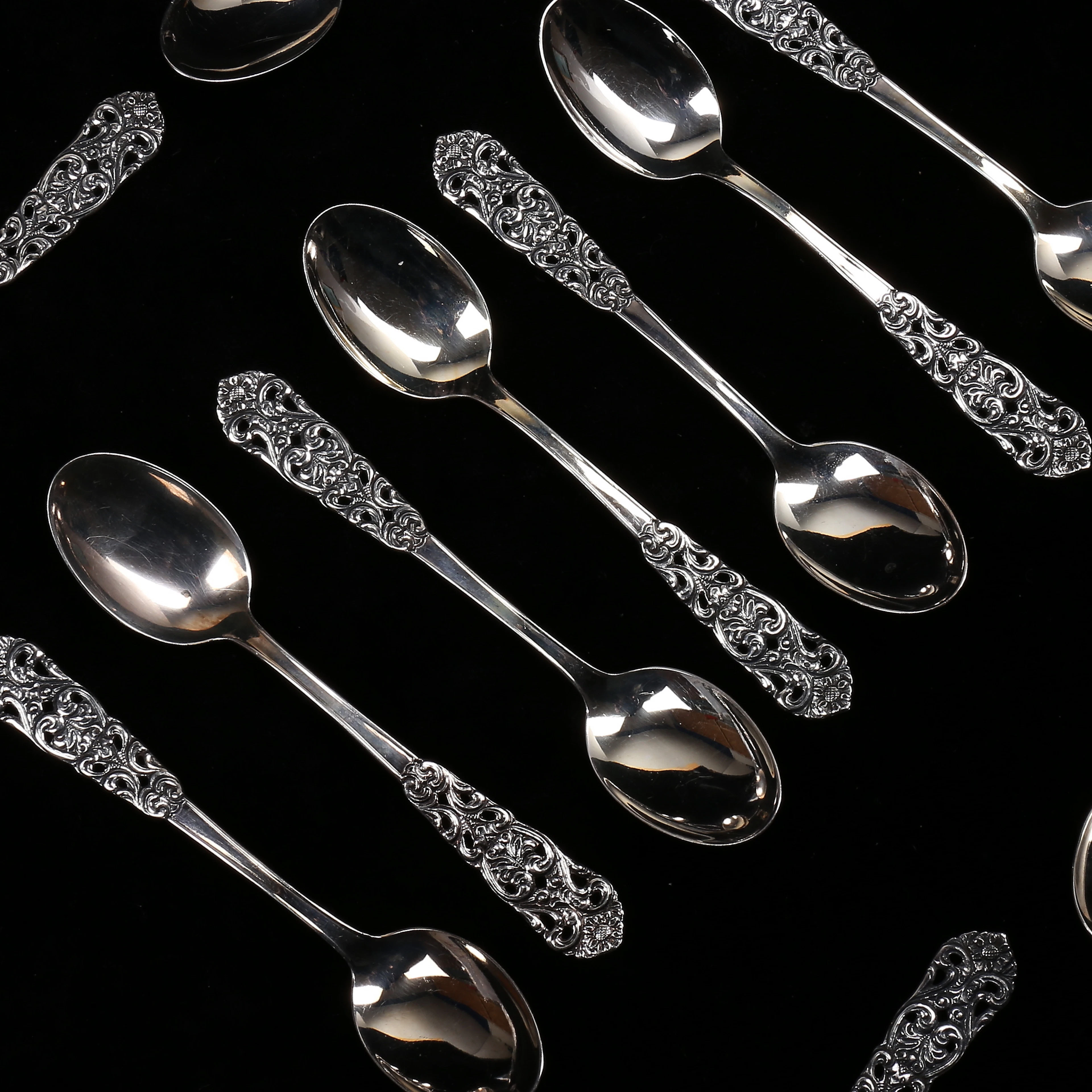
KAFFESKEDAR, 11 st, silver, totalvikt 125 gram.
10/18/2026
$141.1
估價: $151.32
SKEDAR, 5 st, silver, "Gammal Fransk", Lars Larson & Co, Göteborg
10/18/2026
$356.09
估價: $353.09
讓您的拍賣觸及全球收藏家!
立刻發佈上架